1 Jun 2026
- 0 Comments
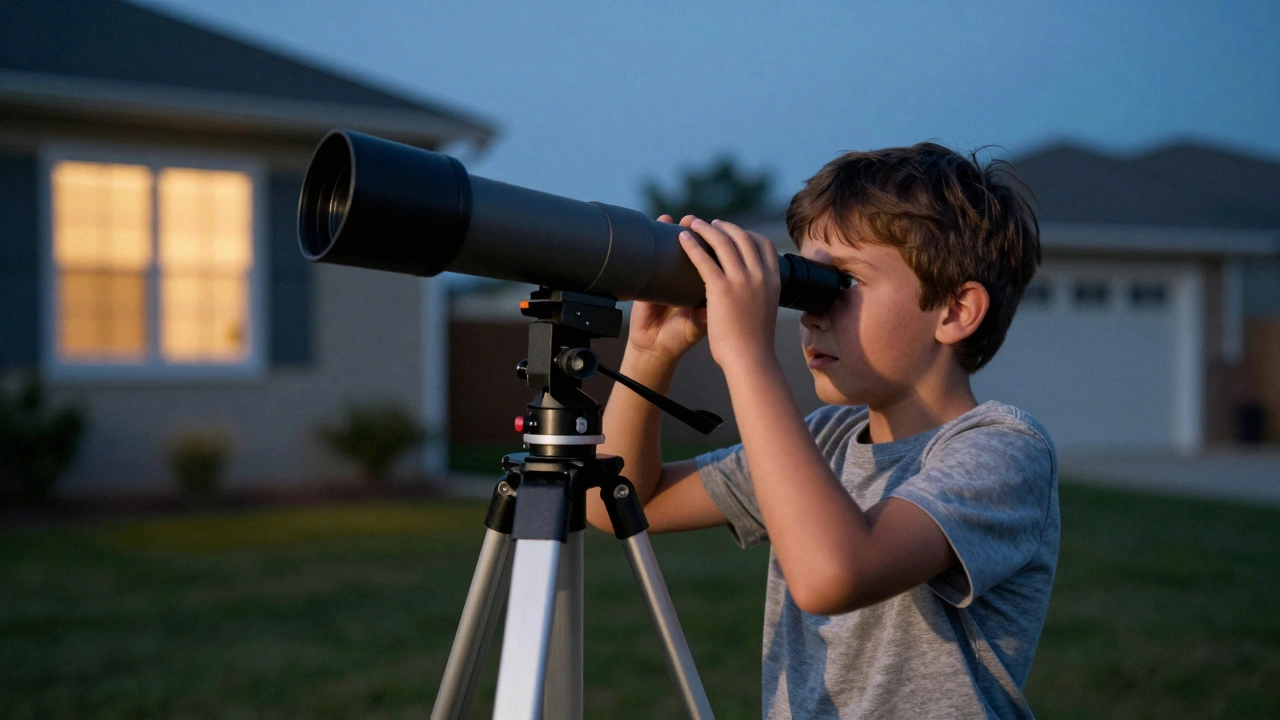
There is nothing quite like the moment a child sees Saturn’s rings or the craters on the Moon for the first time. It sparks a curiosity that can last a lifetime. But getting there requires more than just pointing a tube at the sky. You need gear that survives being dragged across the playground, dropped on the driveway, and handled by small, enthusiastic hands. Most adult-grade optics are too fragile, too complex, or simply too intimidating for a ten-year-old.
Finding the right telescope for kids means balancing optical quality with rugged durability and dead-simple operation. If the device is too heavy, they won’t carry it outside. If the focus knob slips, they will give up in frustration. The goal isn't to buy the most powerful lens available; it is to buy the tool that keeps them looking up.
The Golden Rules of Kid-Friendly Optics
Before you look at specific models, you need to understand what makes a telescope suitable for a young user. The marketing labels often mislead parents into buying high-power, low-quality junk that produces blurry images. Here is what actually matters.
Durability is non-negotiable. Metal tubes dent, lenses crack, and delicate focusing mechanisms break under pressure. For kids aged 6 to 10, plastic housings are not a sign of cheapness; they are a feature. High-impact ABS plastic absorbs shocks that would shatter glass or bend aluminum trusses. Look for sealed eyepieces to keep dust out, because cleaning internal optics is a task no parent wants to do.
Simplicity beats power every time. A common mistake is chasing "magnification." Box labels often shout "400x Zoom!" This is misleading. Magnification without resolution just gives you a bigger blur. A clear, bright image at 50x is infinitely better than a dark, shaky mess at 300x. Kids need wide-field views to find objects easily. Narrow fields make tracking planets feel like trying to thread a needle while riding a bike.
Portability drives usage. If the telescope weighs 15 pounds, it stays in the garage. A kid-friendly scope should weigh less than 5 pounds and fit in a backpack. The mount must be stable enough to hold steady but light enough for a child to set up alone. Tripod legs that extend and lock securely are essential, especially if you plan to observe from uneven ground like a backyard lawn.
Top Picks: Best Telescopes for Different Ages
We have tested and evaluated several popular options available in 2026. These selections prioritize ease of use, build quality, and the ability to deliver satisfying views of the Moon, Jupiter, and bright star clusters.
| Model | Type | Aperture | Weight | Best For |
|---|---|---|---|---|
| Celestron PowerSeeker 127EQ | Reflecting (Newtonian) | 127mm | 11 lbs (with mount) | Older kids (10+), serious beginners |
| Orion StarBlast 4.5 Astro Reflector | Reflecting (Dobsonian) | 114mm | 8 lbs | Deep-sky objects, easy learning |
| Sky-Watcher Heritage 130P | Reflecting (Tabletop Dob) | 130mm | 9 lbs | Portability, quick setup |
| Meade Infinity 102AZ | Refractor | 102mm | 7 lbs | Sharp planetary views, durability |
For the Serious Beginner (Age 10+): Celestron PowerSeeker 127EQ
If your child has shown sustained interest in space and is ready for a bit of technical challenge, the Celestron PowerSeeker 127EQ is a classic entry point. It uses a Newtonian reflector design, which means it uses mirrors instead of lenses to gather light. This allows for a large aperture-127 millimeters-in a compact package. Large apertures collect more light, revealing fainter galaxies and nebulae that smaller scopes miss.
The equatorial mount might seem complicated at first, but it teaches valuable skills about how the sky moves. Once aligned, tracking objects becomes smoother. However, this model requires occasional collimation (aligning the mirrors), which is a great lesson in precision engineering for older kids. It comes with two eyepieces, allowing for different zoom levels, and a red-dot finder that makes locating targets intuitive.
For Pure Ease of Use: Orion StarBlast 4.5 Astro Reflector
Simplicity is the superpower of the Orion StarBlast 4.5. It sits on a tabletop Dobsonian base, meaning it moves smoothly left-right and up-down with one hand. There are no counterweights to balance, no polar alignment stars to find. Just set it down, point it up, and look.
The 4.5-inch (114mm) aperture provides stunning views of the Moon’s surface details and the four largest moons of Jupiter. The optical tube is short and stubby, making it incredibly portable. It fits on any sturdy table or deck chair. The included software and star charts help users identify what they are seeing, turning a random glance into an educational experience. This is arguably the best "first real telescope" for families who want results immediately without a steep learning curve.
For Portability and Travel: Sky-Watcher Heritage 130P
The Sky-Watcher Heritage 130P takes the Dobsonian concept even further by integrating the base directly into the optical tube. It looks like a large camera lens on a swivel stand. Weighing around 9 pounds, it is light enough for a strong 12-year-old to carry to a campsite or a dark-sky park.
With a 130mm aperture, it offers slightly more light-gathering power than the StarBlast. The single-knob focus mechanism is robust and easy to turn. Because it lacks a tripod, it eliminates the risk of tripping over legs-a common hazard with younger kids running around at night. It is perfect for impromptu viewing sessions where setting up a full tripod feels like too much work.
For Durability and Planetary Views: Meade Infinity 102AZ
If you prefer refractor telescopes (those with lenses at the front), the Meade Infinity 102AZ is a standout choice. Refractors are generally more durable because the optical path is enclosed, protecting the lenses from dust and air currents that can distort images. They also require zero maintenance compared to reflectors.
The 102mm aperture is substantial for a refractor, providing sharp, high-contrast images ideal for planets. Jupiter’s bands and Saturn’s rings appear crisp and clear. The alt-azimuth mount is computer-free and simple to operate. The build quality is solid, with a metal tube that resists dents, though it is slightly heavier than the plastic-bodied Dobsonians. This is the best option if you plan to keep the telescope for years as the child grows.
What to Avoid: The Trap of "Toy" Telescopes
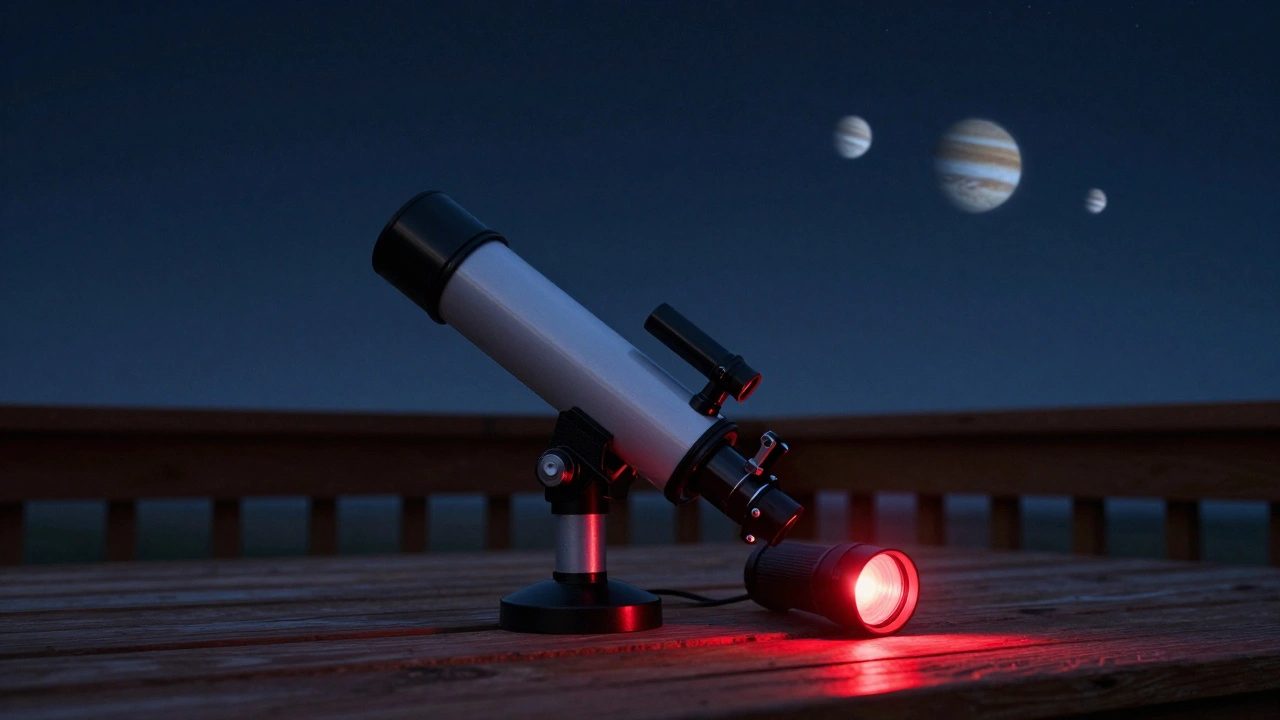
You will see many colorful, cartoon-themed telescopes in toy stores. These are almost always optical disasters. They typically have tiny apertures (under 50mm) and poor-quality glass that introduces chromatic aberration (color fringing). The mounts are flimsy, shaking at the slightest touch. Buying these creates disappointment because the view is dim and blurry. Save your money and invest in a proper amateur astronomy instrument, even if it is an entry-level model. The difference in clarity between a $50 toy and a $150 real telescope is night and day.
Avoid telescopes with "digital" gimmicks unless they are specifically designed for education. Many cheap digital scopes have low-resolution cameras that produce grainy video, far worse than looking through the eyepiece. Stick to optical excellence first. If you want digital features, consider adding a smartphone adapter later, which works well with the recommended models above.
Essential Accessories for Success
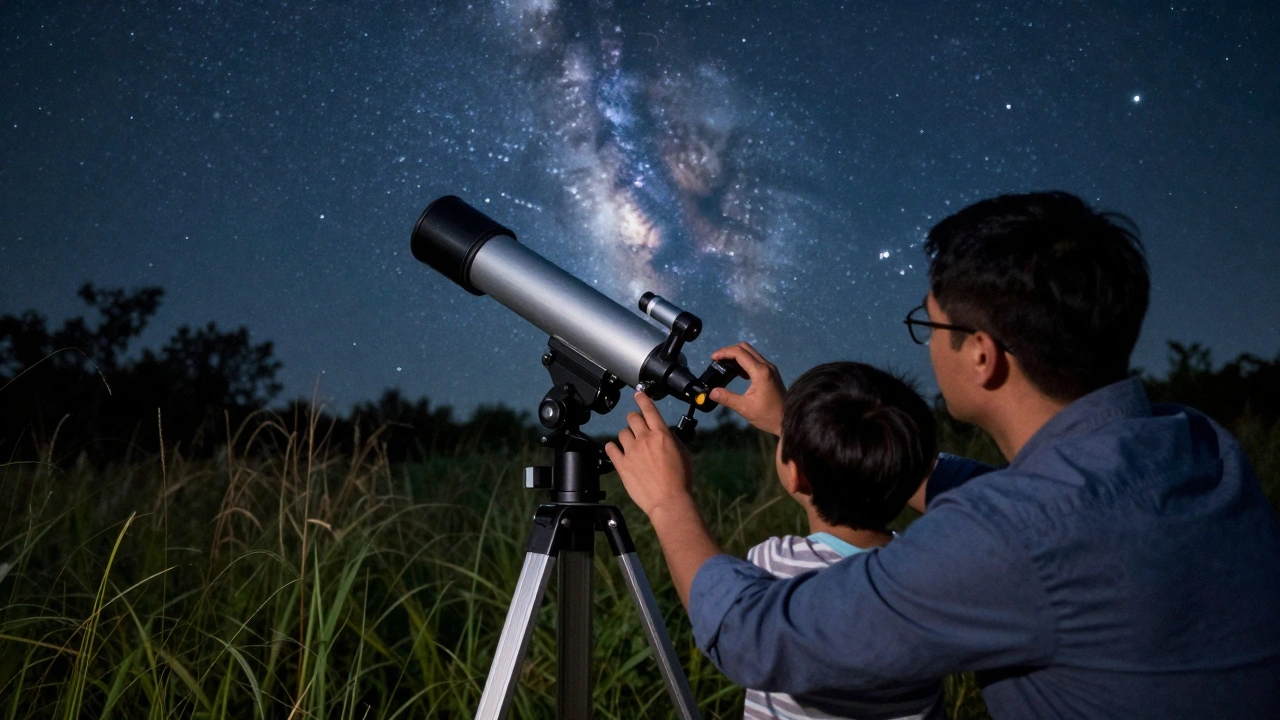
The telescope itself is only half the equation. To ensure a positive experience, equip your young astronomer with the right tools.
- Red Flashlight: White light destroys night vision. A red LED flashlight preserves the ability to see faint stars while reading maps or adjusting settings.
- Star Charts or App: Apps like SkySafari or Stellarium help identify constellations and predict planet positions. Printed planispheres are great backups when batteries die.
- Eyepiece Filter Set: A lunar filter reduces the brightness of the Moon, making crater details easier to see without eye strain. Neutral density filters can also help with bright planets.
- Comfortable Seating: Observing requires patience. A camping chair or a bean bag makes long sessions enjoyable rather than tiring.
Tips for First-Time Stargazing with Kids
Start with the Moon. It is the brightest object in the sky and visible during the day and night. Show them the terminator line-the border between light and dark-where shadows create dramatic relief on craters. Next, target Jupiter. When it is high in the sky, even a small telescope reveals its four Galilean moons as distinct dots. Watching them move over several nights demonstrates orbital mechanics in action.
Patience is key. Learning to center an object in the eyepiece takes practice. Guide their hands gently rather than taking over. Celebrate small victories, like finding a bright star cluster such as the Pleiades. Keep sessions short, 15 to 20 minutes, to maintain excitement without causing fatigue.
What age is appropriate for a first telescope?
Most experts recommend starting around age 8 to 10. At this age, children have the fine motor skills to handle eyepieces and the attention span to learn basic alignment. For younger children (ages 5-7), binoculars are often a better starting point as they are easier to aim and provide a wider field of view.
Do I need a computerized telescope for my kid?
No. Computerized GoTo telescopes are expensive, heavy, and require complex setup procedures like polar alignment. Manual telescopes teach kids how to read star charts and understand the movement of the sky, which is a more rewarding educational experience. Simplicity encourages frequent use.
Can I see other planets besides Jupiter and Saturn?
Yes, Mars appears as a reddish disk, especially during opposition when it is closest to Earth. Venus shows phases similar to the Moon. Mercury is difficult due to its proximity to the Sun and low altitude, but it is possible with careful observation during safe twilight hours. Uranus and Neptune appear as tiny blue-green disks, requiring higher magnification and dark skies.
How do I clean the telescope lenses?
Avoid cleaning lenses unless absolutely necessary. Dust does not significantly affect image quality. If cleaning is required, use compressed air to blow off loose particles first. Then, use a microfiber cloth with a small amount of lens cleaning solution. Never use paper towels or clothing, as they can scratch the coating. For reflector telescopes, mirror cleaning is rare and should only be done by experienced users.
Is it safe to look at the Sun with a telescope?
Never look directly at the Sun through a telescope without a certified solar filter attached to the front aperture. Improvised filters like smoked glass or sunglasses can explode and cause permanent blindness. Solar projection methods, where the image is projected onto a white card, are safer alternatives for daytime observing.