13 May 2026
- 0 Comments
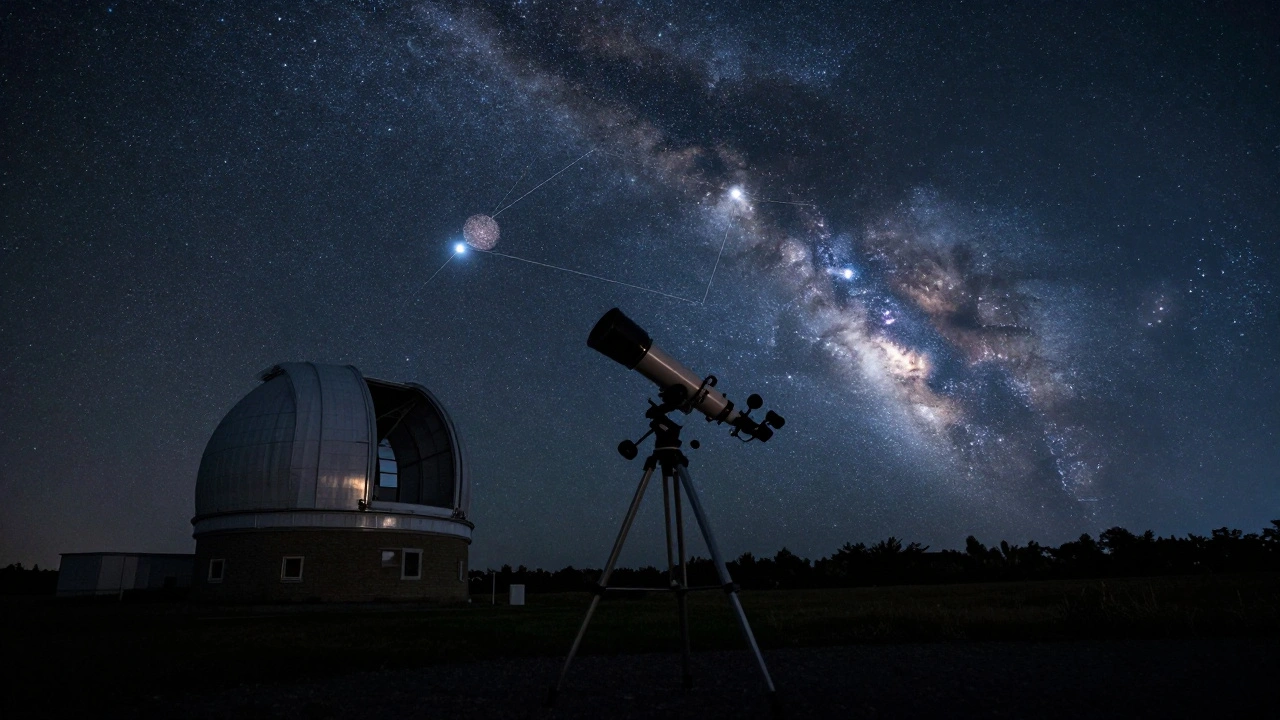
Most beginners spend their first few nights under the stars chasing Orion or trying to spot the Big Dipper. It’s easy, sure. But there is a whole other layer of the night sky that most people ignore because they are looking for famous constellations instead of simple geometric shapes. This is asterism hunting, and it is one of the most rewarding ways to use a wide-field telescope.
An asterism is not an official constellation. It is just a recognizable pattern of stars that might span across two or three different constellations. The Big Dipper is an asterism inside Ursa Major. The Summer Triangle is an asterism made of stars from Lyra, Cygnus, and Aquila. When you start looking for these lesser-known patterns, your observing sessions stop being about checking boxes on a list and start becoming a game of visual discovery.
The magic happens when you pair this mindset with the right gear. A wide-field telescope-usually a refractor with a focal ratio faster than f/5 or a short-tube reflector-gives you a view that mimics what your eyes see, but with more light gathering power. Suddenly, those faint lines connecting stars become visible, and the background isn't just black; it's filled with texture.
Why Wide-Field Telescopes Change the Game
To hunt asterisms effectively, you need context. High-power eyepieces give you detail, but they take away the map. They show you one star at a time, making it nearly impossible to trace the shape of a large pattern. Wide-field instruments solve this problem by providing a low magnification view that keeps multiple stars in the frame simultaneously.
Consider the difference between using a standard 8-inch Dobsonian with a high-power eyepiece versus using a 60mm refractor with a 20mm eyepiece. The Dobsonian will make the stars look like bright points, but you’ll lose the surrounding field. The refractor, however, might show you the same stars as slightly smaller points, but it will also reveal the fainter stars that connect them into a triangle, a cross, or a zigzag. This "field of view" is your primary tool for deep-sky planning.
- Focal Ratio Matters: Look for scopes with f/4 to f/5 ratios. These provide wider apparent fields of view.
- Eyepiece Choice: Use Plossl or Erfle eyepieces with wide true fields (60°+). Barlow lenses are your enemy here; leave them in the drawer.
- Aperture Trade-off: You don’t need massive light gathering for asterisms. A 70mm to 100mm aperture is often ideal because it balances portability with enough resolution to split double stars within the pattern.
This setup allows you to treat the sky like a canvas rather than a pinball machine. You are looking for connections, not just individual targets.
Defining Your Targets: What Makes a Good Asterism?
Not every random grouping of stars is worth hunting. To make your deep-sky planning effective, you need criteria for what constitutes a "good" asterism. I usually look for three things: distinct geometry, brightness contrast, and cultural or historical significance.
Distinct geometry means the pattern should be obvious once you see it. Think of triangles, squares, or tight clusters of four or five stars. If the shape requires you to imagine a wobbly line connecting six faint stars, it’s probably too subtle for casual hunting. Brightness contrast is equally important. The best asterisms have a mix of bright anchor stars and fainter filler stars. This variation helps your eye lock onto the pattern against the dark background.
Finally, knowing the history behind a pattern adds depth to the experience. Many lesser-known asterisms were used by navigators, farmers, or indigenous cultures long before modern astronomy standardized the 88 constellations. For example, the "Keystone" in Hercules is a small square of stars that marks the center of the M13 globular cluster. Knowing this connection turns a simple geometric exercise into a gateway for deeper observation.
Top 5 Lesser-Known Asterisms to Hunt Tonight
If you are ready to move beyond the basics, here are five specific patterns that shine in wide-field views. These are chosen because they are visible from mid-northern latitudes and offer clear geometric shapes.
| Asterism Name | Location (Constellation) | Best Time to View | Visual Characteristic |
|---|---|---|---|
| The Keystone | Hercules | Summer (June-August) | A perfect square of 4 stars enclosing M13 |
| The Pinwheel | Cassiopeia / Cepheus | Autumn/Winter | A curved arc of 5 stars resembling a fan blade |
| The Southern Cross (Crux) | Crux | Southern Hemisphere / Low North | A tight, bright cross shape |
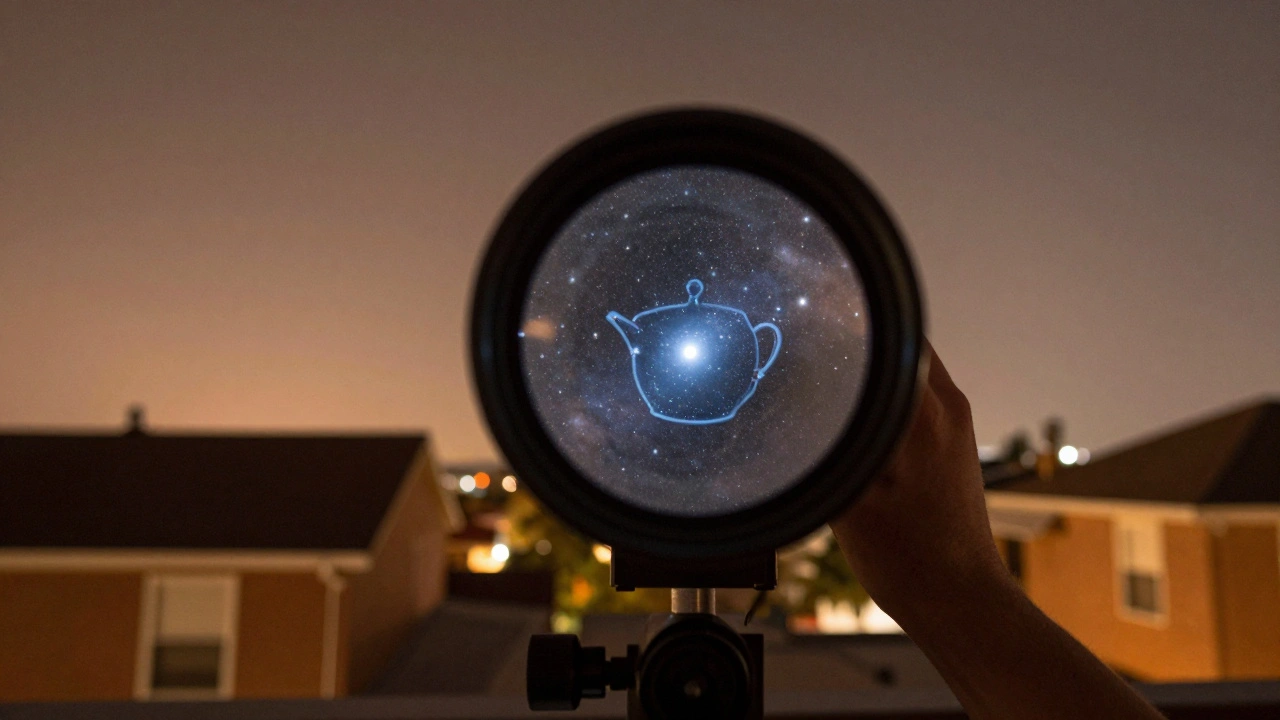
| The Teapot | Sagittarius | Summer | A large, distinct pot shape near the galactic center |
| The Pleiades Cluster | Taurus | Winter | A tiny dipper-like cluster of blue stars |
Let’s break down why these work so well. The Keystone is perhaps the easiest target. In a wide-field scope, you can see all four stars of the square comfortably. More importantly, you can see the fuzzy glow of M13 right in the middle without needing high power. It teaches you to look *through* the pattern to find deep-sky objects.
The Pinwheel in Cassiopeia is less famous but visually striking. It consists of five stars that form a gentle curve. Because Cassiopeia is circumpolar for many northern observers, you can hunt this pattern year-round. It sits near the border of Cepheus, which adds a nice challenge for your star-hopping skills.
The Teapot in Sagittarius is a classic summer sight. It’s large, so it fits easily in a 2-degree field of view. The handle is made of fainter stars, while the body is dense with brighter ones. This contrast makes it excellent for testing your telescope’s ability to resolve dimmer details against a brighter background.
Deep-Sky Planning: Mapping Your Session
Hunting asterisms isn’t just about pointing and shooting. Effective deep-sky planning involves mapping out a sequence of observations that maximizes your efficiency and enjoyment. You want to minimize the time spent slewing the telescope and maximize the time spent soaking in the view.
Start by identifying the meridian-the imaginary line running north-south through the highest point in the sky. Objects near the meridian are at their highest altitude, meaning you are looking through the least amount of atmosphere. This results in sharper stars and better contrast for faint patterns.
Plan your session around "asterism chains." Instead of jumping randomly from Hercules to Taurus, look for patterns that are close together. For example, in spring, you can hop from the Great Square of Pegasus to the nearby Andromeda Galaxy region, then to the Triangulum galaxy area. These areas are rich with both bright asterisms and faint deep-sky objects.
Use a planisphere or a digital app like Stellarium to pre-plan your route. Mark out three or four asterisms that will be above the horizon for at least two hours. This gives you flexibility if weather conditions change or if one pattern is obscured by clouds. Always have a backup target closer to the zenith.
Overcoming Common Obstacles
Even with the best plans, asterism hunting can be frustrating. Light pollution is the biggest enemy. While bright stars remain visible in suburban skies, the fainter stars that complete the geometric shapes often disappear. If you live in a city, focus on asterisms composed of magnitude 2nd and 3rd stars. Avoid patterns that rely on magnitude 4th or 5th stars unless you can escape to a darker site.
Another common issue is "star blindness" or loss of orientation. When you are looking for a specific shape, it’s easy to get lost in the sea of stars. To combat this, always identify a major, unmistakable landmark first. For example, if you are hunting the Keystone, find the bright star Vega in Lyra first, then hop to Altair, and finally sweep up toward Hercules. Using bright anchors as reference points keeps you grounded.
Equipment limitations can also hinder progress. If your telescope has a narrow field of view, you may struggle to see the entire pattern at once. In this case, use your hand or a piece of cardboard to block part of the view, creating a "window" that moves across the sky. This technique helps you mentally assemble the pattern even if you can’t see it all at once.
Pro Tips for Better Observations
Here are some practical tips that can elevate your asterism hunting experience:
- Use Red Filters: If your eyepieces allow it, try red filters. They enhance contrast for faint stars and preserve your night vision better than white light.
- Sketch What You See: Don’t just look; draw. Sketching forces your brain to process the spatial relationships between stars. You’ll notice details you would otherwise miss.
- Observe at Different Times: Asterisms change orientation throughout the night due to Earth’s rotation. A pattern that looks upright at 9 PM might appear tilted at 1 AM. This dynamic movement adds a temporal dimension to your hunting.
- Combine with Deep-Sky Objects: Many asterisms frame famous nebulae or galaxies. The Coathanger in Scorpius is near the Butterfly Nebula. Use the asterism as a guidepost to locate the deep-sky treasure.
- Join a Community: Share your finds with local astronomy clubs. Discussing patterns with others reveals new perspectives and hidden gems you might have overlooked.
By integrating these techniques, you transform passive stargazing into an active, engaging pursuit. You’re not just seeing stars; you’re reading the sky’s geometry.
What is the difference between a constellation and an asterism?
A constellation is one of the 88 officially recognized regions of the sky defined by the International Astronomical Union. An asterism is any recognizable pattern of stars, which may lie within a single constellation or span across multiple constellations. For example, the Big Dipper is an asterism located within the larger constellation of Ursa Major.
Do I need a powerful telescope to see asterisms?
No, in fact, wide-field telescopes with lower magnification are often better for asterism hunting. High-powered scopes narrow your field of view, making it harder to see the overall pattern. A modest refractor or short-tube reflector with a wide-angle eyepiece provides the best balance of brightness and context.
Can I see asterisms from a light-polluted city?
Yes, but you should focus on patterns made of brighter stars (magnitude 2-3). Fainter asterisms relying on magnitude 4-5 stars will likely disappear in urban skies. The Summer Triangle and the Keystone are good examples of patterns visible even with moderate light pollution.
How do I plan my deep-sky observing session?
Start by identifying the meridian and selecting targets that will be high in the sky during your observing window. Group nearby asterisms together to minimize telescope movement. Use a planisphere or app to check visibility times and always have backup targets closer to the zenith in case of cloud cover.
What are some good beginner asterisms to start with?
Great starter asterisms include the Big Dipper (Ursa Major), the Summer Triangle (Lyra/Cygnus/Aquila), the Keystone (Hercules), and the Teapot (Sagittarius). These patterns are bright, geometrically distinct, and visible from most locations in the Northern Hemisphere.