25 Feb 2026
- 0 Comments
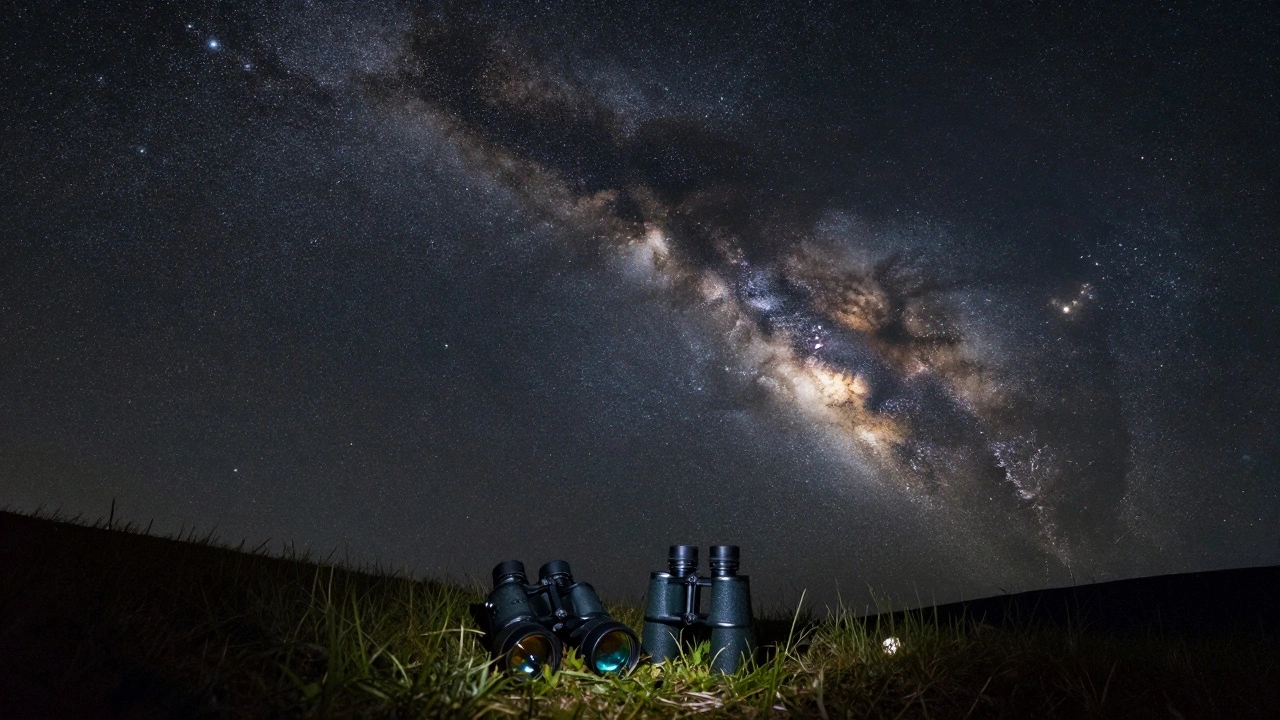
Most people think of space as empty black voids between stars. But the real magic happens in the shadows. Dark nebulae aren’t just empty patches-they’re thick clouds of gas and dust, so dense they block the light from stars behind them. These are the Barnard objects, named after Edward Emerson Barnard, who cataloged them in the early 1900s using long-exposure photographs. And yes, you can see them without a fancy camera. With just binoculars or a small telescope, you can spot these cosmic silhouettes right from your backyard.
What Makes a Dark Nebula Different?
Not all dark patches in the sky are the same. Some are just gaps between stars. Others are true dark nebulae-massive, cold clouds of molecular hydrogen, carbon dust, and ice grains. These clouds are so thick that even the light from distant stars can’t pass through. They’re not glowing like nebulae you see in photos; they’re absorbing light. That’s why they look like holes in the Milky Way.
Barnard’s catalog, published between 1919 and 1927, lists over 370 of these objects. Many are in the northern sky, especially along the plane of the Milky Way. The most famous? Barnard 68, a small, perfectly round cloud about 400 light-years away. It’s so opaque, it hides entire star fields behind it. Another is the Pipe Nebula-a sprawling, pipe-shaped dust lane near the constellation Ophiuchus. You don’t need a huge telescope to see it. Just a clear night and a steady view.
Why Binoculars Are Better Than You Think
Most beginners think you need a big telescope to see deep-sky objects. That’s not true for dark nebulae. In fact, binoculars often work better. Why? Because they show a wide field of view. A dark nebula isn’t a pinpoint-it’s a broad, irregular blotch of missing stars. A high-magnification telescope zooms in too tight. You lose context. Binoculars, especially 7x50 or 10x50, show you the shape of the shadow against the starry background.
Try this: Find the constellation Scorpius. Look just above its curved tail, near the star Antares. There’s a noticeable gap in the star field. That’s the Pipe Nebula’s “bowl.” Now, switch to a telescope. You’ll see the same shape, but surrounded by fewer stars. The binocular view gives you the full picture. You’re not just seeing a dark spot-you’re seeing how it connects to the larger structure of the galaxy.
Telescope Viewing: What to Look For
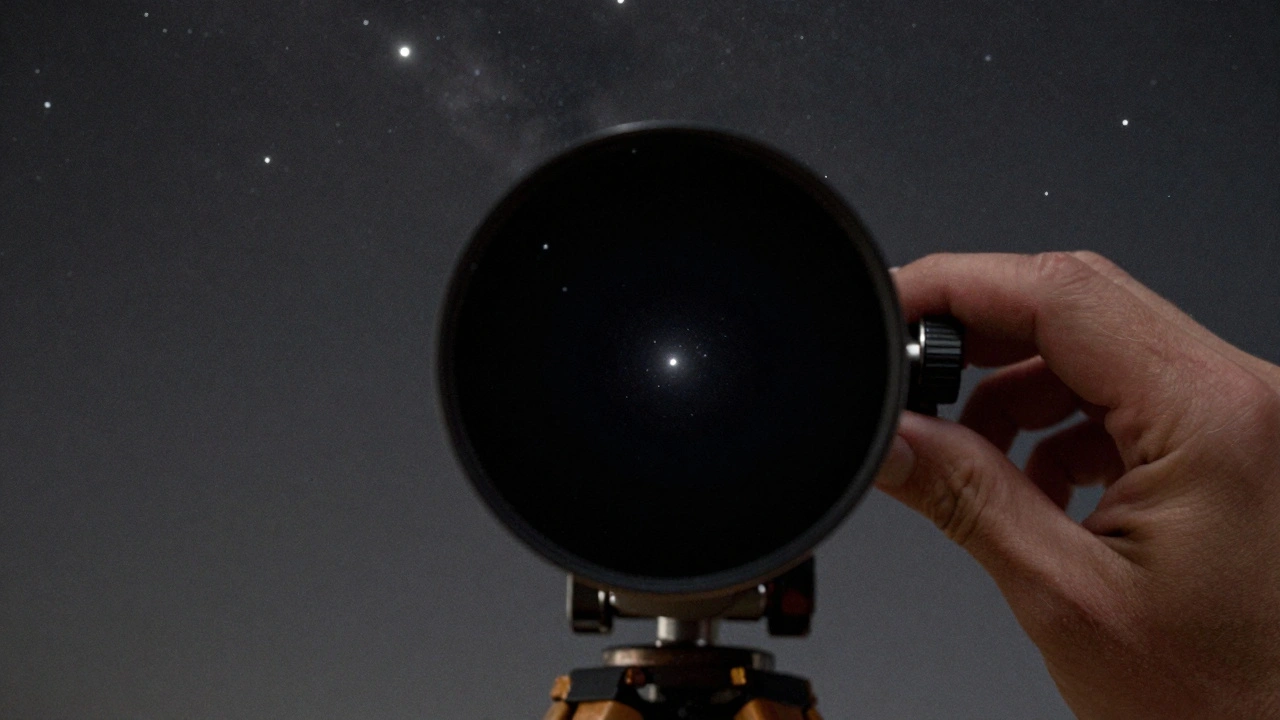
If you’re using a telescope, keep the magnification low-under 50x. Use a wide-field eyepiece, like a 32mm or 40mm. High power turns a dark nebula into a fuzzy smudge. You want to preserve the contrast between the black cloud and the dense star fields around it.
Start with Barnard 68. It’s in Ophiuchus, near the bright star Beta Ophiuchi. At low power, you’ll notice a small, circular area where the star density drops sharply. It looks like a hole punched in the sky. Don’t expect to see texture. There’s no glow. Just absence. That’s the point. The more you stare, the more you’ll see the edges-the way the dust cuts into the background stars like ink on paper.
Another great target is Barnard 33, the Horsehead Nebula. It’s famous in photos, but in a telescope? It’s subtle. You’ll need a dark sky and averted vision-look slightly to the side of the object. The shape of the horse’s head becomes visible as a slight indentation in the bright nebula behind it. It’s not dramatic. But once you see it, you’ll never unsee it.
Best Time and Location to Observe
Dark nebulae are best seen when the Milky Way is high in the sky. That means late spring and early summer for northern observers. In February 2026, the best time to look is between 9 PM and midnight. Head to a place with minimal light pollution. Even a suburban backyard works if you let your eyes adjust for 20 minutes.
Find a spot where you can see the Milky Way arching overhead. If you can’t see it, you’re too far from dark skies. Urban skies hide these objects. Rural areas, mountain tops, or national parks are ideal. In Oregon, places like Smith Rock State Park or the Oregon Dunes offer great views. No need to travel far-just drive away from streetlights.
How to Identify Barnard Objects Without a Chart
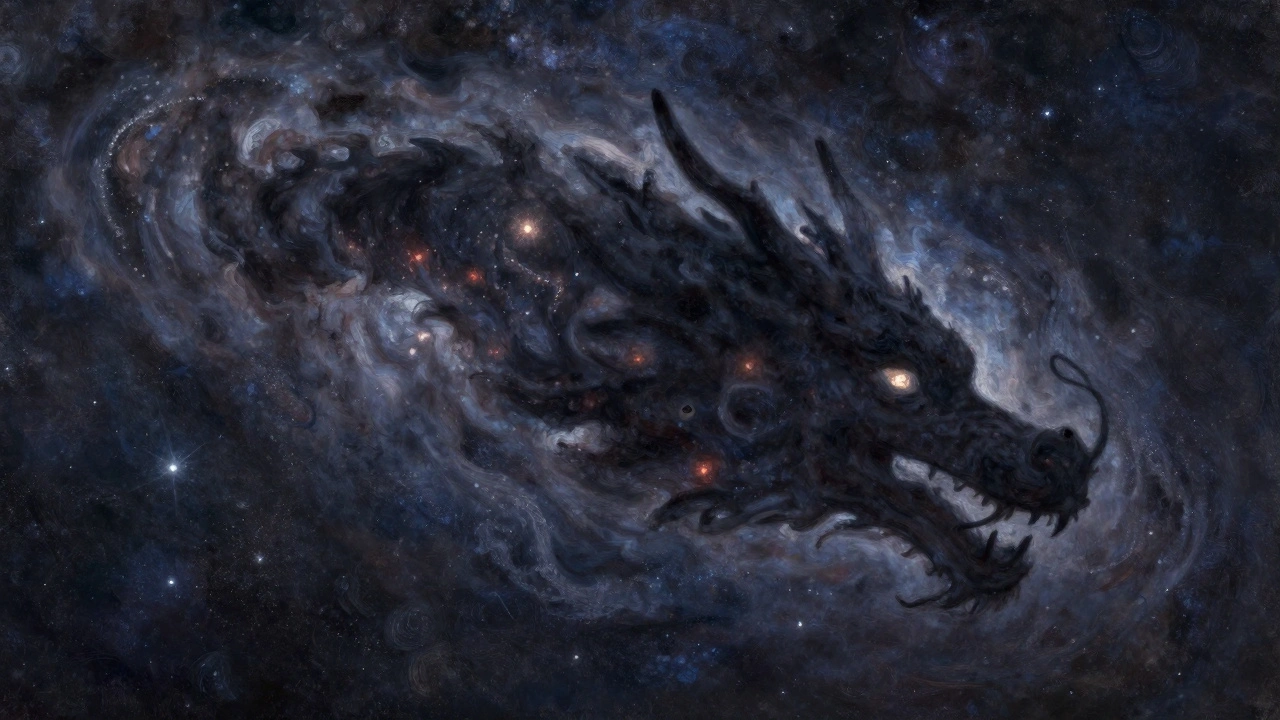
You don’t need to memorize numbers. Start by learning the shapes. Barnard 68 is a perfect circle. The Pipe Nebula looks like a bent pipe. Barnard 167, near the constellation Cepheus, resembles a dragon’s head. Use star-hopping. Pick a bright star you know, then move slowly toward a gap in the stars. If the gap has a defined edge and doesn’t look random, you’ve found a dark nebula.
Try this method: Pick a bright star. Scan 5 degrees to the left. If you see a patch where stars suddenly thin out, pause. Let your eyes relax. Look again. If the darkness feels “solid,” not like a gap, you’re likely looking at a true dark nebula. The difference is subtle, but real. A random gap looks messy. A dark nebula looks intentional, like a cutout.
What You Won’t See (And Why)
Don’t expect color. Dark nebulae don’t glow. They’re not red like emission nebulae. They’re not blue like reflection nebulae. They’re black. And they’re not always obvious. Sometimes they’re faint, blending into the background. That’s why patience matters. Your eyes need time to adapt. Sit still. Don’t rush. Look away, then look back. The shape often emerges slowly.
Also, don’t confuse them with empty regions of space. Some parts of the Milky Way have fewer stars. But those are just low-density areas. Dark nebulae have real mass. They’re the birthplaces of stars. A true dark nebula will have sharp, well-defined edges against a star-rich background. If the edge is fuzzy or irregular, it’s probably not one.
Tools That Help
You don’t need apps to find these, but they help. Use a free sky map like Stellarium or SkySafari. Set the date to February 2026 and turn off all labels. Just let the star field show. Zoom out until you see the Milky Way. Look for the dark patches. Mark them. Then go outside and find them the same way.
Also, try a light pollution map. If you’re in Portland, the best viewing is east of the city, near the Cascade foothills. The Willamette Valley has decent skies if you avoid the urban glow. Go out after midnight when the air cools and the sky steadies.
Why This Matters
These dark clouds aren’t just pretty shadows. They’re where stars are born. Gravity pulls the dust and gas together until a star ignites inside. The Barnard objects are stellar nurseries, hidden in plain sight. When you look at one, you’re seeing the raw material of future suns.
Observing them connects you to the history of astronomy. Barnard didn’t have Hubble. He used glass plates and long exposures. He mapped the invisible. And now, with nothing more than a pair of binoculars, you can do the same. You’re not just stargazing. You’re seeing the skeleton of our galaxy-the dark bones that hold the light together.
Can I see Barnard objects with my smartphone camera?
No. Smartphone cameras can’t capture the contrast needed to show dark nebulae. They overexpose bright stars and lose the subtle shadows. Even long-exposure apps won’t work well because they can’t distinguish between a true dust cloud and a noisy image. You need your eyes, not a sensor, to see the shape and structure of these objects.
Do I need a filter to see dark nebulae?
No. Filters like UHC or OIII are designed for glowing nebulae, not dark ones. In fact, they can make dark nebulae harder to see by reducing overall brightness. You want maximum light. A clear, unfiltered view gives you the best contrast between the dark cloud and the starry background.
Are Barnard objects only visible in the Northern Hemisphere?
Most are, but not all. The best-known ones-like the Pipe Nebula and Barnard 68-are in the northern sky. But there are southern counterparts, like the Coalsack Nebula near the Southern Cross. If you’re south of the equator, you can still see dark nebulae, just different ones. The Milky Way’s structure is the same everywhere; the shadows just shift with your location.
How long does it take to see a dark nebula clearly?
It varies. For some, it takes 5 minutes. For others, 20 or more. Your eyes need to fully adapt to darkness. Avoid any white light. Use red light if you need to check a chart. The first time you look, you might not see anything. Don’t give up. Come back the next night. Look again. The shape often appears slowly, like a hidden image in a Magic Eye puzzle.
Can I photograph dark nebulae with a beginner’s telescope?
Yes, but it’s hard. You need a tracking mount, long exposures (10+ minutes), and a sensitive camera. Most beginners get frustrated because the result looks noisy and faint. Start with visual observation first. Learn to recognize the shape with your eyes. Then, if you want to photograph it, upgrade your gear. The visual experience is more immediate and rewarding for newcomers.