7 May 2026
- 0 Comments
Have you ever looked up at the night sky and felt like you were staring into a blank void? You are not alone. The stars seem random until you realize they follow a strict, predictable schedule. Just as flowers bloom in spring and leaves fall in autumn, specific constellations are groups of stars that form recognizable patterns in the night sky dominate our view depending on the season. Knowing the best time to spot them turns a confusing mess of lights into a readable map.
The Earth orbits the Sun once every year. This movement changes which part of the galaxy faces away from the Sun at night. In winter, we look out toward the galactic center; in summer, we look outward into intergalactic space. Because of this orbital dance, different star groups rise and set at different times throughout the year. If you want to see Orion, you cannot just look up any old July evening. You need to know when it is actually above the horizon and dark enough to see.
How to Read the Celestial Clock
Before diving into specific seasons, you need a simple rule of thumb. The sky rotates roughly 15 degrees per hour due to Earth's rotation. More importantly for seasonal planning, the sky shifts about two hours earlier each month. If a constellation peaks at midnight in January, it will peak at 10 PM in February, 8 PM in March, and so on. This "two-hour shift" is your best friend for planning stargazing sessions.
To get the most out of this, pick a location with minimal light pollution. Living in Portland, Oregon, I often drive 30 minutes outside the city limits to escape the orange glow of streetlights. Use apps like Light Pollution Map to find dark spots near you. Also, remember that the Moon can wash out fainter stars. Plan your outings during new moon phases or when the Moon is low on the horizon.
| Season | Key Constellations | Best Month | Peak Time (Local) |
|---|---|---|---|
| Winter | Orion, Taurus, Gemini | January | Midnight - 2 AM |
| Spring | Leo, Virgo, Ursa Major | April | 9 PM - Midnight |
| Summer | Sagittarius, Scorpius, Cygnus | July | 10 PM - 1 AM |
| Autumn | Pegasus, Andromeda, Aquila | October | 11 PM - 2 AM |
Winter: The Grand Spectacle
Winter might be the coldest season, but it offers the brightest stars. Why? Because we are looking toward the crowded center of the Milky Way, where star density is highest. The crown jewel here is Orion is a prominent constellation visible in the winter sky, known for its three-star belt. It rises around sunset in late November and dominates the southern sky by January.
The best time to see Orion is between December and February. Aim for mid-January around 11 PM. Look south. You will see the three bright stars forming Orion's Belt. Follow the line of the belt upward to Betelgeuse (his shoulder) and downward to Sirius (the brightest star in the night sky, technically in Canis Major). To the left of Orion’s belt lies Aldebaran, the red eye of Taurus is the Bull constellation, featuring the Hyades star cluster.
If you miss Orion, do not worry. He sets in the west, but as he goes down, Gemini is the Twins constellation, marked by the twin stars Castor and Pollux rises in the east. For the full winter experience, head out shortly after sunset in December to catch both rising together. By February, Orion will be lower in the southwest, making it easier to photograph against silhouetted trees.
Spring: The Great Circle
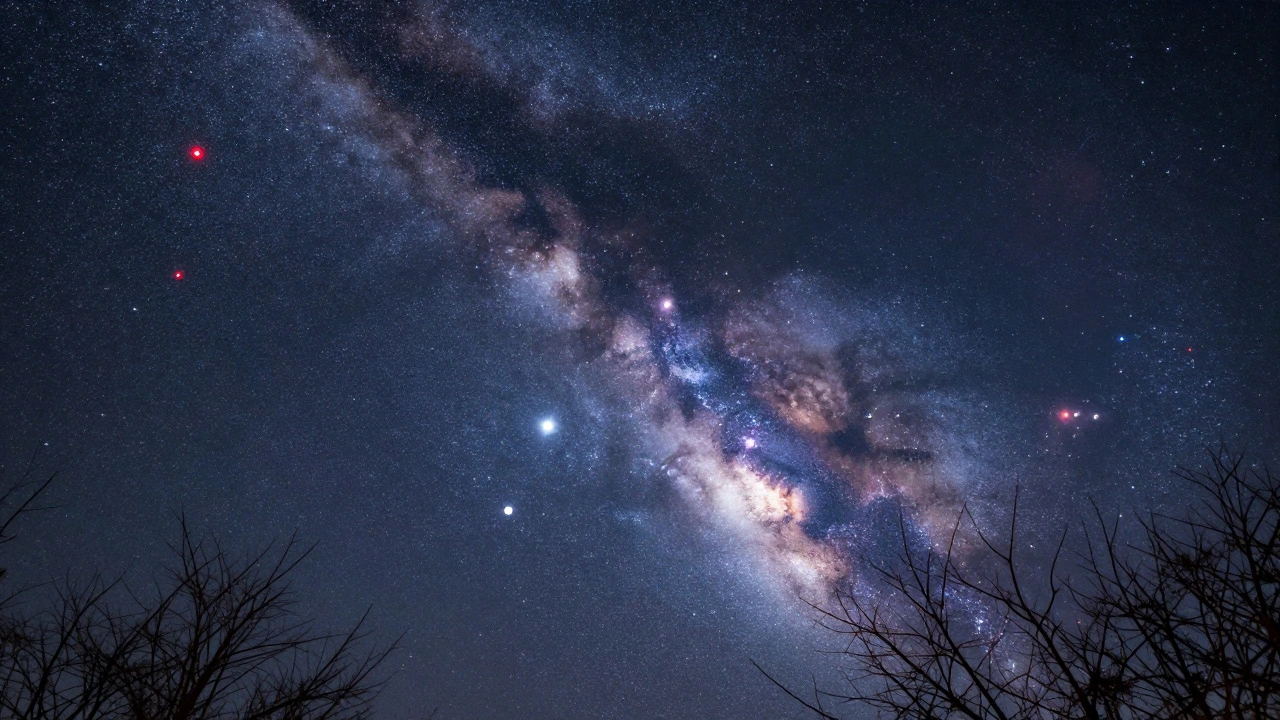
As the nights warm up, the sky clears out some of the bright winter giants, replaced by fainter but equally fascinating shapes. Spring is defined by the "Great Circle of Stars," a loop that includes Leo, Cancer, Hydra, Libra, Scorpius, Ophiuchus, Sagittarius, Capricornus, Aquarius, Pisces, and Cetus. But let's focus on the easiest targets.
Leo is the Lion constellation, easily identified by its backward question-mark shape called the Sickle becomes visible in early spring. The best time to spot Leo is in April, around 9 PM. Look southeast for the Sickle pattern-the curved hook representing the lion's head and mane. The bright star Regulus sits at the bottom of the hook. From there, trace the body of the lion using three fainter stars forming a triangle.
Above Leo, you will find Ursa Major is the Great Bear, containing the famous Big Dipper asterism. While the Big Dipper is visible year-round in northern latitudes, it hangs almost directly overhead in May and June, making it an easy reference point. Use the two pointer stars at the end of the Dipper's bowl to find Polaris, the North Star. This technique works regardless of the season, but the angle changes.
For deep-sky enthusiasts, spring is prime time for galaxies. The Whirlpool Galaxy in Canes Venatici and the Pinwheel Galaxy in Coma Berenices are accessible now. Grab binoculars or a small telescope on a clear April night. These objects are faint, so wait until the Moon is below the horizon.
Summer: The Galactic Core
Summer skies are darker in terms of star brightness, but richer in nebulae and clusters because we are facing the densest part of our galaxy. However, humidity and heat haze can make viewing difficult. The key is patience and finding high-altitude locations if possible.
The Summer Triangle is your anchor here. It consists of three bright stars from different constellations: Vega (Lyra is the Harp constellation, home to the bright star Vega), Deneb (Cygnus is the Swan constellation, shaped like a cross known as the Northern Cross), and Altair (Aquila is the Eagle constellation, featuring the fast-moving star Altair). This large triangle dominates the summer sky from July through September.
The best time to see these is in late July or August, around 10 PM. Look straight up. The Summer Triangle is nearly overhead. Below it, along the Milky Way, lie the more challenging targets: Sagittarius is the Archer constellation, pointing toward the center of the Milky Way and Scorpius is the Scorpion constellation, with the red supergiant star Antares. These are low on the southern horizon. You need a clear view of the southern skyline without buildings or hills blocking your path. Antares, the heart of Scorpius, glows a distinct reddish-orange, competing with Sirius for attention in the opposite part of the sky.
If you have a telescope, aim for the Lagoon Nebula or Trifid Nebula in Sagittarius. They look like fuzzy patches even in binoculars. This is where new stars are being born, right in the core of our galaxy.
Autumn: The Faint Giants
Autumn is often considered the hardest season for stargazers. Why? Because we are looking away from the galactic center, into sparse intergalactic space. There are fewer bright stars. Instead, we see large, faint constellations that span huge areas of the sky.
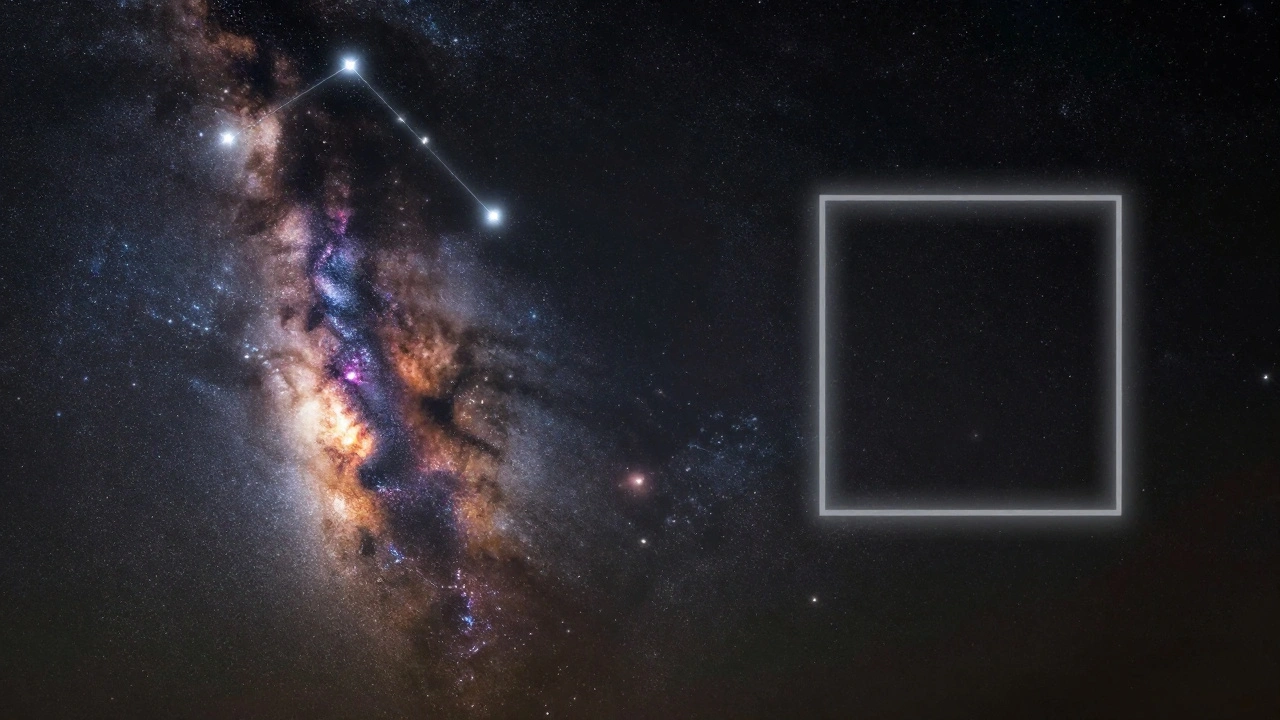
The standout is Pegasus is the Winged Horse, defined by the Great Square of Pegasus. It looks like a giant square tilted on its side. The best time to see Pegasus is in October and November, around midnight. It rises in the east and climbs high by the middle of the night. Inside the square, you can sometimes spot M31, the Andromeda Galaxy, if you look just north of Pegasus into the constellation of Andromeda is the Chain constellation, hosting the nearest major spiral galaxy to the Milky Way.
M31 is the farthest object visible to the naked eye under dark skies. It looks like a faint smudge of light. Use averted vision-look slightly to the side of the target-to help your eyes detect the faint glow. This is a rewarding challenge for beginners. Another autumn gem is Cassiopeia is the W-shaped constellation, circling the North Pole star. It is always visible in the north, but in autumn, it sits high and clear, offering a perfect backdrop for observing satellite trails or meteor showers.
Don't forget the Perseid Meteor Shower in August, which bleeds into early September. While technically late summer, the peak often falls in early September. Lay back on a blanket, face away from city lights, and wait. The meteors radiate from Perseus, but they can appear anywhere in the sky. The best viewing is after midnight when the radiant is higher.
Pro Tips for Year-Round Stargazing
Consistency beats equipment. You do not need a $1,000 telescope to enjoy the stars. Start with your naked eyes, then upgrade to binoculars (7x50 or 10x50 are ideal). They provide wide fields of view and gather more light than your eyes alone.
Let your eyes adjust. It takes 20 to 30 minutes for your pupils to fully dilate in the dark. Avoid looking at your phone screen. If you must check a star chart, use a red-light filter app. Red light preserves your night vision better than white or blue light.
Dress warmly. Even in summer, nights can get chilly, especially if you are sitting still for an hour. Bring layers, a thermos of hot coffee, and a comfortable chair. Comfort allows you to stay longer, and staying longer leads to better sightings.
Finally, learn one constellation at a time. Do not try to memorize the whole sky in one night. Pick a season, pick one pattern, and hunt for it. Once you find it, use it as a stepping stone to the next. Orion points to Sirius and Aldebaran. The Big Dipper points to Polaris and Arcturus. The sky is connected; you just need to start somewhere.
Why can't I see all constellations at the same time?
The Earth orbits the Sun, changing our nighttime view of the universe. At night, we face away from the Sun. As Earth moves around its orbit, the direction we face at night changes. This means different parts of the sky are visible at different times of the year. Additionally, constellations rise and set daily due to Earth's rotation, so timing matters within each night too.
What is the best time of night to stargaze?
Generally, the hours between 10 PM and 3 AM are best. By then, the sky is fully dark, and many constellations have risen high enough to be seen clearly above the horizon. However, this varies by season. In winter, some stars peak earlier; in summer, others peak later. Aim for the middle of the night for the highest altitude views.
Can I see the Milky Way in my backyard?
It depends on your light pollution. If you live in a city, the Milky Way may be washed out. If you can drive 30-60 minutes to a rural area with dark skies, you will likely see it as a faint band of light stretching across the sky. It is most prominent in summer months when the galactic center is visible.
Do I need a telescope to see constellations?
No. Constellations are patterns formed by stars visible to the naked eye. Binoculars can help you see fainter stars that complete the patterns, but they are not required. Telescopes are useful for seeing details within constellations, like nebulae or double stars, but not for identifying the constellations themselves.
Why does the Big Dipper change position throughout the night?
The Big Dipper is part of Ursa Major, which is a circumpolar constellation in the Northern Hemisphere. This means it never sets below the horizon. Instead, it appears to rotate around Polaris, the North Star. As Earth rotates, the Dipper moves from upright to sideways to upside down over the course of 24 hours.