3 May 2026
- 0 Comments
There is nothing more frustrating than spotting a faint galaxy through your Dobsonian telescope is a type of reflecting telescope that uses a simple alt-azimuth mount for easy tracking and high light-gathering power at low cost, only to have the view jitter or stick as you try to center it. You know the optics are good because you can see stars clearly, but the mechanical experience feels cheap. This is especially common with mass-produced Dobsonians from brands like Celestron or Orion. The good news? You don’t need to buy a new scope. With some targeted upgrades to the bearings, focuser, and altitude friction, you can transform a budget instrument into a precision tool.
Why Your Dobsonian Feels Stiff or Slippery
The core design of a Dobsonian relies on two things: smooth movement and stability. Most entry-level models use plastic-on-plastic or low-density polyethylene (LDPE) surfaces for their trunnion bearings. Over time, these surfaces wear down, collect dust, or simply lack the lubricity needed for smooth motion. If your telescope feels "sticky" when moving up and down, or if it drifts uncontrollably, the issue usually lies in the bearing interface or the friction control mechanism.
Before buying parts, diagnose the problem. Does the telescope move smoothly in azimuth (left/right) but stick in altitude (up/down)? If so, your trunnion bearings are likely the culprit. If the entire tube feels loose or wobbly, your altitude friction pads might be worn out or improperly adjusted. Understanding this distinction saves money and ensures you fix the right component.
Bearing Upgrades: From Plastic to Teflon
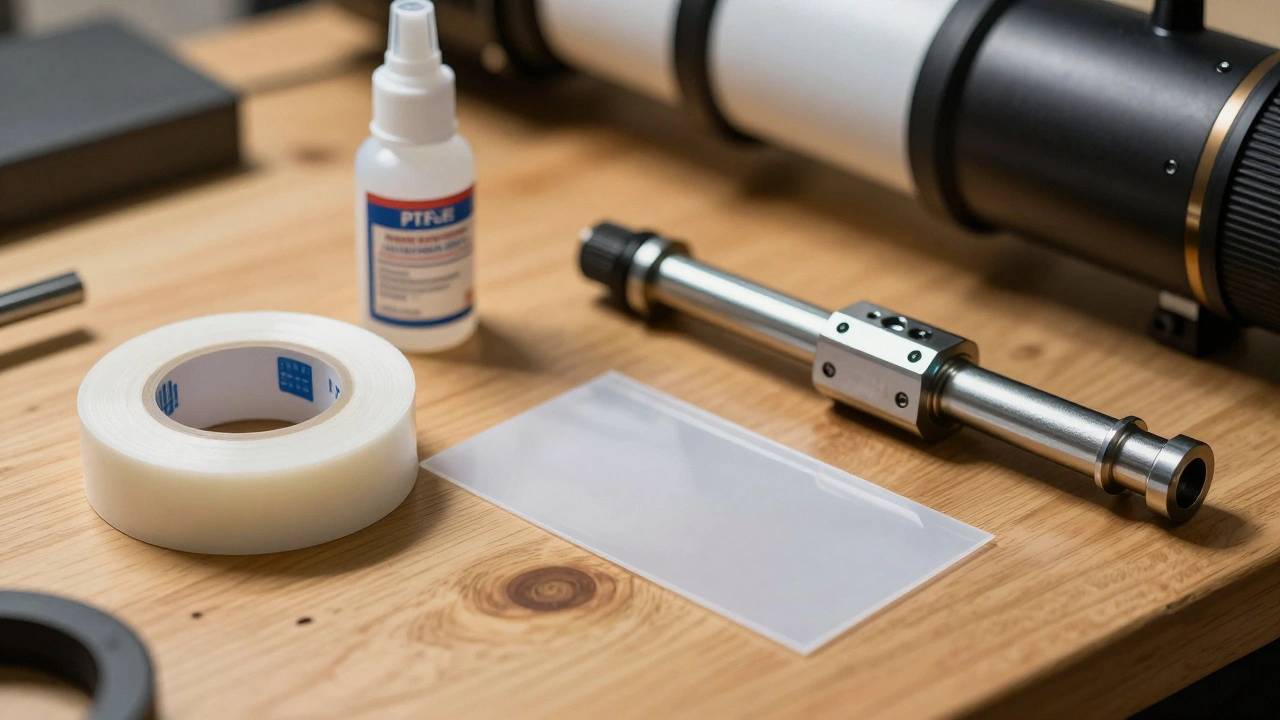
The most impactful upgrade for any Dobsonian is replacing the standard trunnion bearings. Factory bearings often use raw plastic or cardboard-like materials that generate friction and heat. The gold standard for DIY upgrades is Teflon tape is a non-stick polymer film used to reduce friction between moving parts in telescopes. Specifically, look for PTFE (Polytetrafluoroethylene) tape with a thickness of 0.5mm to 1mm. Thicker tape provides better cushioning against imperfections in the wood base.
- Clean the surfaces: Remove all old adhesive residue from both the trunnion arms and the base board. Use rubbing alcohol or acetone. The surface must be perfectly clean for the new tape to adhere properly.
- Apply the tape: Cut strips of Teflon tape slightly wider than the trunnion contact area. Apply them to the trunnions, not the base. This makes future replacements easier. Ensure there are no air bubbles or wrinkles.
- Add lubrication: While Teflon is slippery, adding a thin layer of silicone spray or specialized telescope lubricant helps break in the new surfaces. Avoid oil-based lubricants, which attract dust and grit.
For those willing to invest more, UHMWPE sheets are Ultra-High Molecular Weight Polyethylene sheets that offer superior durability and low friction compared to standard plastics provide an even smoother glide. These sheets are thicker and more durable than tape, resisting wear over years of use. They are particularly beneficial for larger Dobsonians where weight puts more stress on the bearings.
| Material | Friction Level | Durability | Cost | Best For |
|---|---|---|---|---|
| Factory LDPE | High | Low | $0 (Included) | New users, light scopes |
| Teflon Tape (PTFE) | Very Low | Medium | Low ($10-$20) | Most DIY upgrades |
| UHMWPE Sheets | Extremely Low | High | Medium ($30-$60) | Larger scopes, long-term use |
| Felt + Wax | Low | Medium | Low ($5-$15) | Quiet operation, vintage scopes |

Focuser Upgrades: Stabilizing the View
A shaky image ruins the experience, regardless of how smooth your bearings are. Entry-level Dobsonians typically come with rack-and-pinion focusers made of lightweight plastic or thin metal. These focusers flex under the weight of heavy eyepieces, causing the image to shift as you adjust focus. Upgrading to a crayford focuser is a linear sliding focuser design that offers greater rigidity and smoother focusing action than traditional rack-and-pinion systems is one of the best investments you can make.
Crayford focusers work by sliding the entire optical tube assembly forward and backward, eliminating the gear play found in rack-and-pinion designs. They are inherently stiffer and provide a much smoother focusing experience. When selecting a Crayford, ensure it matches the diameter of your telescope’s primary mirror cell. Common sizes include 6-inch, 8-inch, and 10-inch mounts.
If a full Crayford conversion is too expensive or complex, consider upgrading just the focuser knob. Many factory knobs are small and hard to grip. Replacing them with a larger, ergonomic knob allows for finer adjustments. Additionally, check the tension screw on your current focuser. Loosening it slightly can sometimes eliminate backlash without needing a full replacement.
Altitude Friction Improvements
Even with perfect bearings, your telescope needs adequate friction to hold its position. The altitude friction system consists of pads that press against the trunnions. On many budget Dobsonians, these pads are made of soft rubber or foam that compresses unevenly, leading to inconsistent drag.
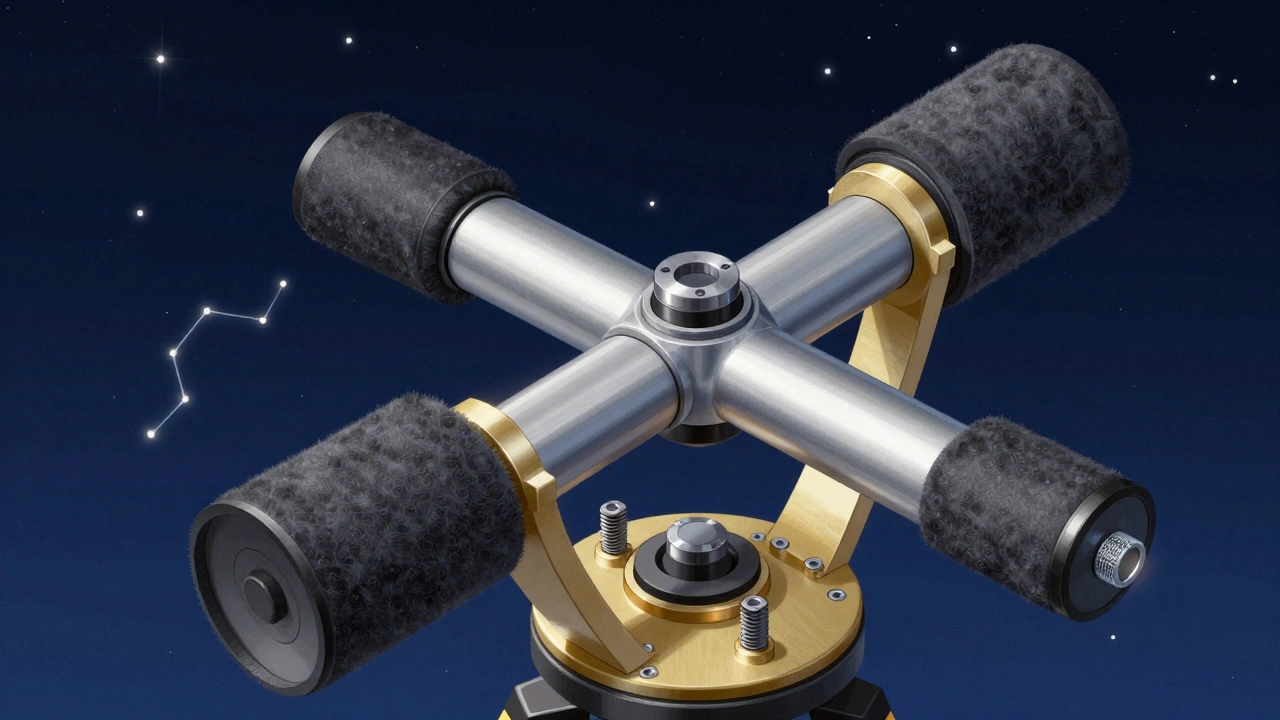
To improve this, replace the stock friction pads with silicone-coated felt is a material combination that provides consistent, adjustable friction without sticking or grabbing. Silicone coating reduces the tendency of the felt to grab the trunnion, allowing for micro-adjustments. You can buy pre-made pads or cut your own from sheet material.
Another critical aspect is the adjustment mechanism. Many Dobsonians use simple wing nuts or bolts to tighten the friction pads. These can loosen over time or require significant force to adjust. Upgrading to a cam-lever system or using lock washers with the existing bolts can help maintain consistent pressure. Test the friction by pointing the telescope at a star and letting go. It should stay in place for at least 10-15 seconds before drifting. If it drops immediately, increase the friction. If it sticks, reduce it.
Additional Tweaks for Precision
Beyond bearings, focusers, and friction, several other modifications can enhance your Dobsonian’s performance. One common issue is collimation-the alignment of the primary and secondary mirrors. Cheap Dobsonians often lose collimation after transport. Installing starlock collimation screws are specialized locking mechanisms that prevent mirror tilt screws from loosening during transport or use can save you hours of frustration. These screws clamp down on the standard set screws, holding the mirror in place securely.
Another useful upgrade is a better finder scope. The red dot finders included with many kits are convenient but lack precision. A small optical finder scope, such as a 6x30 or 9x50, allows you to center objects more accurately. Mount it securely using a dovetail bracket rather than the included plastic rings, which can bend and misalign the finder.
Finally, consider adding a slow-motion control cable to your azimuth axis. While Dobsonians are designed for hand-guiding, a cable drive helps when observing deep-sky objects that require precise positioning. Attach it to the azimuth pivot point for smooth, controlled movement.
When to Stop Upgrading
It’s easy to get carried away with modifications. However, there is a point of diminishing returns. If your telescope is small (under 6 inches), the benefits of expensive upgrades may not justify the cost. For larger scopes (8 inches and above), every improvement in smoothness and stability translates directly to better viewing experiences. Always prioritize the basics: clean optics, proper collimation, and smooth bearings. Once those are dialed in, you can explore more advanced tweaks like custom-made bases or electronic aids.
Can I upgrade my Dobsonian bearings myself?
Yes, upgrading bearings is one of the most common DIY projects. You’ll need Teflon tape or UHMWPE sheets, adhesive, and cleaning supplies. The process involves removing the old bearings, cleaning the surfaces, and applying the new material. It’s straightforward and requires no special tools.
Is a Crayford focuser worth the investment?
If you frequently use heavy eyepieces or engage in astrophotography, a Crayford focuser is highly recommended. It eliminates flexure and provides smoother focusing. For casual visual observing with lightweight eyepieces, a well-maintained rack-and-pinion focuser may suffice.
How do I adjust altitude friction correctly?
Adjust the friction so the telescope holds its position briefly but moves easily when nudged. Point at a star, release the tube, and observe how long it stays put. Aim for 10-15 seconds of hold time. Adjust the tension screws incrementally until you achieve this balance.
What is the best lubricant for Dobsonian bearings?
Silicone spray is ideal for Teflon or UHMWPE bearings. It provides a dry, non-attracting lubrication layer. Avoid oil-based lubricants like WD-40, as they attract dust and can degrade plastic components over time.
Do I need to upgrade my finder scope?
While not essential, a quality optical finder scope significantly improves target acquisition accuracy. Red dot finders are convenient for quick locating but lack the precision needed for pinpointing specific celestial objects. An optical finder enhances the overall usability of your telescope.