6 Jan 2026
- 0 Comments
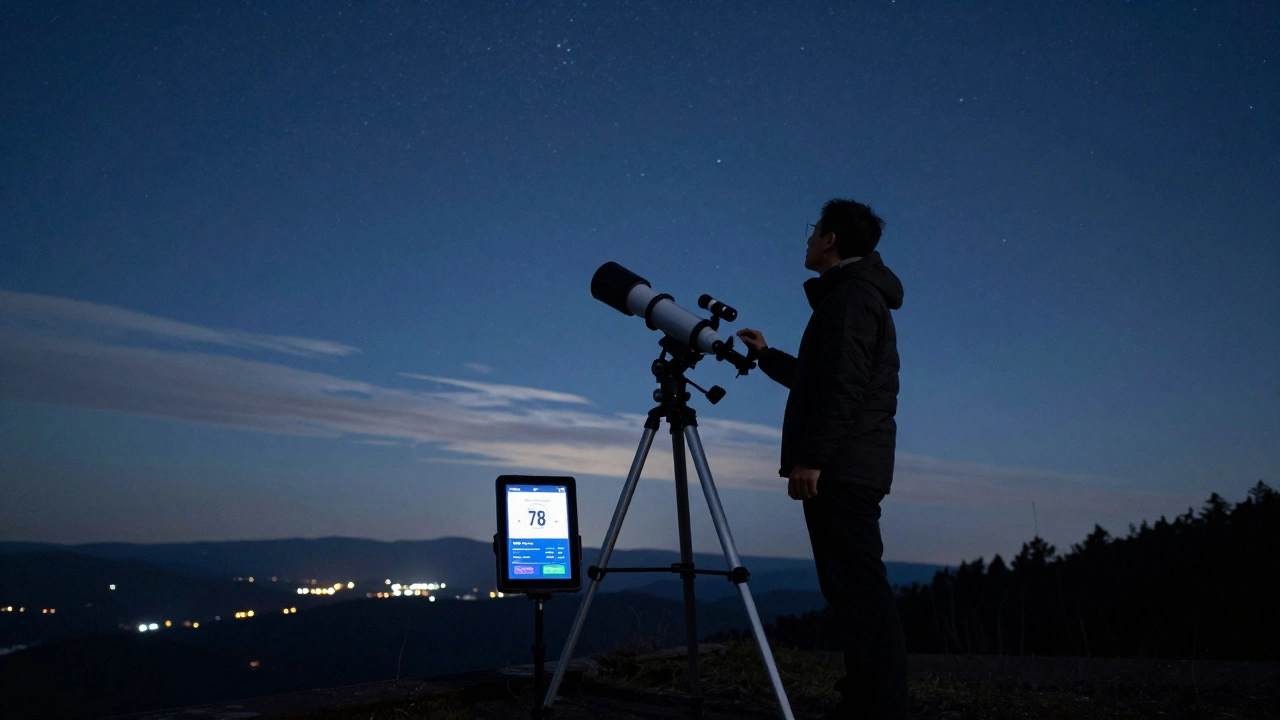
Nothing kills a night of stargazing faster than showing up to a cloudy sky. You spent weeks planning, packed your telescope, drove out to your favorite dark spot, and then-nothing. Just gray clouds and a cold wind. If this sounds familiar, you’re not alone. Thousands of amateur astronomers face this every month. The good news? You don’t have to guess anymore. With the right weather data, you can predict clear skies with surprising accuracy-and turn those missed nights into successful ones.
Why Weather Matters More Than You Think
It’s not just about clouds. Clear skies mean more than just no rain or overcast. For serious observing, you need low humidity, stable air (good seeing), minimal light pollution, and no high-altitude haze. A 70% chance of clear skies on your phone’s weather app doesn’t cut it. That number usually just means no rain. But for astronomy, even thin cirrus clouds or high humidity can blur Jupiter’s bands or wash out faint nebulae.
Think about it: if the air is humid, water vapor scatters starlight. If there’s wind, your telescope shakes. If the temperature drops too fast, your optics fog up. All of these things show up in weather data-you just need to know where to look.
What Data Actually Helps
Forget the basic forecast. You need these five data points:
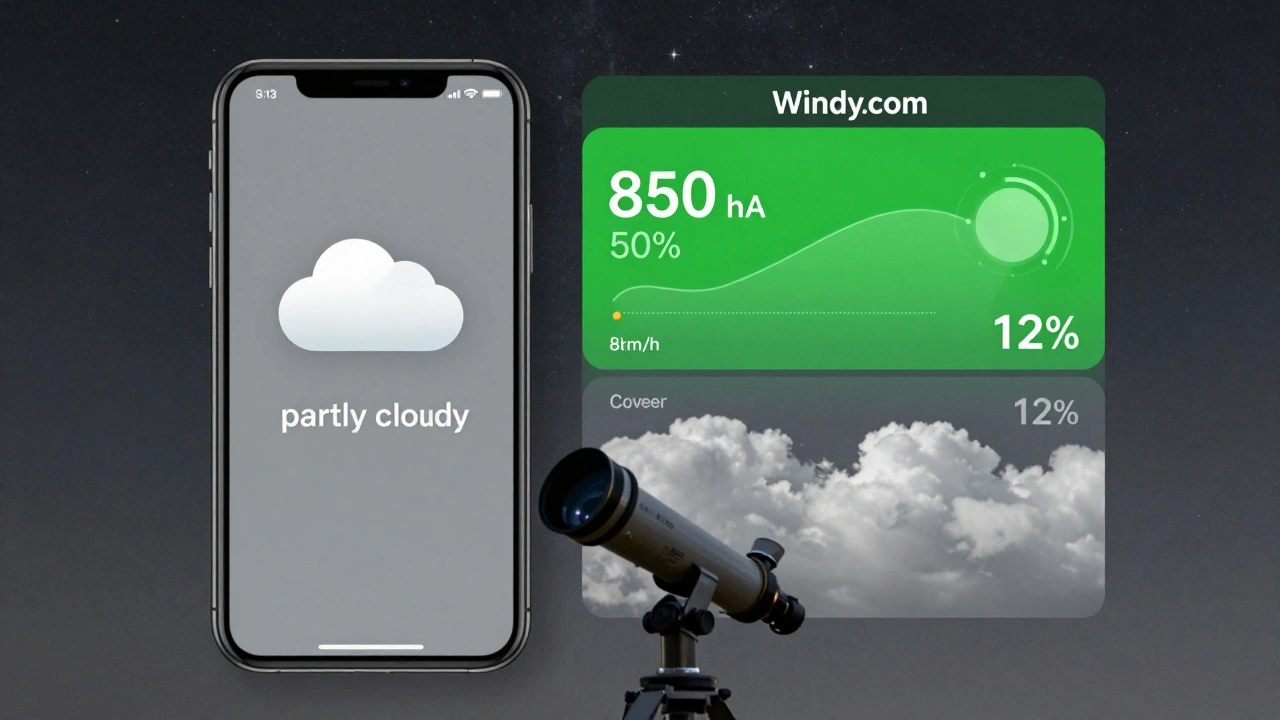
- Cloud cover percentage-not just "partly cloudy." Look for values under 20% for good observing. Anything above 40% usually ruins deep-sky views.
- Humidity at 850 hPa-this is the pressure level around 1,500 meters up. If it’s above 70%, expect haze. Below 50%? Ideal.
- Seeing index-some weather services (like Clear Outside or Astronomy Weather) calculate this. It measures atmospheric stability. A score above 5 on a 10-point scale means steady, sharp views.
- Dew point-if it’s within 5°C of the air temperature, your lenses will fog. Always check this before heading out.
- Wind speed at 10 meters-anything over 15 km/h makes tracking hard. Under 10 km/h is best.
These aren’t guesses. They’re measurable values used by professional observatories. You don’t need a PhD to use them. Just learn where to find them.
Where to Find the Right Data
Most weather apps are useless for astronomy. Here’s what works:
- Clear Outside-a free app built by astronomers. It combines cloud cover, humidity, seeing, transparency, and dew point into a simple score. It’s accurate to within 1-2 hours for most locations.
- Windy.com-type in your observing spot, then toggle to the 850 hPa humidity layer and wind speed at 10m. Zoom in on the next 24 hours. You’ll see exactly when conditions improve.
- NOAA’s HRRR model-the U.S. government’s high-resolution weather forecast. It updates hourly and gives you cloud cover in 3km grids. Use it with a map overlay to see if your dark site will be clear.
- Weather Underground (Wunderground)-filter by local weather stations. A station near your observing spot gives real-time dew point and humidity readings. If it’s dropping fast, you might get a clear window.
Pro tip: Don’t rely on one source. Cross-check at least two. A 90% chance of clear skies on Clear Outside but 60% cloud cover on Windy? Wait. It’s not worth the risk.
How to Use the Data Like a Pro
Here’s how I plan my nights in Portland:
- Check Clear Outside every evening at 6 PM. If the score is below 60%, I don’t bother.
- If it’s 70% or higher, I open Windy and look at the 850 hPa humidity layer. If it’s green (under 50%), I’m in.
- I check the local Wunderground station near Mount Tabor. If the dew point is 5°C or more below the air temp, I know my optics won’t fog.
- I set a phone alert for 11 PM. If the forecast hasn’t changed, I grab my gear.
Last month, I saw Saturn’s rings sharper than I ever have. Why? Because I waited. The forecast said 75% clear at midnight. I checked Windy at 10:30 PM. The cloud cover had dropped to 12%. I was outside by 11:15. That’s the difference between guessing and knowing.
Pitfalls to Avoid
Even with good data, people mess up. Here’s what not to do:
- Don’t trust the overnight forecast-weather models get fuzzy after 12 hours. Use data from the last 3 hours, not the 24-hour prediction.
- Don’t assume your backyard is clear-microclimates matter. If you’re in a valley, cold air sinks and fog forms. If you’re on a hill, wind sweeps it away. Use data from a nearby high point.
- Don’t ignore the moon-even a thin crescent can ruin faint deep-sky objects. Use a lunar phase app to plan around bright moon nights.
- Don’t go out if the sky is clear but the air is still-calm air often means temperature inversion. That traps haze and pollution. Look for a light breeze (5-10 km/h) to mix the air.
Real Example: A Clear Night in Portland
Last December, I wanted to catch the Quadrantid meteor shower. The forecast said "partly cloudy." I checked Clear Outside-it gave me a 78% score. Windy showed 18% cloud cover over the Columbia River Gorge (my observing spot). The 850 hPa humidity was 47%. Dew point was 3°C, air temp was 9°C. Perfect.
I left at 1:30 AM. No clouds. No fog. No wind. I saw 22 meteors in 45 minutes. The same night, a friend drove to the same location but relied on his phone’s weather app. He saw zero. Why? He thought "partly cloudy" meant "good enough." It didn’t.
What to Do When It’s Not Perfect
Not every night will be ideal. But you can still observe.
- If humidity is high but clouds are low-go for planets. Jupiter and Saturn cut through haze better than faint galaxies.
- If the seeing is poor-stick to the moon or double stars. They’re less affected by air turbulence.
- If it’s windy-use a heavier tripod. Add weight. Lock down your gear. Even 12 km/h wind is manageable with the right setup.
Flexibility beats perfection. A slightly hazy night with Jupiter is better than no night at all.
Final Tip: Build Your Own Pattern
Every location has a weather rhythm. In Portland, clear skies often come after a cold front passes-usually between 2 AM and 5 AM. In Arizona, it’s the opposite. Learn your area.
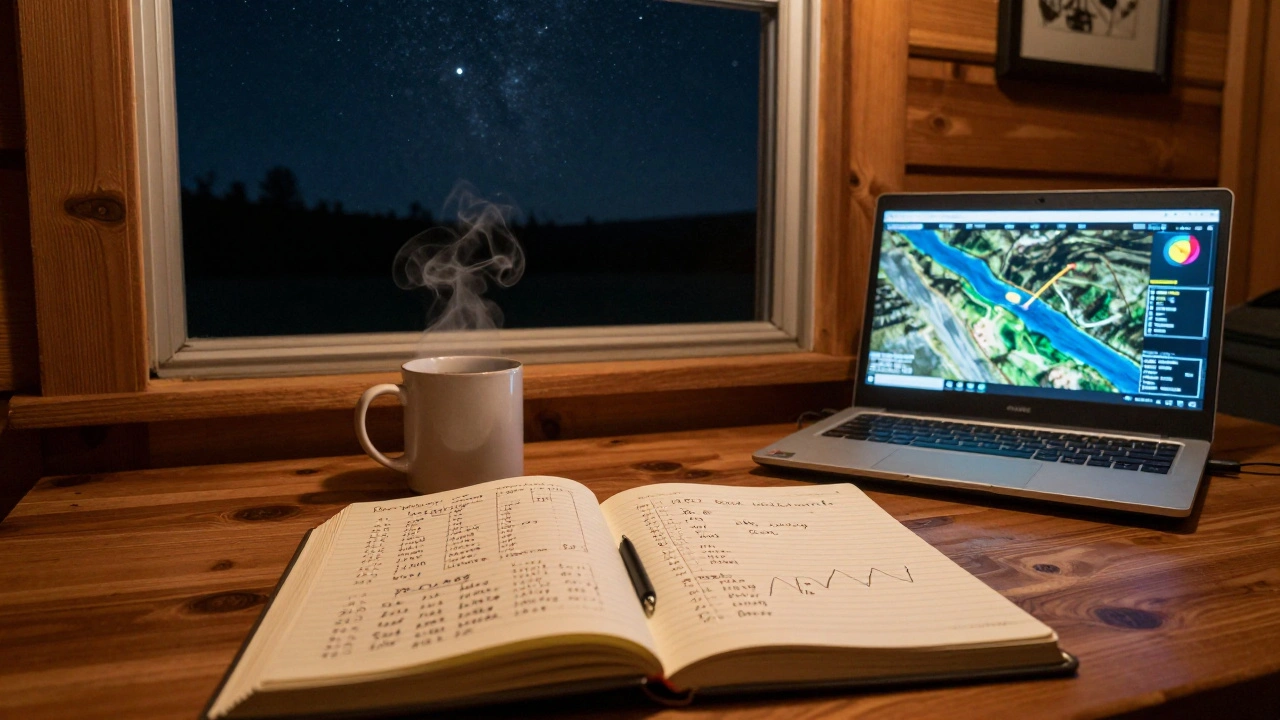
Keep a log. Note the date, the forecast, the actual conditions, and what you saw. After 5-6 sessions, you’ll start seeing patterns. You’ll know that if the dew point drops below 4°C after midnight, you’ve got a 90% chance of clear skies. That’s not luck. That’s science.
Clear skies aren’t a gift. They’re a forecast. And with the right data, you’re not waiting for luck-you’re calling the shots.
Can I use my phone’s weather app to predict clear skies for stargazing?
Most phone weather apps only show rain chance and general cloud cover. They don’t measure humidity at 1,500 meters, dew point trends, or atmospheric stability-key factors for astronomy. You might get lucky once, but you’ll miss more nights than you’ll catch. Use specialized tools like Clear Outside or Windy instead.
What’s the best time of night to check weather before observing?
Check at least twice: once at 6 PM to get the big picture, and again right before you leave (1-2 hours before observing). Weather models update hourly, and conditions can shift fast. The 11 PM to midnight window is when most forecasts stabilize for the overnight period.
Does wind really affect my telescope viewing?
Yes. Wind causes vibrations that blur high-magnification views-especially on planets or the moon. Even 12 km/h wind can make fine detail impossible. If the wind is above 15 km/h, it’s usually not worth setting up unless you’re observing bright objects like the sun (with proper filters) or the full moon.
How do I know if the air is stable enough for detailed viewing?
Look for the "seeing" index on Clear Outside or Windy. A score of 5 or higher means steady air. You can also test it by watching a bright star through your eyepiece. If it twinkles wildly, the air is turbulent. If it’s a steady point of light, conditions are good.
Is there a free way to get high-resolution weather data?
Yes. NOAA’s HRRR model is free and updated every hour. Use it through Windy.com or the National Weather Service’s website. It gives you cloud cover, humidity, and wind speed at 3km resolution-enough to see if your exact observing spot will be clear. No subscription needed.