2 Mar 2026
- 0 Comments
If you own a telescope, you know it’s not just a piece of gear-it’s an investment. A good telescope can cost hundreds or even thousands of dollars. But leaving it in a closet, garage, or attic during the off-season can ruin it faster than you think. Moisture, dust, temperature swings, and even bugs can turn your prized instrument into a dusty, foggy, or worse-broken-hunk of metal and glass. The good news? Preventing damage during long-term storage is simple if you know what to do. No fancy tools. No complicated steps. Just smart habits.
Why Most Telescopes Get Damaged in Storage
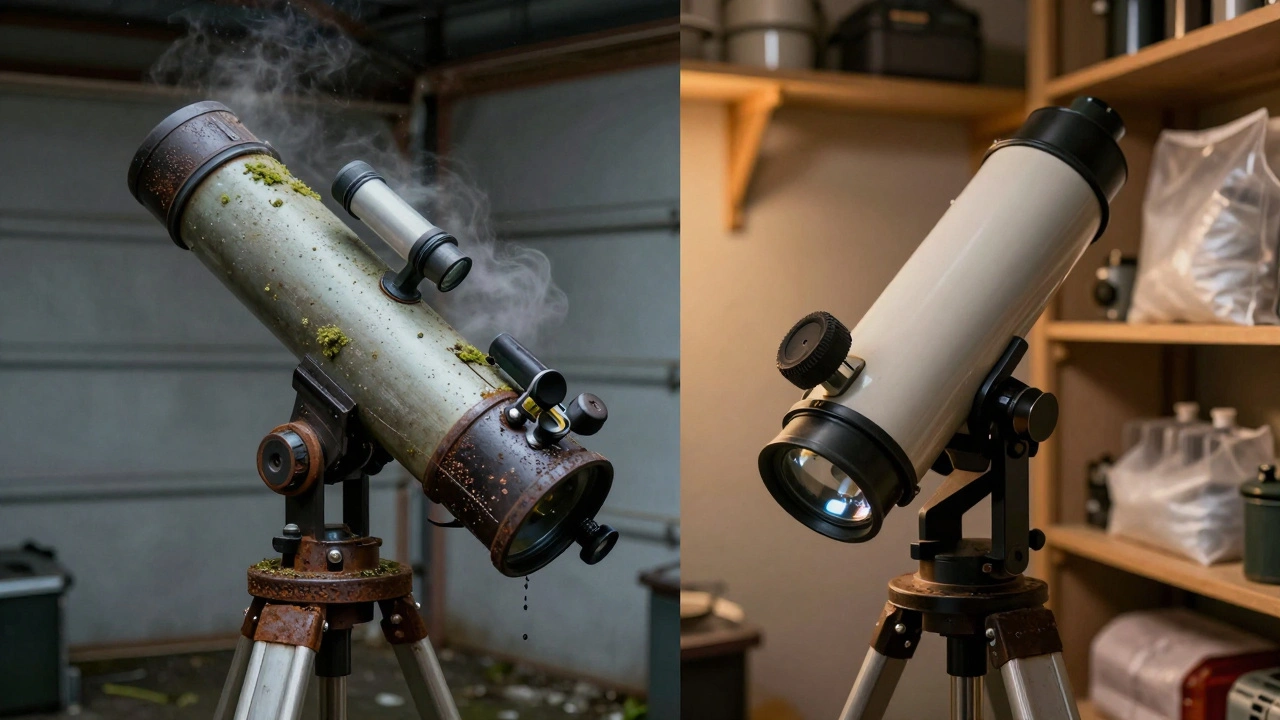
People think storing a telescope is just about putting it in a box. It’s not. The real killers are humidity, condensation, and trapped air. In Portland, where I live, winter humidity often hits 85%. That moisture doesn’t vanish when you pack up your scope. It lingers inside the optics, on the mirrors, and in the focuser mechanism. Over time, that leads to mold, fungus, or corrosion. I’ve seen scopes with fogged eyepieces that looked like they’d been through a steam room. Others had metal parts rusted shut because someone stored them in a damp basement.
Even if you live somewhere dry, temperature changes are dangerous. Moving a telescope from a cold garage to a warm living room? Condensation forms on the lenses. That’s not a one-time thing-it happens every time you move it. And repeated condensation? That’s how fungus grows. Once fungus takes root on a mirror or lens, it’s nearly impossible to remove without professional cleaning-and even then, it might leave permanent damage.
Step-by-Step Storage Process
Here’s what actually works. Do this before you pack up your telescope for the season.
- Remove the eyepieces and accessories. Store them separately in their own padded case. Eyepieces are the most sensitive part. Leaving them attached means pressure on the barrel and potential misalignment.
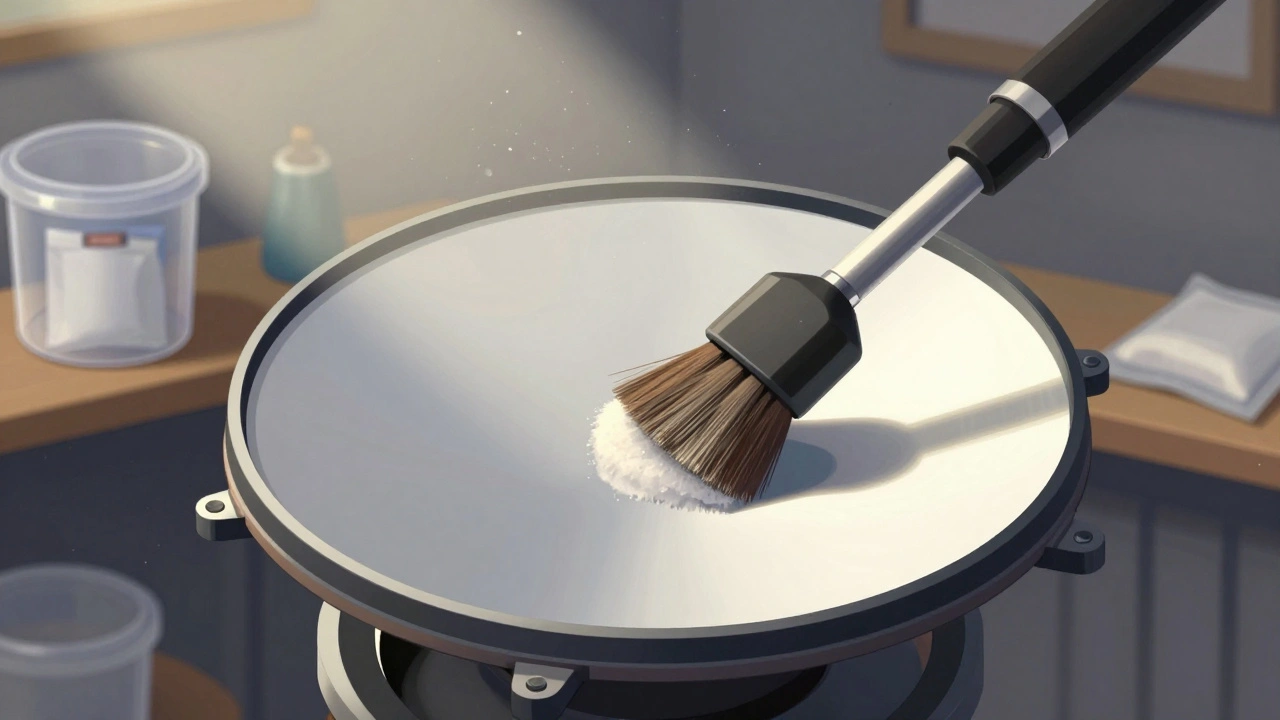
- Clean the optics gently. Use a soft camel-hair brush to remove dust from the mirror and lens. Never use a cloth or tissue. Even microfiber can scratch coatings. If there’s a fingerprint or smudge, use a lens cleaning solution made for optics and a single-use lens tissue. Wipe in a circular motion from the center outward. Don’t over-clean-each cleaning wears down the coating slightly.
- Take out the battery. If your telescope has a GoTo mount or digital display, remove the battery. Batteries leak. And when they do, they eat through circuit boards. I’ve seen three expensive mounts ruined by a single 9V battery that sat for six months.
- Loosen all knobs and clutches. Don’t leave the focus knob cranked all the way in or out. Don’t tighten the declination or RA locks. Let them sit in a neutral position. This prevents stress on gears and springs. Over time, constant tension can warp or break internal components.
- Use silica gel packs. Put at least three to five reusable silica gel packs inside the optical tube and eyepiece case. These absorb moisture. Replace them every few months if you’re storing long-term. You can buy them online in bulk for under $10. They’re cheaper than replacing a mirror.
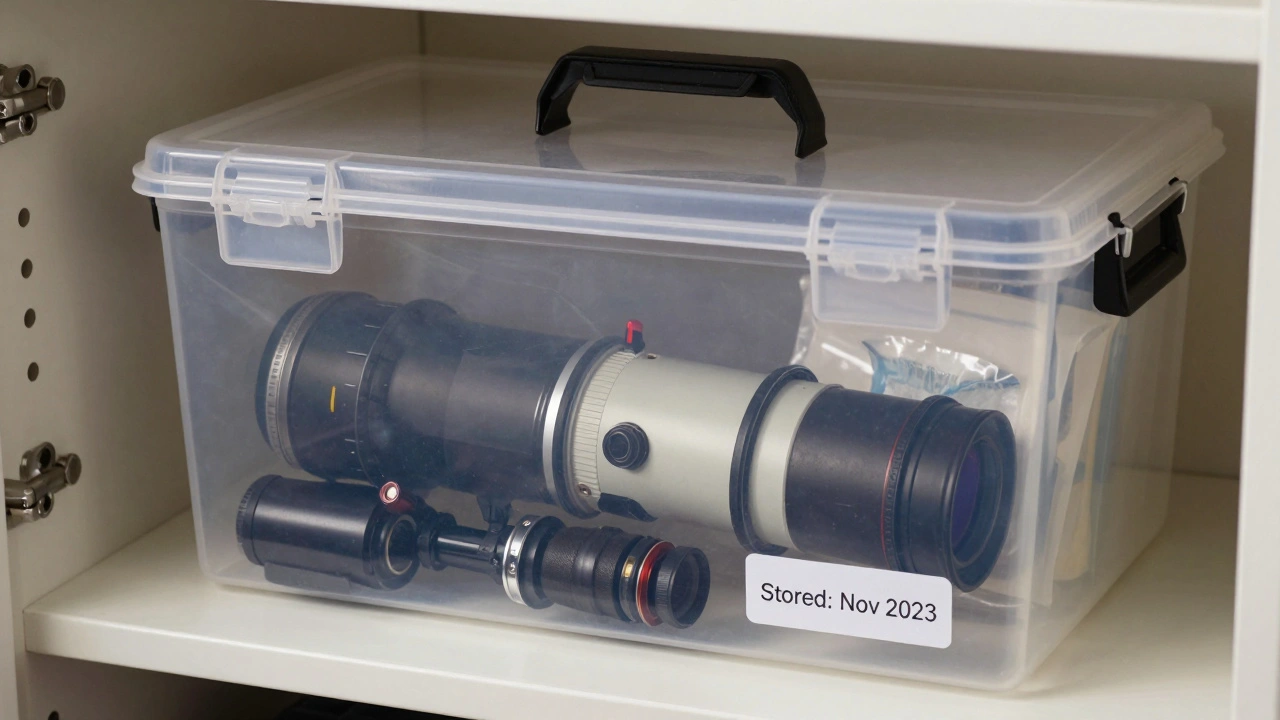
- Store in a sealed plastic container. A large, airtight plastic storage bin with a rubber seal works better than a cardboard box. Cardboard breathes-and so does moisture. Use a clear bin so you can see what’s inside without opening it. Add a label with the date and contents.
- Choose the right storage spot. Avoid attics, garages, basements, and sheds. These places have wild temperature swings and high humidity. A closet inside your home, on an interior wall, is ideal. If you have a climate-controlled room-even better. The goal is to keep the temperature steady (around 60-70°F) and humidity below 50%.
What NOT to Do
There are a few common mistakes that turn good storage into disaster.
- Don’t cover it with a tarp or sheet. Fabric traps moisture. It might look protective, but it’s actually creating a humid microclimate around your optics.
- Don’t store it upright. If your telescope has a primary mirror, storing it vertically can cause the mirror to shift or sag over time. Lay it flat on its side in the container.
- Don’t use mothballs or chemical dehumidifiers. Those strong smells can seep into lens coatings and ruin them. Plus, they’re toxic if you accidentally inhale them during setup.
- Don’t forget to check it. Every 2-3 months, open the container for 10 minutes. Let fresh air in. Check the silica gel. If it’s turned color (most change from blue to pink), replace it. Look for any signs of mold or fogging. A quick peek prevents big problems later.
Storage Duration Matters
Storing your telescope for a month? You can get away with less preparation. But if you’re putting it away for six months or longer-say, from November to April-you need to treat it like a museum piece. The longer it sits, the more time moisture and dust have to do damage. I had a friend who stored his 8-inch reflector for 14 months without cleaning or silica gel. When he took it out, the mirror had a faint greenish haze. He spent $400 to have it recoated. That’s more than half the value of the scope.
Even if you live in a dry climate, seasonal changes still matter. Winter air is dry, but indoor heating makes it drier than normal. That can cause lubricants in the mount to dry out. That’s why keeping things in a sealed container with silica gel is the safest bet no matter where you live.
What to Do When You Bring It Out Again
Don’t just pull it out and point it at the stars. Give it time to adjust.
- Leave the telescope in its case for 24 hours after taking it out. This lets the optics slowly acclimate to the air temperature. Rushing this causes condensation.
- Wipe down the outside with a dry microfiber cloth. No liquids.
- Reinstall the eyepieces and battery. Test the motors and focus slowly. If something feels stiff, don’t force it. Let it warm up longer.
- Check the alignment. If you have a GoTo system, run a quick calibration. It might need minor tweaking after months of inactivity.
Storage Checklist (Print This)
Keep this list taped to the inside of your storage bin:
- ✅ Eyepieces removed and stored separately
- ✅ Optics cleaned with proper tools
- ✅ Battery removed
- ✅ All knobs and clutches loosened
- ✅ 3-5 silica gel packs inside
- ✅ Stored in a sealed plastic container
- ✅ Placed in a climate-stable room (not garage/attic)
- ✅ Checked monthly for moisture or mold
Final Thought: It’s Not About Being Perfect
You don’t need a climate-controlled vault. You just need to stop treating your telescope like a lawn chair. The difference between a scope that lasts 20 years and one that dies in 5 comes down to two things: moisture control and avoiding unnecessary stress. If you follow even half of this, your telescope will thank you. And next time you step outside on a clear winter night, you’ll be ready to see the stars-not fix your gear.
Can I store my telescope in the garage?
No, not unless it’s climate-controlled. Garages get too cold in winter and too hot in summer. Temperature swings cause condensation. Humidity builds up, especially in older garages. Even if it looks dry, moisture is in the air. The best storage spot is a closet inside your home, away from windows and exterior walls.
How often should I replace silica gel packs?
Check them every 2-3 months. Most reusable silica gel changes color when saturated-usually from blue to pink. Once it changes, you can recharge it by baking it in the oven at 250°F for 2-3 hours. Let it cool completely before putting it back. If you don’t want to recharge, buy new ones. They’re inexpensive and worth the peace of mind.
Should I remove the finder scope during storage?
Yes. Finder scopes are small and delicate. Their lenses are often uncoated or have thin coatings that scratch easily. Store it in a padded case with the eyepiece removed. If it’s attached to the main tube, loosen the mounting screws and store it separately to avoid pressure on the alignment.
Is it okay to leave the telescope assembled?
Only if you’re storing it for less than a month. For long-term storage, disassemble it. Leaving the optical tube attached to the mount puts stress on the bearings and gears. Take the tube off the mount, store them separately, and wrap each in a soft cloth. This prevents mechanical wear and makes packing easier.
What if I see mold on my mirror?
Don’t touch it. Mold on mirrors is usually a fuzzy, greenish or black patch. Trying to clean it yourself can scratch the coating. Contact a professional telescope repair service. They have the tools and chemicals to safely remove it without damaging the surface. Prevention is far easier than repair-always use silica gel and keep things dry.