31 Jan 2026
- 0 Comments
Dirty optics ruin your view. A fingerprint on your telescope’s eyepiece, dust on the mirror, or smudges from last night’s observing session - these aren’t just annoyances. They blur stars, kill contrast, and make planetary details vanish. But cleaning optics isn’t like wiping a phone screen. You can’t just grab any cleaner. Using the wrong solvent can strip coatings, craze glass, or leave residues that last for months. So what can you safely use? Let’s cut through the myths and get straight to what actually works: alcohols, distilled water, and optical-grade detergents.
Why Most Cleaners Are Dangerous
Optical surfaces aren’t just glass. They’re layered with thin films - anti-reflective coatings, mirror aluminum, dielectric layers - all designed to let light pass through with minimal loss. These coatings are delicate. Regular glass cleaners? They contain ammonia, which eats away at coatings over time. Window spray? Often has oils or dyes that leave streaks. Even eyeglass cleaners from the drugstore? Many contain surfactants that aren’t meant for precision optics. One wrong wipe, and you’ve permanently damaged a $300 lens. That’s why you need to know exactly what’s in your cleaner.
Isopropyl Alcohol: The Gold Standard
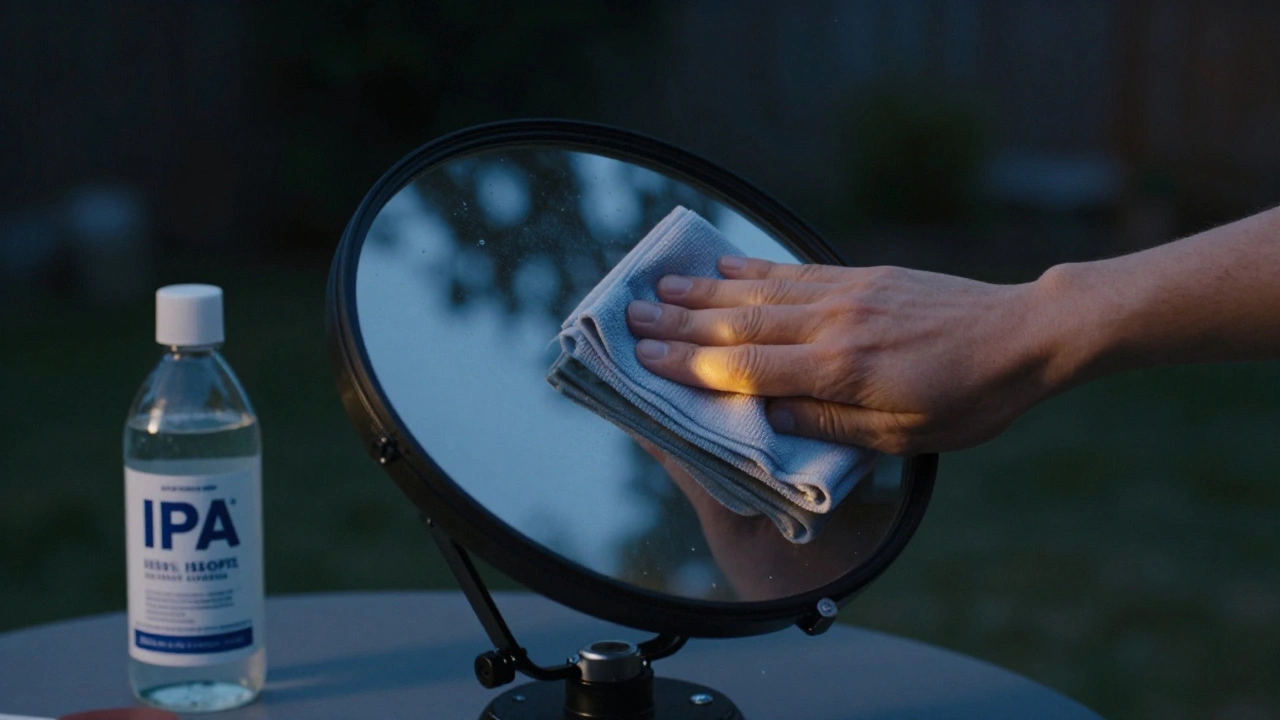
For most telescope optics, 90% or higher isopropyl alcohol (IPA) is the go-to. Why? It evaporates fast, leaves no residue, and doesn’t dissolve optical coatings when used correctly. Lower concentrations - like the 70% you find at pharmacies - contain too much water. That water can pool, seep into lens edges, or leave mineral deposits as it dries. Stick to 90% or 99% IPA. You can buy it in bulk from lab supply stores or online. Some brands even sell it pre-packaged for optics, like ROR or Purosol. Don’t bother with ethanol. It’s less effective and harder to find in high purity.
Here’s how to use it: Pour a small amount onto a clean microfiber cloth - never directly onto the lens. Gently wipe in a circular motion from the center outward. Let it air dry. No need to rinse. No need to buff. The alcohol just vanishes. I’ve cleaned refractor lenses, Newtonian mirrors, and diagonal prisms with this method for over a decade. No haze. No streaks. Just clear views.
Distilled Water: For Sensitive Coatings
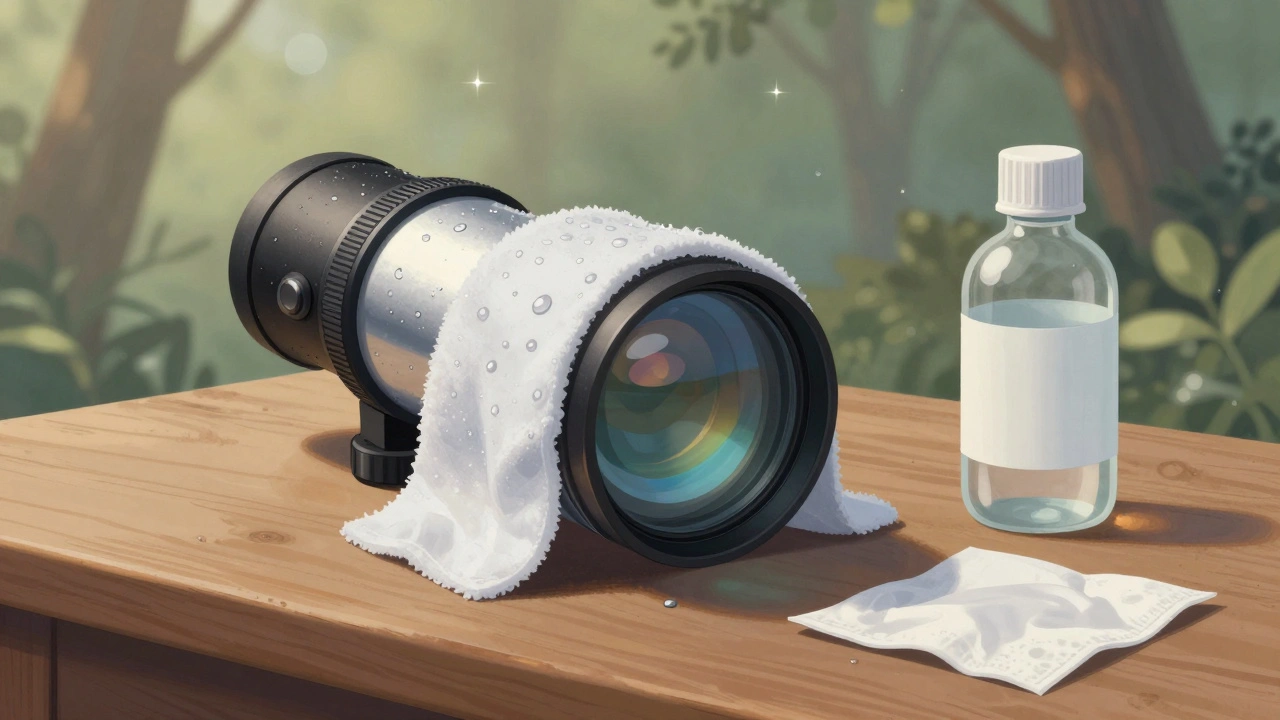
Not all optics can handle alcohol. Some coatings - especially on premium eyepieces or camera lenses - are water-soluble. If you’ve ever noticed a rainbow sheen or a slight loss of contrast after cleaning, you might’ve damaged the coating. In these cases, distilled water is your safest bet. Tap water? No. It has minerals. Those minerals dry onto the glass and scratch it. Distilled water? Pure H₂O. No calcium, no chlorine, no iron.
Use it the same way as alcohol: dampen a microfiber cloth lightly, wipe gently, then immediately follow with a dry section of the cloth to remove excess moisture. Don’t let it sit. Don’t soak it. This method works best for eyepieces, corrector plates on SCTs, and any lens with a multi-coated surface. I once saved a $500 Tele Vue Nagler by switching from IPA to distilled water after noticing faint streaking. It came back to life.
Optical Detergents: The Gentle Powerhouse
When you’ve got thick grime - oil from fingers, pollen, or salt spray from coastal observing - alcohol and water alone won’t cut it. That’s where optical detergents come in. Brands like Eclipse, Purosol, and Zeiss Lens Cleaner use non-ionic surfactants designed specifically for optics. They lift grease without harming coatings. These aren’t dish soap. They’re formulated to be pH-neutral and residue-free.
How to use: Apply a drop or two to a lens tissue or microfiber cloth. Gently clean the surface. Let it dry. No rinsing needed. These detergents are ideal for secondary mirrors, corrector plates, and eyepiece barrels where oils build up. I use it every few months on my 12.5" Dobsonian’s secondary. It removes fingerprints I didn’t even know were there.
What NOT to Use
- Ammonia-based cleaners - they dissolve anti-reflective coatings. Seen it happen. The lens looks foggy, and you can’t polish it away.
- Acetone or nail polish remover - too aggressive. It can craze plastic eyepiece lenses or strip coatings instantly.
- Household wipes - even "lens wipes" from grocery stores often contain alcohol at the wrong concentration or added oils.
- Tap water - leaves mineral stains. Even if it looks clean, under magnification, you’ll see white spots.
- Paper towels or tissues - they scratch. Always use microfiber. Always.
Tools That Make a Difference
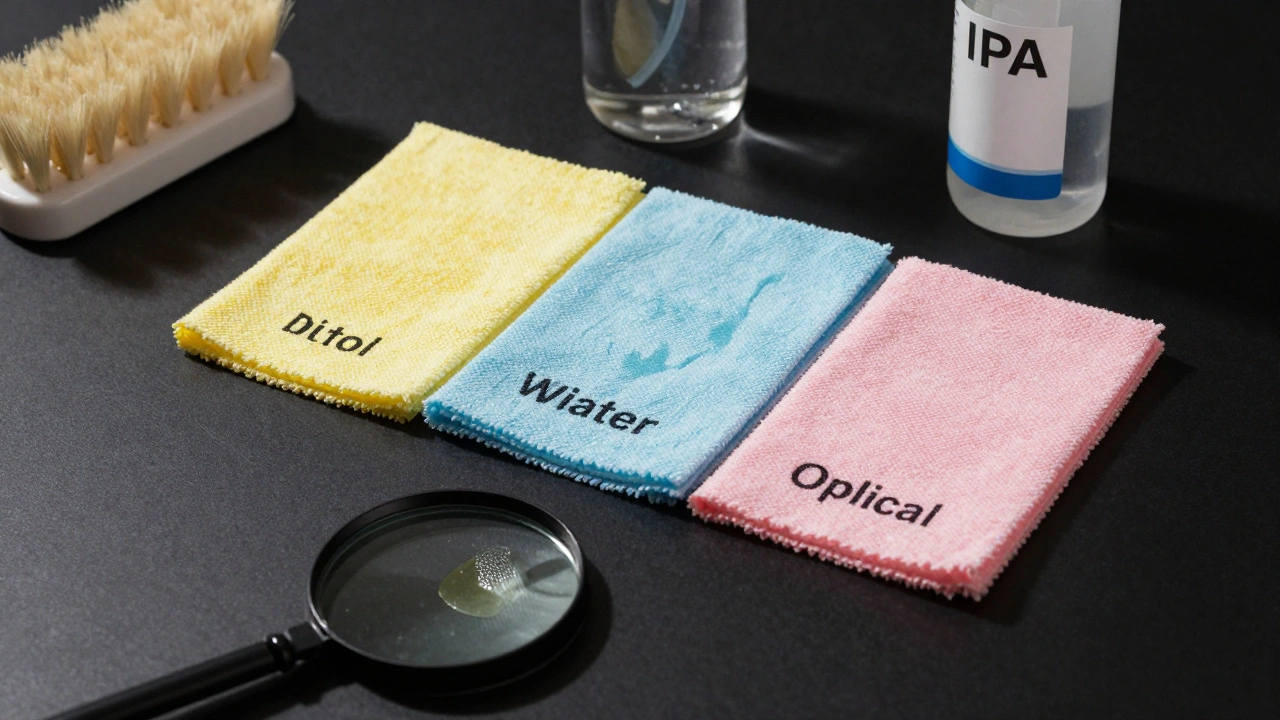
It’s not just about the solvent. The tool matters just as much. A cheap microfiber cloth from Amazon might shed lint or contain synthetic fibers that scratch. Look for lint-free, non-abrasive cloths made for camera lenses. Brands like Zeiss, Purosol, and LensPen make cloths that are washed in purified water and dried in clean rooms. I keep three on hand: one for alcohol, one for water, one for detergent. Color-code them so you don’t mix them up.
For hard-to-reach areas - like the inside of a diagonal or the edge of a corrector plate - use a soft camel-hair brush first. Gently blow away dust. Then clean. Never wipe dust around. That’s how scratches start.
When to Clean - And When Not To
Here’s the truth: you don’t need to clean your optics often. In fact, cleaning too much is more dangerous than leaving a little dust. A tiny speck of dust on a mirror doesn’t affect your view. But every cleaning adds risk. Clean only when you see a noticeable drop in contrast or visible smudges. For most users, once or twice a year is enough. If you’re in a dusty area or use your scope often, maybe every three months. But if it looks clear? Leave it alone.
And never clean under pressure. If you’re at a star party and someone says, “Hey, your eyepiece is dirty!” - resist the urge to wipe it right then. Wait until you’re back home with proper tools and lighting.
Pro Tips from the Field
- Store your cleaning cloths in a sealed plastic bag. Dust and moisture ruin them fast.
- Keep your IPA in a sealed glass bottle. Plastic containers can leach chemicals into the alcohol over time.
- Label every bottle. I once grabbed a bottle labeled "IPA" - turned out it was methanol. Never again.
- Test new cleaners on a small, non-critical surface first - like the edge of a lens barrel or a spare eyepiece.
- Never use a Q-tip. The cotton fibers can get stuck. Use lens tissues instead.
Real-World Example: My 8" Dobsonian
Last summer, I noticed stars looked fuzzy around the edges. I thought it was collimation. It wasn’t. I took off the secondary mirror and saw a greasy film from months of handling. I cleaned it with a drop of optical detergent on a microfiber cloth. Then I wiped the primary mirror with 99% IPA. The difference? Night and day. Jupiter’s bands snapped into focus. I could see the Cassini Division in Saturn’s rings again. It wasn’t magic. It was just the right solvent, used the right way.
Final Rule: Less Is More
Optics are not dirty because they’re old. They’re dirty because they’re touched. The best way to keep them clean? Don’t touch them. Use a lens cap. Store your scope in a dry, dust-free place. Use a dew shield. Clean only when necessary. And when you do, use the right solvent - alcohol for general cleaning, distilled water for delicate coatings, and detergent for grease. Everything else is a gamble.
Can I use rubbing alcohol to clean my telescope lenses?
Only if it’s 90% or higher isopropyl alcohol. Lower concentrations - like 70% - contain too much water, which can leave mineral deposits or seep into lens seals. Avoid ethanol-based rubbers. Stick to pure IPA from lab or optics suppliers.
Is distilled water better than alcohol for cleaning eyepieces?
For multi-coated eyepieces, yes. Alcohol can degrade some modern coatings over time. Distilled water is gentler and leaves no residue if dried properly. Use a microfiber cloth, dampen lightly, then wipe dry immediately. It’s safer for premium eyepieces like Tele Vue or Pentax.
Can I use Windex or glass cleaner on my telescope?
No. Window cleaners contain ammonia and other chemicals that strip anti-reflective coatings. Even if the lens looks clean, the coating may be permanently damaged. You’ll lose contrast and brightness. Stick to optics-specific cleaners only.
How often should I clean my telescope mirror?
Every 1-2 years is enough for most users. Cleaning too often increases the risk of scratches or coating damage. Only clean when you see visible smudges or a drop in image sharpness. Dust doesn’t hurt - smudges do.
What cloth should I use for cleaning optics?
Use lint-free microfiber cloths designed for camera lenses or optics. Avoid paper towels, tissues, or cheap cloths from discount stores - they scratch. Brands like Zeiss, Purosol, and LensPen make reliable options. Keep them sealed in a plastic bag when not in use.
Remember: your telescope’s optics are its soul. Treat them with care. The right solvent, the right tool, and the right timing will keep your view sharp for decades. Skip the shortcuts. You’ll thank yourself next clear night.