7 Mar 2026
- 0 Comments
Ever looked up at the night sky and wondered why you can’t see the Milky Way anymore? If you live in a city or even a suburb, you’re not alone. Light pollution has turned our night skies into a washed-out haze, hiding stars that have been visible for thousands of years. But there’s a simple way to measure just how bad it is - and it doesn’t require a telescope. Enter the SQM and SQC meters: affordable, handheld tools that turn guesswork into hard data.
What Is Sky Quality, Really?
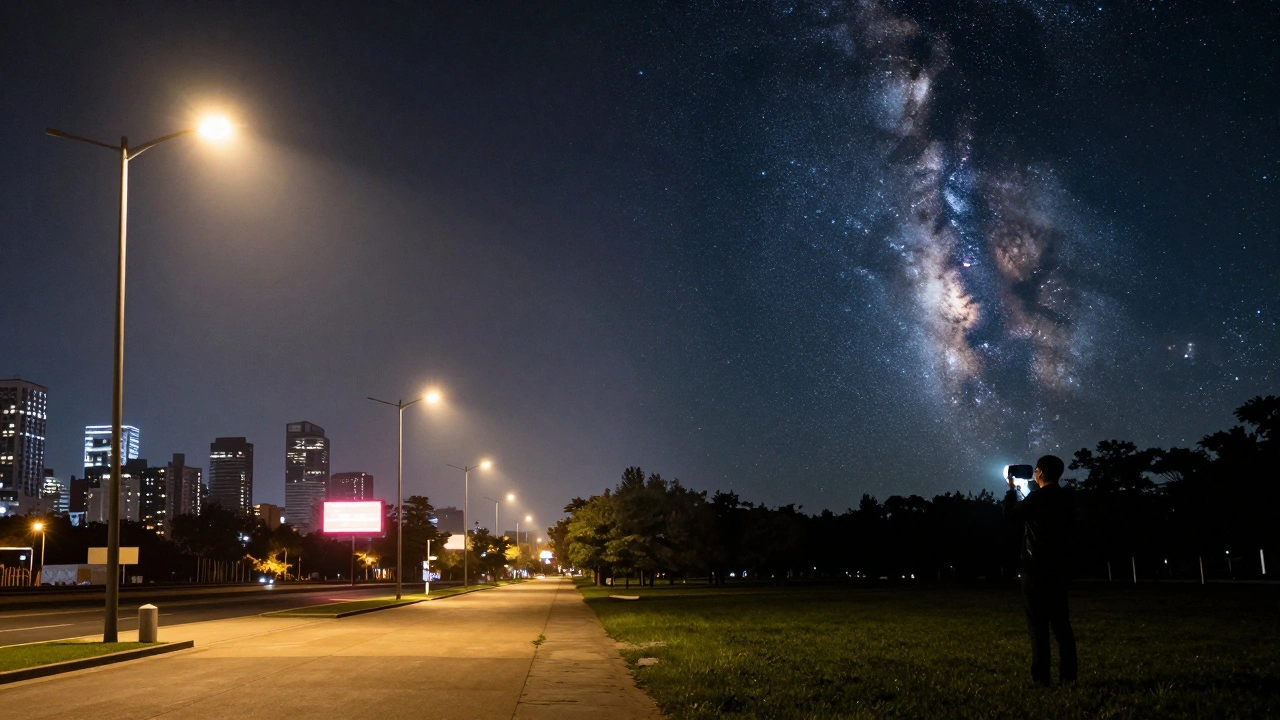
Sky quality isn’t about how many stars you think you see. It’s a scientific measurement of how dark your night sky is, measured in magnitudes per square arcsecond (mag/arcsec²). The higher the number, the darker the sky. A perfect, moonless, zero-light-pollution sky is around 22.0 mag/arcsec². Most suburban backyards sit between 17.0 and 19.0. Big cities? You’re lucky to hit 15.0 - that’s like trying to read a book under a bright streetlamp.
This isn’t just for stargazers. Astronomers, researchers, and even wildlife biologists use sky quality data to track how artificial light is changing ecosystems. In Portland, where I live, we’ve seen our local sky brightness drop by nearly 0.3 mag/arcsec² over the last five years - not because we’re getting darker, but because we’re getting brighter. Streetlights, LED signs, and poorly shielded home lighting are the culprits.
SQM vs. SQC: What’s the Difference?
You’ll hear two names tossed around: SQM and SQC. They’re both made by the same company - Unihedron - but they serve different needs.
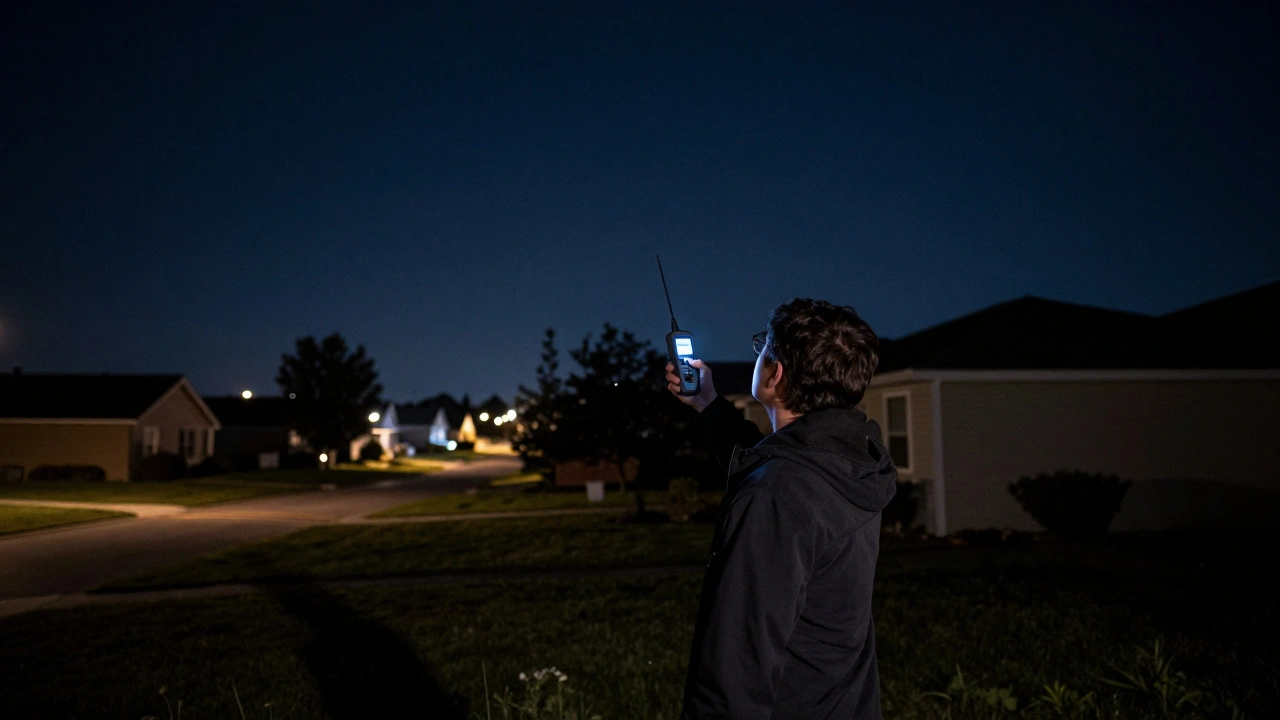
The SQM (Sky Quality Meter) is the original. It’s a small, battery-powered device with a single sensor that points straight up. It measures the brightness of the sky directly overhead. It’s simple, rugged, and reliable. You point it at the sky, press a button, and get a reading in under a second. No setup. No calibration. Just plug in the batteries and go.
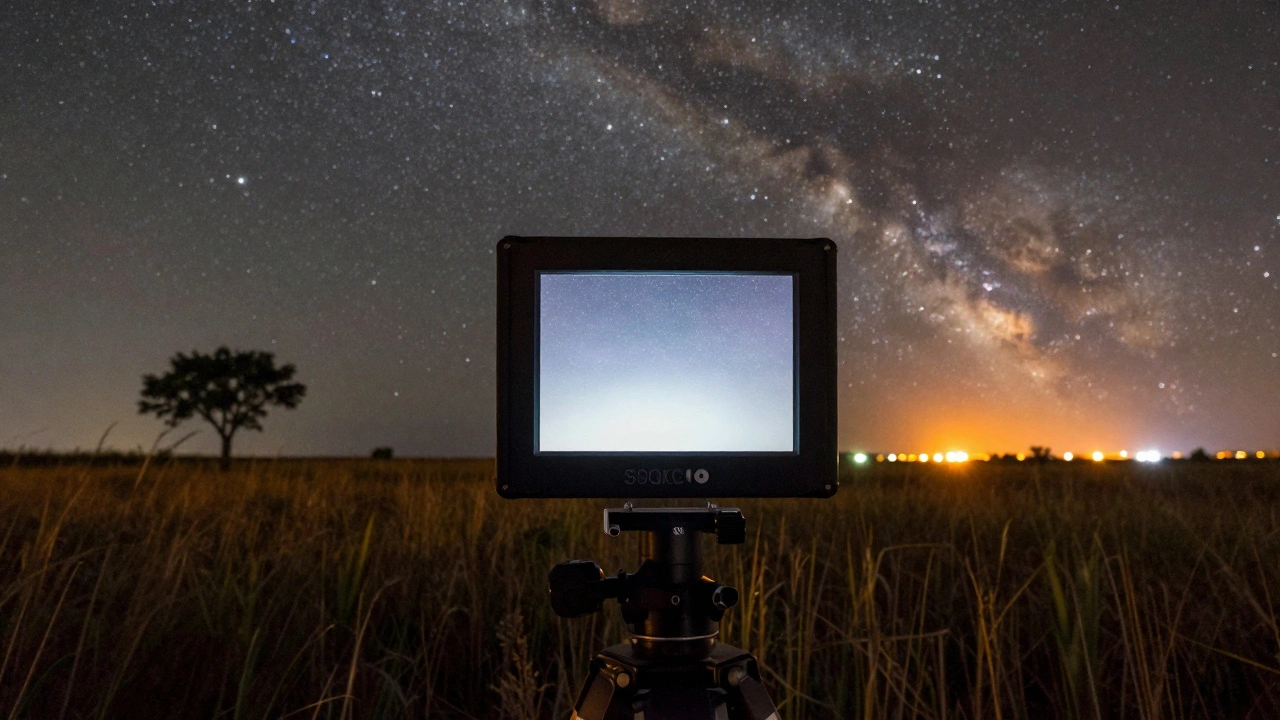
The SQC (Sky Quality Meter Camera) is the newer version. It’s essentially an SQM with a built-in camera. Instead of just measuring one spot, it takes a full-sky image and gives you a detailed map of brightness across the horizon. It’s perfect if you’re trying to find the darkest corner of your yard, track how a new streetlight affects your view, or document light pollution patterns over time.
Here’s how they compare:
| Feature | SQM | SQC |
|---|---|---|
| Price | $185 | $320 |
| Measurement Type | Single point (zenith) | Full-sky image + point data |
| Portability | Very high | High (requires tripod) |
| Best For | Quick checks, citizen science | Mapping, research, astrophotography planning |
| Connectivity | None | USB, SD card, PC software |
Most amateur observers start with the SQM. It’s the gold standard for tracking changes in local sky conditions. But if you’re serious about documenting how your neighborhood’s lighting affects your view - or if you’re planning where to set up your camera for astrophotography - the SQC is worth the upgrade.
How to Use an SQM Meter: A Step-by-Step Guide
Using an SQM is easier than checking your phone’s battery. Here’s how to get accurate readings:
- Wait for a clear, moonless night. Even a thin crescent moon can raise your sky brightness by 1-2 magnitudes.
- Let your eyes adjust for at least 15 minutes. No phone screens. No red lights unless absolutely necessary.
- Turn off all nearby lights - porch lights, garage lights, even your car. Block any direct light from hitting the meter.
- Point the SQM straight up (zenith). Hold it steady. Don’t tilt it.
- Press the button. Wait for the reading to stabilize. It’ll flash for a few seconds, then lock in.
- Record the number. Write it down with the date, time, and location.
Repeat this at the same spot once a month. Over time, you’ll start to see trends. Maybe your sky got darker after the city replaced old streetlights with shielded LEDs. Or maybe it got worse after a new development went up down the road.
Why This Matters Beyond Stargazing
Sky quality data isn’t just for hobbyists. Scientists use it to track the global rise in light pollution. A 2023 study in Nature found that artificial skyglow is increasing by about 2% per year worldwide - and it’s worse in urban areas. In the U.S., over 80% of people can’t see the Milky Way from their homes.
But here’s the thing: we can fix this. Cities like Tucson, Flagstaff, and even parts of Portland have passed lighting ordinances that require shielded fixtures, lower brightness, and curfews for non-essential lighting. These rules work. In Flagstaff, where the dark sky rules have been in place since the 1950s, sky brightness hasn’t changed in 30 years - while nearby towns have gotten noticeably brighter.
When you measure your sky, you’re not just collecting numbers. You’re building evidence. You can take your SQM readings to a city council meeting. You can compare your data with others through the Globe at Night project. You can show your neighbors that the bright LED sign above the gas station isn’t just ugly - it’s making the whole neighborhood lose its connection to the night.
Common Mistakes and How to Avoid Them
Even experienced users mess up. Here are the top three mistakes I’ve seen:
- Measuring under clouds. Clouds reflect light. They can make your sky look 0.5-1.5 magnitudes brighter than it really is. Wait for clear skies.
- Using it near windows or reflective surfaces. If you’re standing next to a glass door or a shiny car, light bounces into the sensor. Move at least 10 feet away from buildings or vehicles.
- Not recording context. A number without context is meaningless. Always note: date, time, location, weather, moon phase, and nearby light sources.
Also, don’t trust your phone’s light meter app. Those are calibrated for indoor lighting, not night skies. They’re off by 3-5 magnitudes - that’s like comparing a candle to a floodlight.
Where to Go for the Darkest Skies Near You
If you’re curious how dark your local sky really is, here are some real-world benchmarks:
- City center (Portland): 15.5-16.5 mag/arcsec²
- Suburban backyard: 17.0-18.5 mag/arcsec²
- Rural farm (30 miles out): 19.0-20.0 mag/arcsec²
- Dark sky park (e.g., Malheur National Wildlife Refuge): 20.5-21.5 mag/arcsec²
- Perfect dark sky (e.g., Atacama Desert): 22.0 mag/arcsec²
Try this: drive out to a state park on a clear night. Bring your SQM. Compare your backyard reading to the park’s. You might be shocked. In Oregon, places like Smith Rock State Park or the Oregon Dunes offer readings close to 20.0 - and they’re less than two hours from Portland.
What’s Next After You Measure?
Once you’ve got your first reading, don’t stop. Track it. Share it. Use it.
- Start a logbook - digital or paper. Record each reading like a weather observation.
- Join the International Dark-Sky Association and submit your data to their global map.
- Use your SQM to test how different lighting fixtures affect your sky. Replace an unshielded bulb with a shielded one. Measure again. Show the difference.
- Teach someone else how to use it. One SQM in a school, a scout troop, or a neighborhood association can spark real change.
Sky quality measurement isn’t about being an expert. It’s about paying attention. It’s about asking: What are we losing, and can we get it back? With a $200 device, you’re not just seeing more stars. You’re helping protect the night.
Can I use an SQM meter during twilight or with a full moon?
No. Twilight and moonlight significantly raise sky brightness, making readings misleading. The SQM is designed for true night conditions - when the sun is at least 18 degrees below the horizon and the moon is below the horizon or in its new phase. Measurements taken during twilight or under moonlight are not comparable to standard dark-sky readings.
Do I need to calibrate my SQM meter?
No. SQM meters are factory-calibrated and designed to be stable over time. You don’t need to recalibrate them. Just keep the lens clean, avoid extreme temperatures, and replace the batteries when needed. If your readings suddenly jump by more than 0.5 magnitudes without a change in location or lighting, check for obstructions or reflections.
Is the SQC worth the extra cost?
Only if you’re doing more than casual observation. The SQC is ideal for astrophotographers who need to map light pollution across the horizon, researchers documenting changes over time, or anyone preparing a formal report for local government. For most backyard observers, the SQM gives all the data they need - and it’s far more portable.
Where can I buy a real SQM or SQC meter?
The only official source is Unihedron (unihedron.com). Avoid third-party sellers on eBay or Amazon - many listings are counterfeit or used units sold as new. Unihedron ships worldwide and includes a calibration certificate with each unit. The SQM costs $185, and the SQC is $320.
Can I use an SQM meter in winter?
Yes, but cold weather affects battery life. Lithium batteries (like CR123A) work better than alkaline in freezing temps. Keep spare batteries warm in your pocket. Also, avoid touching the sensor with cold hands - condensation can fog the lens. A quick wipe with a microfiber cloth usually fixes it.
Measuring your sky isn’t just a hobby. It’s a quiet act of resistance against the light that’s drowning out the stars. With an SQM or SQC, you’re not just seeing the night - you’re protecting it.