15 Mar 2026
- 0 Comments
Every time you point your telescope at Jupiter or catch a glimpse of the Orion Nebula, you’re relying on a delicate balance of parts - especially the spider vane and secondary mirror. These aren’t just small components. They’re the silent guardians of your view. If they rust, bend, or shift even a fraction of a millimeter, your image gets blurry, distorted, or worse - unusable. Most amateur astronomers clean their primary mirror religiously, but overlook the spider vane and secondary mirror until it’s too late. By then, alignment is off, and rust has started eating into the metal. This isn’t theory. It’s what happens in Portland’s damp climate every spring.
What Is a Spider Vane, and Why Does It Matter?
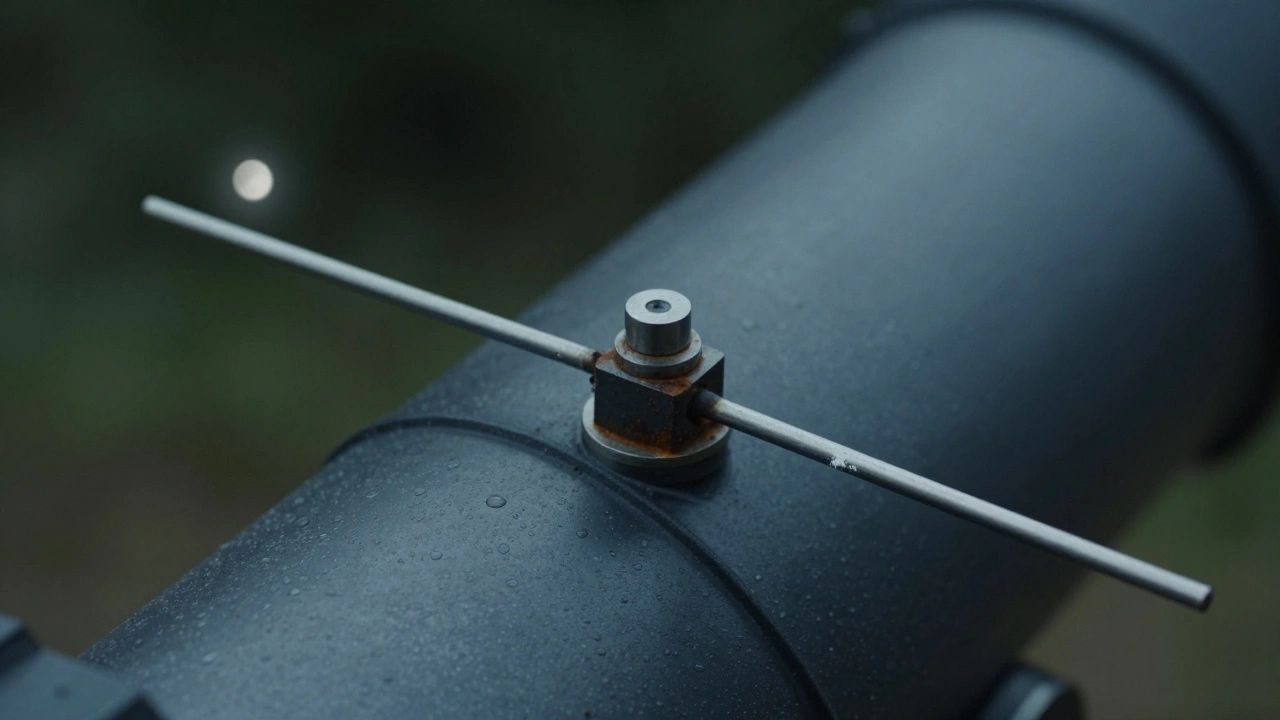
The spider vane is the thin metal structure - usually three or four arms - that holds the secondary mirror in place at the top of a reflector telescope. It’s often made from stainless steel, aluminum, or sometimes even carbon fiber. In a Newtonian telescope, it’s the thing you see as a cross or star shape when you look up the tube. Sounds simple? It is - until it doesn’t work right.
Here’s the catch: spider vanes are under constant stress. They hold the secondary mirror steady while the telescope moves, points, and tracks objects across the sky. Even a tiny amount of corrosion or a slight bend from a bump or temperature change can throw off the mirror’s position. That misalignment doesn’t just reduce sharpness. It creates coma, astigmatism, and light scatter that makes planets look like smudged orbs.
And here’s the real problem: most vanes are not sealed. They’re exposed to air, humidity, and the occasional dew. In Portland, where the air hangs heavy with moisture for months, rust doesn’t just appear - it spreads. A single rust spot on a vane arm can grow into a weak point that flexes under load. And when that happens, your secondary mirror wobbles. You won’t feel it. You’ll just notice your stars aren’t pinpoint anymore.
Secondary Mirror: The Silent Victim
The secondary mirror is small - often less than 2 inches across - but it’s just as critical as the primary. It reflects light from the primary mirror up to the eyepiece. Its surface is coated with aluminum, and that coating is thin. If moisture gets trapped behind it - especially if the vane holding it is corroding - condensation can form on the back of the mirror. That’s when you get rust spots on the metal backing, or worse, delamination of the coating.
One user in Eugene reported his 8-inch Newtonian went from crisp views to a foggy, dim image over winter. He cleaned the primary, swapped eyepieces, even checked his collimation. Nothing helped. He finally removed the secondary and found rust forming under the aluminum coating. The spider vanes were rusted, too. The moisture had been seeping in slowly, and by the time he noticed, the mirror’s reflectivity was down 30%. Replacing it cost $180. A $10 bottle of anti-rust spray could’ve prevented it.
Preventing Rust: Simple Steps That Work
You don’t need a lab to stop rust. You just need consistency.
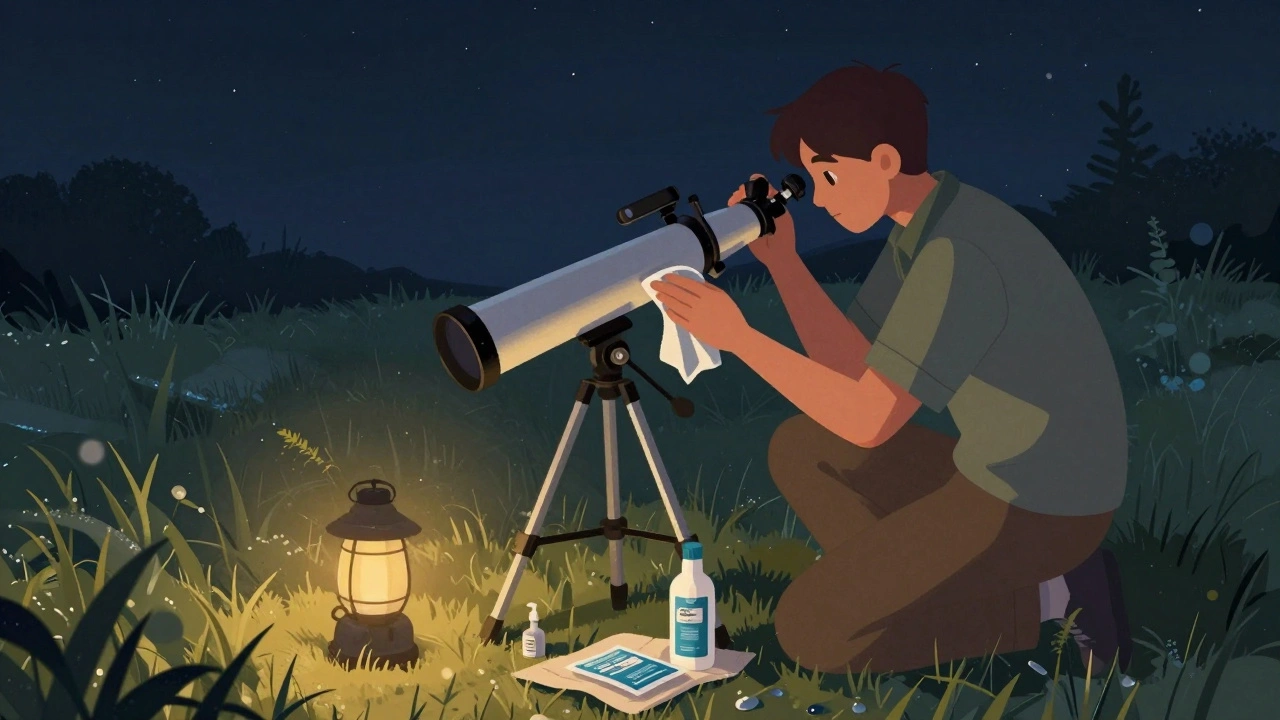
- Wipe down vanes after every use. Use a microfiber cloth lightly dampened with distilled water. Then dry immediately. Don’t skip this, even if it was just a quick session. Dew is the enemy.
- Apply a thin layer of silicone-based lubricant. Use a product like CRC Silicone Lubricant or even a tiny drop of Vaseline on the contact points where the vane meets the hub. This creates a barrier against moisture. Don’t overdo it - excess grease attracts dust.
- Store your telescope with the tube pointed down. This lets any trapped moisture drain out instead of pooling near the secondary mirror. If you have a dew shield, leave it on during storage - it helps keep humidity out.
- Use silica gel packs. Put two or three in the telescope case, not inside the tube. Moisture control is about environment, not just the optics.
- Check every three months. Even if you haven’t used it, inspect the vanes. Look for white powder (early rust), discoloration, or flaking. If you see it, clean it now - don’t wait.
Some people swear by naval jelly or rust converters. Don’t. Those are for fixing rust, not preventing it. And they leave residue that can attract more moisture. Prevention is always easier than repair.
Alignment Shift: The Invisible Problem
Alignment isn’t something you fix once and forget. It’s a living thing. Temperature changes, transport, even a slight bump can nudge the secondary mirror. The spider vane is the weak link. If it’s corroded, it loses rigidity. If it’s bent, it pulls the mirror off-center.
Here’s how to check alignment without tools:
- At night, point the telescope at a bright star like Vega or Polaris.
- Defocus the star slightly until you see a round disk of light.
- Look at the shadow of the secondary mirror and spider vanes in the center.
- If the shadow is perfectly centered, you’re good.
- If it’s off to one side - even a little - your alignment is off.
Another sign? Stars look good in the center of the field, but turn into teardrops or comas near the edges. That’s not your eyepiece. That’s misalignment.
Most Newtonians need collimation every 3-6 months, even if you haven’t moved them. If you’re using your scope in a humid climate like ours, do it every 2 months. And if you’ve seen rust on the vanes? Do it immediately.
When to Replace - Not Repair
Some people try to sand off rust or repaint vanes with spray paint. Don’t. You’re not fixing the problem - you’re making it worse. Paint chips. Sanding creates uneven surfaces. Even a 0.1mm change in vane thickness alters tension and alignment.
If the vanes are rusted through, warped, or have deep pitting, replace them. You can buy replacement vanes online for under $25. They’re usually made of stainless steel or anodized aluminum. Upgrade to carbon fiber if you want zero thermal expansion - but that’s overkill unless you’re doing serious astrophotography.
Replacing the secondary mirror is more expensive, but if the coating is flaking or the glass is fogged behind the surface, you have no choice. A new 2-inch secondary mirror for an 8-inch Newtonian runs $80-$120. That’s cheaper than a new eyepiece - and way cheaper than a new telescope.
Real-World Fix: A Case from Portland
Last year, a local astronomer brought his 6-inch Newtonian into a repair shop. He’d been using it for five years, stored it in his garage, and never cleaned the vanes. The secondary mirror was coated in a fine white powder. The vanes were rusted halfway through. He thought his optics were failing.
The technician cleaned the mirror, replaced the vanes with stainless steel ones, and re-collimated. The cost: $65. The result? Stars were sharp again. Planets looked crisp. He’d saved his scope - and his sanity.
He now wipes the vanes after every session. Keeps silica gel in the case. Checks alignment every 45 days. His views are better than ever.
What Most People Get Wrong
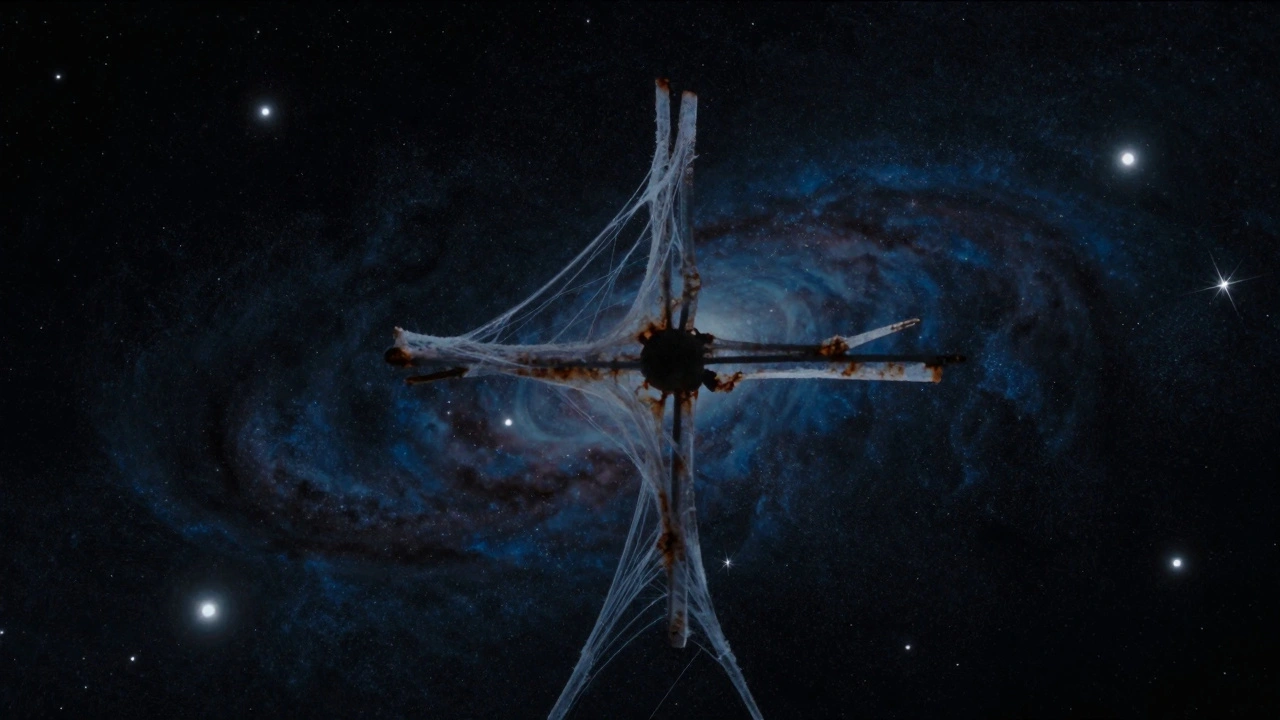
They think rust is just a cosmetic issue. It’s not. Rust on the spider vane changes the mechanical properties of the structure. It becomes flexible. That flexibility introduces vibration and drift. Even a 0.05mm shift in secondary mirror position can ruin high-magnification views of Mars or Jupiter’s moons.
They think alignment is only for professionals. It’s not. You can check it with your eyes. You can adjust it with a screwdriver and patience. There are free YouTube tutorials that show you how - no tools needed.
They wait until the image is blurry. Don’t. Check your vanes every season. If you’re in a rainy climate, check them every month. Rust doesn’t ask permission. It just starts.
Quick Summary / Key Takeaways
- Spider vanes hold your secondary mirror - if they rust or bend, your view degrades.
- Rust on vanes leads to alignment shifts - even tiny ones ruin sharpness.
- Wipe vanes dry after every use. Moisture is the #1 cause of failure.
- Apply silicone lubricant to contact points - it’s cheap and effective.
- Replace rusted or warped vanes. Don’t try to sand or paint them.
Can I use WD-40 on my spider vanes to prevent rust?
No. WD-40 is a solvent and light lubricant, not a rust inhibitor. It evaporates quickly and leaves behind a sticky residue that attracts dust and moisture. It might seem to help at first, but over time, it makes corrosion worse. Use a silicone-based lubricant instead - it lasts longer and doesn’t attract debris.
How often should I collimate my telescope if I live in a humid area?
Every 45 to 60 days. Humidity causes metal parts to expand and contract slightly, which can nudge the secondary mirror out of alignment. If you notice stars looking stretched or blurry at the edges - especially after dew forms - check your collimation right away. Don’t wait for a full-blown alignment issue.
Is carbon fiber better than stainless steel for spider vanes?
For most users, stainless steel is fine. Carbon fiber doesn’t rust and doesn’t expand with temperature changes - great for astrophotographers who need extreme stability. But unless you’re imaging for hours or using a large telescope (10+ inches), the cost difference isn’t worth it. Stainless steel vanes, properly maintained, last decades.
Can I clean the secondary mirror myself?
Only if you have to. Secondary mirrors are more delicate than primary ones. If there’s dust, gently blow it off with a rocket blower. Never wipe it unless there’s a smudge. If you must clean it, use a cotton swab dipped in distilled water and isopropyl alcohol (50/50 mix), and wipe in one direction only. Let it air dry. Most of the time, you don’t need to touch it at all.
What if I see rust on the secondary mirror’s backing?
That’s serious. Rust on the backing means moisture has gotten behind the mirror coating. The aluminum layer is likely peeling. This reduces reflectivity and scatters light. You can’t fix it with cleaning. The mirror needs to be replaced. Continuing to use it will make your views dimmer and less detailed. Don’t delay - a new mirror is cheaper than a new telescope.
Next Steps
Start today. Take your telescope outside, even if it’s cloudy. Look up the tube. See the spider vanes. Are they shiny? Or do they have a dull, grayish film? Run your finger along one - if it feels rough, it’s rusting. Wipe it down. Apply a drop of silicone. Check your collimation. Do this once a month, and you’ll never have to replace a mirror because you didn’t notice a little rust.
Your telescope doesn’t need fancy gear. It needs care. And care is simple - if you do it before it’s too late.