20 Apr 2026
- 0 Comments
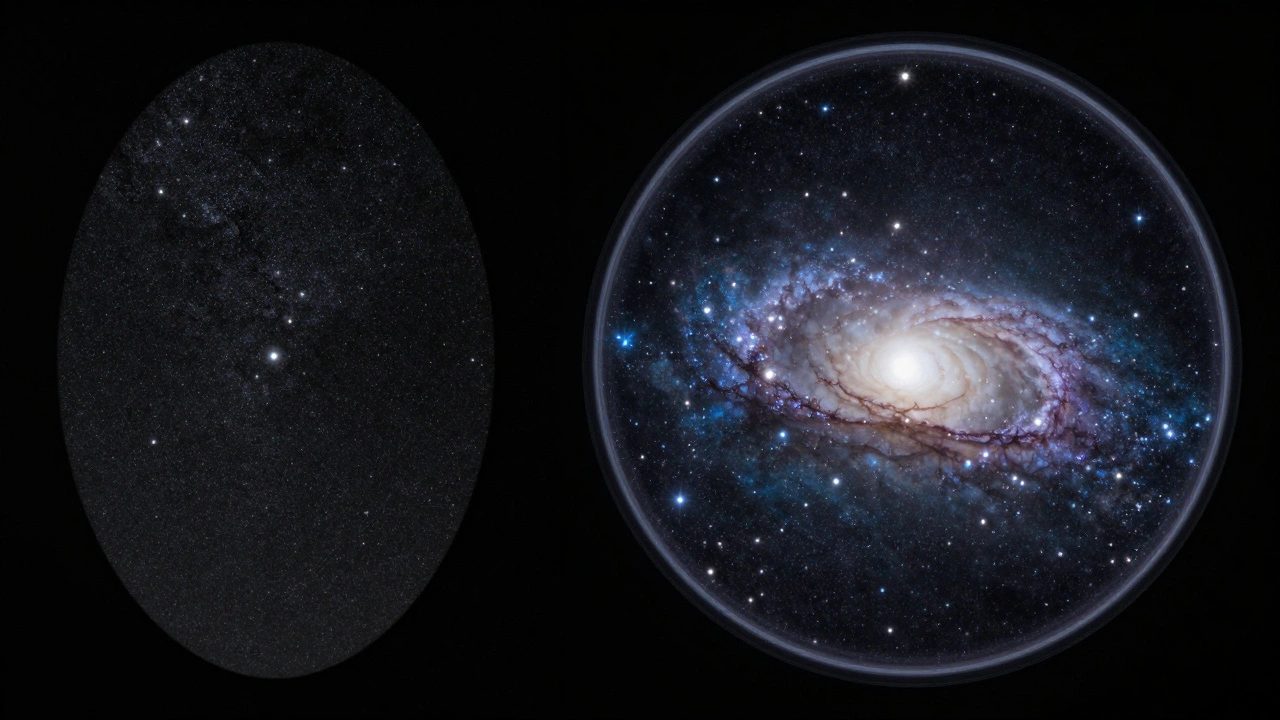
You've spent hours staring at a tiny circle of black sky, trying to find the Andromeda Galaxy, only to realize you're seeing it through a straw. If you're using standard 1.25-inch eyepieces, you're hitting a physical wall. There is a limit to how much light and space can pass through that narrow tube before the image starts to degrade or the view feels claustrophobic. Moving to 2-inch eyepieces is the single most effective way to open up your view of the cosmos, but it isn't always the right move for every observer.
Key Takeaways for Choosing Your Eyepiece Size
- Field of View: 2-inch optics offer a significantly wider apparent field of view (AFOV), making them ideal for large nebulae and star clusters.
- Weight and Balance: These pieces are heavier and can throw off the balance of smaller telescopes.
- Cost: Generally more expensive than 1.25-inch equivalents due to larger glass elements.
- Compatibility: Requires a 2-inch focuser; 1.25-inch focusers need an adapter to go the other way, but you can't fit a 2-inch piece into a 1.25-inch hole.
The Physics of the Field of View
To understand why you'd want a larger eyepiece, we have to look at the Field of View (FOV). This is the actual slice of sky you see when you look through the lens. In a standard 1.25-inch eyepiece, the physical diameter of the lens limits how wide the view can be. If you try to make a 1.25-inch eyepiece with a massive 82-degree apparent field, you often run into "tunneling" or severe vignetting where the edges of the image go dark.
By stepping up to a 2-inch diameter, you're increasing the aperture of the eyepiece itself. This allows for a much larger Apparent Field of View (AFOV)-the angle the eyepiece presents to your eye-without sacrificing image quality. When you combine a long focal length (like 30mm or 40mm) with a 2-inch barrel, you get a "spacewalk" experience where the edges of the view almost disappear, leaving you immersed in the stars.
When the Upgrade Makes Sense
Not every observation benefits from a wider view. If you're hunting for craters on the Moon or splitting double stars, a 2-inch eyepiece is overkill. However, there are specific scenarios where it's a game-changer.
First, consider "deep sky" objects. If you're targeting the Orion Nebula or the Pleiades, these objects span several degrees of the sky. A narrow eyepiece forces you to "hop" across the object, seeing it in pieces. A 2-inch wide-field eyepiece lets you see the entire complex in one frame, providing essential context and a sense of scale.
Second, think about your Telescope's focal length. If you have a long-focal-length instrument, like a Schmidt-Cassegrain, your natural field of view is already narrow. Adding a 2-inch eyepiece helps counteract this, giving you a more usable view for scanning the Milky Way. Conversely, if you have a short, fast Refractor, a 2-inch eyepiece can turn your telescope into a panoramic window.
| Feature | 1.25-Inch Eyepieces | 2-Inch Eyepieces |
|---|---|---|
| Max Typical AFOV | Up to 82° (often with vignetting) | Up to 100° (cleaner edges) |
| Weight | Light, easy on the focuser | Heavy, may require counterweights |
| Ideal Use Case | Planetary, Lunar, High Power | Nebulae, Galaxies, Star Hopping |
| Cost | Budget-friendly | Premium pricing |
The Trade-offs: Weight and Balance
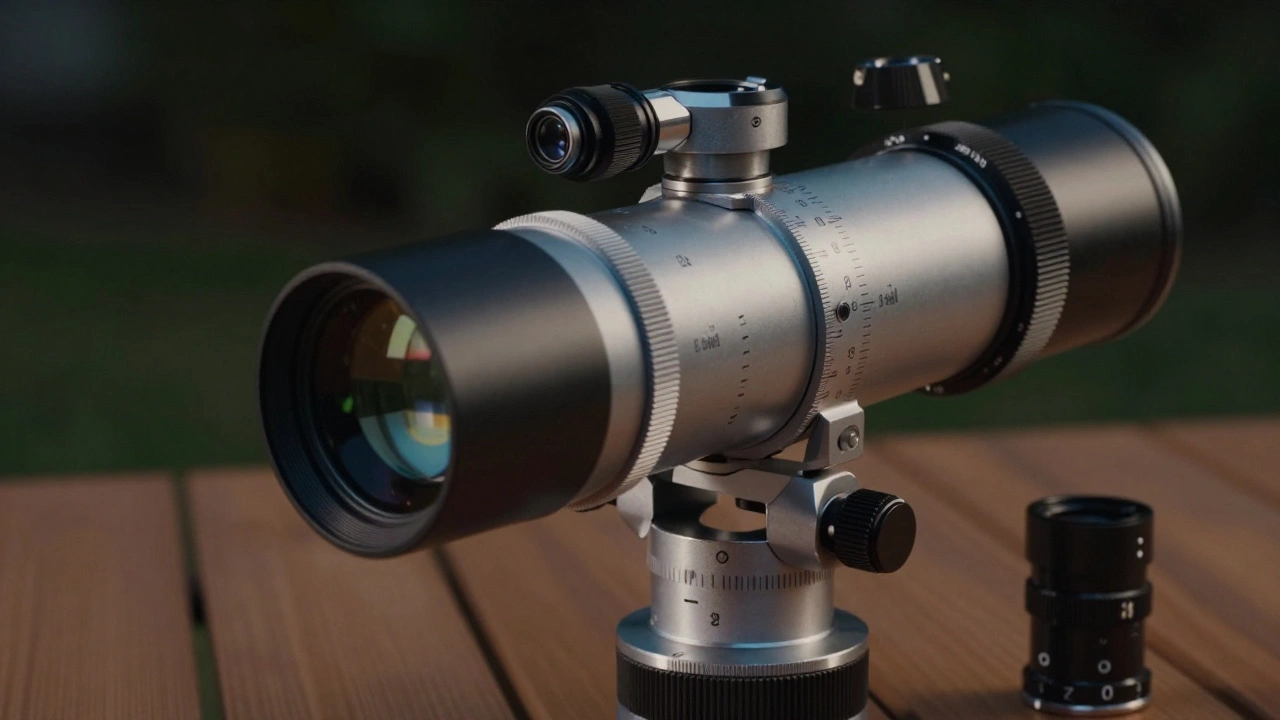
It's not all sunshine and stardust. The biggest practical issue with 2-inch glass is the weight. A high-end 30mm 2-inch eyepiece can weigh as much as a small brick. If you're using a lightweight tripod or a small Alt-Azimuth Mount, adding a heavy eyepiece can cause the telescope to tip forward or drift. This is where you start noticing "scope creep," where the weight of the eyepiece pulls the tube out of alignment.
You also have to consider the Focuser. While most mid-to-high-end telescopes come with a 2-inch focuser, some cheaper models use a plastic mechanism that can flex under the weight of a heavy 2-inch piece. If your focuser sags, you'll lose your collimation, and the image will blur. If you find your gear struggling with the weight, you might need to invest in a more robust focuser or add a counterweight to the rear of the tube.
Optical Performance and the 'Sweet Spot'
There's a common misconception that 2-inch eyepieces are always "better." In reality, for high-magnification work, they are often worse. When you want to see the rings of Saturn, you need a short focal length (e.g., 6mm or 10mm). At those lengths, there is no optical benefit to having a 2-inch barrel. In fact, most of the best high-power eyepieces are 1.25-inch because they are easier to design for precision and far more comfortable to use.
The "sweet spot" for 2-inch eyepieces usually lies between 24mm and 40mm. This range allows you to maximize the Exit Pupil-the diameter of the beam of light leaving the eyepiece. A larger exit pupil makes the image appear brighter and more natural, which is exactly what you want when hunting for faint, ghostly galaxies in a dark sky.
Practical Tips for Your First Purchase
If you've decided to make the jump, don't just buy the most expensive one. Look for an eyepiece that matches your telescope's focal ratio. If you have a "slow" telescope (high f/number), you'll want something that handles that without introducing chromatic aberration-those annoying purple fringes around bright stars.
Also, check if you need a Step-Down Ring. Most 2-inch holders come with a 1.25-inch adapter, but if you're switching back and forth between different sizes, having a high-quality, threaded adapter ensures you don't lose light or introduce tilt into your optical path. Tilt is the enemy of a sharp image; even a fraction of a millimeter of misalignment can make the stars look like little comets instead of pinpoints.
Summary of the Decision Tree
Still not sure? Ask yourself these three questions:
- Do I spend most of my time looking at large objects? If yes, go 2-inch.
- Does my telescope have a sturdy 2-inch focuser? If no, stick to 1.25-inch or upgrade the focuser first.
- Am I okay with a heavier setup? If you travel often and want a light kit, the extra weight of 2-inch glass might be a dealbreaker.
Can I use a 2-inch eyepiece in a 1.25-inch focuser?
No. A 2-inch eyepiece is physically larger than a 1.25-inch focuser. You can use a 1.25-inch eyepiece in a 2-inch focuser using an adapter, but it's physically impossible to put a larger eyepiece into a smaller hole.
Will a 2-inch eyepiece make my image brighter?
Not necessarily. Brightness is determined by the exit pupil, which depends on the telescope's aperture and the eyepiece's focal length. However, because 2-inch eyepieces allow for longer focal lengths with wider views, they often provide a brighter, more natural-looking image for deep-sky objects.
Do 2-inch eyepieces cause more distortion?
Actually, they often have less. Because they have more room for larger glass elements, designers can correct for aberrations more effectively than they can in a cramped 1.25-inch housing, especially when dealing with wide angles.
Are they worth the extra money?
For planetary observers, no. For deep-sky enthusiasts, absolutely. The ability to see a whole cluster or a large nebula without constantly adjusting the telescope changes the entire experience of observing.
What is the best focal length for a 2-inch eyepiece?
Generally, focal lengths between 24mm and 40mm are where 2-inch eyepieces shine. Anything shorter than 20mm usually doesn't provide enough of a field-of-view advantage to justify the extra size and weight.
Next Steps for Your Gear Setup
If you've just bought your first wide-field piece, take a moment to check your balance. Slide your telescope tube slightly forward or backward in the rings to compensate for the extra weight at the eyepiece end. If you're still seeing a dark ring around the edges, check your diagonal; some cheap 2-inch diagonals have a restrictive internal stop that prevents you from actually seeing the full width of your new eyepiece.
For those who find 2-inch eyepieces too heavy, look into "lightweight" wide-field series from reputable manufacturers. Many brands are now using specialized polymers and high-index glass to keep the weight down without sacrificing that immersive view of the stars.