2 May 2026
- 0 Comments
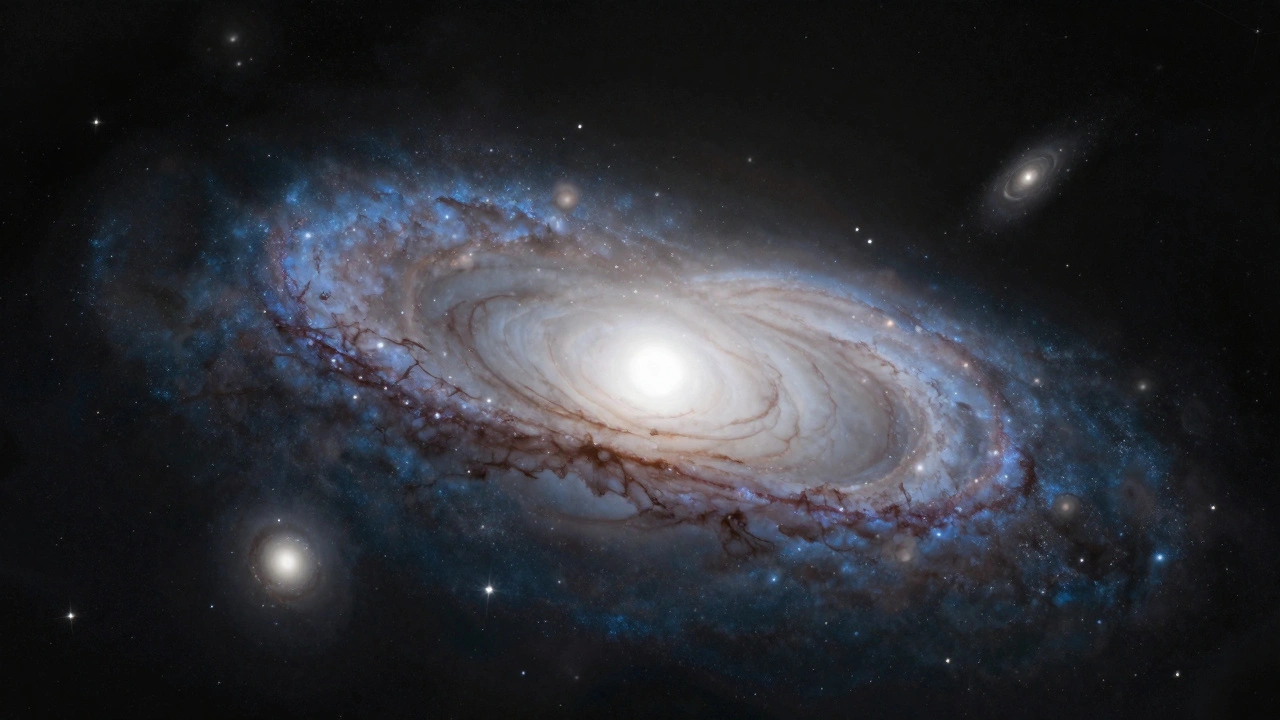
Finding the Andromeda Galaxy is easy. It’s bright, big, and visible to the naked eye from dark skies. But hunting down its faint, ghostly companions-the dwarf spheroidal galaxies-is a different beast entirely. These objects are the ultimate test for any serious deep-sky imager. They don’t have bright cores or flashy nebulae. Instead, they spread their light so thin that your camera sensor struggles to distinguish them from the background sky glow.
If you’re tired of chasing bright targets and want to tackle something truly challenging, learning how to plan for low surface brightness (LSB) targets is your next step. This guide breaks down exactly what makes these galaxies so hard to image, how to identify the best ones near Andromeda, and the specific technical adjustments you need to make to capture them without getting buried in noise.
What Makes Dwarf Galaxies So Difficult?
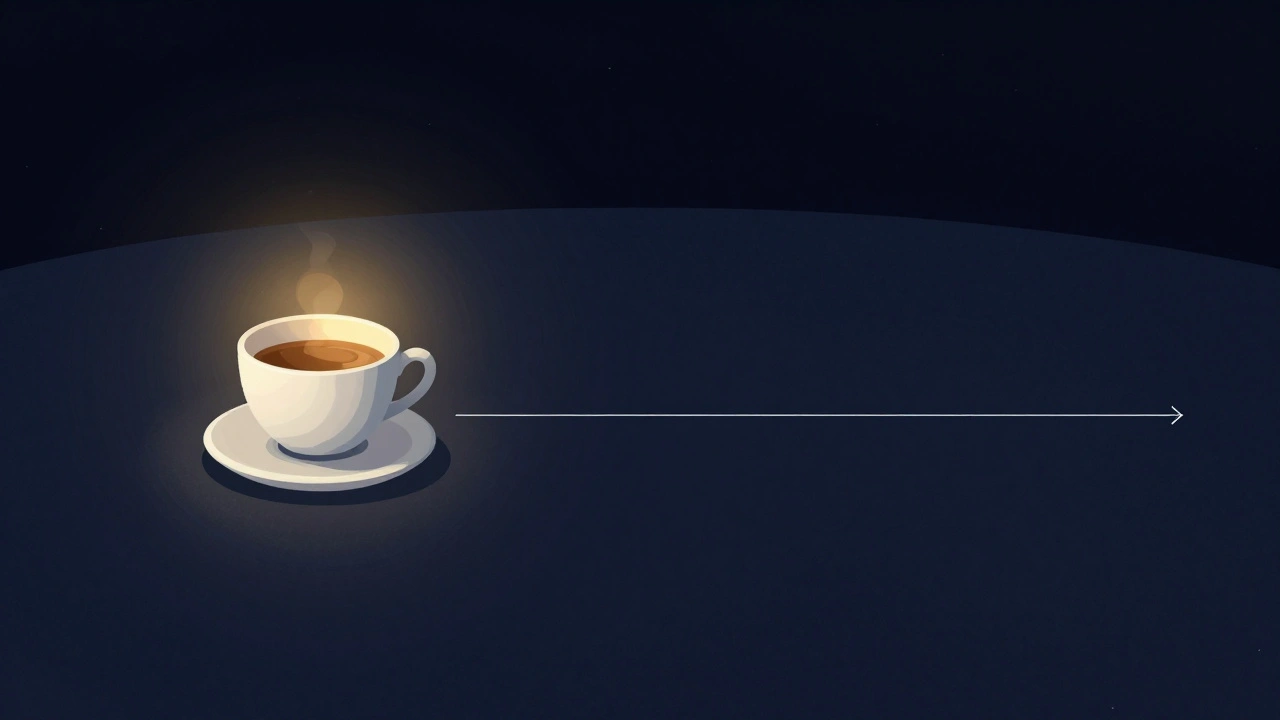
To understand why dwarf galaxies are tough, you first need to grasp the concept of surface brightness. Imagine pouring a cup of coffee into a small mug versus spreading it across a large table. The total amount of coffee is the same, but on the table, it’s barely visible. That’s what happens with dwarf galaxies like M32 or NGC 185. They contain billions of stars, but those stars are spread over such a wide area that each square arcsecond of your image receives very little light.
The enemy here isn't just darkness; it's contrast. Your camera records everything: the galaxy, the background skyglow, and the electronic noise from your sensor. With bright targets, the signal from the object overwhelms the noise. With LSB targets, the signal is often weaker than the noise floor of your equipment unless you integrate for hours. If your setup isn't optimized for high dynamic range and low noise, the galaxy will simply vanish into the grainy static of your image.
- Skyglow interference: Even light pollution hundreds of miles away can wash out LSB targets.
- Read noise limitations: Cheap sensors struggle to separate faint signals from internal electronics noise.
- Optical scatter: Imperfections in your lenses or mirrors can create halos that hide faint details.
Identifying Targets Near Andromeda
You don't need to aim randomly. The Andromeda system hosts several classic dwarf galaxies that serve as excellent practice grounds. These satellites orbit the larger host galaxy and offer varying levels of difficulty based on their distance from the core and their intrinsic brightness.
| Object Name | Type | Apparent Magnitude | Difficulty Level |
|---|---|---|---|
| M32 | Dwarf Elliptical | 8.9 | Easy (Bright Core) |
| NGC 185 | Dwarf Spheroidal | 9.4 | Moderate |
| M110 | Dwarf Elliptical | 8.5 | Easy |
| NGC 147 | Dwarf Irregular | 10.1 | Hard (Faint) |
| Pegasus Dwarf Irregular | Dwarf Irregular | 14.6 | Very Hard (Background) |
Start with M32 and M110. They are bright enough to show structure quickly, allowing you to calibrate your exposure settings. Once you master those, move to NGC 185, which has a much lower surface brightness despite being similar in total magnitude. Finally, attempt NGC 147, which requires significant integration time to reveal its irregular shape against the star field.
Equipment Requirements for Low Surface Brightness Imaging
You don't necessarily need the most expensive gear, but you do need gear that prioritizes signal-to-noise ratio (SNR). Here is what matters most when targeting LSB objects.
Cooling Capable Sensors
Thermal noise is your biggest adversary. As your sensor heats up during long exposures, it generates false electrons that look like signal. A cooled CMOS or CCD camera reduces this "dark current" significantly. If you are using an uncooled DSLR or mirrorless camera, you must take dark frames to subtract this noise later. However, dedicated astro-cameras with active cooling give you a distinct advantage in pulling out faint details.
Fast Optics vs. Resolution
For LSB targets, aperture speed (f-ratio) is more critical than resolution. An f/4 telescope gathers light twice as fast as an f/8 scope. You want to fill your pixels with photons from the target rather than from the background sky. While high-resolution optics help separate stars, they do not help you see a faint, diffuse galaxy if the exposure times become impractically long due to slow optics.
Light Pollution Filters
A narrowband filter might seem counterintuitive for galaxies (which emit continuum light), but a broad-band light pollution reduction (LPR) filter can help. It blocks specific wavelengths from sodium and mercury vapor lamps while passing most astronomical light. For extremely faint dwarfs, every bit of skyglow rejection helps improve contrast.
Planning Your Session: Exposure Strategy
Planning is where most amateurs fail. They take short exposures hoping to stack thousands of frames, but they never account for read noise. Here is the strategy you should follow.
- Calculate Sky Background: Use software like Nasmyth Celestial or Stellarium to check the moon phase and twilight angles. You need at least 3-4 hours after astronomical twilight ends.
- Determine Optimal Sub-exposure Time: Aim for exposures long enough that the sky background signal is at least 3-5 times higher than your camera's read noise. For a modern CMOS camera, this might mean 5-10 minute subs. For older CCDs, it could be 15-30 minutes.
- Total Integration Time: Don't underestimate the time needed. To get a clean signal-to-noise ratio for a dwarf spheroidal, you likely need 10-20 hours of total integration. Plan multiple nights or use an automated observatory.
- Focus Precision: Stars must be perfectly focused. Soft stars increase the background sky level in every pixel, raising the noise floor. Use a Bahtinov mask or live view peak focusing tools.
Post-Processing: Revealing the Invisible
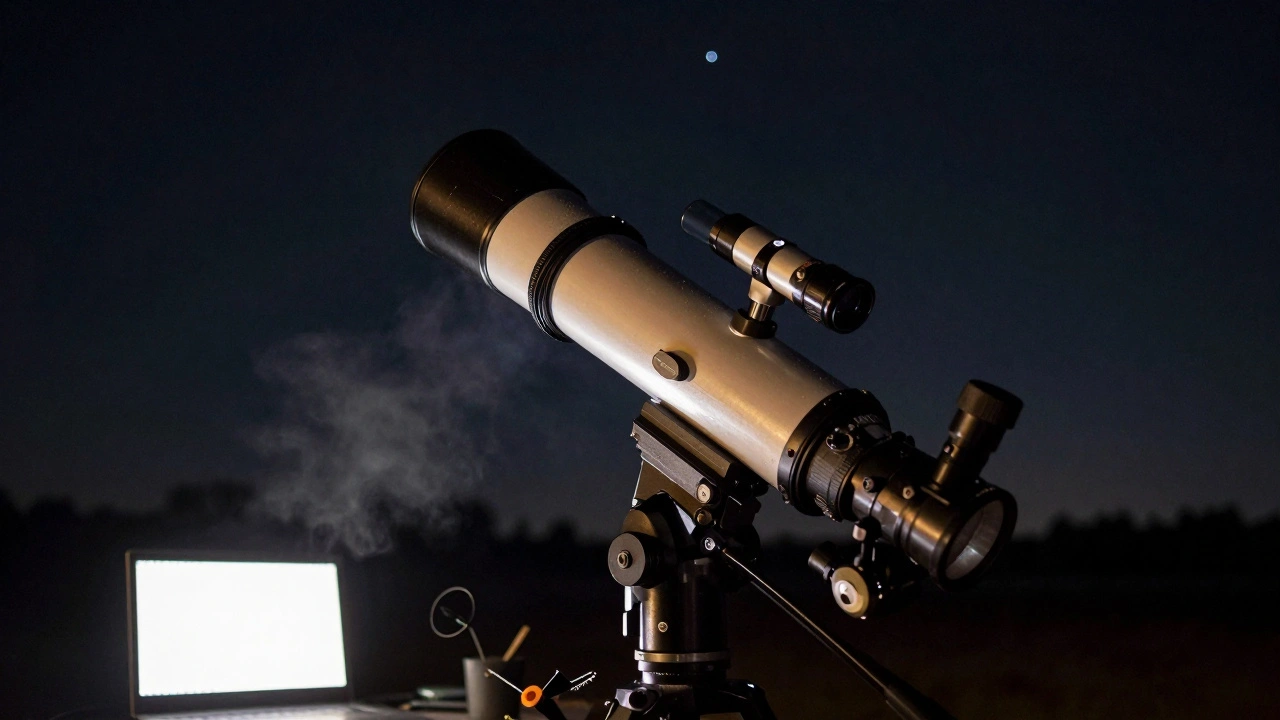
Capturing the data is only half the battle. Processing LSB targets requires a gentle touch. Aggressive stretching will amplify noise and destroy the subtle gradients you worked so hard to collect.
Start by stacking your images using algorithms that weight frames by quality. Software like DeepSkyStacker or PixInsight excels here. During the stacking process, ensure you apply sigma clipping to remove cosmic rays and satellite trails.
In processing, avoid global curves early on. Instead, use local stretch techniques. Tools like Multiscale Linear Transformation (MLT) in PixInsight allow you to stretch the faint outer layers of the galaxy without blowing out the brighter core or amplifying noise in the darkest regions. You may also need to perform careful background neutralization to remove color casts from light pollution, which can obscure faint monochromatic structures.
Troubleshooting Common Issues
Even with perfect planning, things go wrong. Here is how to fix the most common pitfalls when imaging dwarf galaxies.
- Noisy Background: If your image looks grainy even after stacking, your sub-exposures were too short relative to your read noise. Increase individual exposure times.
- Flat Field Errors: Dust donuts and vignetting are magnified when you stretch faint images. Take flats at the end of the night when the sky is still dark, ensuring consistent illumination.
- Tracking Drift: Long exposures require precise guiding. If your stars are elongated, the light spreads out, reducing peak SNR. Check your mount's periodic error correction (PEC).
- False Color: Light pollution filters can sometimes leave a green or red tint. Use white balance calibration before stretching.
Imaging dwarf galaxies is a marathon, not a sprint. It rewards patience and precision over quick results. By understanding the physics of low surface brightness and optimizing your workflow from planning to processing, you can bring these hidden neighbors of Andromeda into sharp focus.
Can I image dwarf galaxies with a DSLR camera?
Yes, but it is significantly harder. DSLRs have higher read noise and lack active cooling. You will need longer exposure times per frame to overcome the noise floor, and you must shoot in RAW format. Stacking hundreds of frames is essential to average out the noise.
Why do dwarf galaxies look like fuzzy blobs?
Dwarf spheroidal galaxies lack the gas and dust required to form new stars or spiral arms. They consist mostly of old, dim stars distributed evenly. Without dense clusters or nebulae, they appear as smooth, featureless ellipses or spheres.
What is the best time of year to image Andromeda's dwarfs?
How much integration time do I need for NGC 185?
For a clean image of NGC 185 showing its outer halo, you typically need between 10 and 20 hours of total integration time under dark skies. Under moderate light pollution, this may extend to 30+ hours.
Does focal length matter for low surface brightness targets?
Focal length determines how large the target appears in your frame. While shorter focal lengths gather light faster (lower f-ratio), longer focal lengths concentrate the light onto fewer pixels, potentially increasing the signal per pixel. However, the primary factor is always the f-ratio and total integration time.
What software is best for processing LSB images?
PixInsight is widely considered the gold standard for advanced noise control and local stretching. DeepSkyStacker is excellent for free stacking. Photoshop can be used for final touches but lacks the specialized astronomical processing tools needed for initial noise reduction.