1 May 2026
- 0 Comments
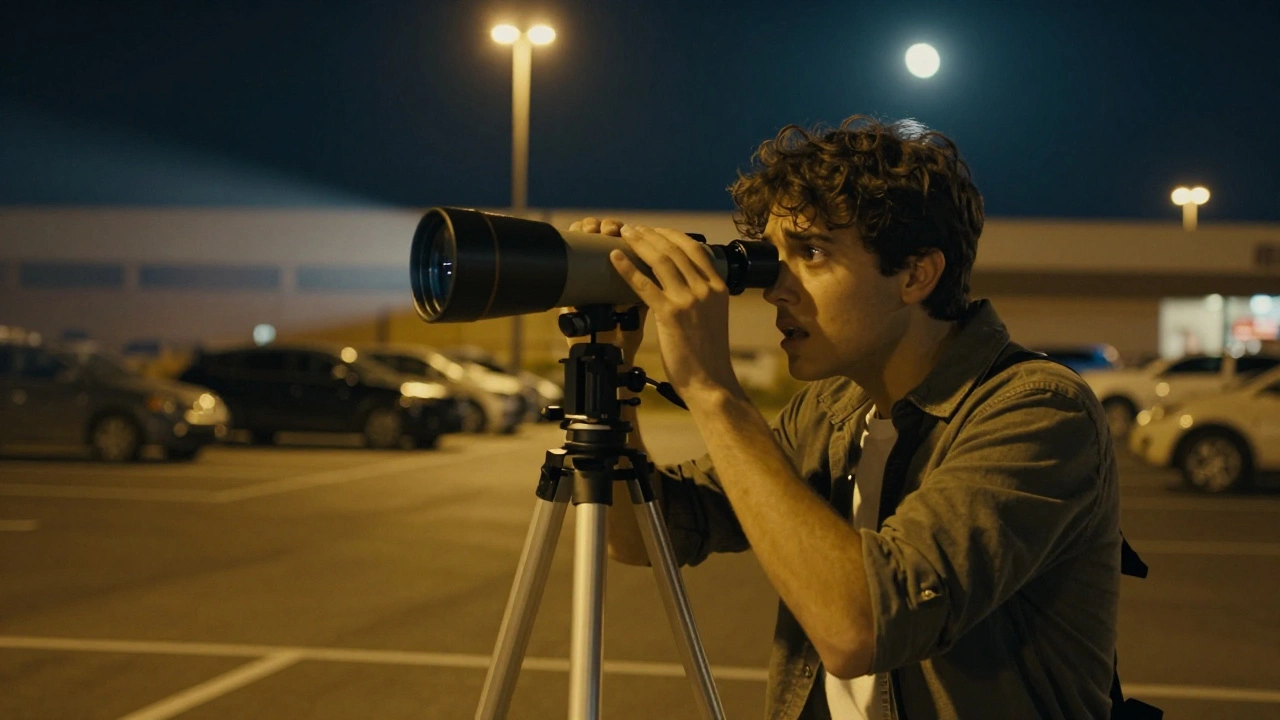
Imagine standing in the parking lot of a big-box store on a crisp Friday night. You’ve just bought your first telescope, excited to finally see Saturn’s rings or the craters on the Moon. You set it up, look through the eyepiece, and… nothing. Just a blurry gray smear that makes your eyes water. The mount wobbles like a jellyfish in a storm. The instructions are written in a language you don’t speak. This is the classic "department store scope" disaster, and it kills more hobbyists’ interest than anything else.
We’ve all seen them. They sit on shelves labeled with astronomical prices for what amounts to toy-grade optics. Brands like Celestron often produces entry-level models sold in mass retail stores, Orion a reputable brand often confused with its budget competitors, or generic names you’ve never heard before. These scopes promise "1000x magnification" as if higher numbers mean better views. They don’t. In fact, they guarantee disappointment. Let’s break down exactly why these telescopes are traps and how to avoid them so you can actually enjoy the night sky.
The "Power" Myth: Why Magnification Lies
The biggest lie told by department store telescope marketing is the idea of "magnifying power." You’ll see boxes boasting "60x," "150x," or even "500x" magnification. Here’s the truth: magnification is not a fixed feature of a telescope. It’s determined by the eyepiece you put in the back. A cheap $30 telescope might claim 100x, but if you use a different eyepiece, that number changes instantly. More importantly, high magnification without adequate aperture (the diameter of the main lens or mirror) results in a dark, blurry image.
Think of it like this: aperture is the bucket collecting light; magnification is just stretching that light out. If your bucket is tiny (small aperture), stretching the water (light) too far just gives you a thin, dry mist. Department store scopes usually have small apertures-often around 70mm to 90mm-but pair them with tiny, low-quality eyepieces that force high magnification. The result? A view so dim and fuzzy that you can’t tell if you’re looking at Jupiter or a dirty window pane. Real beginner scopes prioritize aperture over magnification. A good rule of thumb is that useful magnification is roughly twice the aperture in millimeters. So, a 70mm scope should realistically max out around 140x under perfect conditions, not the 500x printed on the box.
The Mount Problem: Stability Is Everything
If the optics are bad, the mount is worse. Most department store telescopes come with what’s called an Alt-Azimuth Mount a simple up-down, left-right mounting system common in cheap scopes. On paper, this sounds fine. But in practice, these mounts are often made from thin, hollow metal tubes that flex and shake. When you nudge the telescope to find a star, the whole thing wobbles for ten seconds before settling. By then, the object has moved out of view because the Earth rotates.
Worse, many of these scopes lack counterweights. Without proper balance, the telescope wants to tip over. You end up holding the tube with one hand while trying to adjust the focus with the other, which introduces more vibration. Some models even use plastic gears that strip easily, leaving you unable to move the telescope smoothly. A sturdy mount is non-negotiable. Look for solid aluminum or steel construction, not lightweight alloys that feel flimsy when you lift them. If the mount doesn’t feel heavy and substantial, the telescope won’t stay on target long enough for you to see anything clearly.
Optical Quality: Glass That Disappoints
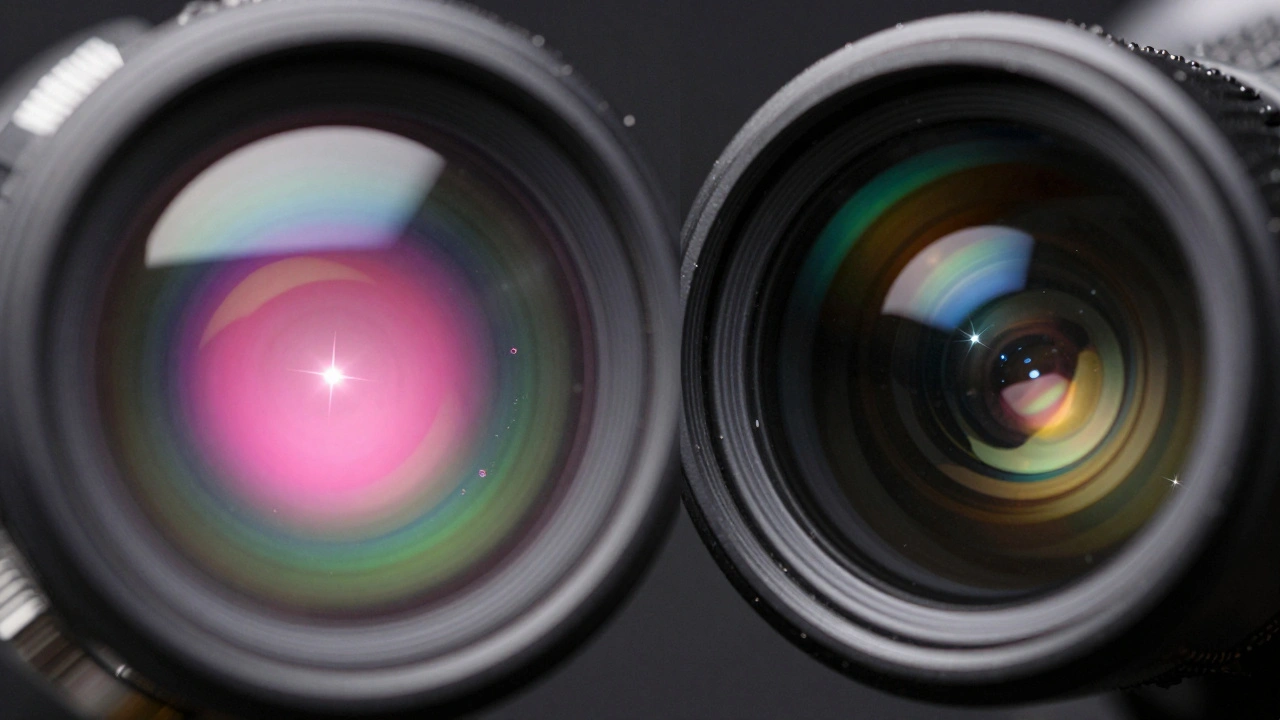
The lenses and mirrors inside department store scopes are rarely optically aligned. This process, called collimation, ensures that light travels straight through the system to your eye. Cheap scopes often come out of the factory misaligned, meaning the light scatters instead of focusing. Even if you could align them perfectly, the glass itself is usually poor quality. It may have bubbles, streaks, or incorrect curvature, leading to chromatic aberration-the rainbow-colored halos around bright objects like stars or planets.
Refractor Telescopes telescopes that use lenses to gather light sold in stores often suffer from severe color fringing because they use single-element lenses rather than achromatic doublets. An achromatic lens uses two types of glass to reduce color errors, but department store versions skip this cost-saving measure. The result is a view where Mars looks like a pink blob surrounded by purple haze. Don’t let the shiny exterior fool you; the internal optics are where the money goes, and these scopes skimp heavily here.
Identifying the Red Flags
How do you spot a bad telescope before you buy it? There are several clear warning signs. First, check the brand. While some major brands sell budget lines, unknown brands with names like "AstroMax" or "SkyView Pro" are almost always no-go zones. Second, look at the price. A decent beginner telescope costs between $200 and $400. Anything under $150 is likely cutting corners on optics, mount, or both. Third, read the specs critically. If the box claims "high power" without mentioning aperture size, run away. Aperture is king. Finally, check the accessories. Cheap scopes often include low-power, low-quality eyepieces and finderscopes that are harder to use than the main telescope. A good finder helps you locate objects; a bad one just adds frustration.
| Feature | Department Store Scope | Quality Beginner Scope |
|---|---|---|
| Price Range | $50 - $150 | $200 - $400 |
| Aperture | 70mm - 90mm (often overstated) | 114mm - 150mm (accurate) |
| Mount Type | Flimsy Alt-Azimuth, plastic gears | Sturdy Equatorial or Alt-Azimuth, metal gears |
| Optics | Uncoated, misaligned, chromatic aberration | Coated, pre-aligned, minimal aberration |
| Magnification Claim | "Up to 500x" (misleading) | Based on aperture (realistic) |
Better Alternatives for Beginners
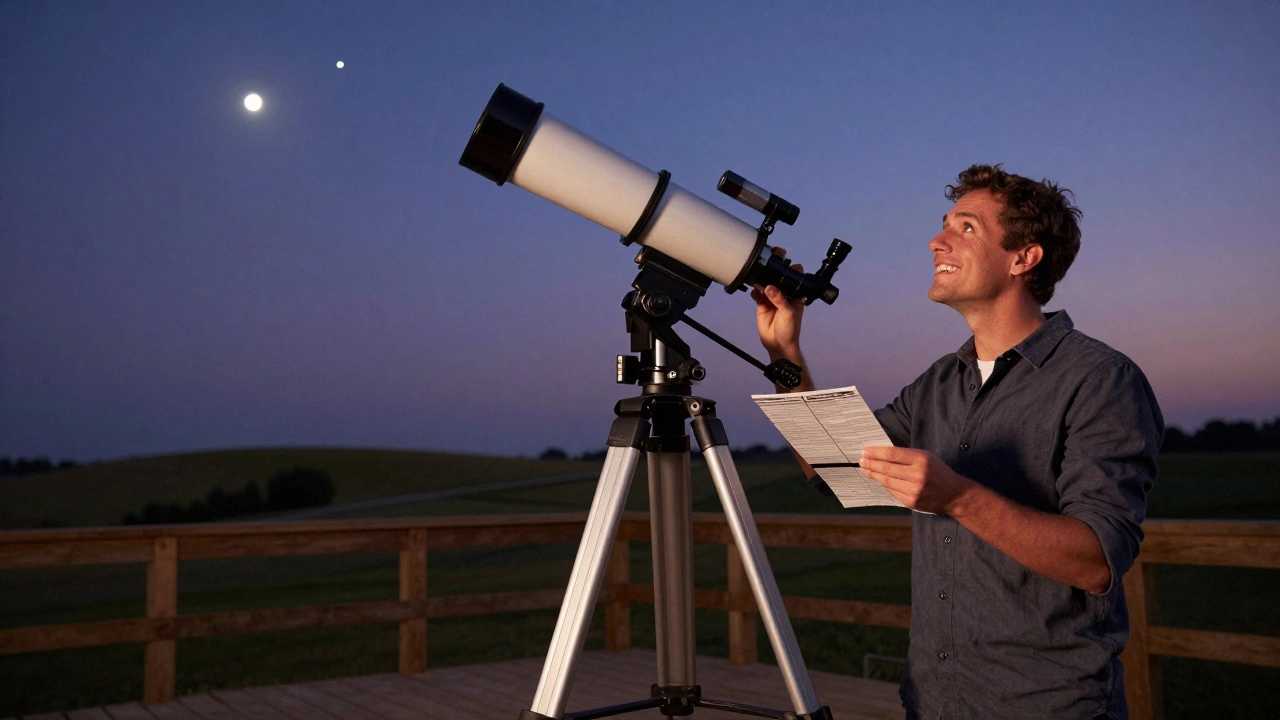
Avoiding bad telescopes isn’t about spending thousands of dollars. It’s about spending wisely. For most beginners, a Dobsonian Telescope a simple, stable mount design ideal for beginners offers the best value. Dobsonians have large apertures for their price, simple controls, and sturdy mounts. A 6-inch (150mm) Dobsonian costs around $300 and will show you details on Jupiter, Saturn, and nebulae that a $100 department store scope can’t even hint at. Brands like Synta manufacturer behind many popular budget Dobsonians or Zhumell known for affordable, reliable Dobsonian designs make excellent entry-level options.
If you prefer portability, consider a small Makutov-Cassegrain Telescope a compact reflector design with a sealed tube. These are heavier than refractors but offer more aperture in a smaller package. Look for models from established brands that specialize in astronomy, not general merchandise. Always buy from dedicated astronomy retailers or online specialists who understand the product. They can answer questions about collimation, eyepiece compatibility, and usage tips that a big-box store employee simply won’t know.
What to Do If You Already Bought One
Did you already bring home a department store scope? Don’t despair. You can still salvage some enjoyment. First, lower your expectations. Use it only for the Moon and bright planets like Venus or Jupiter. Avoid deep-sky objects like galaxies or nebulae-they’ll be invisible. Second, try to improve the mount stability. Place the telescope on a solid, level surface, not a shaky table. Use the lowest power eyepiece available (the one with the highest number on it, like 20mm or 25mm). Higher power reveals flaws; lower power hides them slightly. Finally, consider selling it and upgrading. Many used astronomy forums and local clubs will buy these scopes cheaply, allowing you to recoup some costs toward a better instrument.
Why are department store telescopes so cheap?
They cut costs on every component: using thin metal for mounts, uncoated or poorly ground glass for optics, and plastic parts for mechanisms. They also rely on high-volume sales and misleading marketing to move inventory quickly, sacrificing quality for profit margins.
Can I fix a bad department store telescope?
You can sometimes improve performance by collimating the optics (aligning the mirrors/lenses) and using better eyepieces. However, fundamental issues like flimsy mounts and poor glass quality cannot be fixed. Upgrading is usually more cost-effective than repairing.
What is the best type of telescope for a beginner?
A 6-inch to 8-inch Dobsonian telescope is widely considered the best starter option. It offers large aperture for the price, easy-to-use controls, and stable viewing. Alternatively, a small Makutov-Cassegrain provides portability with decent performance.
Does higher magnification always mean a better view?
No. Magnification depends on the eyepiece, not the telescope itself. High magnification without sufficient aperture results in a dark, blurry image. Useful magnification is limited by the telescope's aperture and atmospheric conditions.
Where should I buy my first telescope?
Buy from specialized astronomy retailers or reputable online shops that focus on optical equipment. Avoid general merchandise stores, big-box retailers, and unknown brands. Specialized sellers provide knowledgeable support and higher-quality products.