11 Apr 2026
- 0 Comments
The Basics of How Stars Get Their Names
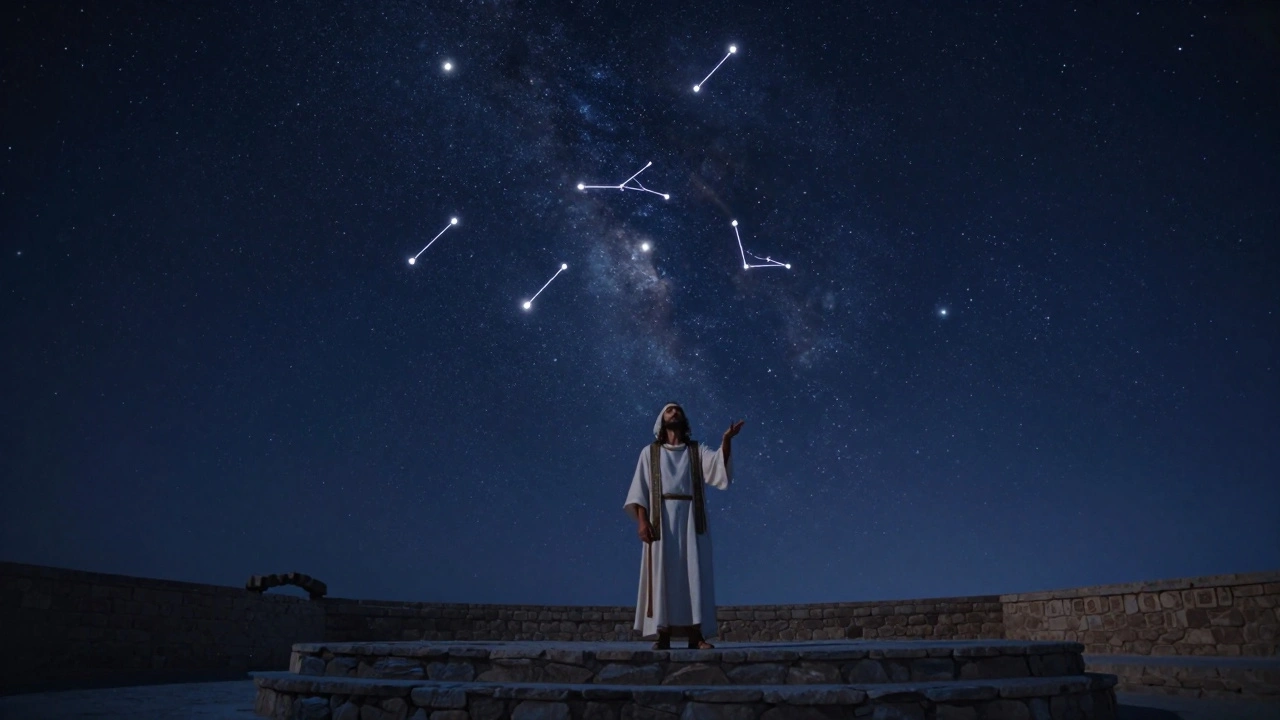
If you've spent any time with a telescope, you probably noticed that naming stars is a mess. There is no single "Official Star Naming Office" that handles everything. Instead, we have a mix of traditional names and scientific labels. Most of the stars you'll recognize by name come from Arabic or Greek sources. When early astronomers mapped the sky, they described stars based on their position in a constellation-for example, "the foot of the giant." Over centuries, these descriptions morphed into the names we use today.
For the scientific crowd, the International Astronomical Union (IAU) is the boss. They don't usually give names to new stars; they assign designations. If a star doesn't have a traditional name, it gets a Bayer designation (a Greek letter like Alpha Centauri) or a Flamsteed number. It's a bit like having a legal name for your taxes and a nickname for your friends.
The Heavy Hitters: Sirius, Vega, and Altair
Let's start with the stars that are almost impossible to miss. Sirius is the brightest star in the night sky. It sits in the constellation Canis Major. Because it's so bright, it's often called the "Dog Star." If you're looking for it in the winter, look for the bright glow next to Orion. Sirius is actually a binary system-a bright white star with a tiny, faint companion called Sirius B.
Then there's Vega. This one is a superstar for astronomers because it's relatively close to Earth and very bright. It's the brightest star in the constellation Lyra. For a long time, Vega was the benchmark for the "zero point" of the stellar magnitude scale, meaning every other star's brightness was measured against it. If you see a bright, bluish-white star high overhead in the summer, that's likely Vega.
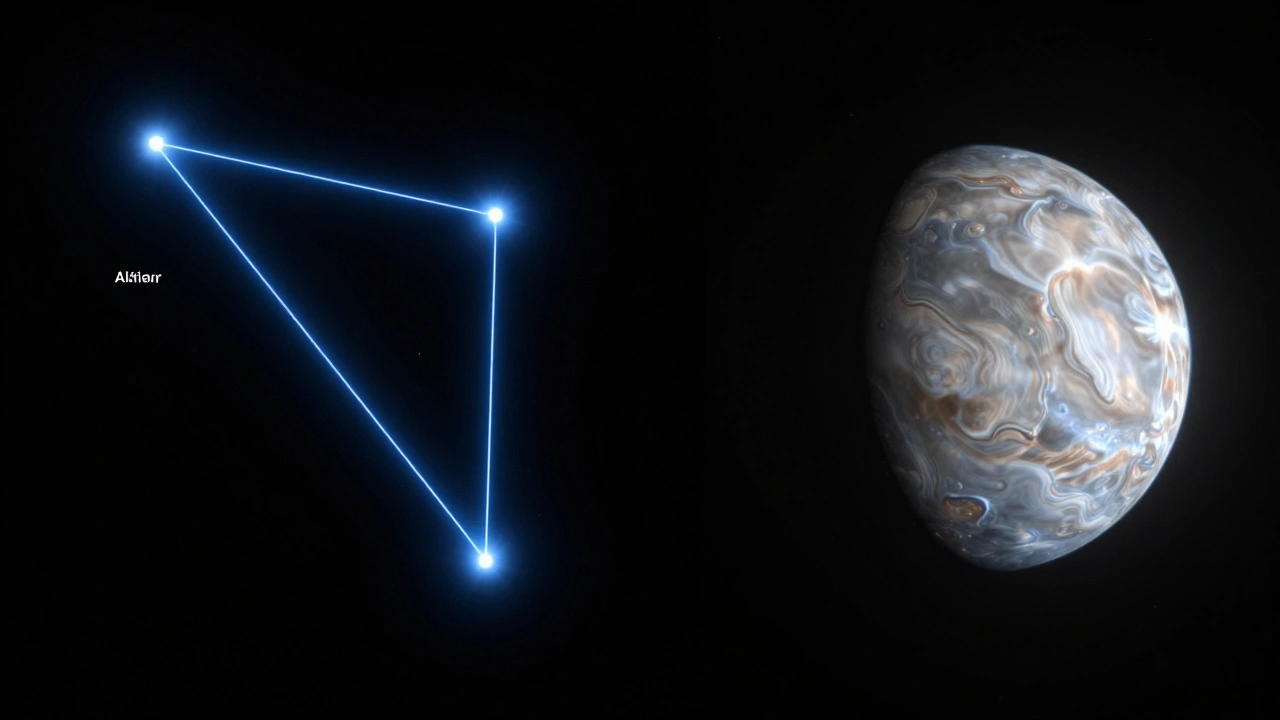
And we can't forget Altair. Located in Aquila, Altair is the third point of the "Summer Triangle" (along with Vega and Deneb). It's a fast rotator, spinning so quickly that it's actually flattened at the poles, making it look like an oval rather than a perfect sphere. This physical distortion is a great example of how these named stars aren't just dots; they are complex physical objects.
| Star Name | Constellation | Visual Magnitude | Key Characteristic |
|---|---|---|---|
| Sirius | Canis Major | -1.46 | Brightest star in the sky |
| Vega | Lyra | 0.03 | Standard for magnitude scale |
| Altair | Aquila | 0.77 | Rapidly rotating oblate spheroid |
| Betelgeuse | Orion | Variable | Red Supergiant nearing end of life |
| Polaris | Ursa Minor | 1.97 | North Star / Celestial Pole |
The Red Giants and the North Star
Not all named stars are white or blue. Betelgeuse is a fantastic example of a red supergiant in the constellation Orion. It's so massive that if you swapped it with our Sun, it would swallow Mercury, Venus, Earth, and Mars. Its name comes from the Arabic *Yad al-Jauza*, meaning "the hand of the giant." It's also a variable star, meaning its brightness fluctuates, which has led to a lot of excitement recently about whether it's about to go supernova.
Then you have Polaris. While it isn't the brightest star in the sky (it's actually quite average), it's probably the most famous because it stays put. As the Earth rotates, Polaris stays aligned with the North Pole. This makes it a critical tool for navigation. If you can find the Big Dipper and follow the two "pointer stars» at the end of the bowl, they lead you straight to Polaris.
How to Find Named Stars in Your Backyard
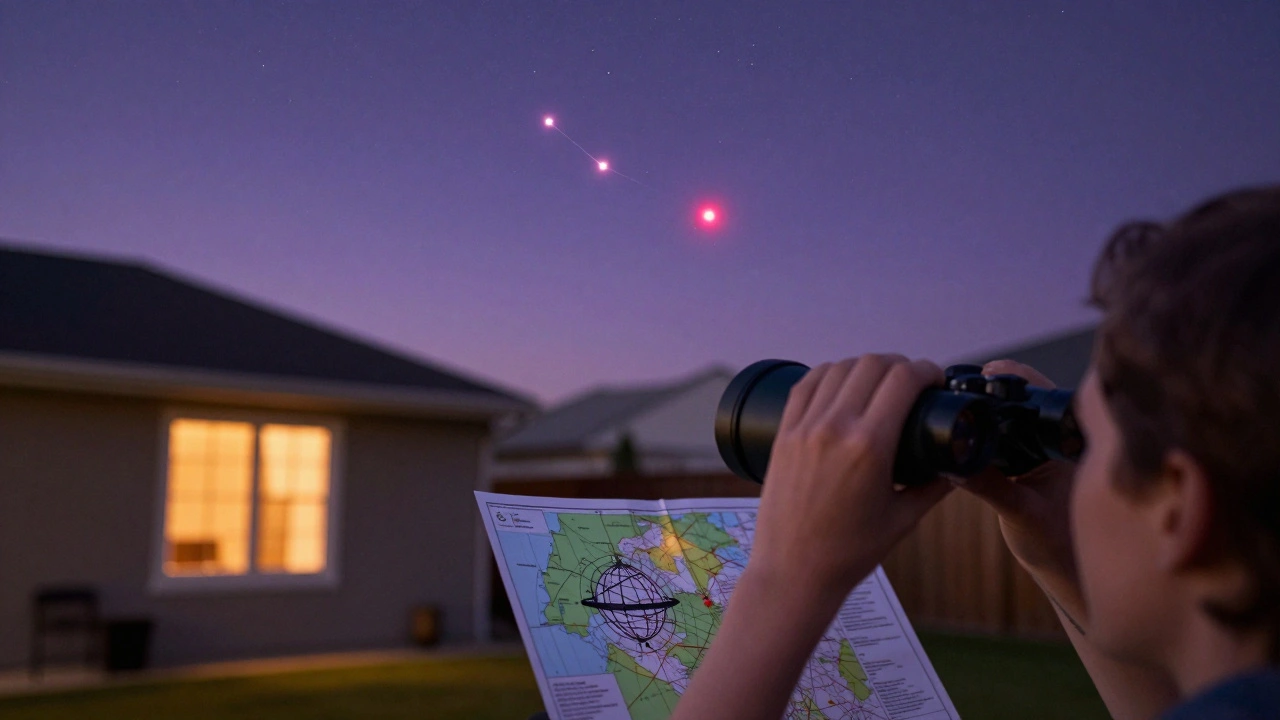
You don't need a fancy observatory to find these. Most of them are visible even from a city like Portland, provided you have a clear patch of sky. The trick is to use a method called "star hopping." Start with a known pattern-like the three stars of Orion's Belt-and move from there. To find Sirius, simply draw a line from the belt down toward the southwest horizon.
If you're just starting out, I recommend getting a planisphere or using a free app. These tools show you the constellations in real-time. Once you spot a bright star, check if it's one of the "classics." Most of the named stars are the brightest members of their constellations, usually designated as Alpha (the brightest), Beta (second brightest), and so on. For instance, Capella is the Alpha star of Auriga.
Common Pitfalls in Star Naming
One of the biggest mistakes people make is thinking that every star has a unique, romantic name. In reality, most stars are just numbers. If you see something like HD 140283, that's not a secret code; it's just an entry in the Henry Draper catalog. While it's tempting to buy a "Name a Star" certificate for a anniversary or birthday, be aware that these are not recognized by the IAU. You're essentially paying for a piece of paper, not a permanent change in galactic records.
Another point of confusion is the difference between a star and a planet. People often say, "Look at that bright star!" when they are actually looking at Jupiter or Venus. A quick rule of thumb: planets generally don't twinkle. Stars twinkle because their light is distorted by our atmosphere; planets are closer and appear as tiny disks, which makes their light more stable.
The Cultural Connection of Stellar Names
The names we use today are a layered cake of history. The Greeks gave us the mythological names, but the Islamic Golden Age astronomers preserved and expanded this knowledge, adding their own descriptive names. For example, Aldebaran means "the follower" because it seems to follow the Pleiades star cluster across the sky.
Different cultures saw different things. While we see Orion the Hunter, other cultures saw a great bird or a celestial warrior. This is why learning the proper names helps you understand how humans have used the stars as a clock, a calendar, and a map for millennia. The sky is essentially the oldest book we have, and the star names are the index.
Why are some stars named and others not?
Historically, only the brightest stars that were visible to the naked eye were given names by ancient civilizations. With the invention of the telescope, we discovered millions more stars. Since it's impossible to give a unique, meaningful name to every single one, astronomers shifted to a numbering system based on coordinates and catalogs.
Can I officially name a star?
Not in a way that the scientific community recognizes. The International Astronomical Union (IAU) is the only body that assigns official designations. Commercial "name a star" services are for novelty purposes and do not appear in any official star charts or scientific databases.
What is the difference between a star name and a Bayer designation?
A proper name is a traditional identifier (like Sirius). A Bayer designation is a system introduced by Johann Bayer in 1603 that uses a Greek letter combined with the genitive form of the constellation's name (like Alpha Canis Majoris). It tells you the star's relative brightness within its constellation.
Which is the brightest named star?
Sirius, located in the constellation Canis Major, is the brightest star in the night sky. It has a visual magnitude of -1.46; remember that in astronomy, the lower (or more negative) the number, the brighter the object appears.
How do I find the North Star?
Locate the Big Dipper (the ladle shape). Find the two stars that make up the outer edge of the bowl, opposite the handle. Follow a straight line from those two stars upward until you hit a moderately bright star-that is Polaris.
Next Steps for Stargazers
If you're feeling inspired to find more named stars, start by picking one constellation per month. Focus on the "Big Three" of the summer: Lyra, Cygnus, and Aquila. Once you can find Vega, Deneb, and Altair, you've mastered the Summer Triangle. From there, try moving to the winter sky to find the brilliant light of Sirius and the fiery red of Betelgeuse.
For those who want to go deeper, try a basic pair of 10x50 binoculars. You'll notice that some "single" named stars are actually double stars. For example, if you look at Altair or Sirius with magnification, you can start to see the complexity of these systems. The more you look, the more the sky stops being a flat map and starts feeling like a three-dimensional forest of suns.