15 May 2026
- 0 Comments
It is a crisp autumn night. The air is cool, the sky is clear, and you have finally decided to look up. You stand in your backyard with two options on the table: a pair of binoculars or a telescope. Which one do you pick? This is the single most common question asked by new astronomers, and it often leads to buyer’s remorse. People buy expensive telescopes that end up gathering dust because they are too complex to use, while others stick with binoculars forever, missing out on the deep detail that only a dedicated instrument can provide.
The truth is, neither tool is inherently "better." They serve different jobs. Binoculars offer a wide, natural view of the sky, perfect for scanning large areas quickly. Telescopes sacrifice field of view for magnification, allowing you to see fine details on planets and distant galaxies. Choosing between them depends entirely on what you want to see, how much effort you want to put in, and where you plan to observe.
The Case for Binoculars: The Wide-Field Advantage
Before we talk about optics, let’s talk about human vision. Your eyes work best when they can take in a big picture. This is where binoculars shine. Unlike a telescope, which forces you to look through a single small tube, binoculars give you a stereoscopic (3D) view. This makes star clusters look like glittering jewels rather than flat dots on black paper.
The most significant advantage of binoculars is their field of view. A typical pair of 10x50 binoculars might show you an area of the sky equivalent to looking at your thumb held at arm's length. A telescope, even with its lowest power eyepiece, often shows you less than the size of a coin held at arm's length. If you want to see the entire Andromeda Galaxy or the Pleiades star cluster in one glance, binoculars are superior.
Consider the practicality. You can grab a pair of binoculars from your coat pocket and start observing in ten seconds. There is no setup, no alignment, and no heavy tripod to carry. For casual stargazing, meteor showers, or watching the Moon rise over the horizon, binoculars are the ultimate convenience tool. They are also incredibly versatile; you can use them for birdwatching during the day and astronomy at night.
- Best for: Star clusters, double stars, nebulae, and wide-field Milky Way views.
- Effort level: Low. Point and look.
- Cost: A good pair starts around $100-$200.
The Power of Telescopes: Magnification and Detail
If binoculars are about context, telescopes are about detail. The primary job of a telescope is to gather light and magnify images. While binoculars typically max out at 10x or 12x magnification, telescopes can easily reach 200x or more. This allows you to see features that are invisible to the naked eye and binoculars alike.
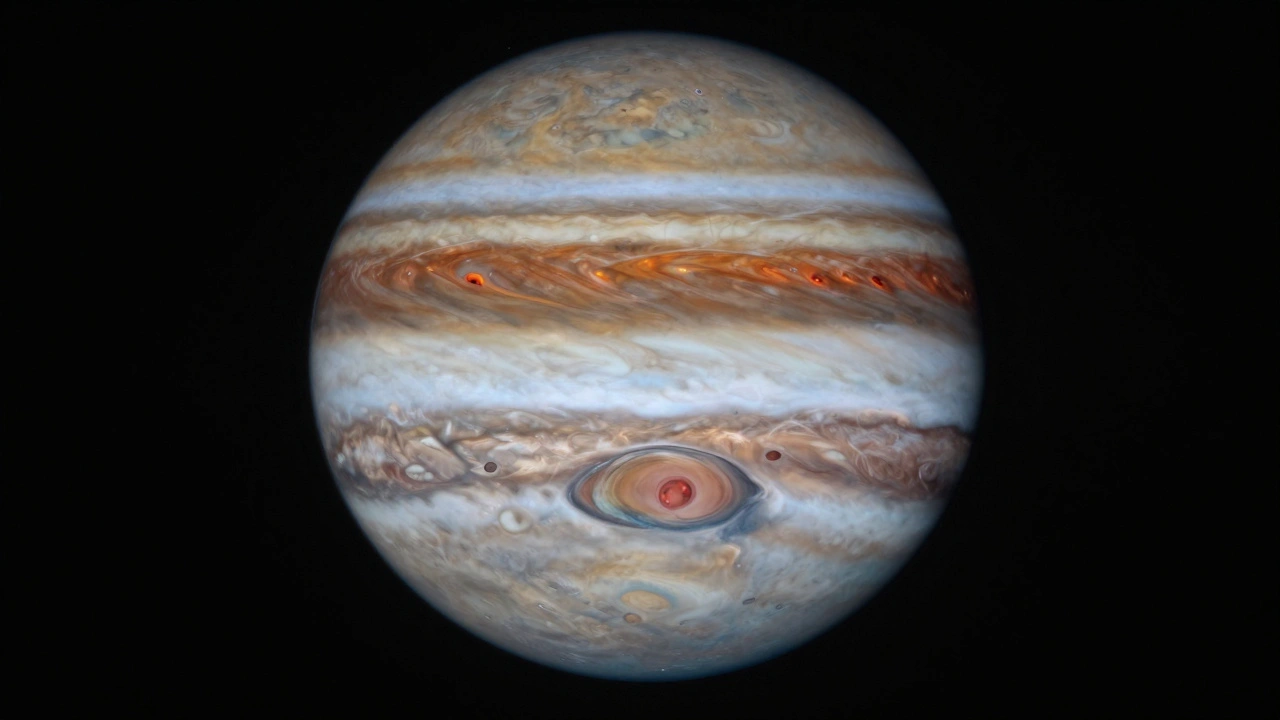
Imagine looking at Jupiter through binoculars. You will see a tiny disk, maybe with a hint of bands if conditions are perfect. Now look through a telescope. You will see the distinct colored bands of the atmosphere, the Great Red Spot, and the four Galilean moons orbiting in real-time. Saturn transforms from a fuzzy blob into a ringed system with visible gaps. These experiences are not just incremental improvements; they are entirely different categories of observation.
Telescopes also excel at light gathering. Larger mirrors or lenses collect significantly more photons than binocular objectives. This means you can see fainter objects-distant galaxies, planetary nebulae, and emission nebulae-that simply do not appear in binoculars. However, this power comes with trade-offs. Telescopes have narrow fields of view, making it hard to find objects without proper tracking or a finder scope. They are also heavier, more expensive, and require more maintenance.
- Best for: Planets, lunar craters, globular clusters, and faint deep-sky objects.
- Effort level: High. Requires setup, alignment, and learning.
- Cost: A decent starter telescope starts around $300-$600.
Key Differences: Field of View, Magnification, and Portability
To make an informed decision, you need to understand the technical differences between these two tools. Let’s break down the three most critical factors: field of view, magnification, and portability.
| Feature | Binoculars | Telescopes |
|---|---|---|
| Field of View | Wide (0.5° - 1°) | Narrow (0.1° - 0.5°) |
| Magnification | Fixed (usually 7x-12x) | Variable (20x-300x+) |
| Light Gathering | Moderate (depends on objective size) | High (depends on aperture) |
| Portability | High (handheld or small tripod) | Low (requires sturdy mount/tripod) |
| Learning Curve | Minimal | Steep (alignment, focusing, finding objects) |
| Image Stability | Shaky without tripod | Stable with proper mount |
The field of view is the area of the sky you can see at once. Binoculars win here comfortably. Telescopes force you to hunt for objects, which can be frustrating if you don’t know the sky well. Magnification is where telescopes dominate. Higher magnification reveals smaller details but requires a steady mount and excellent atmospheric conditions. Portability is often overlooked. A lightweight binocular set fits in a car trunk easily. A telescope, especially a reflector or Schmidt-Cassegrain, can weigh 20 pounds or more and require a vehicle to transport.
Choosing Based on Your Goals: What Do You Want to See?
Your choice should be driven by your observational goals. Ask yourself: What excites me more? Seeing the whole Milky Way stretch across the sky, or seeing the rings of Saturn? Here is how to match your interests to the right tool.
If You Love Star Clusters and Nebulae
Choose binoculars. Objects like the Pleiades, Hyades, and Double Cluster are breathtaking in binoculars because you can see thousands of stars at once. Telescopes would only show a fraction of these clusters, losing the grandeur of the scene. Emission nebulae like Orion Nebula are also impressive in binoculars, appearing as a soft, glowing patch of light.
If You Are Fascinated by Planets and the Moon
Choose a telescope. The Moon is a world unto itself. With a telescope, you can see crater rims, lava tubes, and mountain ranges. Planets like Jupiter and Saturn reveal their dynamic atmospheres and moon systems. Mars shows polar ice caps and surface markings during opposition. Binoculars cannot deliver this level of detail.
If You Want to Explore Deep-Sky Objects
This is a tie, but with caveats. Large binoculars (like 15x70) can show bright galaxies like Andromeda and Triangulum. However, a telescope with a larger aperture (8 inches or more) will reveal spiral arms, dark lanes, and companion galaxies. If you want to see faint, distant objects, a telescope is necessary.
Budget Considerations: Getting the Most Value
Money is always a factor. In the astronomy world, you get what you pay for, but the value curve differs between binoculars and telescopes.
A $100 pair of binoculars will provide a surprisingly good experience. They will be sharp, bright, and easy to use. You can spend $200-$300 on high-end binoculars for better coatings and ergonomics, but the jump in performance is marginal for most users. On the other hand, a $100 telescope is usually a toy. It will have poor optics, a flimsy mount, and be frustrating to use. A decent entry-level telescope starts around $300-$400. To get truly satisfying views of deep-sky objects, you often need to invest $600-$1,000 or more.
If you are on a tight budget, binoculars are the smarter investment. They offer immediate gratification and high quality for low cost. Telescopes require a higher initial investment to avoid disappointment.
Practical Tips for Beginners
No matter which tool you choose, follow these tips to enhance your experience.
- Start with the Moon. It is the easiest target and helps you learn focusing and handling.
- Use a tripod for binoculars. Handholding binoculars above 7x magnification causes shaky images. A cheap camera tripod adapter solves this.
- Learn the sky first. Before buying any equipment, spend time looking at the sky with your naked eye. Learn the constellations. This makes finding objects with either tool much easier.
- Wait for dark skies. Light pollution kills astronomical viewing. Find a location away from city lights for the best results.
- Let your eyes adjust. It takes 20-30 minutes for your pupils to fully dilate. Avoid white light (use red light instead) to preserve your night vision.
When to Upgrade or Combine
You don’t have to choose forever. Many serious astronomers own both. Binoculars are used for scanning the sky and enjoying wide-field views, while telescopes are brought out for specific targets like planets or faint galaxies. If you start with binoculars and find yourself wanting more detail, upgrading to a telescope is a natural next step. Conversely, if you find telescopes too cumbersome, you might stick with binoculars and enjoy the simplicity.
Another option is a Spyglass or a small refractor telescope mounted on a stable tripod. These offer a middle ground, providing moderate magnification and portability. However, for pure astronomy, binoculars and traditional telescopes remain the gold standards.
Can I use binoculars for astrophotography?
Yes, but it is challenging. You need a sturdy tripod and a camera that can attach to the binoculars. Results are best for wide-field shots of the Milky Way or large star clusters. Telescopes are generally better for detailed planetary or deep-sky photography.
What is the best magnification for astronomy binoculars?
10x50 is considered the standard for astronomy. The 10x magnification provides enough detail, while the 50mm objective lenses gather plenty of light. 7x50 is easier to hold handheld, and 15x70 offers more detail but requires a tripod.
Do I need a telescope to see Saturn’s rings?
You can see a hint of Saturn’s shape with high-quality binoculars, but to clearly see the rings as distinct structures, you need a telescope with at least 60mm aperture and 50x magnification.
Which is better for beginners: binoculars or a telescope?
Binoculars are better for beginners. They are easier to use, less expensive, and provide immediate satisfaction. Telescopes have a steep learning curve and can be frustrating if you don’t know the sky well.
Can I see galaxies with binoculars?
Yes, you can see bright galaxies like Andromeda (M31) and Triangulum (M33) with binoculars. They will appear as faint, fuzzy patches of light. Telescopes will reveal more structure and detail.