19 May 2026
- 0 Comments
Why Season Matters More Than You Think for Meteor Watching
We often think of meteor showers as a single type of event: dark skies, lying on the grass, and counting shooting stars. But if you’ve tried to watch them in both January and July, you know that’s not quite right. The experience changes drastically depending on the season. It isn’t just about which shower is active; it’s about how your body handles the environment while you wait for those flashes.
Watching meteors requires patience. You might sit for an hour seeing nothing but static stars before a burst of activity. In summer, that means dealing with humidity, bugs, and heat retention in your clothes. In winter, it means fighting numbness, wind chill, and the struggle to keep your eyes open without freezing. Understanding these seasonal differences helps you plan better gear and choose the right time to go out.
The Big Players: Winter vs. Summer Showers
To understand the comfort challenge, we first need to look at what we are actually watching. The major meteor showers follow predictable annual cycles based on Earth's orbit through debris trails left by comets and asteroids.
The Perseids, peaking in mid-August, are the kings of summer. They offer high rates-often 50 to 100 meteors per hour under perfect conditions-and bright fireballs. Because they radiate from the constellation Perseus, which sits high in the northern sky during summer nights, you get excellent viewing angles after midnight.
On the other end of the spectrum, we have the Quadrantids in early January. This is often the most underrated shower of the year. It peaks around January 3-4 and can produce up to 80 meteors per hour. However, its peak is incredibly sharp, lasting only a few hours. Then there are the Geminids in mid-December. These are reliable, steady, and often brighter than the Perseids because they originate from an asteroid (3200 Phaethon) rather than a comet, making them denser and slower.
| Showers | Peak Month | Avg. Rate (ZHR) | Best Viewing Time | Key Challenge |
|---|---|---|---|---|
| Quadrantids | January | 80/hr | Pre-dawn | Extreme Cold |
| Geminids | December | 120/hr | After Midnight | Short Nights |
| Perseids | August | 100/hr | After Midnight | Bugs & Humidity |
| Delta Aquariids | July | 20-30/hr | All Night | Heat Retention |
Summer Stargazing: Battling Heat and Bugs
When people hear "summer stargazing," they imagine warm nights and light jackets. That works until you stop moving. Your body generates heat, and when you lie still on a blanket or in a lawn chair for two hours, that heat has nowhere to go. You start sweating, which leads to discomfort and distraction.
The bigger issue in summer, especially here in places like Portland or anywhere with lush vegetation, is insects. Mosquitoes, gnats, and no-see-ums are active all night. You cannot simply apply bug spray and forget it; it wears off, and reapplying it while trying to keep your eyes adjusted to the dark is frustrating. Plus, many sprays smell strong, which can be unpleasant when you’re close to others or trying to enjoy the natural scent of the outdoors.
Humidity also plays a role. High moisture in the air can make lenses fog up if you are using binoculars or cameras. For naked-eye viewing, it mostly affects comfort. A damp breeze feels sticky rather than refreshing. The key to surviving summer showers is ventilation. You want gear that lets air circulate so you don’t overheat, but blocks bugs effectively.
Winter Stargazing: The Cold Reality
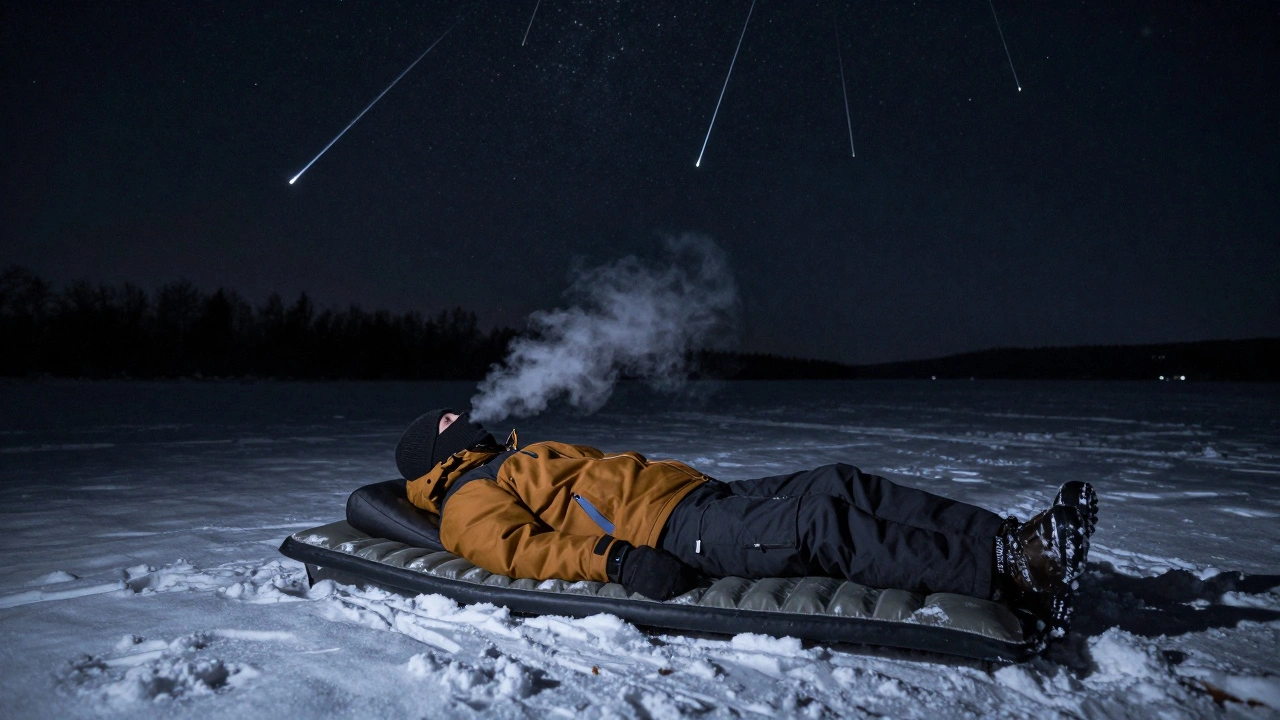
Winter meteor showers are physically demanding. The Quadrantids and Geminids require you to be outside during the coldest months. In January and December, temperatures in many parts of the Northern Hemisphere drop well below freezing. Wind chill makes it feel even colder. If you sit still, your core temperature drops, and extremities freeze quickly.
The biggest mistake people make is wearing too many bulky layers that restrict movement. You need warmth, but you also need to be able to shift positions. Lying on frozen ground sucks heat away from your body faster than air does. Without proper insulation between you and the ground, you will lose feeling in your legs within 30 minutes, regardless of how warm your jacket is.
Another hidden challenge is condensation. When you step from a warm car into cold air, your glasses and camera lenses fog up instantly. Your breath forms clouds in front of your face, obscuring your view. Planning for these thermal dynamics is essential for enjoying winter showers.
Gear Strategy: What to Pack for Each Season
Your gear list should change dramatically between June and January. Using the same setup for both seasons will lead to discomfort and likely cut your session short.
Summer Essentials
- Lightweight, breathable clothing: Avoid heavy cotton jeans. Opt for synthetic blends or linen that wick sweat and dry quickly. Long sleeves protect against sunburn earlier in the evening and bug bites later.
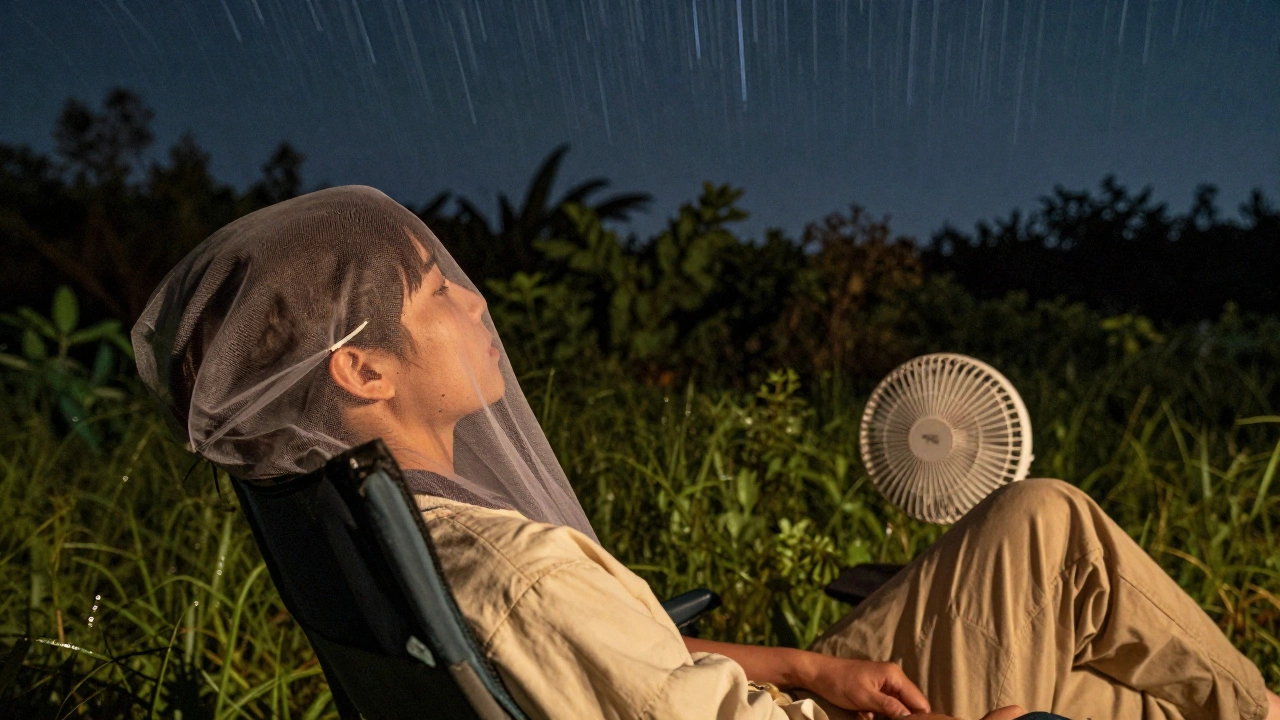
- Insect protection: Bring a head net or mesh veil. It sounds extreme, but it allows you to breathe freely and see clearly without swatting mosquitoes constantly. Use DEET-free repellents on skin to avoid irritation near eyes.
- Hydration: You lose more water in humid heat than you realize. Bring electrolyte drinks, not just water. Dehydration causes headaches, which ruin stargazing.
- Cooling aids: A small portable fan directed at your neck can help regulate body temperature without blowing dust into your eyes.
Winter Essentials
- Insulated sleeping pad: This is non-negotiable. An R-value of 4 or higher prevents ground cold from seeping into your back and legs. Lie directly on this, not on a thin towel.
- Hand and foot warmers: Chemical heat packs last 8-10 hours. Put them in your pockets and inside your boots. Keep your toes warm to maintain circulation.
- Thermal base layers: Wear merino wool or synthetic thermals next to your skin. Cotton retains moisture and gets cold when you sweat slightly from exertion walking to the site.
- Insulated mug: Hot chocolate or tea keeps your core warm. Ensure the lid seals tightly to prevent spills in the dark.
- Balaclava or buff: Protects your face from wind chill while allowing you to see. Regular scarves can slip down or block your peripheral vision.
Finding Dark Skies: Light Pollution in All Seasons
Regardless of the season, light pollution is your enemy. Urban areas wash out faint meteors, leaving you to see only the brightest ones. The difference between city lights and true darkness is stark. In a Bortle Class 1-2 sky (very dark), you can see dozens of faint meteors that disappear completely in suburban areas (Bortle Class 6-7).
Summer offers longer nights, meaning more time to watch. However, twilight lasts longer, delaying the start of prime viewing. Winter nights are shorter, but the darkness comes quicker after sunset. The trade-off is that you must finish observing before sunrise, which happens earlier in winter. Plan your arrival time accordingly. Aim to arrive at least an hour before the radiant point of the shower rises above the horizon.
Planning Your Session: Timing and Patience
Meteor showers aren’t like concerts where everything happens at once. They are random events spread over hours. The best strategy is to let your eyes adapt to the dark. Give yourself 20-30 minutes in total darkness before expecting to see much. Avoid looking at phone screens; use red-light mode if you must check time or maps.
For summer showers like the Perseids, aim for late August nights when the moon is low or absent. A full moon drowns out meteors. Check lunar calendars beforehand. For winter showers, the moon phase matters less because you are often watching pre-dawn, but a bright moon can still reduce contrast. Always check weather forecasts for cloud cover. Clear skies are useless if they are blocked by clouds.
Safety Tips for Solo Observers
Whether it’s hot or cold, safety comes first. Tell someone where you are going and when you expect to return. Carry a fully charged phone in a sealed bag to protect it from moisture or cold. In winter, battery life drains faster in low temperatures, so keep the phone close to your body heat. In summer, dehydration and heat exhaustion are real risks, especially if you hike to remote spots. Bring more water than you think you need.
Which is better to watch: winter or summer meteor showers?
It depends on your tolerance for discomfort. Summer showers like the Perseids offer warmer weather but bring bugs and humidity. Winter showers like the Geminids and Quadrantids provide clearer, crisper air and often higher meteor counts, but require serious preparation for cold. If you prioritize comfort, choose summer. If you prioritize intensity and clarity, choose winter.
Do I need special equipment to see meteor showers?
No. Meteor showers are best viewed with the naked eye. Binoculars and telescopes limit your field of view, causing you to miss meteors that streak across wider areas of the sky. Good eyesight and dark-adapted pupils are your best tools.
How do I stay warm during winter meteor showers?
Use an insulated sleeping pad with a high R-value to block ground cold. Wear layered clothing including thermal base layers. Use chemical hand and foot warmers. Drink hot beverages frequently. Avoid sitting directly on metal or concrete surfaces.
What is the best time of night to watch meteor showers?
The best time is usually after midnight, closer to dawn. This is when the radiant point of most showers is highest in the sky, and Earth is facing forward into the debris stream, increasing collision rates. Arrive early to let your eyes adjust to the dark.
Can I see meteor showers from my backyard?
Yes, but you will see fewer meteors due to light pollution. Bright meteors will still be visible, but faint ones will be washed out by streetlights and house lights. For the best experience, travel to a location with minimal artificial lighting, such as a state park or rural area.