21 Feb 2026
- 0 Comments
Buying your first telescope is exciting. You’ve picked out the model, read the reviews, and maybe even practiced setting it up in your backyard. But here’s something no one tells you: solar filters and nighttime trip hazards are just as important as the optics. Skip these, and you risk permanent eye damage-or a trip to the ER. This isn’t scare tactics. It’s what actually keeps beginners safe.
Why Solar Filters Aren’t Optional
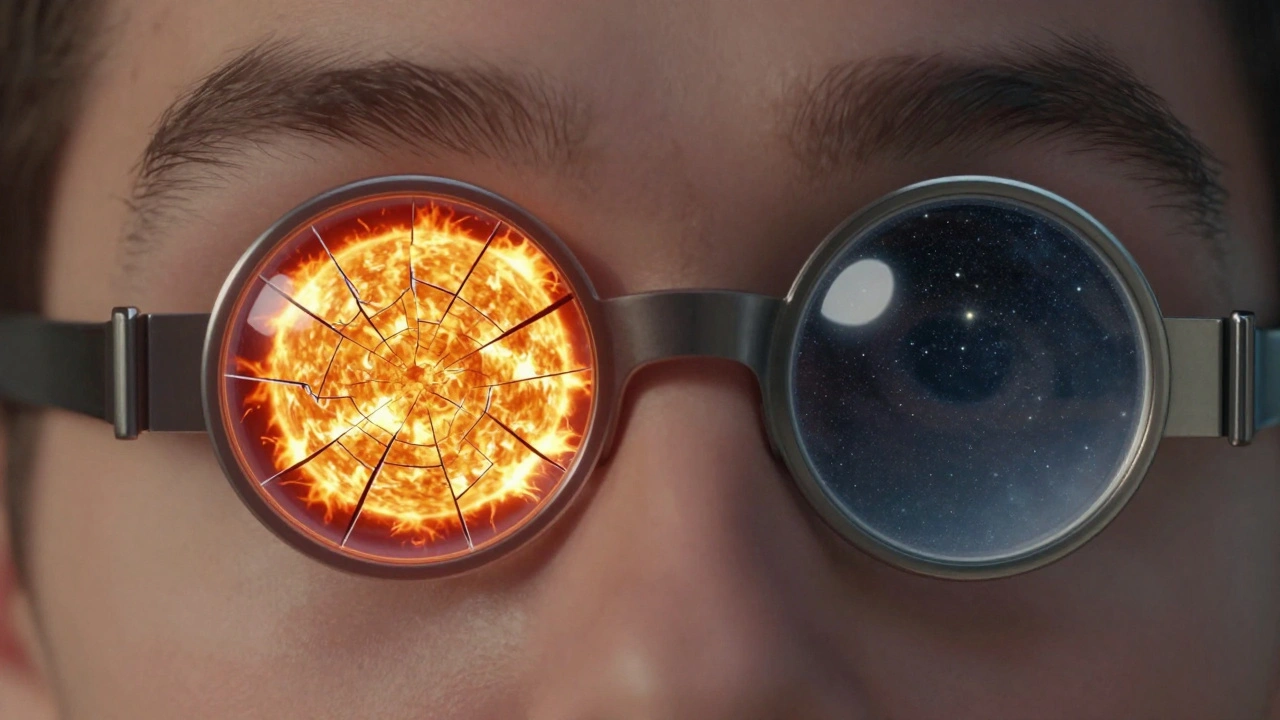
It’s tempting to point your telescope at the sun. It’s bright, it’s there, and you’ve heard about seeing sunspots. But looking at the sun through an unfiltered telescope is like staring into a blowtorch. Your eye’s retina doesn’t feel pain until it’s too late. Damage is instant and permanent. No warning. No second chance.
Not all filters are created equal. A cheap solar filter bought off Amazon that says "solar viewing" might not be safe. Look for filters that meet the ISO 12312-2 international safety standard. That’s the only real benchmark. Reputable brands like Thousand Oaks Optical, Baader, and Celestron make certified filters that screw onto the front of your telescope’s objective lens. Never use a filter that slips into the eyepiece. Those can crack from heat buildup and shatter into your eye.
Here’s a simple rule: if you can’t see the sun’s disk clearly through the filter without squinting, it’s not safe. If you see any pinpricks of light around the edges, stop using it. Replace it. Even a tiny crack or scratch means it’s no longer reliable. And never, ever try to use sunglasses, smoked glass, or CDs as makeshift filters. They block less than 1% of the light you need to block.
What Happens When You Look at the Sun Without a Filter
One amateur astronomer in Oregon, a 32-year-old teacher, pointed his new 8-inch reflector at the sun during a partial eclipse in 2024. He thought a neutral density filter would be enough. It wasn’t. He lost central vision in his right eye. He could still see shapes, but not faces, text, or details. He never saw the sun directly again. His case isn’t rare. The American Astronomical Society reports over 200 documented cases of solar retinopathy from amateur telescopes since 2015. Half were beginners.
There’s no treatment. No surgery. No recovery. Once the photoreceptor cells in your retina are destroyed, they’re gone for good. That’s why the first thing you do after setting up your telescope should be to install the solar filter-before you even turn it on.
Nighttime Hazards: More Than Just Tripping
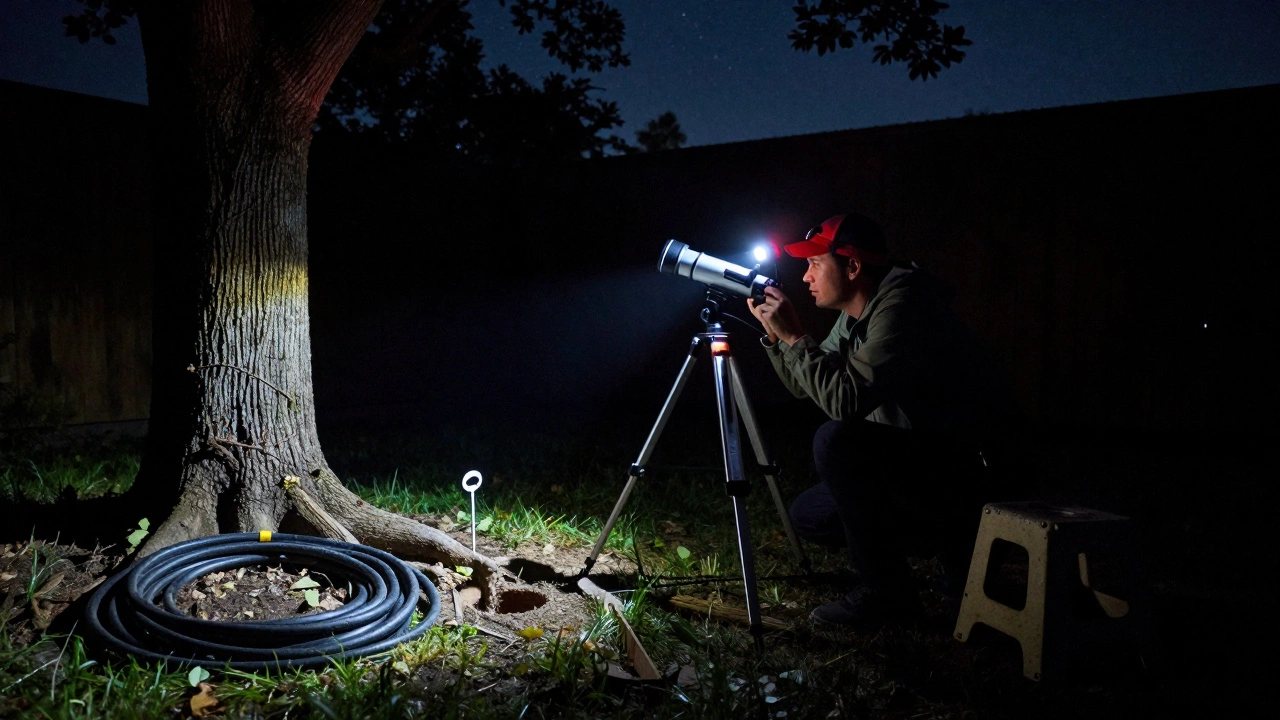
At night, your backyard isn’t just dark. It’s unpredictable. You’re focused on aligning your telescope, adjusting the focus, or scribbling notes. You forget about the uneven ground, the garden hose, the low branch, or the dog’s leash.
Most beginners don’t realize how much depth perception drops after dark. A 6-inch drop in the grass looks like a flat surface. A tree root you didn’t see at noon becomes a trip hazard after 10 p.m. One user in Portland fractured his ankle last winter when he stepped into a hidden hole while chasing a comet. He was carrying his eyepiece case. He dropped it. When he bent down to pick it up, he twisted his ankle. He couldn’t walk for six weeks.
Here’s what works: always use a red-light headlamp. White light ruins your night vision and makes it harder to see obstacles. A red light lets you see the ground without losing your adaptation to darkness. Keep your observing area clear. Before you start, walk the path with your headlamp on. Move hoses, rake leaves, mark holes with garden stakes. Keep your telescope’s tripod legs away from high-traffic areas. If you have pets, keep them inside. A curious cat can knock over a $500 telescope in seconds.
What to Carry: The Beginner’s Safety Kit
You don’t need a full first-aid station. But there are five things every beginner should keep nearby:
- A red-light headlamp with extra batteries
- A small first-aid kit with adhesive bandages and antiseptic wipes
- A foldable stool or low chair-no need to stand for hours
- A water bottle and a snack-cold nights drain energy fast
- A printed star map or offline astronomy app on a tablet (not your phone-screen glare ruins night vision)
And yes, bring a jacket. Even in Portland, nighttime temperatures drop 20 degrees faster than you think. Hypothermia isn’t just for hikers. It happens to people sitting still in their backyards.
When to Stop: Warning Signs You’re Pushing Too Far
It’s easy to get caught up in the moment. You’ve waited all week for clear skies. The moon is perfect. Jupiter is bright. You don’t want to go inside. But your body will tell you when it’s time.
If you’re shivering, your fingers are numb, or your vision is blurry from fatigue, stop. Pushing through doesn’t make you tougher. It makes you reckless. One user in Texas kept observing for four hours straight in 35-degree weather. He passed out on the lawn. His telescope fell over. His wife found him hours later. He was fine, but his equipment was damaged. He didn’t observe again for six months.
Set a timer. Three hours max on your first few outings. If you’re still awake and alert after that, fine. But don’t let enthusiasm override common sense. Astronomy is a marathon, not a sprint.
What You Shouldn’t Do
- Don’t use a telescope without a solar filter-even for a second.
- Don’t rely on smartphone apps for navigation in the dark without a red-light filter.
- Don’t observe alone if you’re new. Bring a friend, even if they’re not into astronomy. Just having someone there changes everything.
- Don’t assume your telescope’s manual covers safety. Most don’t.
- Don’t use a telescope indoors through a window. Glass distorts the image and can trap heat, warping the optics.
Where to Get Reliable Solar Filters
Stick to known brands. Avoid generic filters sold on eBay or random online marketplaces. Here are three trusted sources:
- Thousand Oaks Optical - Their glass filters are durable and widely recommended by observatories.
- Baader AstroSolar - Their film filters are lightweight and safe for both refractors and reflectors.
- Celestron - Their SkyMaster series includes integrated filters for beginner models.
Always check the filter’s serial number against the manufacturer’s website. Some counterfeit filters have fake ISO labels. A real one will have a batch code you can verify.
Final Thought: Safety Isn’t Boring. It’s Respect.
Telescopes give you a window into the universe. But that window is fragile-both the lens and your eyes. Safety gear isn’t a sign you’re inexperienced. It’s proof you care enough to keep seeing the stars for years to come. A good filter lasts a decade. A damaged retina doesn’t heal. Take the extra five minutes to check your gear. Walk your path. Bring a jacket. Stay alert. The universe will still be there tomorrow. And the next night. And the one after that.
Can I use a solar filter on my smartphone camera to photograph the sun?
No. Smartphone cameras don’t have the same optical path as telescopes, and even a certified solar filter won’t protect the camera’s sensor from overheating. You can damage the camera’s image sensor permanently. If you want to photograph the sun, use a dedicated solar telescope or a DSLR with a proper front-mounted solar filter designed for photography.
What if I accidentally look at the sun without a filter for a second?
Even a fraction of a second can cause damage. If you think you’ve looked at the sun without a filter, stop observing immediately. Don’t rub your eyes. Avoid bright screens. See an eye doctor within 24 hours-even if you feel fine. Retinal damage often has no immediate symptoms. Early diagnosis is the only way to monitor the extent of injury.
Is it safe to observe the sun during sunrise or sunset?
No. The sun’s intensity doesn’t drop enough at sunrise or sunset to make it safe. Its light still carries enough energy to burn your retina. Always use a certified solar filter, no matter the time of day.
Why can’t I just use eclipse glasses instead of a solar filter?
Eclipse glasses are designed for direct viewing with the naked eye, not for use with optical devices like telescopes or binoculars. The concentrated light from a telescope will overwhelm the filter material, causing it to crack or melt. Always use a filter designed specifically for your telescope’s aperture and optical path.
How often should I replace my solar filter?
If it’s undamaged and properly stored, a high-quality solar filter can last 10-15 years. But inspect it before every use. Look for pinholes, scratches, or warping. If the film is peeling or the glass is cracked, replace it immediately. Never use a filter that’s been exposed to extreme heat or left in direct sunlight for long periods.