14 Jan 2026
- 0 Comments
Look up on a clear night, and you’ll see more than just dots of light. You’ll see stories - tales of gods, monsters, heroes, and lovers carved into the sky by ancient eyes. The constellations aren’t random groupings of stars. They’re cultural maps, painted by civilizations who looked up and asked, What does this mean?
Why Do We See Shapes in the Stars?
Humans have been connecting stars for at least 40,000 years. The earliest known star map, carved into a mammoth tusk in Germany, shows a pattern that might be the Pleiades. But it wasn’t science that drove these connections - it was story. Without telescopes, without physics, ancient people used myth to make sense of the sky. They saw patterns because their brains are wired to find meaning. A lion, a hunter, a swan - these weren’t just convenient labels. They were living narratives that explained the world.
Every culture had its own constellations. The Aboriginal Australians saw a canoe in the Southern Cross. The Chinese saw a dragon winding through the northern sky. But when Western astronomy took shape, it locked in the Greek and Roman versions. Why? Because those stories got written down, preserved, and spread through empires. Today, the 88 official constellations recognized by the International Astronomical Union are mostly based on those ancient Mediterranean tales.
The Hunter and the Bear: Orion and Ursa Major
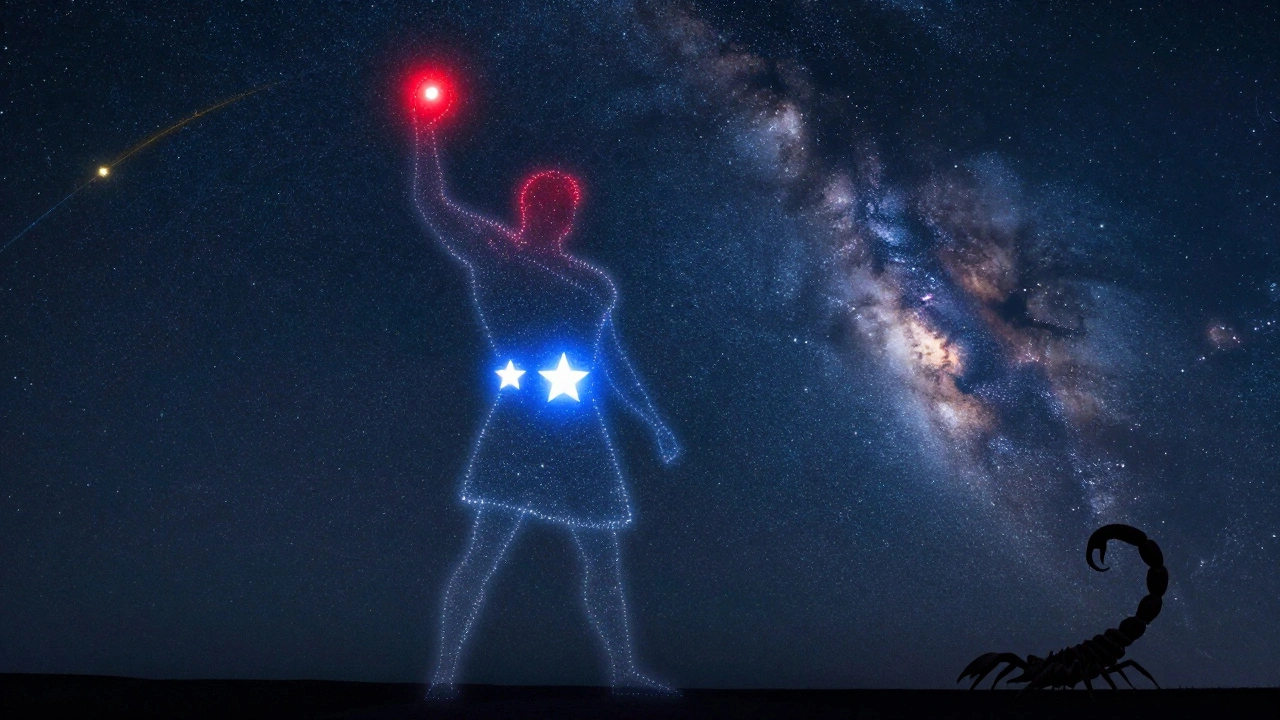
One of the most visible constellations in the winter sky is Orion - the hunter. Three bright stars in a row form his belt. Above them, his shoulder glows with Betelgeuse, a red supergiant that could swallow our solar system. Below, Rigel shines as his foot. To the Greeks, Orion was a giant hunter, boastful and brave. He claimed he could kill every beast on Earth. That arrogance didn’t end well. According to myth, the Earth goddess Gaia sent a giant scorpion to kill him. The scorpion succeeded, but Zeus, impressed by Orion’s courage, placed him in the sky. The scorpion became Scorpius, placed on the opposite side of the sky so they never meet again.
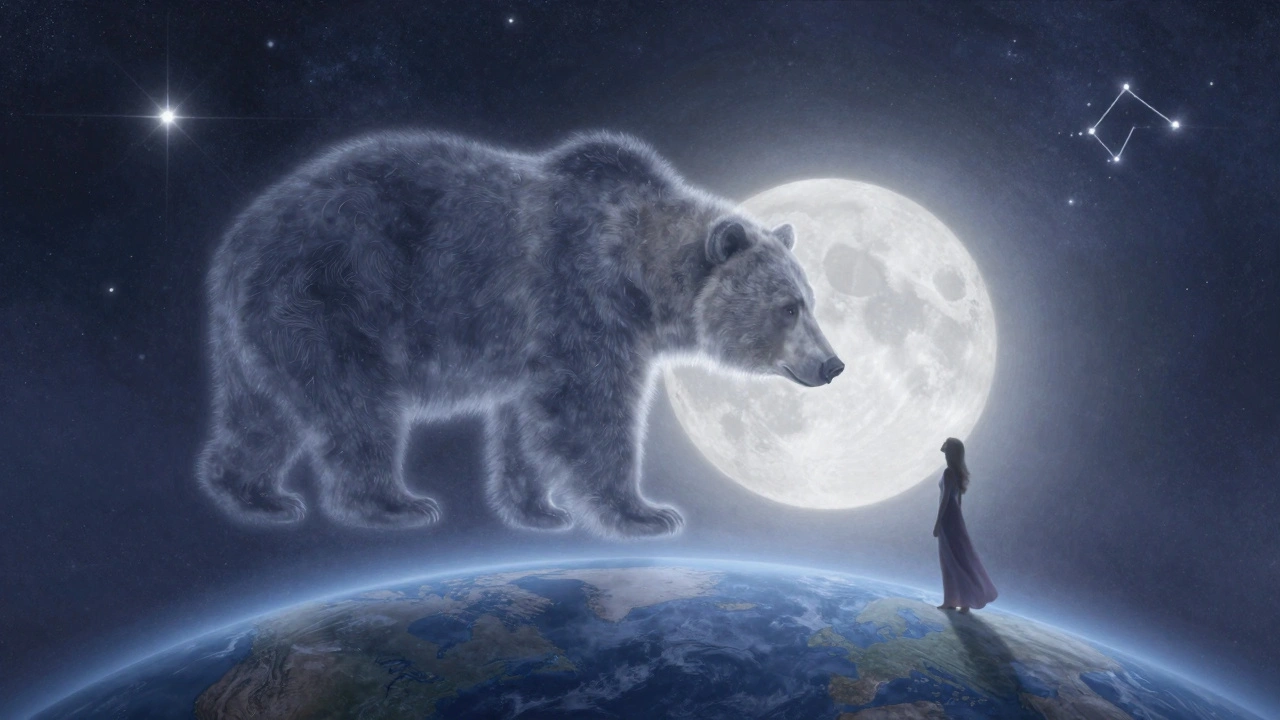
Just above Orion, you’ll find Ursa Major - the Great Bear. Its most famous part is the Big Dipper, a spoon-shaped group of seven stars. To the Greeks, this was Callisto, a beautiful nymph loved by Zeus. When Zeus’s jealous wife Hera found out, she turned Callisto into a bear. Years later, Callisto’s own son, Arcas, nearly shot her while hunting. Zeus intervened, lifting both into the sky as bears. But Hera, still angry, asked Poseidon to keep them forever out of the water. That’s why Ursa Major never dips below the horizon in the northern hemisphere - it’s stuck circling the North Star, forever in exile.
The Swan, the Lyre, and the Swan’s Song
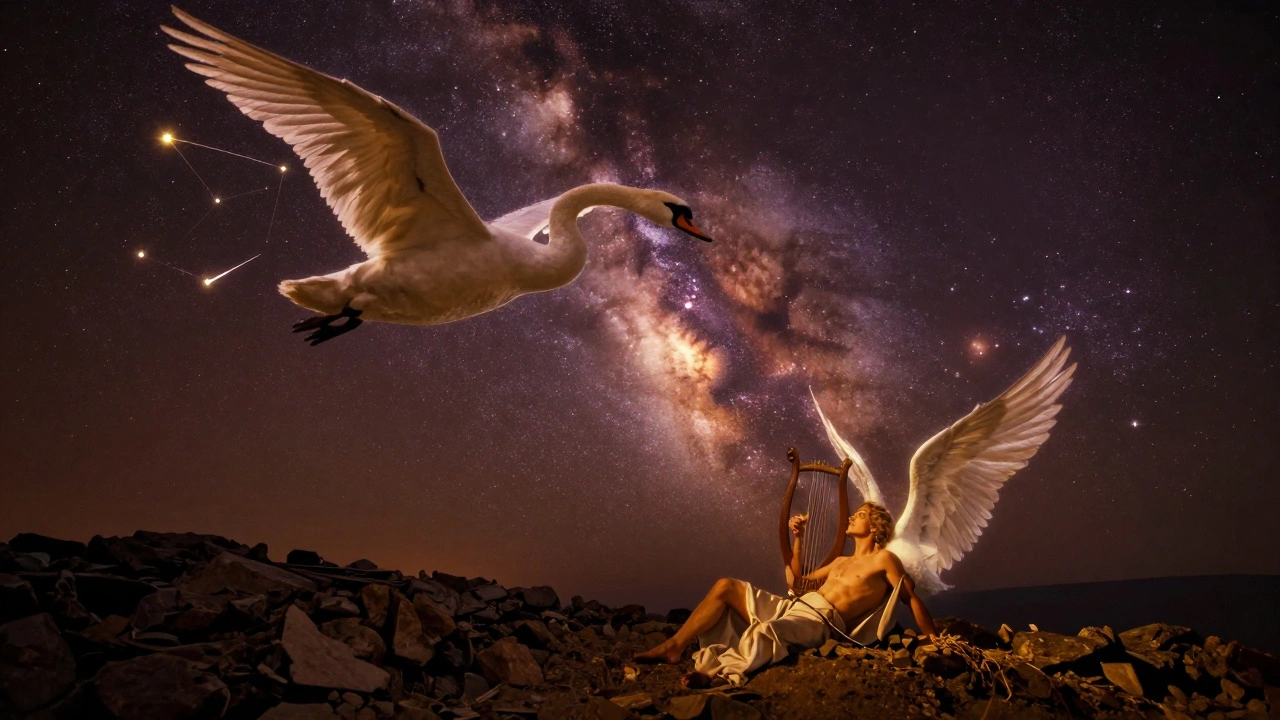
Look east in late summer, and you’ll see Cygnus - the Swan - stretching across the Milky Way. Its brightest star, Deneb, marks its tail. In Greek myth, this was Orpheus, the legendary musician. After his wife Eurydice died, he descended into the underworld and charmed Hades and Persephone with his lyre. They let her go - on one condition: he couldn’t look back until they reached the surface. He looked. She vanished. Broken, Orpheus wandered the earth, playing music so beautiful even stones wept. Eventually, he was torn apart by frenzied women. His soul went to the afterlife, but his lyre was placed in the sky as Lyra. His body became Cygnus, the swan, a bird known for its haunting, final song.
Notice how many of these stories end in death - but also in transformation. The stars don’t just remember the dead. They turn grief into something eternal. That’s why these myths still stick. We don’t just see patterns. We see ourselves.
The Girl Who Became a Virgin: Virgo and the Wheat
Virgo, the virgin, is one of the largest constellations in the sky. Its brightest star, Spica, means “ear of wheat.” In Roman myth, Virgo was Astraea, the goddess of justice. She lived among humans during the Golden Age, when peace ruled and people didn’t need laws. But as greed and violence spread, she grew disgusted. One night, she climbed into the sky and became a constellation. Her star, Spica, was said to be the last ear of wheat she held before leaving Earth.
But there’s another version - one from Babylon. There, Virgo was linked to the goddess Shala, whose symbol was an ear of barley. The connection between the constellation and harvest is strong. Ancient farmers watched Virgo rise in the spring, signaling the time to plant. The myth wasn’t just poetry - it was a calendar. The stars told them when to work, when to wait, when to hope.
The Sea Monster and the Hero: Cetus and Perseus
Deep in the southern sky, you’ll find Cetus - the Sea Monster. It looks like a messy jumble of faint stars. But this one has a dramatic story. Cetus was sent by Poseidon to devour the kingdom of Ethiopia. Why? Because Queen Cassiopeia bragged that her daughter Andromeda was more beautiful than the sea nymphs. The gods punished pride with disaster. To stop the monster, the king chained Andromeda to a rock by the sea.
Enter Perseus. He had just slain Medusa, whose gaze turned people to stone. Flying on winged sandals, he used Medusa’s head to turn Cetus into a reef. He rescued Andromeda. They married. Later, all three - Perseus, Andromeda, and Cassiopeia - were placed in the sky. Cassiopeia, still proud, was placed in a chair that circles the pole, sometimes upside down. It’s a warning: hubris has consequences, even in the heavens.
Why These Stories Still Matter
Today, we know stars are suns, light-years away, born in gas clouds and dying in explosions. We can calculate their mass, temperature, and age. But knowing the science doesn’t erase the story. In fact, it deepens it.
When you look at Orion, you’re not just seeing three stars in a row. You’re seeing a hunter who dared to challenge nature. When you spot the Big Dipper, you’re not just tracking a pattern - you’re remembering a mother turned into a bear, still circling the sky, never allowed to rest. These stories are human. They’re about fear, love, pride, loss. They’re about what we fear and what we worship.
Modern astronomy gives us data. Ancient mythology gave us meaning. We don’t need to choose one over the other. The stars hold both. The next time you look up, take a moment. Don’t just name the stars. Listen for the stories they still whisper.
Constellations as Timekeepers
Before clocks, before calendars, the sky was the clock. Ancient farmers, sailors, and priests tracked constellations to mark seasons. The rising of Sirius, the brightest star in Canis Major, signaled the flooding of the Nile in Egypt. The appearance of Pleiades in the dawn sky told Greek farmers it was time to harvest. These weren’t superstitions - they were survival tools.
Even today, indigenous cultures use star patterns to navigate and time rituals. The Maori of New Zealand use Matariki (the Pleiades) to mark their new year. In Australia, the Yolngu people use the position of the Emu in the Sky - a dark nebula, not a bright star - to know when emu eggs are ready to collect.
The constellations we inherited from the Greeks are just one version. The real truth? The sky belongs to everyone. Every culture that looked up saw something different - and something real.
How to Find These Stories in the Sky
You don’t need a telescope. Just a clear night and a little patience.
- Start with Orion. It’s hard to miss. Find the three-star belt. Betelgeuse is the reddish star above it. Rigel is the blue-white one below.
- Follow the line of Orion’s belt upward. You’ll hit Aldebaran, the eye of Taurus the Bull. Then keep going to the Pleiades - a tiny, misty cluster of stars.
- Look north. Find Polaris, the North Star. The Big Dipper points to it. The dipper’s handle curves into Arcturus, then to Spica in Virgo.
- Use free apps like Stellarium or SkySafari to overlay constellation lines on your phone’s camera view.
- Read the myth as you look. Let the story shape how you see the pattern.
There’s no right way to see the sky. But there’s a richer way - one that connects you to people who looked up thousands of years ago and saw the same stars, and felt the same wonder.
Are the constellations real, or just human-made patterns?
The stars themselves are real - massive balls of gas millions of miles away. But the patterns we call constellations? Those are human inventions. Stars in a constellation aren’t physically connected. They just happen to line up from our viewpoint on Earth. Orion’s belt stars, for example, are 800 to 1,300 light-years apart. They’re not a team - they just look like one from here.
Why do some constellations only appear in certain seasons?
Earth orbits the sun, so each night we see a different slice of the sky. In winter, we face the center of the Milky Way, so Orion, Taurus, and Gemini are high in the sky. In summer, we look away from the center, so Scorpius and Sagittarius dominate. It’s like turning your head in a room - you see different walls depending on which way you face.
Do other cultures have different constellations?
Absolutely. The Greeks and Romans gave us the 88 official ones, but many cultures saw entirely different shapes. The Navajo saw a bear being chased by four hunters - that’s Ursa Major and the stars around it. The Polynesians used stars like Hōkūleʻa (Arcturus) to navigate across the Pacific. The Chinese divided the sky into lunar mansions and saw dragons, tigers, and cranes. The sky has no single story - only many.
Why do we still use ancient Greek myths today?
Because those stories were written down, translated, and spread by empires. Greek astronomy was adopted by the Romans, then preserved by Islamic scholars, and later revived in Europe. The names stuck - not because they’re better, but because they were recorded. Modern astronomy uses them for standardization, but the myths themselves are just one of many possible ways to understand the stars.
Can I create my own constellation?
You can - and people do. Amateur astronomers and artists often sketch personal patterns. But officially, the International Astronomical Union (IAU) is the only body that recognizes constellations, and they’ve locked in the 88 since 1922. Still, your personal story matters. Look at the stars and make your own meaning. That’s what humans have always done.