13 Apr 2026
- 0 Comments
Quick Guide to the Process
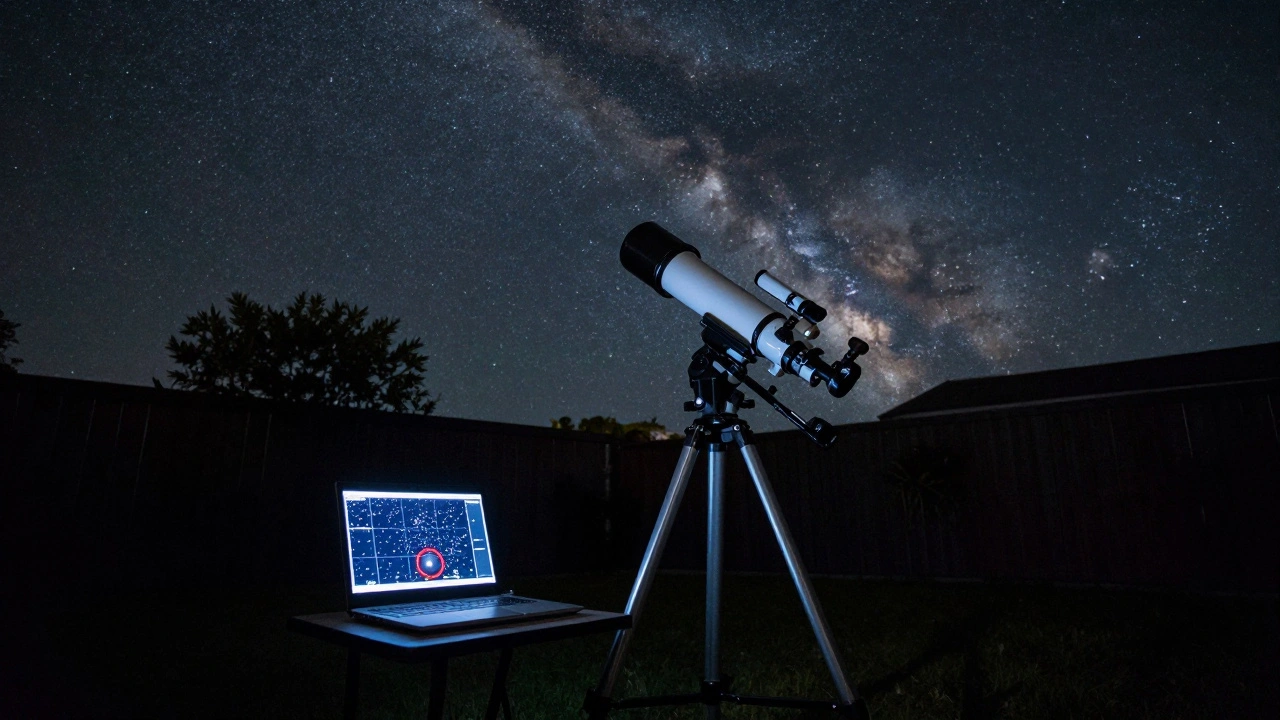
- Capture: Take multiple images of the object over several hours.
- Measure: Use software to find the exact Right Ascension (RA) and Declination (Dec).
- Format: Convert your data into the strict 80-column MPC format.
- Submit: Email or upload the report to the MPC for verification.
Why Astrometry Matters for NEOs
When you find a potential asteroid, you're basically looking at a single dot. One measurement tells you where it is *now*, but it doesn't tell you where it's going. To calculate an orbit, astronomers need a series of positions over time. This is called astrometry. For Near-Earth Objects-asteroids that come within 0.13 astronomical units of Earth-precision is everything. A tiny error in your measurement can be the difference between a harmless flyby and a potential impact warning. If you see a new object, you're performing a critical service. Most professional surveys, like Pan-STARRS, find thousands of candidates, but they can't follow up on all of them. Citizen scientists provide the "follow-up" observations that confirm if an object is a real asteroid or just a glitch in the sensor. By submitting your data, you help refine the orbit and ensure the object doesn't get "lost" again.The Tools You Need for Precise Measurements
You can't just eyeball coordinates. You need a digital workflow that eliminates human error. First, you need a high-quality star catalog. Most modern software uses the Gaia catalog, which is the gold standard for stellar positions. If your reference stars are off, your asteroid position will be off too. For software, Astrometrica is the classic choice for asteroid hunters. It's designed specifically for this task, allowing you to "blink" images to see movement and automatically calculate coordinates. If you prefer open-source tools, ASTAP (Astrometric STAcking and Processing) is a powerhouse that handles plate solving and measurement with incredible speed.| Software | Primary Use | Skill Level | Best Feature |
|---|---|---|---|
| Astrometrica | Dedicated asteroid tracking | Intermediate | Integrated blinking and MPC formatting |
| ASTAP | Plate solving and measurement | Beginner to Pro | Extremely fast star matching |
| SIRIUS | Professional astrometry | Advanced | High-precision coordinate reduction |
Step-by-Step: From Image to MPC Report
Capturing the data is the easy part. The hard part is the formatting. The MPC is very picky; if your file has one extra space or a wrong character, their automated system will reject it immediately.- Image Acquisition: Take at least 3 to 5 images of the object, spaced 15 to 30 minutes apart. This creates a "track" that allows the MPC to distinguish the asteroid from a background star.
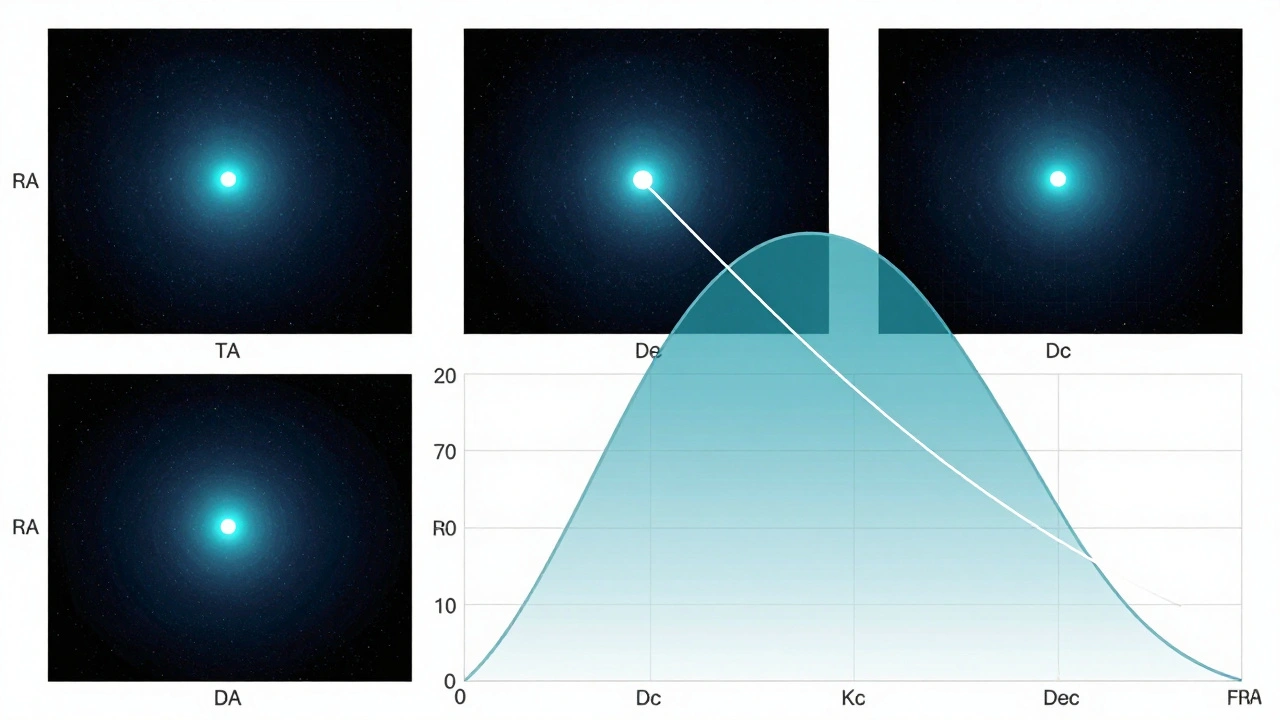
- Plate Solving: Use your software to map the pixels of your image to actual celestial coordinates. This process involves matching the stars in your photo to a known catalog.
- Centroiding: Don't just click the center of the dot. Use Gaussian fitting (a mathematical way to find the exact center of the light blob) to get the position accurate to within 0.1 arcseconds.
- Time Recording: Use UTC (Coordinated Universal Time). The MPC requires the exact moment the image was taken, converted to a decimal day format or a specific timestamp. If you use your local time, your data is useless.
- Formatting the Report: Your report must follow the 80-column format. It includes the object's designation, the date, the time, the RA, the Dec, the magnitude (brightness), and your observatory code.
Navigating the MPC Observatory Code
Before you can submit professional-grade data, you need an observatory code. This is a unique identifier that tells the MPC where the observation came from. If you're using a commercial telescope or a small home setup, you might not have one yet. To get a code, you usually have to submit a series of high-quality observations first. The MPC will review your work to ensure your measurements are consistent and accurate. Once they trust your data, they assign you a three-character code (like "XYZ"). If you don't have a code, you can still submit data using your location's coordinates, but having a code makes your reports more credible and easier to process.Common Pitfalls to Avoid
Many beginners make the mistake of submitting only one observation. A single point is just a dot; you need a string of points to create a vector. If you only provide one measurement, the MPC can't do anything with it except maybe add it to a list of "unconfirmed" sightings. Another common error is forgetting to account for Atmospheric Refraction. The Earth's atmosphere bends light, especially when an object is low on the horizon. If you don't correct for this, your coordinates will be slightly shifted, which might lead the MPC to believe the object is in a different orbit entirely. Lastly, be careful with magnitude estimates. Asteroids can vary in brightness quickly. Use a set of comparison stars in the same field of view to gauge the asteroid's brightness rather than relying on the software's automated guess, which can be tricked by a bright background nebula.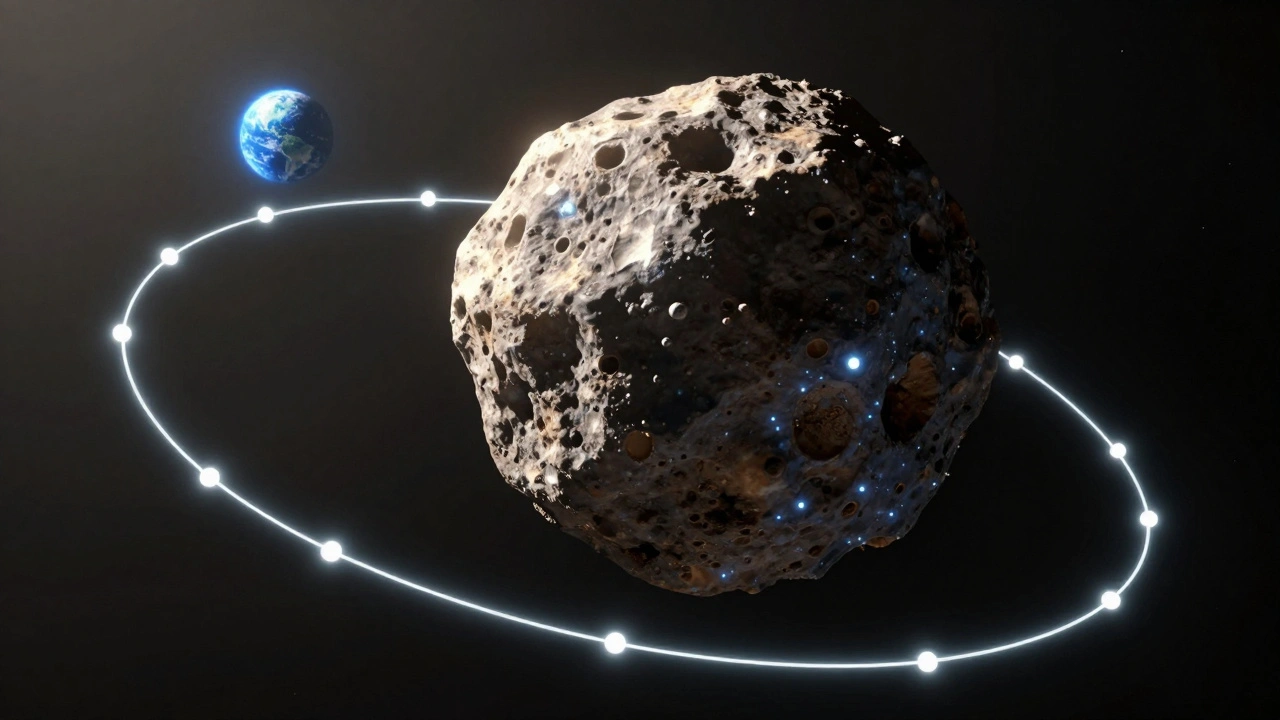
The Thrill of Confirmation
Once you send your file, it goes through an automated pipeline. If your data matches a known object, you'll get a notification. But if it doesn't match anything and other observers start reporting the same object, it becomes a "candidate." When enough astrometry is collected to lock in the orbit, the MPC issues a provisional designation (like 2026 AB1). If the orbit is stable and the object is verified as a MPC astrometry contributor's find, you've officially contributed to the planetary defense network. It's a strange feeling knowing that a tiny dot on your laptop screen is actually a million-ton rock hurtling through the void, and you're the one who helped find it.What is the difference between a discovery and a confirmation?
A discovery is the first time an object is sighted and reported. A confirmation occurs when subsequent observations (astrometry) by the same or different observers prove the object exists and allow its orbit to be calculated. An object isn't "officially" discovered until the MPC confirms its orbit is secure.
Can I use a smartphone telescope for this?
Generally, no. To provide useful astrometry, you need a steady mount and a camera capable of long exposures to capture faint objects. Smartphones lack the resolution and the ability to perform precise centroiding required by the MPC.
How often should I take images of a potential NEO?
For a high-quality report, take 3 to 5 images over a period of 2 to 4 hours. This provides a clear path of motion. If the object is moving very fast, shorter intervals (10-15 minutes) are better to avoid losing the target.
What is the MPC 80-column format?
It is a legacy text-based format where every piece of data (date, time, RA, Dec) must occupy a specific character position in a line. Because it is processed by old-school scripts, a single missing space can cause the entire file to be rejected.
Do I need to be a professional astronomer to submit data?
Not at all. The MPC welcomes data from any observer who can provide accurate, formatted measurements. Many of the most valuable follow-up observations come from dedicated amateur astronomers around the world.