31 Mar 2026
- 0 Comments
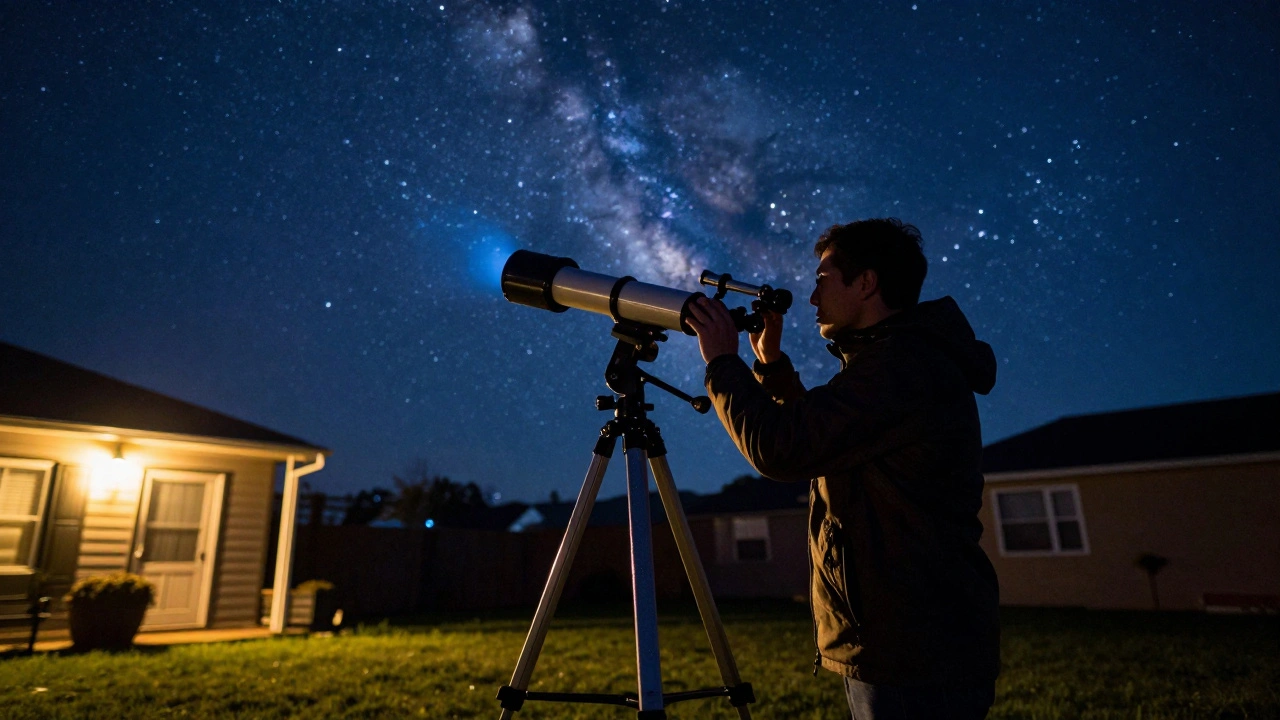
There is a persistent myth that only professional astronomers working in massive observatories drive scientific discovery. You might think your backyard telescope is useless for real research. But look at the records. In 2024 alone, over three dozen new comets were spotted by hobbyists scanning the skies from backyards in places like New Mexico or rural Oregon. That reality hits hard when you realize professional surveys often miss faint, fast-moving objects between their scheduled scans.
Amateur Astronomy is a global practice where non-professional observers systematically record celestial data to support scientific research. Also known as Citizen Astronomy, this movement dates back to the nineteenth century. Today, the "batteries-included" capability of modern camera sensors means your gear matches the sensitivity of early twentieth-century instruments. You have the ability to contribute valid data that researchers rely on for long-term trends.
The Evolution of Data Quality
Back in the days of film photography, amateur data was seen as nice supplementary material. Things changed when Charge-Coupled Devices became affordable. Now, we are talking about high-fidelity imaging that rivals some small academic telescopes.
The shift happened because standardization improved. When you take a picture of a galaxy today, software processes the raw file to remove thermal noise and atmospheric interference automatically. This makes your measurements comparable to those taken at professional facilities. It bridges the gap between casual viewing and rigorous science.
| Feature | Traditional Era (Pre-2000) | Modern Era (2020-2026) |
|---|---|---|
| Sensor Type | Kodak Film / Early CCD | Cooled CMOS / DSLR Sensors |
| Data Sharing | Paper Logbooks / Mailed Charts | Real-time Cloud Uploads / APIs |
| Accuracy | Subjective Visual Estimates | Standardized Magnitude Calibration |
This table shows why your data matters now. The technology allows for precise Photometrythe measurement of the brightness of celestial objects. With modern tools, you can detect a change in brightness of less than 0.01 magnitudes. That precision is critical for understanding stellar behavior over decades.
Case Study: Variable Stars and Long-Term Monitoring
One of the strongest arguments for public contribution comes from variable stars. These are stars that brighten and dim over time. Professionals cannot watch every single target every single night. They simply do not have enough hours in the day.
Enter the American Association of Variable Star Observersa volunteer-based network collecting and analyzing photometric data on variable stars. Since its founding in 1911, the AAVSO has gathered millions of observations. In 2025, they reached a milestone of over ten million entries in their open-access database.
Consider a typical scenario. An observer in Portland checks a known Mira variable. They notice it is dimmer than predicted. Without reporting this, models predicting the star's cycle would remain flawed. By submitting the report, you help calibrate the ephemeris for future prediction. This continuous loop of observation, submission, and modeling creates a living record of stellar evolution.
Professionals use this data to classify outbursts, predict transits, and identify exoplanet candidates. Your nightly routine directly feeds the algorithms that astronomers in universities run in their offices. It turns a local hobby into a global dataset.
Transient Events: Comets and Asteroids
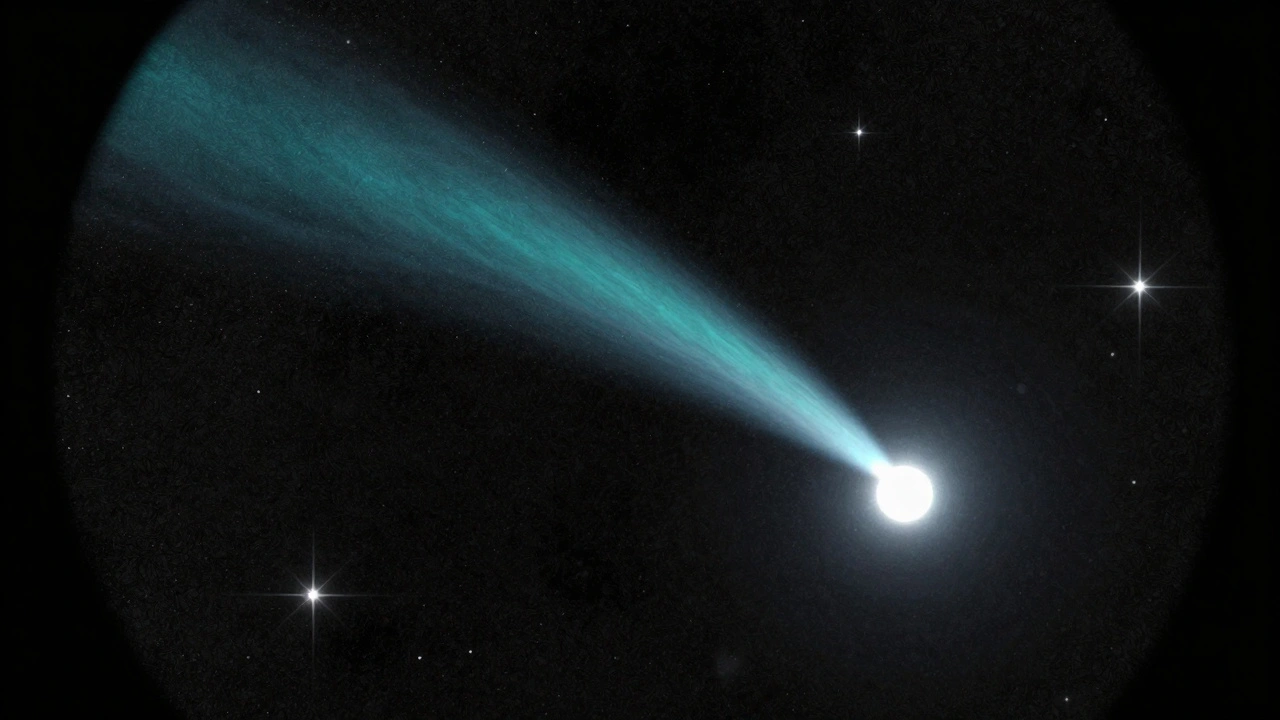
While variable stars require patience, transient events demand quick eyes. Comets are particularly good targets for the public. Unlike satellites, which follow predictable paths, many comets drift through the inner solar system undetected until they are bright enough to see.
In 2023, a notable comet was discovered by an astrophotographer in Europe who stacked images meant for deep-sky scenery. The object was moving too slowly for some automated searches to flag as immediate threats, but visually obvious to someone inspecting difference frames manually. This highlights a human advantage: pattern recognition.
Asteroid tracking works similarly. Near-Earth Objects pose potential risks. If we miss them, the consequences are severe. Amateurs often fill coverage gaps during daylight hours or in sky regions ignored by major surveys. Organizations like the Minor Planet Center coordinate these efforts globally.
The workflow usually involves:
- Imaging the sky repeatedly with fixed setups.
- Running image stacking software to cancel background stars.
- Identifying moving dots relative to fixed stars.
- Reporting coordinates via email or web forms to clearinghouses.
This pipeline ensures nothing slips through the cracks of robotic systems.
Collaborative Models and Data Credibility
Sometimes there is skepticism about amateur data quality. Why trust a hobbyist? The answer lies in verification protocols. Most reputable organizations require cross-validation. If five people see the same anomaly, it gains weight.
We have moved past the era of isolated logs. Now, platforms exist where data is instantly standardized. When you upload your chart to a central portal, algorithms check your zero-points and exposure times. If you deviate from norms, you get flagged for review before the data goes live.
Professional institutions acknowledge this necessity. The Zwicky Transient Facilityan astronomical survey designed to produce wide-field images of the visible sky every few nights regularly shares alerts that invite public follow-up. In turn, the facility uses the follow-up data to refine its own classification models. This symbiosis drives better results for everyone.
Light pollution poses the biggest barrier. In cities like Portland, the skyglow reduces contrast. However, advanced filters now cut through sodium vapor streetlights. This technological leap makes urban observing viable again. You can still collect meaningful data even from suburban backyards.
Tools for Meaningful Contribution
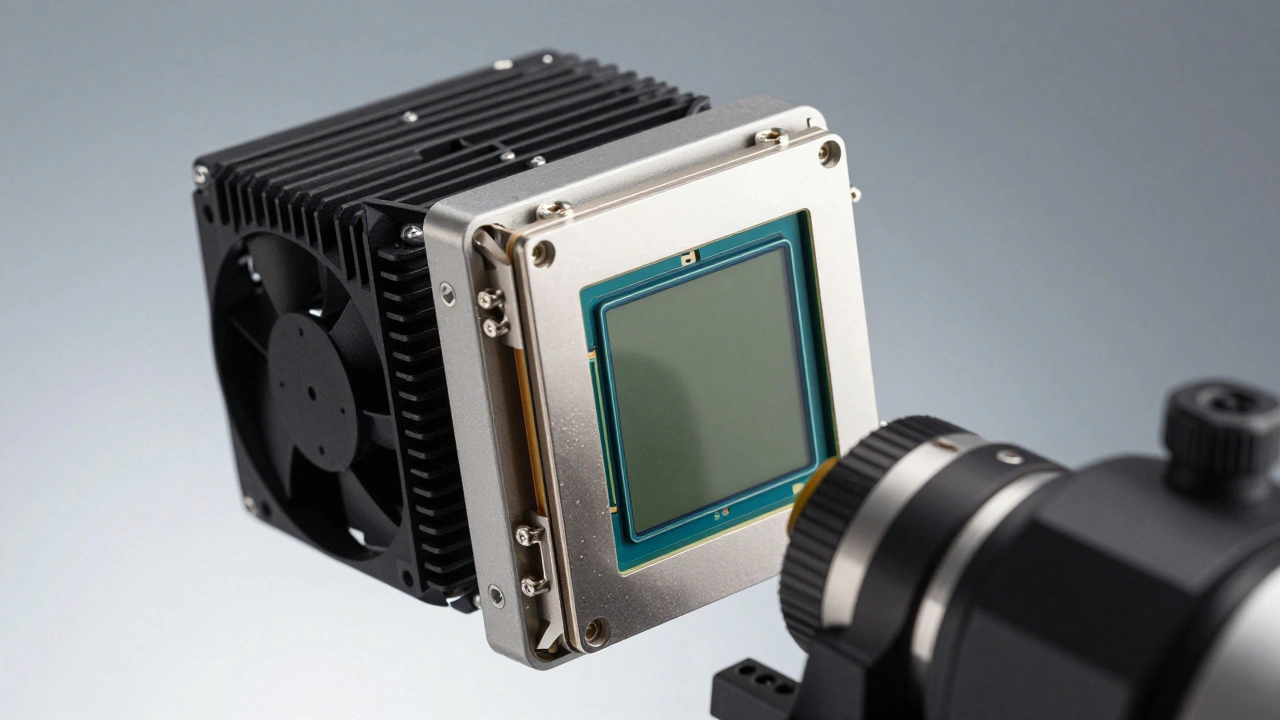
You do not need a million-dollar setup to matter. The entry barrier for serious contribution is surprisingly low. A simple webcam connected to a refractor can yield publishable results on lunar craters or planetary surface details. For deeper work, cooled monochrome cameras are preferred.
Software plays a huge role. Programs exist to automate guiding and capture sequences. They log metadata automatically, ensuring you don't forget to write down the exposure settings. This automation is key to reproducibility. Without it, your charts might lack context.
Spectroscopy is another area opening up. Small devices can attach to telescopes to break light into color components. Amateurs are helping map chemical signatures of distant stars. This adds depth beyond simple brightness measurements.
Steps to Get Involved
If you want to move from watching to contributing, the path is clear. You need to commit to consistency. Here is a logical way to start:
- Choose a Target: Find a variable star list or join a hunt for moving objects.
- Calibrate Your Gear: Take flat frames and dark frames to ensure sensor accuracy.
- Join a Network: Register with organizations like AAVSO or CBAT.
- Submit Regularly: Set aside time weekly for observation.
- Verify Your Data: Check against previous records to understand trends.
Consistency beats intensity. One hour each week provides better value than twenty hours once a month. Researchers need long baselines to detect subtle shifts in cosmic behavior.
Frequently Asked Questions
Do I need expensive equipment to publish?
No, you do not. Many significant discoveries in variable stars come from small aperture telescopes. What matters most is the accuracy of your timing and the calibration of your data files.
How is my data used professionally?
Researchers use submitted data to build light curves, update orbital predictions, and identify anomalies. Databases feed machine learning models that assist in classifying celestial objects.
Can light pollution ruin my reports?
It complicates things, but does not ruin them. If you measure magnitude differences relative to reference stars in the same frame, the light pollution effect cancels out mathematically.
What is the best time to submit observations?
Timing depends on the target. For comets, report immediately. For variables, submit at least weekly to track cycles. Consistent intervals are valued more than perfect dates.
Is there financial compensation for this work?
Generally no. This is voluntary service. However, discoverers often receive naming rights or citations in published papers acknowledging their contribution to the dataset.