2 Feb 2026
- 0 Comments
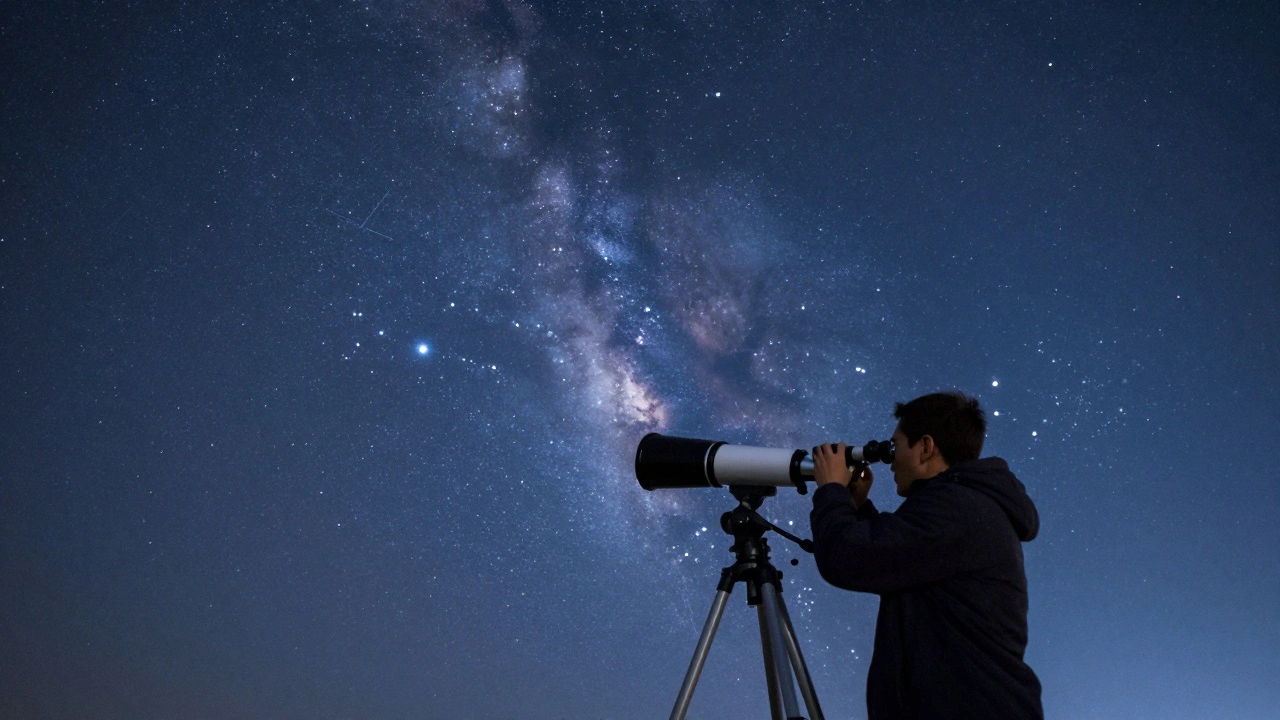
When you're out under the stars, trying to find your way from one object to another without a GoTo system, you're doing something called star hopping. It’s not just a skill-it’s a conversation with the night sky. And like any good conversation, it starts with the right words. In this case, those words are written in light, carried by a low-power eyepiece with the widest field possible.
Why Start with the Widest Field?
Think of your telescope like a camera lens. A wide-angle lens shows you more of the scene. The same goes for eyepieces. A low-power eyepiece with a wide apparent field of view (AFOV) gives you a bigger chunk of the sky at once. That’s not just nice-it’s essential for navigation. If you’re trying to jump from M42 in Orion to M43, and your field only shows three stars, you’re guessing. If your field shows a whole triangle of stars and a faint smudge of nebulosity? You know exactly where you are.Most beginners reach for their highest magnification eyepiece first. Big mistake. High power narrows your view, dims the image, and makes it harder to find anything. You’re not looking at the sky-you’re looking through a straw. Low power is your anchor. It’s your map. It’s your safety net.
What Makes an Eyepiece ‘Low-Power’?
Low-power doesn’t mean ‘weak.’ It means ‘wide and bright.’ In practical terms, it’s usually any eyepiece that gives you 30x to 50x magnification in a typical 8-inch Dobsonian or 4-inch refractor. For example:- A 32mm Plössl in an f/6 telescope = ~40x
- A 24mm wide-angle in the same scope = ~50x
- A 40mm ultra-wide = ~30x
These are your go-to numbers. Below 30x, the image gets too dim for most targets. Above 50x, you lose the wide view that makes star hopping possible. The sweet spot? Around 35x to 45x. That’s where your eyes can comfortably scan, your brain can map, and your hands can move the scope without overshooting.
Field of View: True vs. Apparent
Not all wide fields are equal. There are two types you need to understand:- Apparent Field of View (AFOV): How wide the view feels when you look through the eyepiece. Most Plössls are 50°. Premium wide-angles like Tele Vue Delos or Explore Scientific 82° go up to 80° or more.
- True Field of View (TFOV): The actual patch of sky you’re seeing. This is what matters for navigation.
To calculate TFOV: True Field = Apparent Field ÷ Magnification
Example: A 32mm Plössl (50° AFOV) in a 1200mm focal length scope gives you 37.5x magnification. So your TFOV is 50 ÷ 37.5 = 1.33 degrees. That’s about 2.5 times the width of the full moon. Now try a 24mm 82° eyepiece in the same scope: 50x magnification, 82 ÷ 50 = 1.64 degrees. You’re seeing 23% more sky. That’s not a small gain-it’s the difference between guessing and knowing.
Best Eyepieces for Star Hopping
You don’t need to spend hundreds. But you do need the right design. Here are the top three types that work:- Plössl (50° AFOV): Affordable, reliable. The 32mm is the classic starter. But its narrow view limits navigation.
- Wide-Angle (68°-70° AFOV): Brands like Celestron Ultima, Orion Expanse. Better than Plössls. Gives you more sky without breaking the bank.
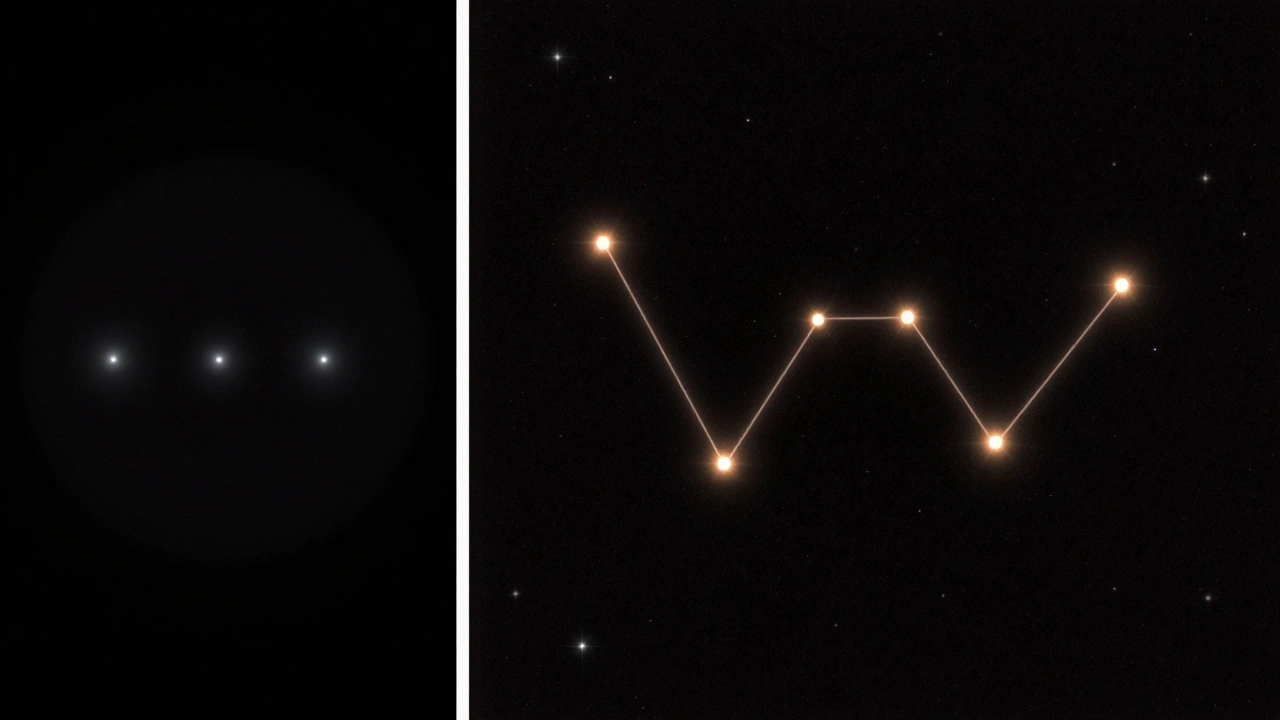
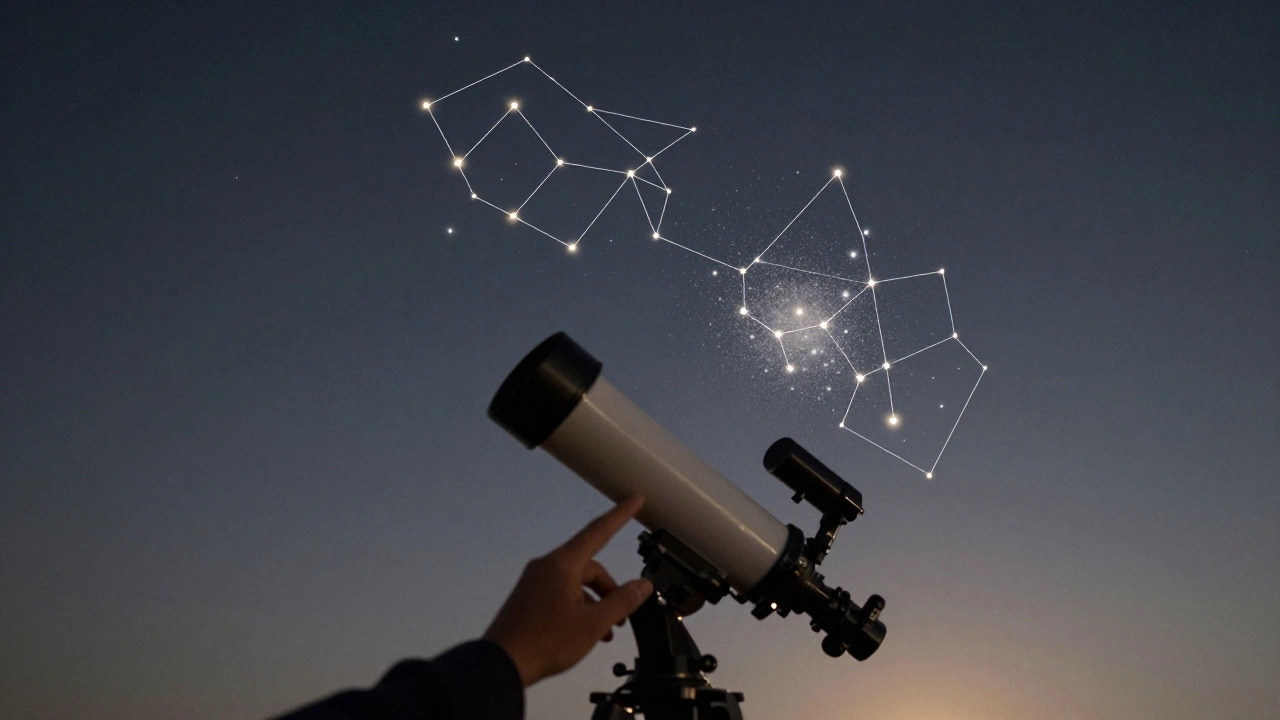
- Ultra-Wide (80°-82° AFOV): Tele Vue Panoptic, Explore Scientific 82°, Meade Ultra Wide Angle. These are game-changers. At 82°, a 24mm gives you over 1.6 degrees of sky. You’ll see entire asterisms in one view-like the “Teapot” in Sagittarius or the “W” of Cassiopeia.
Many seasoned star hoppers carry two eyepieces: a 32mm Plössl for brightness on faint objects, and a 24mm 82° for precise navigation. The 82° isn’t just a luxury-it’s a tool.
Real-World Star Hopping Example
Let’s say you want to find the Wild Duck Cluster (M11) in Scutum. You know it’s just south of the bright star Altair. Here’s how you do it with a wide-field eyepiece:- Start with your 24mm 82° eyepiece. Center Altair.
- Scan 1.5 degrees south. You’ll see a small triangle of 7th-magnitude stars. That’s the key pattern.
- Now, look for a faint, dense patch just below the triangle. That’s M11. You didn’t need a star chart-you saw it with your own eyes.
If you’d used a 10mm eyepiece at 120x, you’d have seen maybe two stars. You’d have no context. You’d be lost.
What to Avoid
Not all wide fields are created equal. Avoid these traps:- Too-long focal lengths: A 40mm eyepiece sounds great-until you realize your scope’s focal ratio is too slow. You’ll get a dim, fuzzy image. Stick to 32mm-24mm for most scopes.
- Low-quality optics: Cheap 32mm Plössls often have bad edge sharpness. If the stars look like smears near the edge, you’re losing half your field. Upgrade to a well-reviewed model.
- Ignoring eye relief: If you wear glasses, you need at least 15mm of eye relief. Many low-cost wide-angles have less. Test before you buy.
How to Test an Eyepiece Before Buying
You don’t have to guess. Here’s how to know if an eyepiece is right for star hopping:- Look at the moon. A good wide-field eyepiece will show the full disk with sharp edges. If the moon looks blurry on the sides, skip it.
- Try it on a bright star field, like Orion’s Belt. Can you see all three belt stars and the sword in the same view? If not, the field is too narrow.
- Use it at night. Look for faint stars near the edge. If they disappear or look distorted, the eyepiece isn’t optimized for low-power use.
Many astronomy clubs have eyepiece swap nights. Go to one. Try five different eyepieces. You’ll know the moment you see the difference.
Why This Matters More Than You Think
Star hopping isn’t just about finding objects. It’s about learning the sky. When you use a wide-field, low-power eyepiece, you start to recognize patterns. You remember that M44 (the Beehive) looks like a smudge under the feet of Gemini. You notice that the Pleiades sit right above Aldebaran. You stop memorizing coordinates and start reading the sky like a story.That’s the real power of a wide field. It turns astronomy from a technical task into a personal journey. And that’s why the best navigators-the ones who find things even without charts-aren’t using the most expensive gear. They’re using the widest view.
Final Tip: Keep It Simple
You don’t need three eyepieces. Start with one: a 24mm 82° if you have a fast scope (f/5-f/6), or a 32mm Plössl if you have a slower one (f/7+). Use it for 90% of your time. When you’re ready to go deeper, then add a medium-power eyepiece. But never, ever skip the wide view. It’s your foundation.Can I use a smartphone app instead of star hopping?
Smartphone apps are great for planning, but they’re not a replacement for star hopping. When you rely on a screen, you’re looking down-not up. You miss the texture of the sky, the flow of stars, and the rhythm of the night. Star hopping builds a real, tactile connection to the universe. Apps help you get started. Eyepieces help you belong.
Is a wide-field eyepiece worth the extra cost?
Yes-if you plan to use your telescope often. A good 24mm 82° eyepiece costs $150-$250. That’s more than a cheap 32mm Plössl, but it lasts longer, shows more sky, and makes every session more rewarding. Think of it as buying a better map. You wouldn’t use a torn, blurry map to hike a new trail. Don’t use a narrow view to explore the night.
Do I need a Barlow lens with a low-power eyepiece?
No. A Barlow lens increases magnification, which reduces your field of view. That’s the opposite of what you want for navigation. Save the Barlow for when you’re zooming in on planets or double stars. For star hopping, keep it out of the optical path.
What if my telescope has a slow focal ratio (f/8 or higher)?
Slower scopes need longer focal length eyepieces to get low power. A 32mm Plössl is ideal here. It gives you around 30x-35x, which is still wide enough for navigation. You’ll get a brighter image than a 24mm would in the same scope. Don’t force a short focal length-stick to what gives you brightness and coverage.
Can I star hop with a GoTo telescope?
You can, but you’re missing out. GoTo scopes are great for efficiency, but they don’t teach you the sky. Use your GoTo to find a target, then switch to your wide-field eyepiece. Look around. Find the stars that lead there. You’ll start seeing patterns you never noticed before. That’s the real reward.