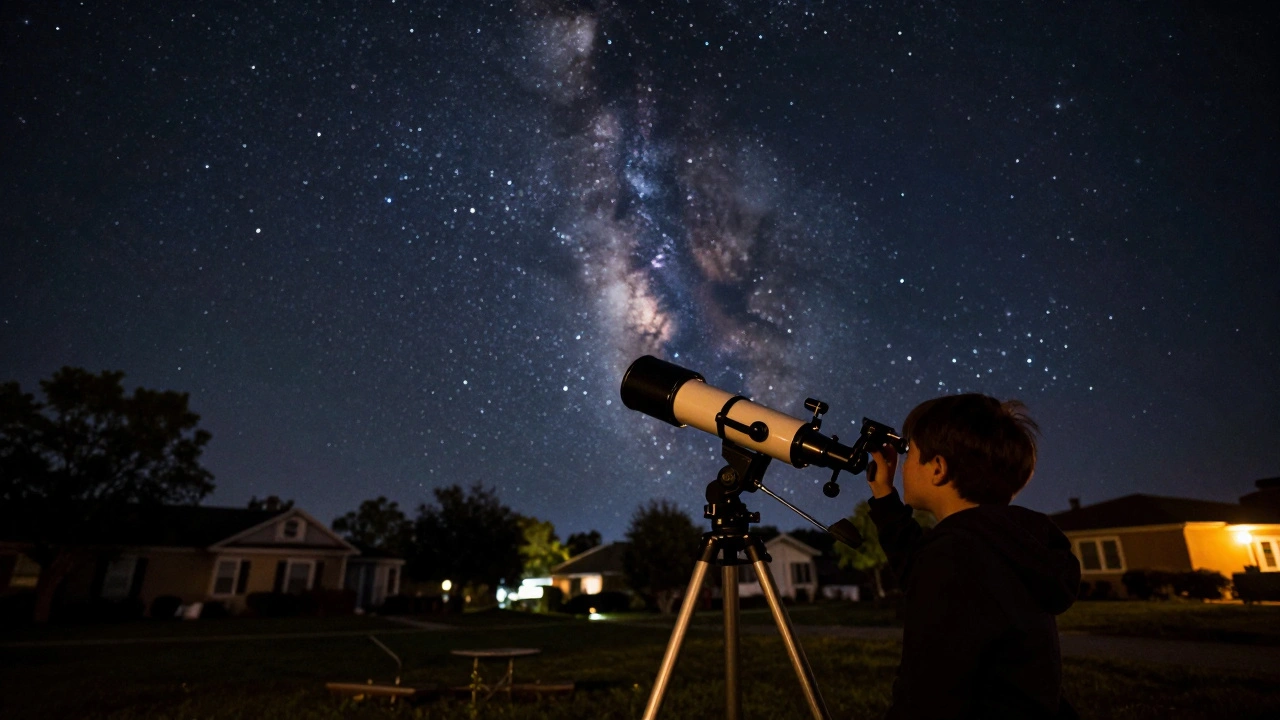
1 Jan 2026
- 0 Comments
If you’ve ever looked up at the night sky and seen a patch of haze that looked like a glowing cloud, you were probably staring at a nebula. Or if you noticed a dense crowd of stars clustered together like a glittering snowflake, that’s a star cluster. These are some of the most beautiful sights in the sky-but not every telescope shows them the way they’re meant to be seen. That’s where wide-field refractors come in.
Why Wide-Field Refractors Are Different
Most beginner telescopes are designed for planets. They give you sharp, zoomed-in views of Jupiter’s bands or Saturn’s rings. But they’re terrible for big, faint objects like the Orion Nebula or the Pleiades star cluster. Why? Because they have long focal lengths and narrow fields of view. You end up seeing just a tiny slice of the sky, like looking through a straw. Wide-field refractors are built for the opposite. They have short focal lengths-often under 600mm-and wide apertures, usually between 60mm and 100mm. This combination gives you a broad view of the sky, letting you fit entire nebulae and star clusters into a single eyepiece. You don’t just see a piece of the Orion Nebula-you see the whole thing, with its glowing gas and dark dust lanes stretching across the view. These telescopes use lenses, not mirrors, which means they don’t need alignment. No messy collimation. Just point, look, and enjoy. They’re also lightweight and portable. You can throw one in a backpack and hike to a dark sky site without breaking your back.What Makes a Good Wide-Field Refractor
Not all refractors are made equal. A cheap department store telescope might look like one, but it won’t deliver. Here’s what actually matters:- Focal ratio: Look for f/5 to f/7. Anything slower than f/7 won’t give you the wide view you need. Faster than f/5 can introduce optical flaws unless it’s a high-quality design.
- Aperture: 70mm to 90mm is the sweet spot. Smaller than 60mm and you lose light-gathering power. Bigger than 100mm and the scope gets heavy and expensive.
- Lens type: Achromats are affordable but show color fringing around bright stars. Apochromats (APOs) fix this with extra glass elements. They cost more, but for deep-sky viewing, the contrast boost is worth it.
- Focus mechanism: A smooth, precise focuser is critical. If it’s stiff or wobbly, you’ll miss fine detail in nebulae.
What You Can See With One
With a good wide-field refractor, you’re not just looking at stars-you’re exploring entire regions of the Milky Way. Here’s what you’ll actually see:- The Pleiades (M45): You’ll fit all seven main stars, plus dozens of fainter ones, in the same view. The misty glow of dust around the stars becomes visible under dark skies.
- The Orion Nebula (M42): The whole nebula fits, with its Trapezium cluster in the center. You’ll see the dark lane cutting through the nebula’s middle-the same one Hubble photographed.
- The Double Cluster (NGC 869 & NGC 884): Two brilliant clusters side by side in Perseus. A wide-field refractor shows them as a single stunning sight.
- The Andromeda Galaxy (M31): You won’t see spiral arms, but you’ll see the central bulge and the dark dust lanes along its edge. It fills the eyepiece like a glowing cigar.
- The North America Nebula (NGC 7000): This faint, star-shaped cloud is invisible in most scopes. But with a wide-field refractor and a narrowband filter, it becomes unmistakable.

How They Compare to Other Telescopes
| Type | Field of View | Light Gathering | Portability | Best For |
|---|---|---|---|---|
| Wide-Field Refractor | Very Wide | Good | High | Star clusters, nebulae, large galaxies |
| Newtonian Reflector | Narrow | Excellent | Low | Planets, small nebulae, deep-sky objects under dark skies |
| Compact SCT | Narrow | Very Good | Medium | Planets, small galaxies, high magnification |
| Binoculars (7x50 or 10x50) | Extremely Wide | Low | Very High | Star fields, wide nebulae, easy scanning |
What You Need to Pair With It
A wide-field refractor doesn’t need a fancy mount, but it does need a stable one. A shaky mount ruins the view. You don’t need GoTo tracking for visual use, but a sturdy alt-az mount helps a lot. Eyepieces matter too. You want wide-angle designs-68° or more. A 32mm Plossl gives you a decent view, but a 31mm Tele Vue Nagler will blow you away. The difference isn’t just magnification-it’s immersion. You feel like you’re floating in space. Filters can help. A UHC (Ultra High Contrast) filter blocks light pollution and lets through the glow of hydrogen and oxygen in nebulae. It turns a faint smudge into a glowing cloud. A narrowband filter like an OIII is even better for planetary nebulae like the Ring Nebula.Who Should Buy One
If you’re someone who:- Loves sweeping the sky and discovering new objects
- Wants to see the full beauty of nebulae, not just a piece
- Prefer lightweight gear for quick sessions or travel
- Isn’t obsessed with planetary detail
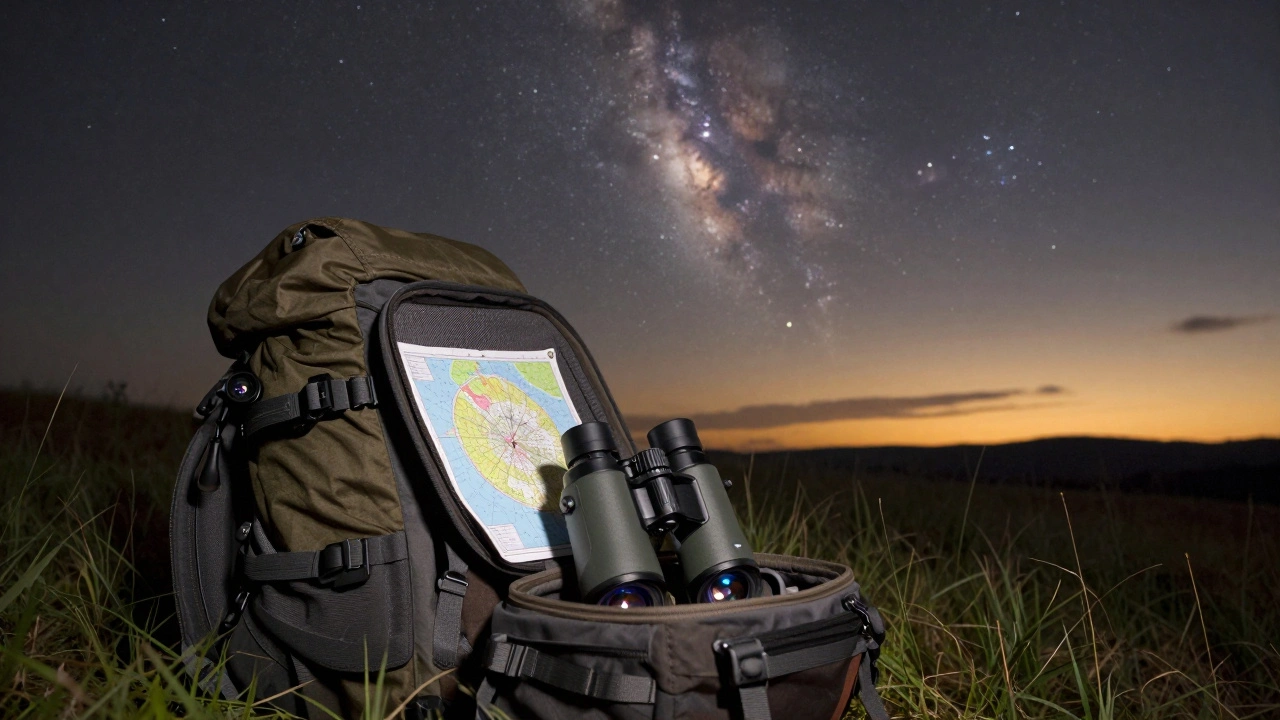
Real-World Use: A Night in Portland
Last October, I took my 80mm APO to a quiet spot near Mount Tabor. The sky was clear, the moon was down, and the light pollution was manageable. I started with the Pleiades. The stars sparkled like diamonds scattered on black velvet. Then I moved to the Orion Nebula. The glow was soft, but unmistakable. I could see the dark rift cutting through its center-the same feature that’s visible in long-exposure photos. I didn’t need a computer. I didn’t need filters. Just the telescope, a comfortable chair, and patience. In 20 minutes, I’d seen more than I had in months of using my 6-inch reflector. That’s the magic of wide-field refractors. They don’t just show you objects. They show you the sky as it was meant to be seen-whole, rich, and alive.Final Thoughts
You don’t need the biggest scope to see the most beautiful things in the sky. Sometimes, the smallest scope shows you the most. Wide-field refractors are simple, affordable, and surprisingly powerful. They bring the grandeur of the Milky Way into your hands. You don’t need to be an expert. You don’t need to spend thousands. Just find a dark spot, point it up, and let the universe come to you.Can a wide-field refractor show planets well?
It can, but not as well as a longer focal length telescope. A 70mm or 80mm refractor will show Jupiter’s cloud bands and Saturn’s rings, but the image won’t be as sharp or magnified as with a 120mm scope at f/10. For planetary viewing, you’ll want to use a higher-power eyepiece (like a 6mm or 8mm), but you’ll lose some of the wide-field advantage. Most users treat wide-field refractors as deep-sky tools and keep a separate scope for planets.
Is an apochromatic (APO) refractor worth the extra cost?
Yes-if you care about contrast and color accuracy. Achromats (two-element lenses) show purple fringing around bright stars, which can ruin the view of star clusters and nebulae. Apochromats (three-element lenses) fix this, giving you cleaner, higher-contrast images. For deep-sky observing, especially under dark skies, the difference is noticeable. The extra cost (usually $200-$500 more) is justified for serious observers.
Do I need a tracking mount for visual use?
No. Tracking mounts are helpful for astrophotography, but for visual observing, a sturdy alt-az mount is enough. At low to medium magnifications, you can keep objects in view with gentle nudges. Many observers use simple tripod-mounted refractors and still enjoy hours of observing. If you’re just starting out, skip the GoTo system-it’s unnecessary and adds cost.
What’s the best wide-field refractor under $500?
The Orion SkyScanner 100 a 100mm f/5 refractor on a tabletop alt-az mount is often recommended. It’s not an APO, but it’s a large aperture for the price and gives surprisingly good views of nebulae and clusters. For a more compact option, the Vixen A70L a 70mm f/6.5 achromat with a sturdy mount is a solid, portable choice under $400.
Can I use a wide-field refractor for astrophotography?
Absolutely. Many astrophotographers use 70mm to 80mm APO refractors as their primary imaging scopes. They’re ideal for capturing large nebulae like the North America Nebula or the Lagoon Nebula. You’ll need a tracking mount and a camera, but the optical quality is excellent for wide-field imaging. It’s one of the most popular setups for beginners in astrophotography.