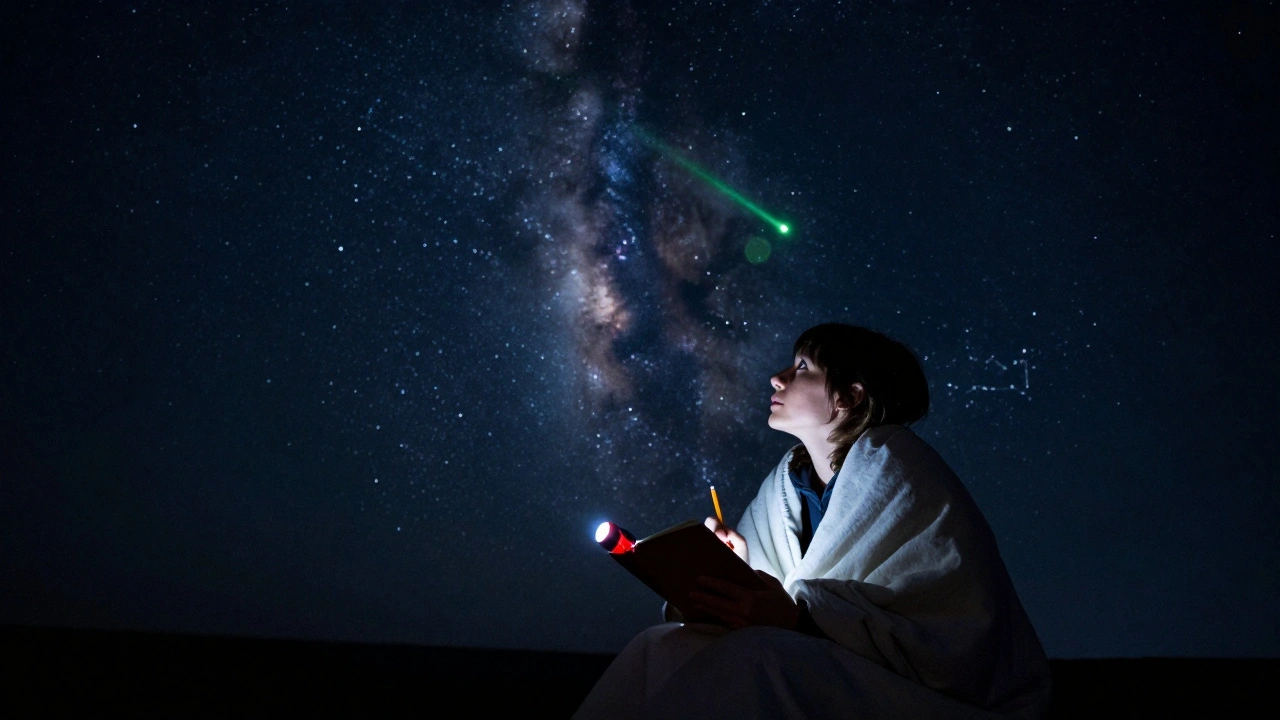
16 Mar 2026
- 0 Comments
When you see a meteor streak across the night sky, it’s over in less than a second. But that fleeting flash holds secrets-how bright it was, how fast it moved, what color it glowed. If you want to record real scientific data, not just a memory, you need a simple, reliable checklist. You don’t need fancy gear. Just your eyes, a notebook, and a little discipline.
Why Record Meteors at All?
Amateur observers have contributed to meteor science for over a century. The American Meteor Society, the International Meteor Organization, and even NASA rely on data from people like you. When hundreds of observers report the same meteor shower, patterns emerge. You might notice that the Perseids are brighter in even-numbered years. Or that the Geminids leave more green trails than expected. These details help scientists track the debris trails left by comets and asteroids. Your notes aren’t just personal memories-they become part of a global dataset.
The Three Things You Must Record
Every meteor you see should be logged with three key details: magnitude, speed, and color. These aren’t guesses. They’re measurable observations, even without instruments.
- Magnitude tells you how bright the meteor was. The scale goes from -3 (super bright, brighter than Venus) to +6 (barely visible). Most meteors fall between +1 and +4.
- Speed is how fast the meteor moved across the sky. Is it a slow drift or a sudden flash? Divide them into three categories: slow, medium, or fast.
- Color is what hue you saw. This depends on the chemicals burning up in the atmosphere. Common colors include white, yellow, green, red, and blue.
Don’t try to remember all three after the meteor’s gone. Write them down as it happens-or right after, while it’s still fresh.
Magnitude: How to Judge Brightness
Comparing brightness to known stars is the easiest way to estimate magnitude. Here’s a quick reference:
- +6: Faintest star you can see on a dark night
- +4: Faintest star in the Big Dipper
- +1: Vega or Arcturus-bright and unmistakable
- -1: Jupiter at its brightest
- -3: Venus at its peak
- -5: The brightest meteors (fireballs)
When you see a meteor, ask: Is it dimmer than Vega? Brighter than Jupiter? If it outshines Venus, call it -3 or brighter. If it’s just a faint streak, call it +4 or +5. Don’t overthink it. Your estimate is better than no data at all.
Speed: Slow, Medium, or Fast?
Speed is trickier than magnitude because you don’t have a clock. But you can still judge it by how long it takes to cross a familiar part of the sky.
- Slow: Takes more than 2 seconds to cross the width of your outstretched hand. These are usually sporadic meteors or those from slow-moving debris.
- Medium: Crosses your hand in about 1 second. Most shower meteors fall here.
- Fast: Flashes by in less than half a second. These often leave persistent trains and come from high-velocity streams like the Leonids.
Practice this before the shower. On a clear night, watch a few random meteors and guess their speed. You’ll get better quickly.
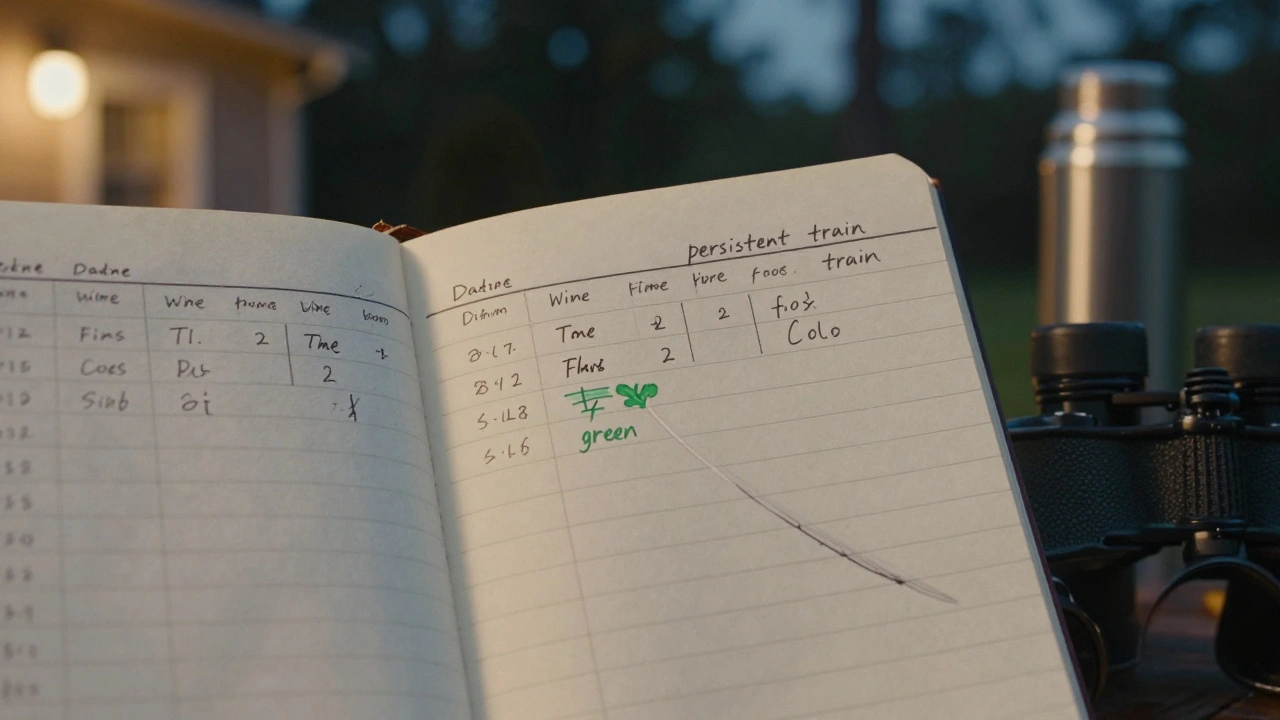
Color: What’s Burning Up?
Color comes from the elements in the meteoroid as they vaporize. Sodium gives yellow, magnesium glows green, iron produces orange-red, and calcium or silicon can create blue or violet.
- White: Most common. Happens when multiple elements burn together.
- Yellow: Sodium is present. Often seen in sporadic meteors.
- Green: Magnesium. Common in the Perseids and Leonids.
- Red: Iron or nitrogen. Seen in slower meteors or those entering at shallow angles.
- Blue/Violet: Calcium or silicon. Rare. Often tied to fast-moving meteors from Halley’s Comet debris.
Don’t confuse atmospheric effects with true color. A meteor that looks red near the horizon might just be filtered by haze. Stick to what you see directly overhead.
Your Simple Checklist
Print this or write it on a sticky note. Keep it next to your chair or blanket.
- Date and time (to the nearest minute)
- Direction of the meteor (use compass points: N, SE, etc.)
- Magnitude (use numbers: -2, +3, +5)
- Speed (slow, medium, fast)
- Color (white, yellow, green, red, blue, or none)
- Any persistent train? (Yes/No)
- Notes (e.g., “split into two,” “left smoke trail,” “appeared near Vega”)
Use a waterproof notebook or a voice recorder if it’s too cold to write. The goal is consistency, not perfection.
What to Avoid
Don’t wait until the next morning to write your notes. Your memory fades fast. One observer in Portland last year recorded 12 meteors during the Orionids-but only wrote down 3 the next day. The rest were gone.
Don’t use your phone. The screen light ruins your night vision. If you must use a device, set it to red mode (many astronomy apps have this) or use a red headlamp with the lowest brightness.
Don’t try to capture photos. Cameras miss most meteors. They’re too fast, too dim, or too brief. Your eyes are better sensors. Focus on observation, not photography.
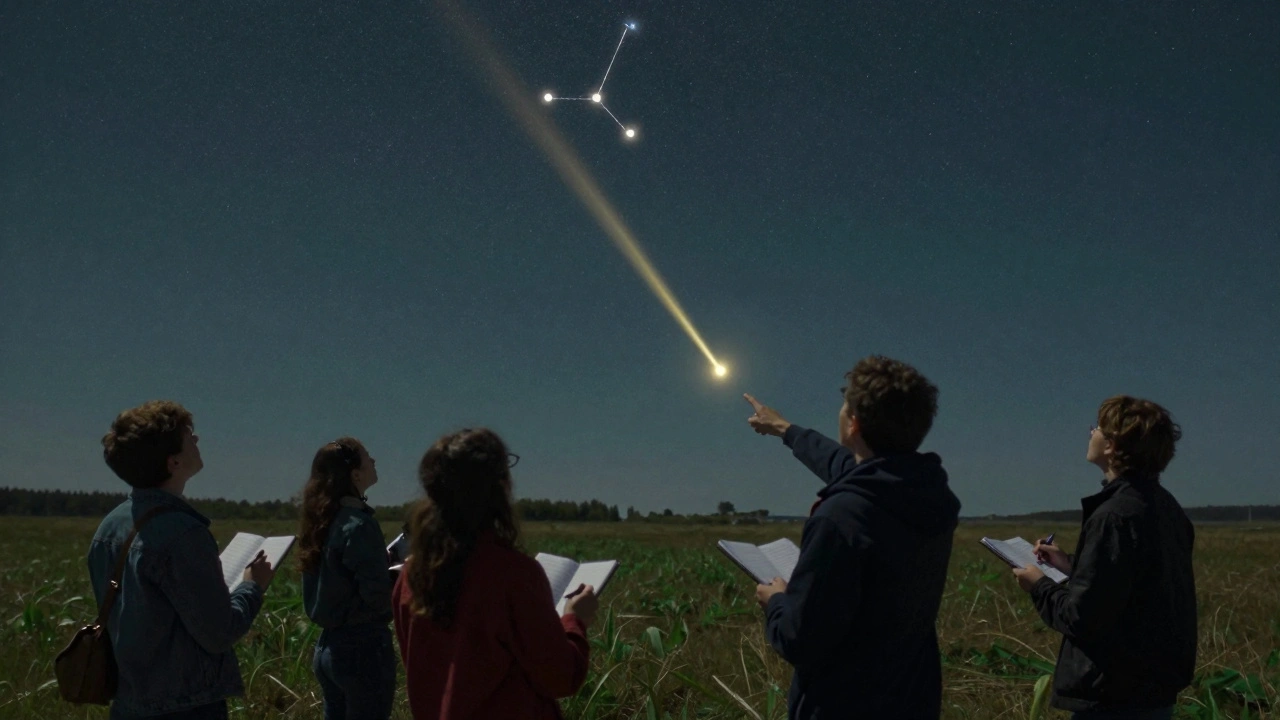
When to Observe
The best meteor showers are predictable:
- Perseids (August 11-13): Peak around midnight. Bright, fast, often green. Best in the Northern Hemisphere.
- Geminids (December 13-14): Slower, brighter, white-yellow. Highest rates of any shower.
- Orionids (October 20-22): Fast, faint, from Halley’s Comet. Good after midnight.
- Leonids (November 17-18): Very fast. Rare fireballs every 33 years. Usually modest activity.
Go out after midnight. The Earth’s rotation sweeps you into the debris stream. Dark skies matter more than location. Even a backyard with minimal light pollution works.
What Happens to Your Data?
Submit your logs to the American Meteor Society (AMS) or the International Meteor Organization (IMO). They compile reports from thousands of observers. You’ll get a confirmation email. Some years, your notes help confirm a new meteor stream or a change in activity.
One observer in Oregon recorded 87 meteors during the 2025 Perseids. Their data showed a 12% increase in green-colored meteors compared to 2023. That detail made it into a peer-reviewed paper. You don’t need a PhD to make that kind of contribution.
Final Tip: Train Your Eyes
Before the next shower, spend 15 minutes under the stars without looking at your phone. Let your eyes adjust. Notice how the Milky Way looks different from last year. Learn the constellations near the radiant point. The more familiar you are with the sky, the better your observations become.
Meteor watching isn’t about having the best gear. It’s about paying attention. The sky is always moving. You just have to be there to see it-and record it right.
Do I need a telescope to observe meteors?
No. Telescopes limit your field of view and make it harder to catch fast-moving meteors. Your naked eyes are the best tool. They cover a wide area of the sky and adjust quickly to sudden flashes. Binoculars can help you spot fainter stars, but they’re not useful for meteor watching.
Can I record meteor data with my smartphone?
You can use a smartphone app to log your observations, but don’t use the screen to look at the sky. The blue light kills your night vision. If you must use a phone, enable red screen mode, lower brightness to minimum, and use voice notes. Still, paper and pencil are more reliable and don’t need charging.
What if I can’t tell the color of a meteor?
That’s fine. Many meteors appear white because multiple elements burn at once. If you’re unsure, write “white” or “unclear.” Don’t guess. Scientists prefer honest data over inaccurate guesses. You’re still helping by reporting magnitude and speed.
How many meteors should I aim to record per hour?
There’s no target. Some hours you’ll see 10, others none. What matters is consistency. Record every meteor you see, even if it’s faint. A single observer reporting 5 meteors over 3 nights is more valuable than someone who sees 50 in one night and forgets to log them. Quality over quantity.
Do meteor showers happen every year at the same time?
Yes, most major showers occur around the same dates each year because they’re tied to Earth crossing the same debris trail left by a comet or asteroid. The Perseids always peak around August 12-13. The Geminids around December 13-14. Minor showers vary more, but the big ones are reliable. Check the AMS calendar each fall to plan your sessions.