9 Apr 2026
- 0 Comments
Quick Wins for Your First Night
Before you get bogged down in star charts, keep these high-value targets in mind. These are the 'low-hanging fruit' of the night sky because they are bright enough to find without complex equipment.
- The Moon: Always the best starting point. It's bright, high-contrast, and always changing.
- Jupiter: The king of the planets. Even a small telescope reveals its signature stripes and four largest moons.
- Saturn: The most rewarding target. Seeing the rings for the first time is a rite of passage for every observer.
- Venus: Look for the 'morning' or 'evening star.' You can see its phases, much like the Moon.
- Mars: Though smaller, its reddish hue makes it distinct.
Mastering the Moon: Your First Laboratory
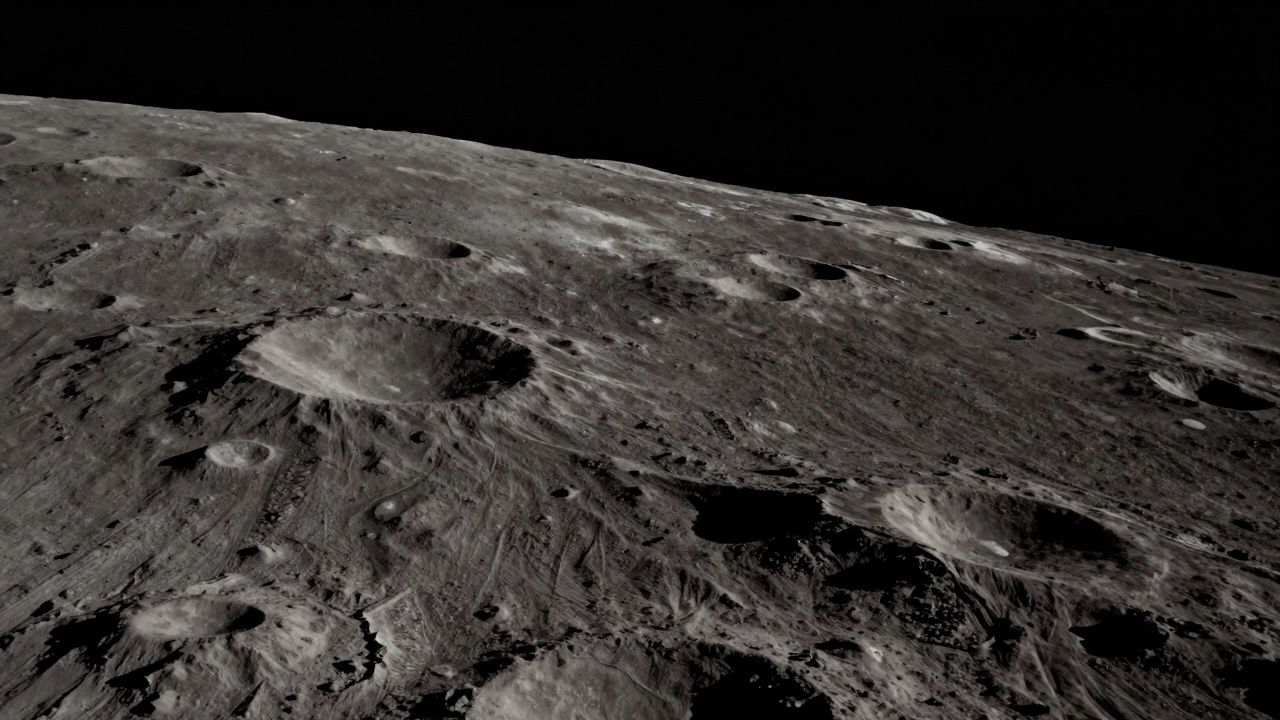
The Moon is Earth's only natural satellite and the most accessible celestial body for amateur astronomy. It serves as the perfect training ground for using beginner telescopes because you can practice focusing and tracking without losing your target in the dark.
Don't just look at the full moon. In fact, a full moon is often too bright and looks flat. The real magic happens at the terminator-the line dividing the light and dark sides. This is where shadows are longest, making craters and mountains pop in 3D. Try targeting the Mare Tranquillitatis is the 'Sea of Tranquility,' a large, dark basaltic plain on the Moon's near side . If you look closely, you can see the jagged edges of the highlands crashing into the smooth plains.
Try starting with your lowest power eyepiece (the one with the highest number, like 25mm). This gives you a wider field of view, making it easier to find the lunar surface. Once you've centered the target, switch to a higher power eyepiece (like 10mm) to zoom in on specific craters like Tycho or Copernicus.
Jupiter: The Gas Giant's Secrets
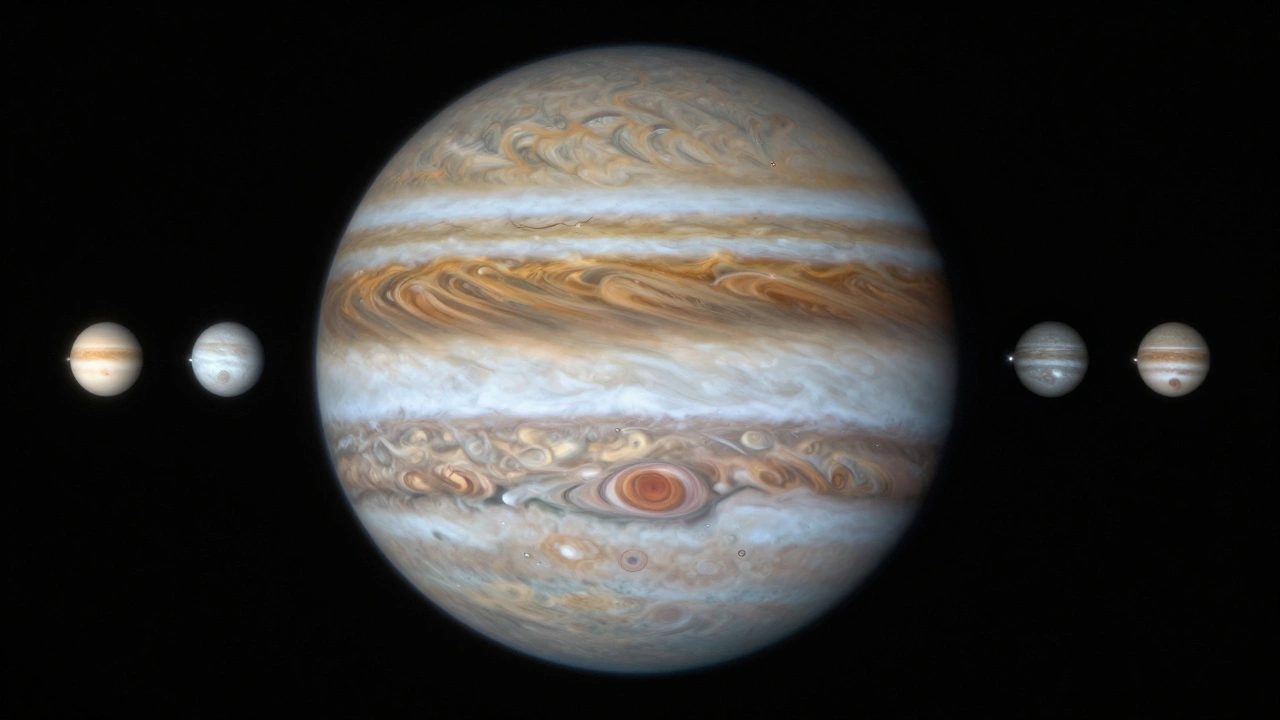
When you point your telescope at Jupiter is the largest planet in our solar system, a gas giant known for its Great Red Spot and massive gravity , you aren't just seeing a disk. You're seeing a living weather system. With a decent entry-level scope, you can clearly see two pale stripes across its center. These are cloud belts of ammonia ice.
The most exciting part about Jupiter is the Galilean Moons are the four largest moons of Jupiter-Io, Europa, Ganymede, and Callisto-discovered by Galileo in 1610 . They look like tiny, bright pinpricks of light arranged in a straight line across the planet. If you watch them over a few nights, you'll notice they move. You're essentially witnessing a miniature solar system in action.
| Target | Key Feature to Find | Best Eyepiece Strategy | Difficulty |
|---|---|---|---|
| Moon | Crater Edges (Terminator) | Low $\rightarrow$ High Power | Very Easy |
| Jupiter | Equatorial Belts & Moons | Medium Power | Easy |
| Saturn | The Planetary Rings | High Power | Easy |
| Venus | Phase (Crescent/Gibbous) | Low Power | Medium |
Saturn: The Crown Jewel of the Sky
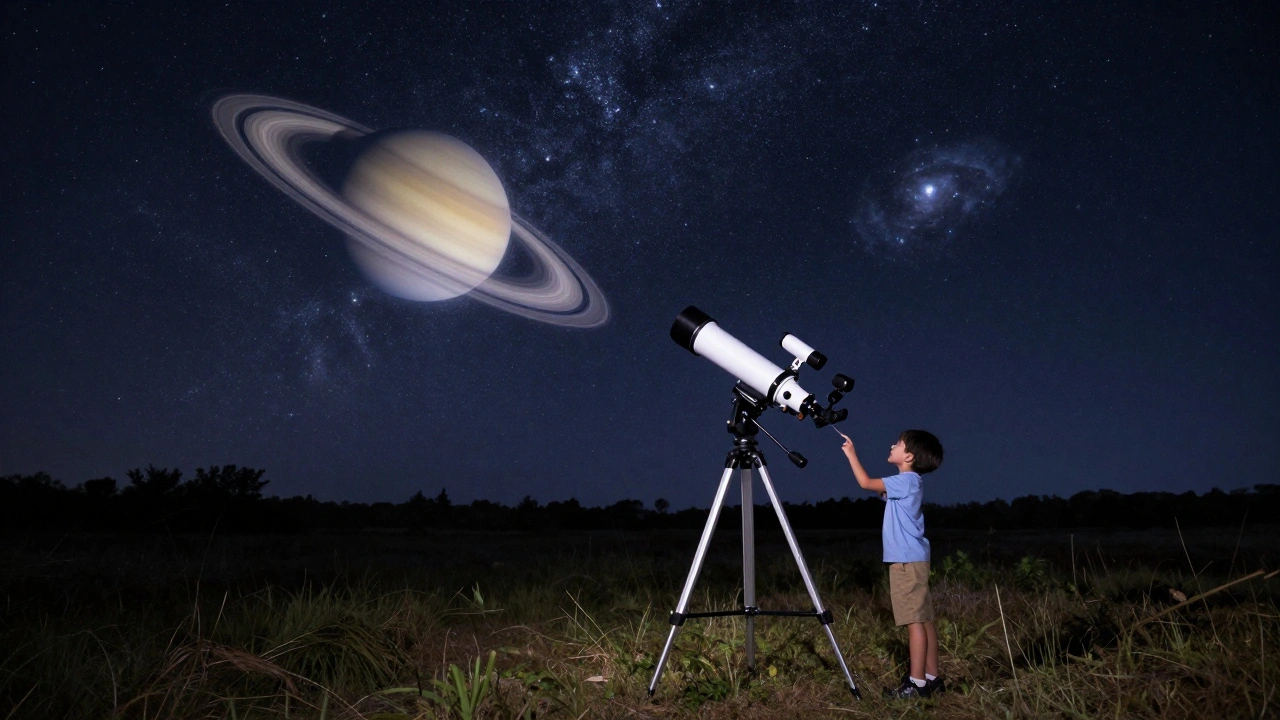
If Jupiter is the most active, Saturn is the sixth planet from the Sun, famous for its extensive ring system composed of ice and rock is the most beautiful. Nothing prepares a new observer for the first time they see those rings. It looks like a tiny, perfect model hanging in the void.
To get the best view, use a higher magnification. You want to be able to see the gap between the planet's body and the rings. If you have a steady mount or a tripod, you might even spot the Cassini Division is a prominent gap in Saturn's rings, first observed by Giovanni Cassini in 1675 -a thin dark line cutting through the rings. Also, keep an eye out for Titan, Saturn's largest moon, which usually appears as a small, steady point of light nearby.
Overcoming Common First-Night Hurdles
Most beginners struggle not with the telescope, but with the environment. One of the biggest mistakes is taking a telescope from a warm living room directly into the cold night air. This causes the glass to contract and creates air currents inside the tube, making your view look like it's underwater. This is called 'thermal equilibrium.' Give your gear 30 to 60 minutes to cool down outside before you start observing.
Another common issue is 'shaking.' Every time you touch the focus knob, the image might dance around. The trick is to use a light touch and avoid leaning on the tripod. If your mount has slow-motion controls, use them rather than pushing the telescope by hand. Small adjustments make the difference between a blurry smudge and a sharp image.
Planning Your Session with Tools
You don't need to be a master of geometry to find planets. Today, we have tools that make the process instant. Stellarium is an open-source planetarium software that shows a realistic 3D map of the night sky in real-time is a gold standard for beginners. You can set your location and date, and it will tell you exactly where Jupiter or Saturn will be at 9:00 PM tonight.
Pair this with a basic Star Chart is a map of the night sky used to identify constellations and celestial objects to understand the 'neighborhood.' For example, if you can find the constellation Leo, you can often find nearby planets by following the ecliptic-the invisible path the planets follow across the sky.
The Progression Path: What's Next?
Once you've mastered the Moon and planets, you'll feel the itch to see deeper. The natural next step is targeting 'Deep Sky Objects' (DSOs). Start with the Orion Nebula is a diffuse nebula situated in the Milky Way, being the closest region of obvious massive star formation to Earth . It's bright enough for beginners and looks like a ghostly cloud. After that, try the Andromeda Galaxy or the Pleiades star cluster. These targets require a bit more patience and darker skies, but the confidence you built with the planets will make the hunt much more rewarding.
Why does the Moon look blurry even after I focus?
This is often due to atmospheric turbulence, also known as 'seeing.' If the air is moving or shifting temperature, the light bends, creating a shimmering effect. Try moving your telescope away from concrete slabs or house walls, as they radiate heat and distort the air.
Do I need a special filter for the Moon?
While not strictly necessary, a lunar filter (usually a neutral density filter) is highly recommended. The Moon is incredibly bright, and a filter reduces that glare, making the craters and details more comfortable to look at without straining your eyes.
How can I tell the difference between a planet and a star?
The easiest way is to watch them. Stars twinkle because they are distant point sources of light easily distorted by our atmosphere. Planets are closer and appear as tiny disks, so their light is steadier. If it doesn't twinkle, it's likely a planet.
What is the best time of night to see planets?
It depends on the planet's orbit, but generally, planets are visible shortly after sunset or before sunrise. Use an app like Stellarium to see when a specific planet 'rises' above the horizon for your specific location.
Can I see the rings of Saturn with a cheap telescope?
Yes, as long as the telescope has a reasonable aperture (around 60mm to 70mm) and you use a higher-power eyepiece. You won't see the fine gaps in the rings, but the distinct 'hat' shape of the rings is visible even in very basic starter scopes.
Next Steps for New Observers
If you've successfully spotted the Galilean moons or Saturn's rings, don't stop there. Try keeping an observation log. Write down what you saw, the date, and the eyepiece you used. This helps you notice subtle changes, like the changing phases of Venus or the rotating cloud belts of Jupiter.
If you find your telescope is shaking too much, consider upgrading your tripod or using a vibration suppression pad. If you're struggling to find objects, try a 'push-to' system or a simple red-dot finder scope to align your main lens more accurately. The more you spend time under the stars, the more the sky starts to feel like a map you can actually read.