2 Jan 2026
- 0 Comments
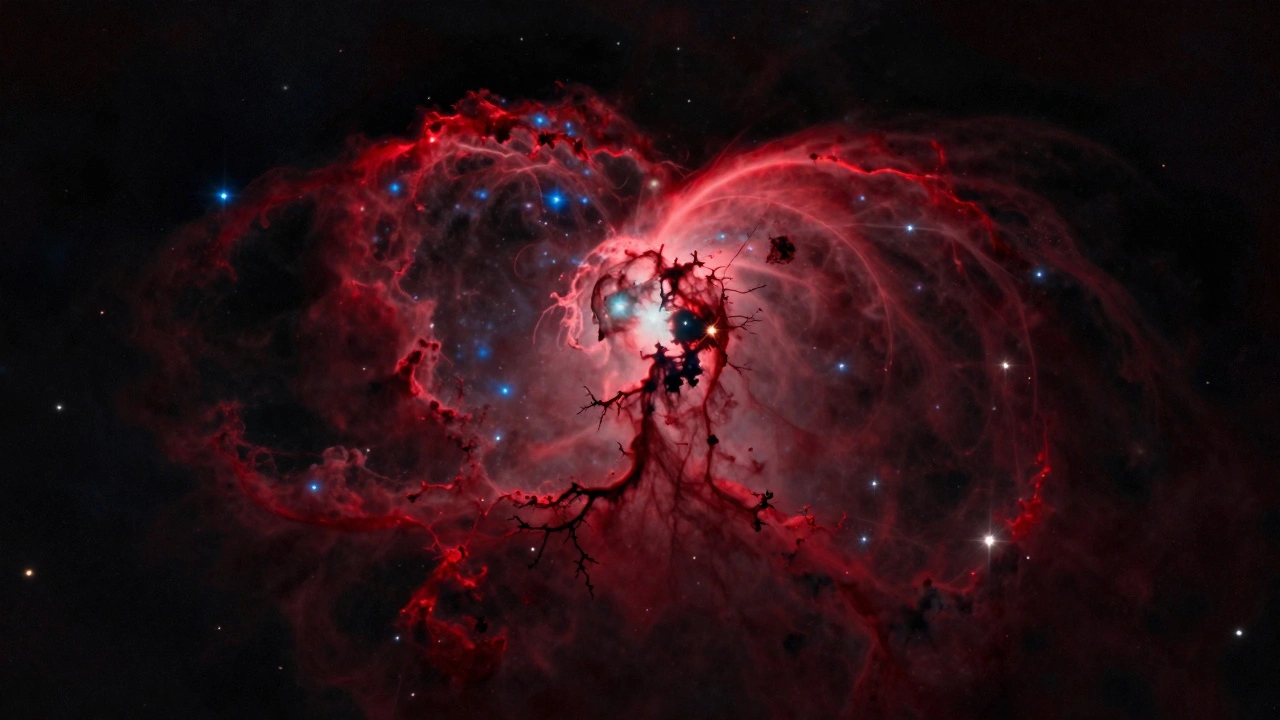
When you look up at the night sky, you might see a glowing cloud of gas and dust - that’s a nebula. But not all nebulae look the same. Some glow bright red, others shimmer with blue light, and some are invisible unless you know exactly where to look. The difference comes down to three main types: emission, reflection, and dark nebulae. Each forms in unique ways and reveals something different about the universe around us.
Emission Nebulae: The Cosmic Glow Sticks
Emission nebulae are the most colorful and easiest to spot. They glow because of ionized gas - mostly hydrogen - that’s been energized by nearby hot stars. When ultraviolet light from these stars hits the gas, it strips electrons from atoms. When the electrons recombine with the atoms, they release energy as visible light. That’s why emission nebulae often look red: hydrogen emits light at a wavelength of 656 nanometers, which our eyes see as deep red.
The Orion Nebula (M42) is the classic example. It’s visible to the naked eye as a fuzzy patch below Orion’s belt. Through a telescope, it explodes into detail - wisps of gas, newborn stars, and pockets of glowing material. You’ll need a dark sky and at least a small telescope to see it well, but even binoculars can show its glow on a clear night. Emission nebulae are often found in star-forming regions, like the Carina Nebula or the Lagoon Nebula. These areas are cosmic nurseries where gravity pulls gas together until new stars ignite.
Reflection Nebulae: The Cosmic Mirrors
Reflection nebulae don’t produce their own light. Instead, they shine by bouncing light from nearby stars. Think of them like dust clouds in a room with a flashlight. The dust scatters the starlight, usually blue light, because shorter wavelengths scatter more easily - just like Earth’s sky turns blue during the day. These nebulae often appear as faint, hazy blue patches near bright stars.
The most famous reflection nebula is around the Pleiades star cluster. The dust between the stars reflects the blue light of the hottest, youngest stars in the group. You can see it with binoculars if you’re in a dark enough location. Unlike emission nebulae, reflection nebulae don’t need high-energy radiation to glow. They just need a bright star nearby and enough dust to scatter its light. They’re often found in the same regions as emission nebulae, but their faintness makes them harder to photograph without long exposures.
Dark Nebulae: The Invisible Clouds
Dark nebulae are the quiet ones. They don’t glow. They don’t reflect light. They block it. These are dense clouds of cold gas and dust so thick that they hide the stars behind them. To the naked eye, they look like holes in the Milky Way - patches of sky that seem empty. But they’re not empty. They’re full of material that will one day collapse into new stars.
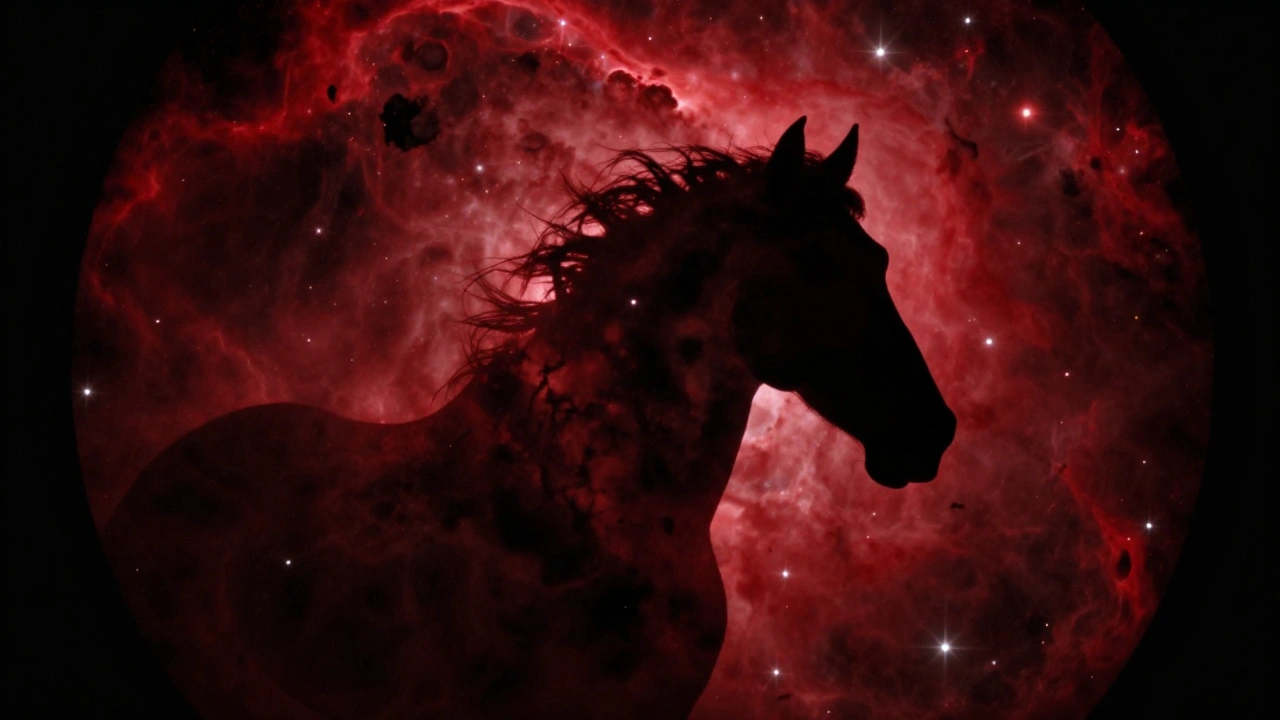
The Horsehead Nebula is the most famous example. It’s a small, dark silhouette shaped like a horse’s head, located near the star Zeta Orionis. You can’t see it with small telescopes under city skies. Even in rural areas, you need a large aperture telescope and a very dark sky. Astronomers use narrowband filters to isolate the hydrogen-alpha light from nearby emission regions, which helps contrast the dark shape against the glowing background. Dark nebulae are often part of larger molecular clouds, like the Coalsack Nebula near the Southern Cross. These clouds contain enough mass to form thousands of stars over millions of years.
Why the Differences Matter for Observers
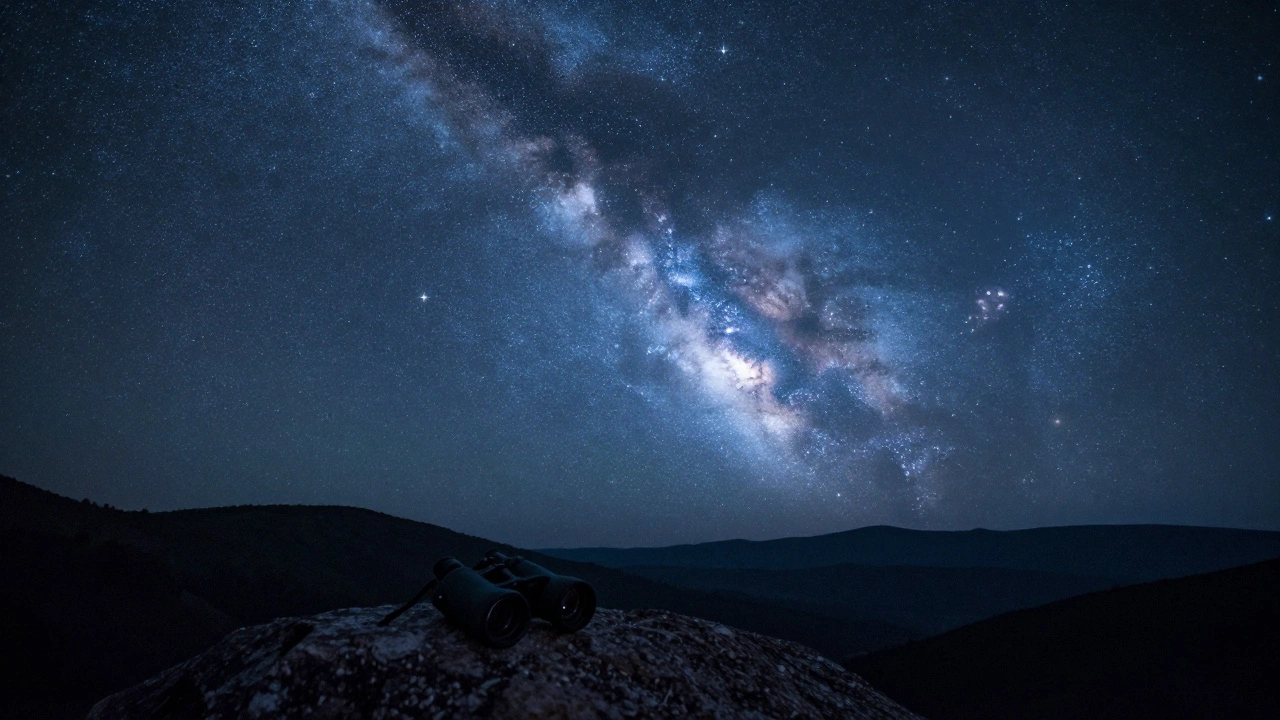
If you’re trying to observe these nebulae, knowing the type changes how you prepare. Emission nebulae respond well to UHC (Ultra High Contrast) filters - they block unwanted light pollution while letting through the red hydrogen-alpha light. Reflection nebulae benefit from broadband filters that preserve blue light, but they’re often best seen in long-exposure astrophotography. Dark nebulae? You don’t need filters at all. You need dark skies and good eyes. Your best tool is averted vision - looking slightly to the side of the object so your retina’s more sensitive rod cells catch the faint contrast.
Location matters too. Emission nebulae can be seen from mid-latitudes like Portland, Oregon, especially in spring and summer. The Orion Nebula is visible from late fall through early spring. Reflection nebulae like those near the Pleiades are best in winter. Dark nebulae are easiest to see along the plane of the Milky Way - so late summer and early fall are prime time, when the galactic center is high in the sky.
What You Can See With Basic Gear
You don’t need a $5,000 telescope to see these nebulae. Here’s what you can realistically expect:
- Binoculars: Orion Nebula (emission), Pleiades (reflection), and the Coalsack (dark) if you’re far from city lights.
- Small telescope (60-90mm): Orion Nebula shows structure; Pleiades dust becomes visible; dark nebulae appear as subtle shadows near bright star fields.
- Large telescope (150mm+): Horsehead Nebula, Pipe Nebula, and Barnard’s Loop become visible under dark skies.
Many amateur astronomers start with emission nebulae because they’re bright and colorful. But once you’ve seen the dark shapes cutting through the Milky Way, you’ll start seeing the sky differently. You’re not just looking at stars - you’re seeing the scaffolding of star formation.
How to Find Them
Use a star chart app like SkySafari or Stellarium. Set it to show deep-sky objects and toggle the nebula filter. Look for catalog numbers:
- Emission: M42 (Orion), M8 (Lagoon), M17 (Omega), NGC 7000 (North America Nebula)
- Reflection: NGC 1435 (Pleiades), IC 349 (Merope Nebula), NGC 1973-75-77 (Orion’s reflection region)
- Dark: Barnard 68, Barnard 33 (Horsehead), LDN 1622 (Pipe Nebula), Coalsack (Chile/Argentina sky)
Try observing each type on different nights. Compare how the light changes with moon phase, air clarity, and light pollution. You’ll start noticing patterns - like how dark nebulae cluster along the galactic plane, or how emission nebulae cluster near OB associations (groups of massive young stars).
What’s Next?
Once you’ve identified these three types, you’ll start noticing hybrids. Some nebulae have both emission and reflection components - like the Orion Nebula, where red glow meets blue dust. Others, like the Snake Nebula (Barnard 72), are dark clouds with faint emission at their edges. The more you look, the more you’ll see the universe as a dynamic system: gas collapses, stars form, radiation ionizes, dust scatters, and gravity reshapes everything over millions of years.
And that’s the beauty of nebulae. They’re not just pretty pictures. They’re the birthplaces of stars, the building blocks of galaxies, and the raw material of planets - including Earth. When you observe a nebula, you’re not just watching light. You’re watching the universe make itself.
Can I see nebulae with binoculars?
Yes, but only the brightest ones. The Orion Nebula (M42) is easily visible in binoculars under dark skies. The Pleiades star cluster shows faint blue reflection nebulosity around its brightest stars. Dark nebulae like the Coalsack are visible as gaps in the Milky Way. You won’t see fine detail, but you’ll see their presence. For anything else - like the Horsehead Nebula - you need a telescope and very dark skies.
Why do some nebulae look red and others blue?
Red comes from emission nebulae: hydrogen gas glowing after being energized by hot stars. Blue comes from reflection nebulae: dust scattering blue light from nearby stars, just like our sky turns blue. The color tells you what’s happening - ionization versus scattering. A nebula that looks purple usually has both types of material mixed together.
Do I need a filter to see nebulae?
Not always. Emission nebulae benefit from UHC or OIII filters - they block city lights and boost contrast. Reflection nebulae don’t need filters; in fact, filters can dim their faint blue glow. Dark nebulae don’t need filters at all - you’re looking for contrast against bright background stars. The best filter for most beginners is a pair of dark-adapted eyes and a clear, moonless night.
Are dark nebulae really empty?
No. Dark nebulae are some of the densest, coldest regions in space. They contain mostly molecular hydrogen and dust - the raw material for new stars. They look empty because they block the light from stars behind them. In fact, they’re so thick that even infrared telescopes struggle to see through them. The Horsehead Nebula, for example, contains enough mass to form hundreds of stars.
When is the best time to observe nebulae from Portland?
Orion’s emission nebula is best from late fall to early spring. The Pleiades reflection nebula peaks in winter. Dark nebulae along the Milky Way are best in late summer and early fall, when the galactic center is high in the sky. For all types, wait for moonless nights and get as far from city lights as possible - places like Mount Hood or the Columbia River Gorge offer excellent views.