30 Jan 2026
- 0 Comments
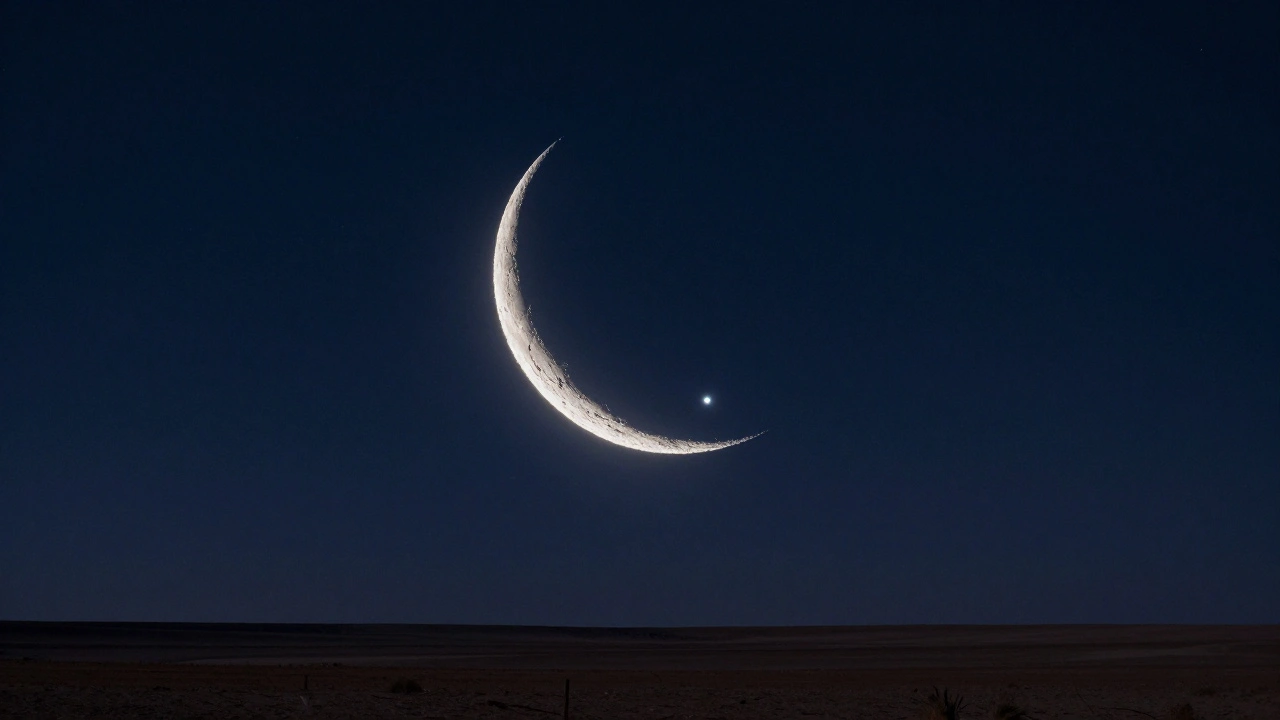
When the Moon glides in front of a star or planet, it doesn’t just block the light-it creates a precise cosmic event you can plan for, watch, and even record. These moments, called lunar occultations, happen far more often than most people realize. In fact, somewhere on Earth, the Moon hides a bright star nearly every night. For amateur observers, this isn’t just a neat trick of the sky-it’s an opportunity to time events with millisecond precision, test equipment, and contribute to real science.
What Exactly Is a Lunar Occultation?
A lunar occultation occurs when the Moon passes directly in front of a celestial object, hiding it from view. This isn’t a shadow or eclipse-it’s the Moon’s solid surface physically blocking the light. The Moon moves fast across the sky, about 0.5 degrees per hour, which means it can cover a star in under a minute. For planets, the process takes longer because they’re larger in angular size. Jupiter, for example, can take up to 15 seconds to fully disappear behind the Moon’s edge.
Not all occultations are visible from every location. The Moon’s path across the sky shifts slightly each night, and its position relative to Earth’s surface changes based on your longitude and latitude. That’s why an occultation visible in New York might not be seen at all in London. This geographic sensitivity is what makes planning so important.
Which Objects Get Occulted?
The Moon regularly occults stars, especially those near the ecliptic-the path the Sun, Moon, and planets follow across the sky. The brightest stars, like Spica, Regulus, and Aldebaran, get occulted several times a year. These events are easy to spot with binoculars or a small telescope.
Planets are rarer targets. Venus, Mars, Jupiter, and Saturn all get occulted, but only about once every few years from a given location. Mercury rarely gets occulted because it stays close to the Sun and is hard to observe. Uranus and Neptune are possible, but they’re so dim you’ll need a telescope and precise timing to catch them.
Occultations of stars are more common because they’re point sources. When a star vanishes, it disappears instantly-no gradual dimming. That makes them perfect for timing. A planet, on the other hand, fades slowly as one edge slips behind the Moon, then reappears gradually. The exact moment of disappearance or reappearance depends on the observer’s location, making planetary occultations trickier to predict but more valuable for scientific use.
How to Plan for an Occultation
You can’t just look up and expect to see one. Planning is essential. Here’s how to do it right:
- Check the date and time-Use reliable sources like the International Occultation Timing Association (IOTA) or apps like Stellarium or SkySafari. These tools show exact times for your specific location, down to the second.
- Confirm visibility-Not all occultations are visible from your area. The Moon’s limb (edge) is jagged due to mountains and valleys, and your position on Earth determines whether you’ll see the object disappear behind a mountain or a valley. IOTA provides detailed path maps showing where the event will be visible.
- Know the horizon-If the occultation happens near the horizon, atmospheric distortion can blur the timing. Try to observe when the Moon is higher in the sky-above 30 degrees is ideal.
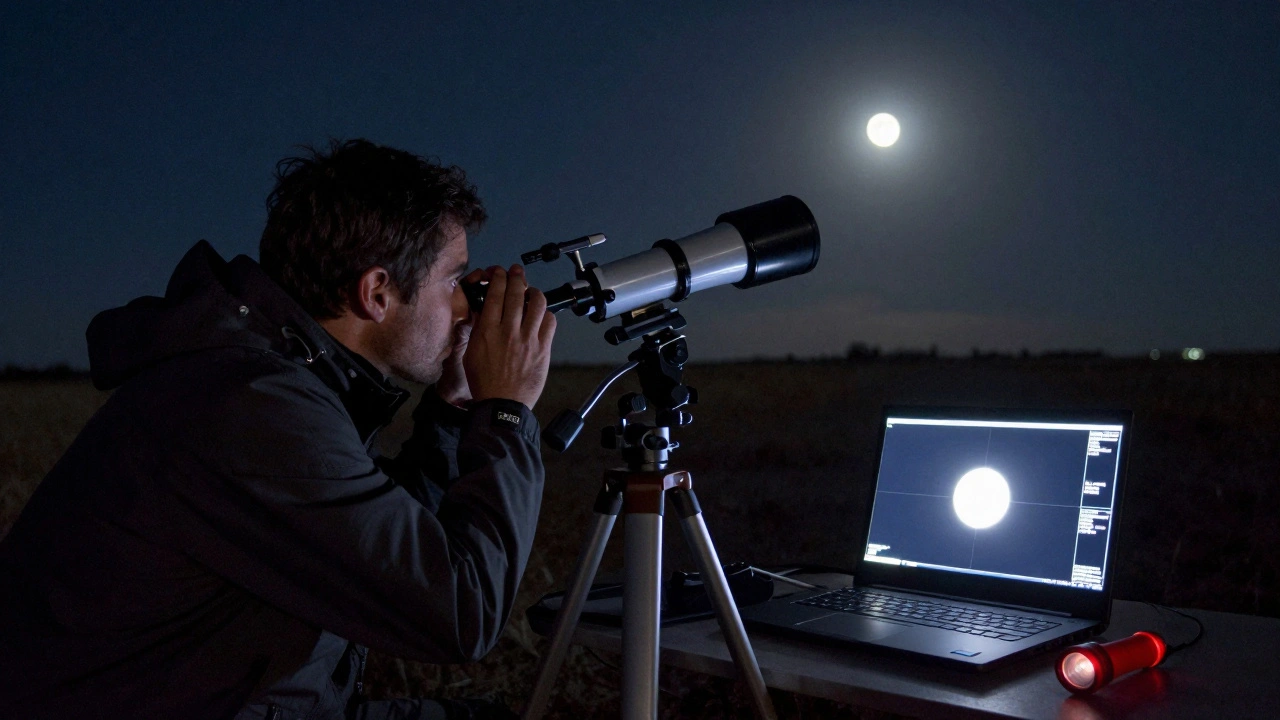
- Use the right gear-For stars, a good pair of binoculars works. For planets or fainter stars, use a telescope with at least 60mm aperture. A video camera connected to a computer can record the exact moment of disappearance, which is how amateur astronomers contribute data to scientists.
- Time it accurately-You need a precise clock. Use GPS time or sync your phone to an atomic time server. Even a 0.1-second error can mean you miss the data point astronomers need.
Why Do Scientists Care?
Amateur observers aren’t just watching-they’re helping. When multiple people record the exact time a star vanishes behind the Moon, scientists can map the Moon’s surface in incredible detail. The Moon’s edge isn’t smooth; it’s covered in craters, ridges, and peaks. Each time a star disappears, it reveals a tiny bump or dip in the lunar limb.
By combining dozens of observations from different locations, researchers can build a 3D model of the Moon’s topography. This helps refine orbital calculations, improve landing site safety for future missions, and even detect subtle changes in the Moon’s rotation over time.
Occultations also help measure star positions with extreme accuracy. If a star’s position is slightly off in catalogs, the exact timing of its disappearance can reveal that error. In some cases, occultations have uncovered previously unknown binary star systems-two stars too close together to resolve with telescopes-by showing a double dip in brightness before the star fully vanishes.
What to Watch For During the Event
When the star disappears, it doesn’t just fade out. It vanishes instantly, like flipping a switch. That’s because stars are so far away they appear as points of light. If you see a gradual dimming, you’re likely seeing atmospheric distortion, not the actual occultation.
Reappearance is often more dramatic. The star suddenly flashes back into view-sometimes with a bright burst of light. This happens because the Moon’s edge is uneven. As the star peeks out from behind a lunar mountain, its light gets focused briefly, creating a flash that lasts only a fraction of a second. These flashes, called “lunar limb flashes,” are rare and exciting to witness.
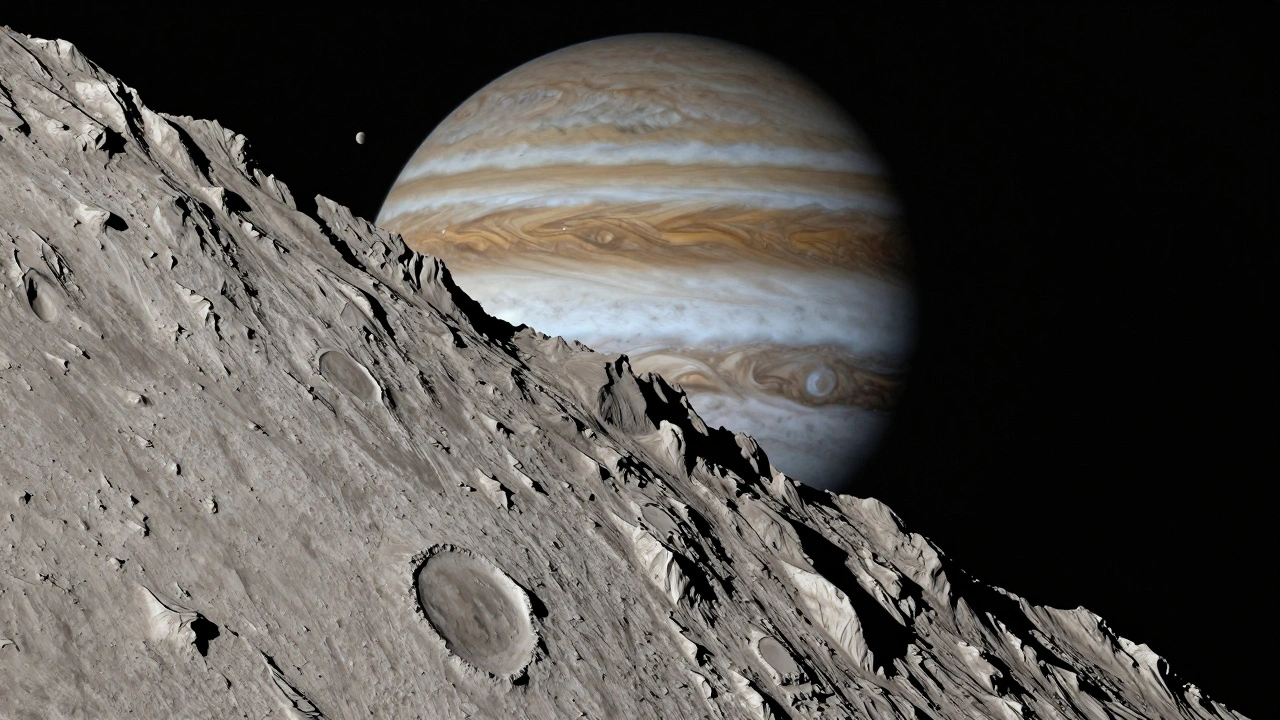
For planets, watch for partial phases. Jupiter might disappear slowly, with one of its moons still visible for a few seconds after the planet’s disk is covered. Saturn’s rings can vanish in stages, offering a unique view of how the Moon’s limb intersects with the ring plane.
When to Look Next
In early 2026, several notable occultations are visible across North America and Europe:
- February 22-The Moon occults Aldebaran (brightest star in Taurus). Visible from the U.S. Southwest and parts of Europe. Best time: 10:47 UTC.
- March 1-The Moon hides Regulus (the heart of Leo). Visible from the eastern U.S. and Western Europe. Timing: 02:15 UTC.
- March 18-Jupiter occulted by the Moon. Visible from the Pacific Northwest and Alaska. The event lasts over 20 minutes.
These events are visible to the naked eye if the Moon isn’t too bright. Use a red-light flashlight to preserve night vision, and avoid using phone screens directly. A star chart app set to night mode helps you locate the target before the Moon moves in.
Common Mistakes to Avoid
Many first-timers expect occultations to be slow, dramatic events like eclipses. They’re not. The star vanishes in a blink. If you’re not ready, you’ll miss it.
- Not checking your location’s visibility-Some apps show events globally, but your exact longitude matters. Always cross-check with IOTA’s path maps.
- Using a phone screen too close-Blue light ruins night vision. Use a red filter or dim the screen to 10% brightness.
- Ignoring the Moon’s brightness-If the Moon is gibbous or full, its glare can wash out faint stars. Wait for crescent phases for better contrast.
- Forgetting to sync your clock-Even a 2-second error can make your data useless to researchers.
What to Do After the Event
If you recorded the timing, submit it. Organizations like IOTA and the British Astronomical Association rely on amateur reports. You don’t need fancy gear-just a timestamp and your location. A simple note like “Aldebaran disappeared at 10:47:03 UTC, from 34.05°N, 118.24°W” is enough.
Some observers even video the event. A basic webcam attached to a telescope can capture the exact moment. Upload it to forums like Cloudy Nights or share it with local astronomy clubs. You might be surprised how much your data helps.
Next Steps
Start by downloading Stellarium and setting your location. Look up the next lunar occultation visible from you. Mark your calendar. Set an alarm. Be ready 10 minutes early. Bring a red flashlight, a notebook, and a warm coat. You don’t need to be an expert-you just need to be there at the right time.
Occultations are among the most accessible and scientifically valuable events in amateur astronomy. They don’t require expensive gear, long exposures, or dark skies. Just your eyes, a clock, and a little patience.
Can I see a lunar occultation with the naked eye?
Yes, if the star or planet is bright enough. Aldebaran, Regulus, and Spica are all visible without optics under dark skies. The Moon’s brightness can make it harder-try observing during a crescent phase when the sky is darker. For planets like Jupiter, binoculars help, but you can still see the disappearance with your eyes if you’re prepared.
Why do some occultations only happen in certain places?
The Moon’s path across the sky is narrow-about 30 arcminutes wide. That’s roughly the width of your pinky finger at arm’s length. If you’re just a few miles off the centerline of the path, you might miss the event entirely. This is why detailed maps from IOTA are essential-they show the exact zone where the occultation will be visible.
How often do lunar occultations occur?
The Moon occults a star or planet roughly once every 1-2 days somewhere on Earth. But for any single location, you might only see one or two bright events per year. Fainter stars are occulted more often, but they’re harder to see. Planets like Jupiter get occulted about once every 3-5 years from a given spot.
Do I need a telescope to observe an occultation?
Not always. For bright stars like Aldebaran or Regulus, binoculars are enough. A telescope helps with timing accuracy and seeing fainter stars, but the naked eye can detect the disappearance if the Moon isn’t too bright. For planets, a telescope is recommended because their size makes the event slower and harder to pinpoint.
Can I contribute data even if I’m not an expert?
Absolutely. Organizations like IOTA rely on amateur observers to collect timing data. Even a single observation with a timestamp and location can be valuable. You don’t need a high-end camera-just a smartphone synced to atomic time and a clear view of the Moon and target. Your data helps refine lunar maps and improve orbital models.