8 Jan 2026
- 0 Comments
Planning a long road trip to watch the stars isn’t just about packing a tent and a blanket. If you want to see the Milky Way clearly, catch a meteor shower without interference, or photograph the northern lights, you need more than luck-you need strategy. Most people think dark skies are just far away from cities, but that’s only part of the story. The real challenge is finding places that are truly dark, accessible, safe, and worth the drive.
Why Most "Dark Sky" Places Aren’t What They Claim
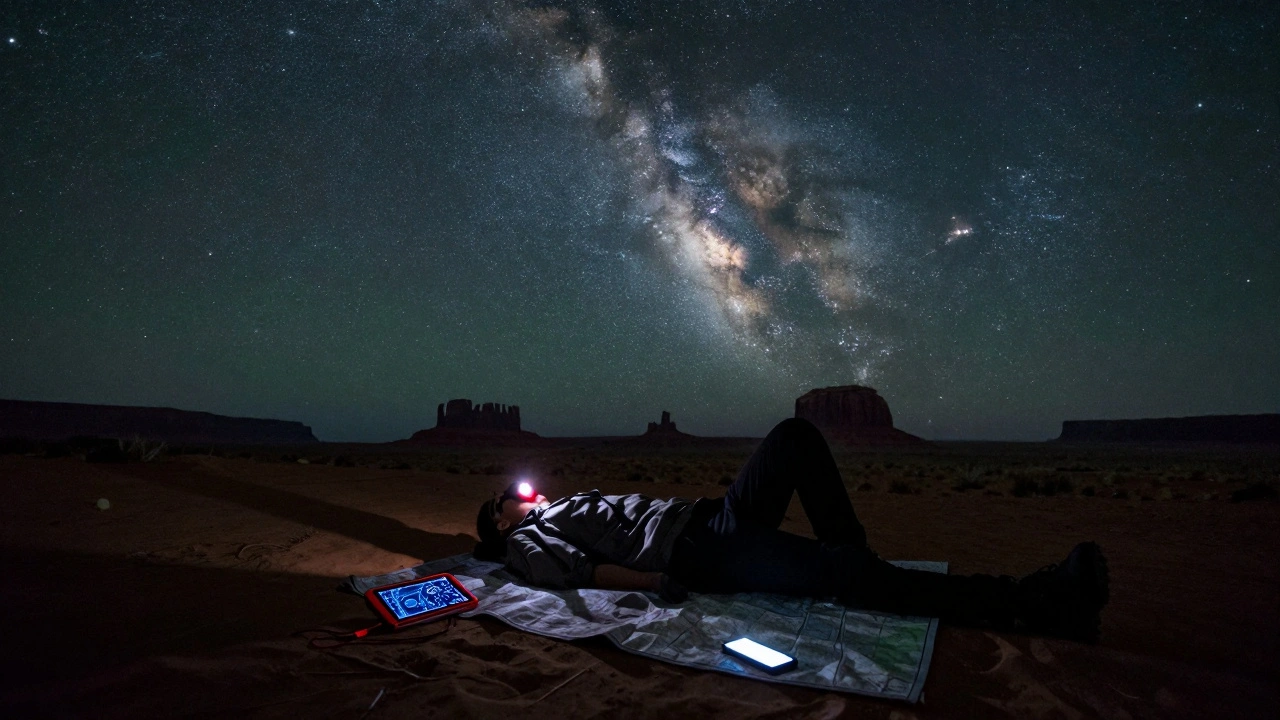
You’ve seen the Instagram posts: a person lying under a sky full of stars, captioned "Just got to a dark sky site!" But many of those spots are still too bright. A location might be 50 miles from a city, but if there’s a small town with unshielded streetlights, a highway with bright billboards, or a nearby industrial zone, your view is ruined. True dark sky sites have a Bortle Scale rating of 1 or 2. That means the Milky Way casts shadows. You can read a book by its glow. And you can see the zodiacal light-a faint cone of light rising from the horizon after sunset or before sunrise-that most people never even know exists.Check the Dark Site Finder map. It’s not perfect, but it’s the most reliable public tool. It shows light pollution levels by color: black for the darkest, red for the worst. Look for areas labeled "Class 1" or "Class 2." These are rare. In the lower 48 U.S. states, fewer than 150 spots meet this standard. Most are in the Southwest, Great Basin, or northern Rockies.
Best Road Trip Destinations for Extended Stays
Not all dark sky places are created equal. Some are great for one night. Others are built for weeks. Here are the top five for extended trips:- Big Bend National Park, Texas - The darkest spot in the contiguous U.S. with no nearby towns. You can camp for days and see the galactic center in May. Rangers host monthly night sky programs.
- Great Basin National Park, Nevada - High elevation, dry air, and zero commercial lighting. The park has a dedicated astronomy pavilion and permits overnight parking for stargazers.
- Chaco Culture National Historical Park, New Mexico - Not just dark, but culturally rich. Ancient Puebloan sites align with solstices. The park enforces strict light rules and has a visitor center with telescope nights.
- Death Valley National Park, California - Vast, remote, and legally protected from new lighting. The annual Death Valley Astronomy Festival draws serious observers. Best from October to April.
- Boundary Waters Canoe Area Wilderness, Minnesota - For those who want solitude. No roads, no power lines, just lakes and trees. You need to paddle in, but the sky is pure. Ideal for summer aurora sightings.
Each of these places has one thing in common: they’re managed by agencies that enforce lighting ordinances. That’s rare. Most public lands don’t care about light pollution. These do.
What to Pack Beyond the Basics
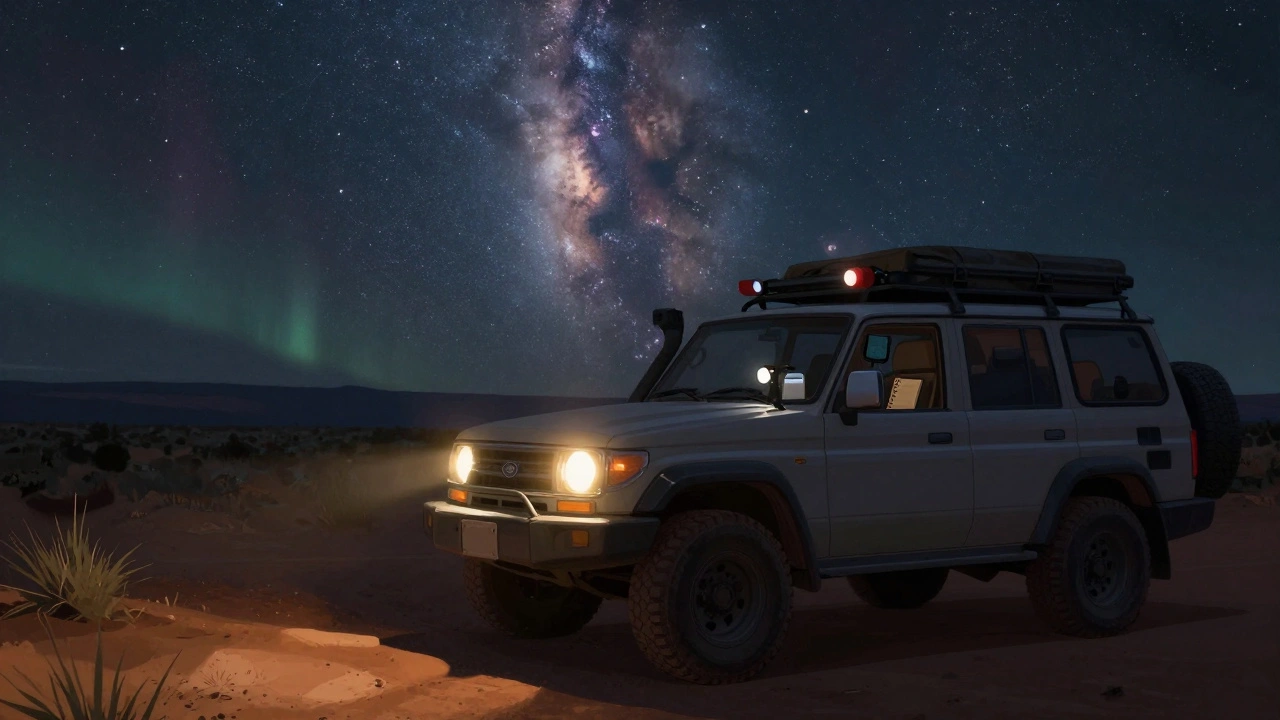
You don’t need a $5,000 telescope to enjoy the dark sky. But you do need the right gear. Here’s what works:- Red-light headlamp - Regular white light ruins your night vision. Red light lets you read maps or adjust gear without losing your adaptation. Look for ones with adjustable brightness.
- Thermal blanket and insulated pad - Even in summer, desert nights drop below 40°F. A foam pad under your sleeping bag cuts ground heat loss. A Mylar blanket adds extra warmth without bulk.
- Star chart app with offline mode - SkySafari or Stellarium Mobile. Download maps for your location before you leave. Cell service is nonexistent in most dark sky zones.
- Portable power bank - 20,000mAh minimum. You’ll need it for your phone, headlamp, and maybe a small fan to keep bugs away.
- Logbook and pencil - Digital notes get lost. Write down what you see: time, constellation, brightness, weather. You’ll forget details by morning.
And leave the Bluetooth speaker at home. Sound travels. So does light. Your presence shouldn’t disturb others.
Timing Your Trip for Maximum Impact
Dark skies are always there-but the best views aren’t. The moon is your biggest enemy. A full moon drowns out faint stars and the Milky Way. Plan around the new moon. Use a lunar calendar. For example, in March 2026, the new moon falls on the 21st. That’s your prime window.Also, know your season:
- Winter (Dec-Feb) - Best for Orion, Pleiades, and the winter Milky Way. Cold, but crisp air gives sharp views.
- Spring (Mar-May) - Galactic center starts rising after midnight. Best for deep-sky objects like the Andromeda Galaxy.
- Summer (Jun-Aug) - Milky Way core is overhead after 10 p.m. Meteor showers peak in August (Perseids).
- Fall (Sep-Nov) - Auroras become visible in northern locations. The Andromeda Galaxy is at its highest.
Check the KP index if you’re chasing auroras. A value of 4 or higher means visible activity. You can get real-time alerts from NOAA’s Space Weather Prediction Center.
How to Avoid Getting Lost (Literally and Figuratively)
Many people show up at a dark sky site, set up, and then realize they can’t find their way back to the trailhead. Or they run out of water. Or their car battery dies. Here’s how to avoid the common mistakes:- Drive a vehicle with high clearance - Many dark sky spots require gravel or dirt roads. A sedan won’t make it. SUVs or trucks are ideal.
- Carry extra fuel - Gas stations are often 50+ miles away. Fill up before you leave the last town.
- Leave a trip plan with someone - Tell a friend your route, expected return, and exact coordinates. Use Google Maps’ offline sharing. If you don’t check in, they’ll know something’s wrong.
- Bring a satellite communicator - Garmin inReach or Zoleo. They work without cell service. You can send SOS signals and text updates. Worth the investment if you’re going solo.
- Test your gear before you go - Don’t wait until you’re in the desert to find out your headlamp batteries are dead. Do a dry run at home.
One last thing: don’t go alone unless you’re experienced. Even seasoned observers get disoriented in total darkness. A second person doubles your safety and your enjoyment.
What to Expect When You Get There
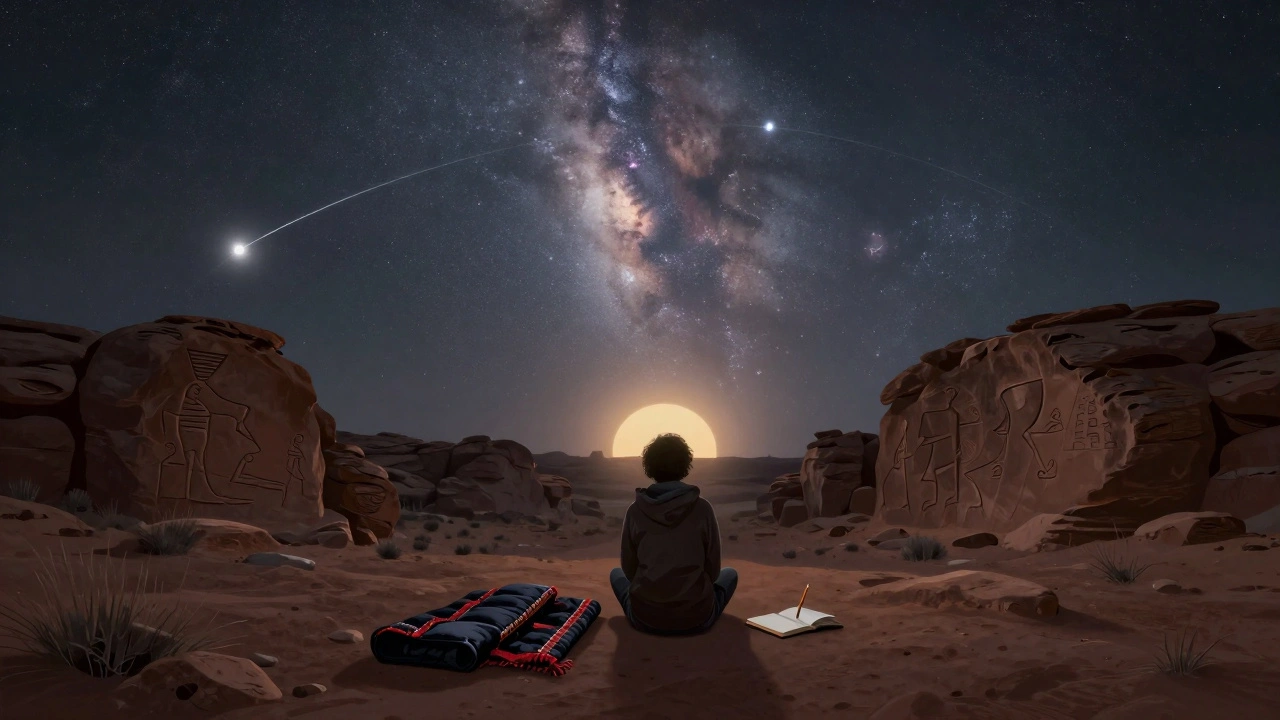
The first time you stand under a true dark sky, it changes you. You’ll see stars you didn’t know existed. You’ll spot satellites gliding silently. You’ll catch the faint glow of the Gegenschein-a dim patch of light opposite the sun, caused by dust reflecting sunlight. It’s not a trick of the eye. It’s real.You’ll also hear silence. Not the quiet of a quiet room. The kind of silence that feels heavy, like the air itself is holding its breath. That’s when you realize: this is what the night looked like for 99% of human history.
Bring a journal. Write down what you feel. Not just what you see. Because that’s what lasts.
How do I know if a location is truly dark sky?
Use the Dark Site Finder map or the Light Pollution Map by the International Dark-Sky Association. Look for areas marked Class 1 or 2 on the Bortle Scale. If the Milky Way casts shadows on the ground and you can see the Andromeda Galaxy with the naked eye, you’re in a true dark site.
Can I use a telescope on a road trip to dark sky sites?
Yes, but keep it simple. A small Dobsonian or refractor is easier to set up than a large mount. You don’t need tracking for casual viewing. Bring a red-light lamp to adjust it, and avoid using white light near others. Many dark sky parks have designated viewing areas with power outlets for those who need them.
Is it safe to camp alone at dark sky locations?
It can be, but only if you’re prepared. Bring a satellite communicator, leave your itinerary with someone, and choose well-managed sites like national parks. Avoid remote wilderness areas unless you have survival training. Most incidents happen due to dehydration, cold exposure, or getting lost-not wildlife.
What’s the best time of year to visit dark sky sites?
It depends on what you want to see. Summer (June-August) offers the brightest Milky Way core. Winter (December-February) gives crisp views of Orion and the Pleiades. Spring and fall are ideal for deep-sky objects like galaxies and nebulae. Always avoid full moon nights. New moon windows are your best bet.
Do I need a permit to stargaze at dark sky locations?
Most national parks and public lands allow free stargazing without a permit. But if you plan to camp overnight, you’ll need a standard camping permit. Some places, like Chaco Culture Park, require advance reservations for overnight stays. Always check the official website before you go.