1 Apr 2026
- 0 Comments
The Face of the Moon Through Your Scope
When you turn your telescope toward the night sky, the surface looks pockmarked like old cheese. But there is real order in that chaos. You aren't just looking at random holes; you are peering at a geological record that tells the story of billions of years. Every observer wants to distinguish between the basic bowl-shaped pits and the larger, more intricate basins. Knowing the difference changes how you interpret what you see. It turns a pretty view into a science lesson.
To understand these structures, you need to grasp how the impact craters formations created by high-speed collisions with celestial bodies like asteroids or comets. On the Moon Luna, Earth's only natural satellite, characterized by a lack of atmosphere to protect its surface , these impacts leave permanent marks. Without wind or water to erode them, the landscape remains largely untouched, preserving features from the distant past. This lack of erosion allows us to study the mechanics of collision clearly.
What Makes a Crater Simple?
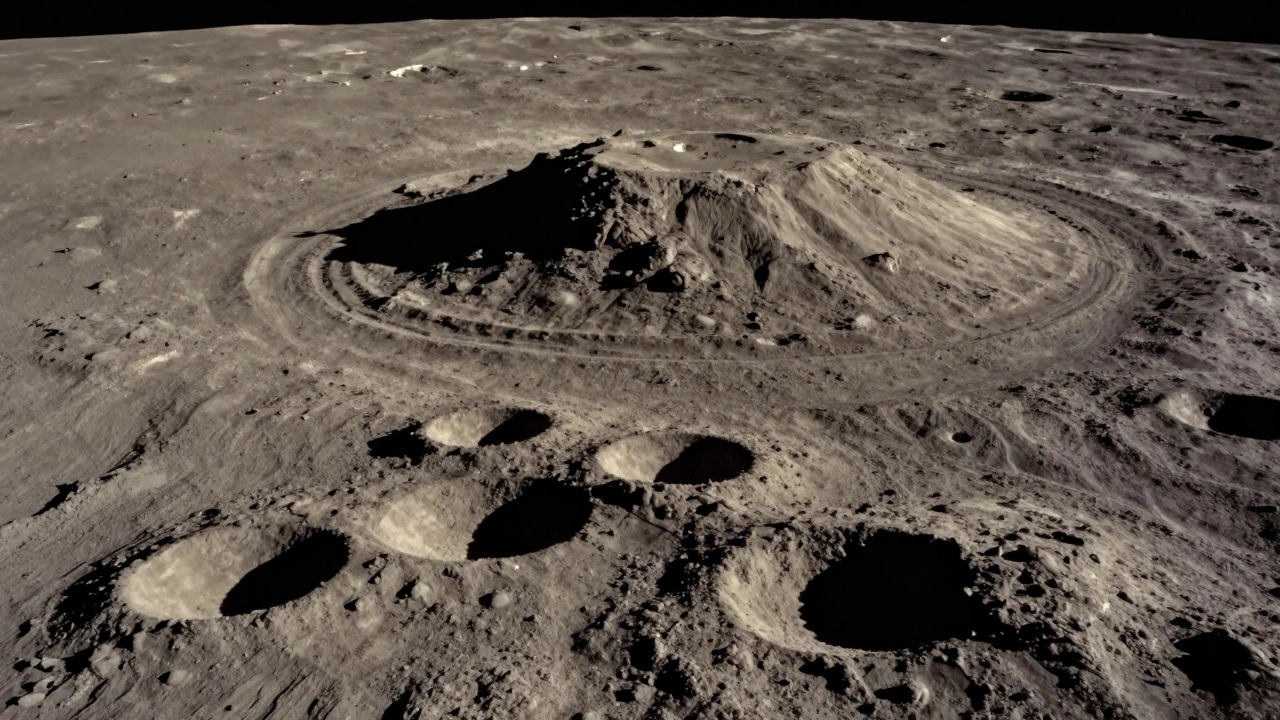
Smaller impacts result in what scientists classify as simple craters. These are generally bowl-shaped depressions. When a smaller object strikes the ground, the energy isn't enough to reshape the entire region significantly. The resulting hole has steep walls and a relatively shallow floor compared to its depth. In observational terms, these look like clean cups etched into the surface.
| Feature | Description | Observation Tip |
|---|---|---|
| Shape | Bowl-like depression | Look for smooth interior slopes |
| Diameter | Usually less than 15 kilometers | Requires higher magnification |
| Floor | Straight slope, no flat bottom | Shadows show curvature easily |
The threshold for simplicity depends on the gravity of the body involved. On our Moon, simple craters typically top out around fifteen kilometers in diameter. Beyond this size, the physical laws governing the rock and debris shift. The walls become unstable and slump inward. For an observer using a standard refractor or Dobsonian, spotting a simple crater often means hunting near the terminator where shadows define the rim. You will notice the rim is raised above the surrounding terrain, casting a line of darkness across the inside.
The Evolution Into Complexity
As the size of the impacting object grows, so does the energy of the explosion. This leads to the formation of complex craters. These structures are distinct because the sheer force causes the ground to rebound. Think of dropping a stone in mud versus dropping a bomb. The second event causes a shockwave that bounces back up. This rebound creates a central peak rising from the middle of the floor.
Complex Craters Large impact structures featuring flat floors, terraced walls, and central peaks caused by seismic rebound usually appear larger than fifteen kilometers. They are not rare either. Some of the most famous targets for lunar viewing fall into this category. When you look at Copernicus A large, prominent complex crater located in Oceanus Procellarum , you are seeing a perfect example. Its bright rays extend outward, signaling a relatively young age. The floor is flat enough that it often traps lava flows in other locations, though Copernicus itself sits in a mare region where volcanic activity filled lower basins over eons.
Identifying Key Structural Elements
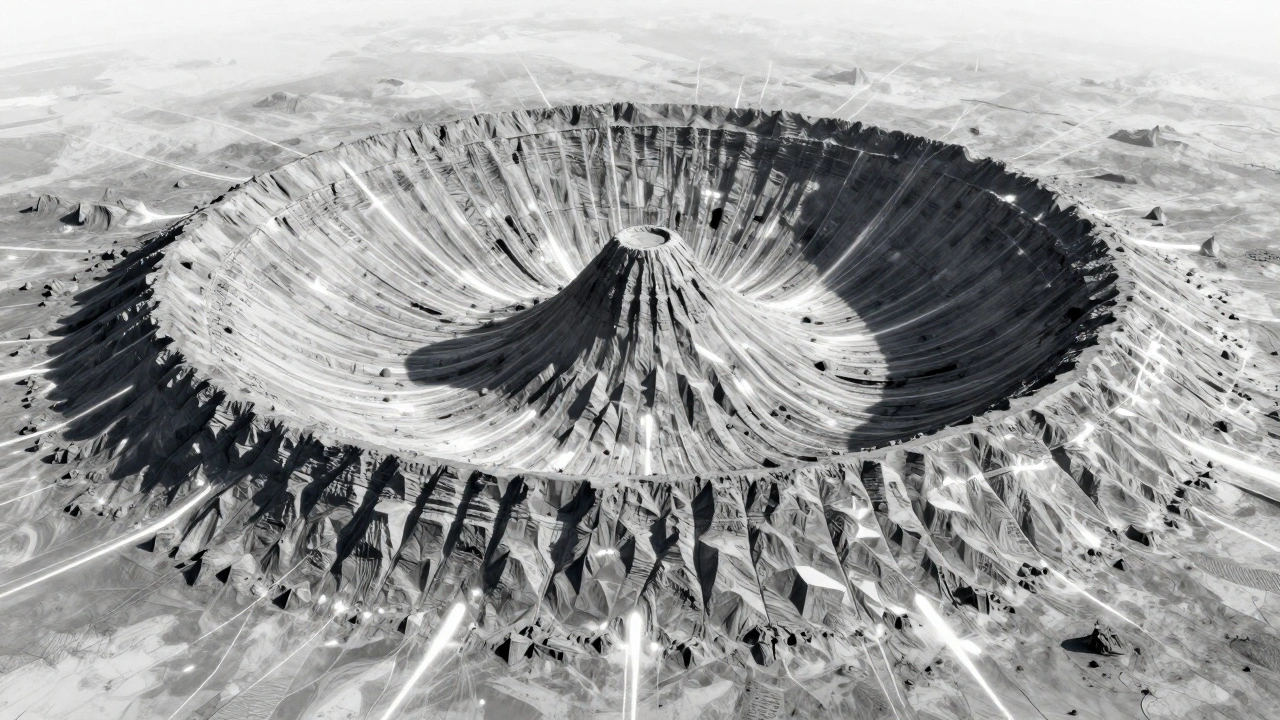
You need to learn specific terminology to describe what you are actually pointing your eyepiece at. The edge of the crater is called the rim wall. In complex formations, this wall doesn't stay vertical. It slumps down in steps. We call this terracing. It looks like stairs cut into the mountain side leading to the basin below. This slumping happens because the material is heated and shocked during the impact, weakening its structural integrity.
Another feature to hunt for is the central peak. This isn't a volcano. It is a piece of the crust pushed upward by the shockwave. Sometimes these peaks reach heights comparable to mountains on Earth, standing over two kilometers tall. Inside the floor, you might also see secondary craters. These are formed when debris ejected from the main impact crashes back down nearby. They create clusters of smaller bumps inside the giant bowl.
The material thrown out during the event forms ejecta blankets Layers of debris deposited around the crater rim after an impact event . Fresh craters have bright ray systems Long streaks of high-albedo material radiating from the crater center that are easily visible even with binoculars. Over time, micrometeorite bombardment darkens these rays, blending them with the background regolith The layer of loose, fragmented material covering the bedrock of the Moon . This aging process helps astronomers estimate the surface age.
Timing Your Observation
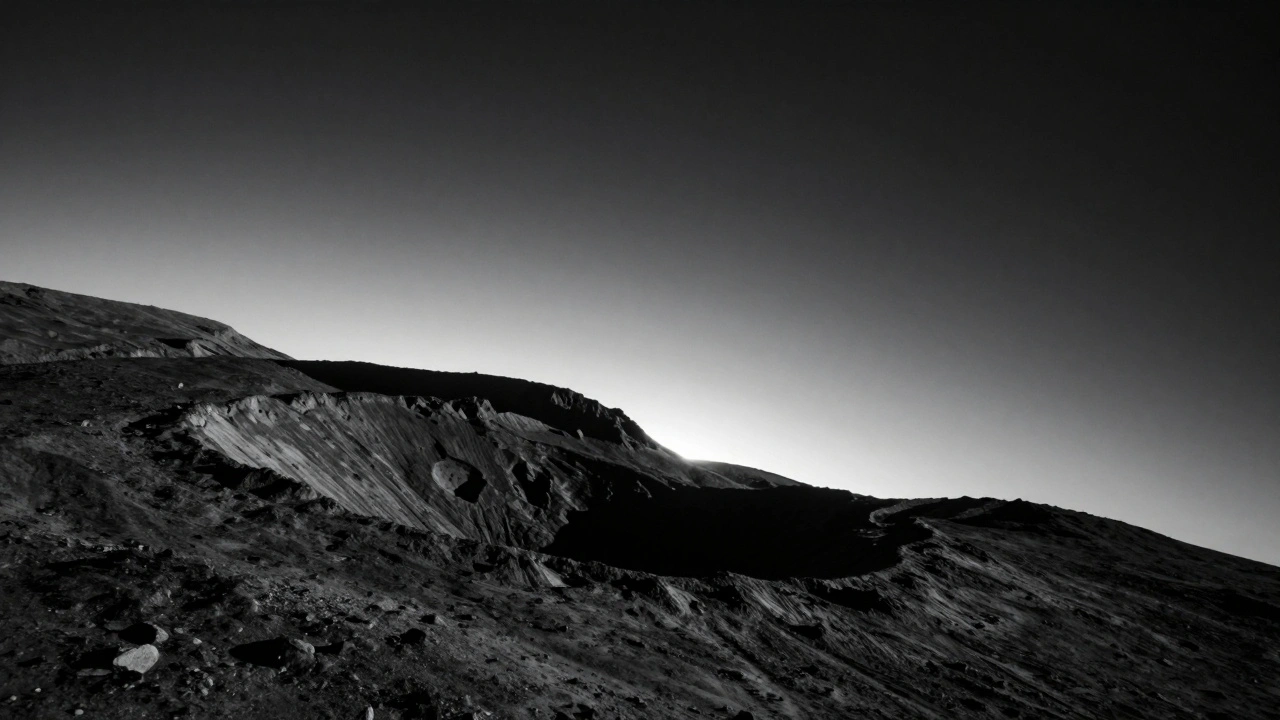
The best way to see these distinctions is through lighting. Observing at full moon flattens everything due to overhead sunlight. Instead, aim for the terminator, the moving line between day and night. Low-angle sunlight casts long shadows that exaggerate height differences. A ridge that is barely visible during the noon of the lunar day becomes a massive cliff at dusk.
If you are observing from a location like Portland, weather patterns dictate your window. Winter months often bring clearer air mass. When clouds finally break, catch a waxing gibbous phase. The southern hemisphere of the Moon has fewer maria, meaning more cratered highlands. This offers more targets for studying complex structures like the Clavius Crater One of the largest visible complex craters in the southern hemisphere . During the early evening of a cold January night, the angle of the sun reveals the deep interior terraces clearly.
Why Shape Matters for Science
This isn't just about pretty pictures. The transition from simple to complex tells us about the planet's crust. The diameter where this switch happens depends on gravity. On Mars, the transition occurs at much larger diameters because gravity is weaker. By comparing these thresholds, we learn about the internal structure of different worlds. It serves as a probe for geology we cannot touch.
For the backyard astronomer, recognizing the type of crater adds context to the timeline. Younger craters usually retain their sharp rims and bright rays. Older ones are softened and overlapped by newer impacts. Spotting a nested crater-a small simple one sitting on the ramparts of a large complex one-gives you a sense of chronology right in your eyepiece.
Tips for Better Viewing
To get the most out of your session, filter your approach. Using a polarizing filter can sometimes reduce glare from bright rilles, making texture pop. Adjust your magnification to balance brightness and detail. Too much power dims the image, hiding faint details in the shadowed walls. Start low to locate, then increase to inspect the floor.
- Focus on the terminator for maximum contrast.
- Look for shadow length to judge depth.
- Note whether the floor is flat (complex) or curved (simple).
- Identify central peaks to confirm complexity.
With practice, you will stop counting craters and start reading the landscape. You will understand that a simple pit represents a minor event, while a complex basin represents a catastrophe that reshaped the local geography. It turns the static face of the Moon into a dynamic history book.
What is the main difference between simple and complex craters?
Simple craters are small, bowl-shaped depressions with smooth walls, typically under 15 kilometers wide. Complex craters are larger, featuring flat floors, terraced walls, and central peaks formed by seismic rebound.
How do I see craters best through a telescope?
Observe when the crater is near the terminator line. The low angle of sunlight creates long shadows that highlight the three-dimensional structure, depth, and wall features much better than direct overhead light.
Why do complex craters have central peaks?
During a high-energy impact, the compression of the ground triggers a shockwave. As the shockwave dissipates, the bedrock rebounds upward, pushing material from deep underground to form a spike or peak in the center.
Are ray systems found on all craters?
No, ray systems are typically associated with younger complex craters. Over millions of years, space weathering and micrometeorite bombardment darken these rays until they blend with the surrounding regolith.
Can I see the difference with binoculars?
Yes, binoculars can show large complex craters with central peaks like Tycho or Copernicus. Simple craters are often too small or indistinct to resolve details with binoculars, requiring a telescope.