10 Feb 2026
- 0 Comments
Ever bought a telescope only to realize it barely fits in your closet? You’re not alone. Thousands of people start stargazing with big dreams-only to give up because their gear takes over their living room. The real question isn’t whether you want to see Jupiter’s bands or Saturn’s rings. It’s: which telescope actually works with your life?
Tabletop Telescopes: Compact, But What Are You Sacrificing?
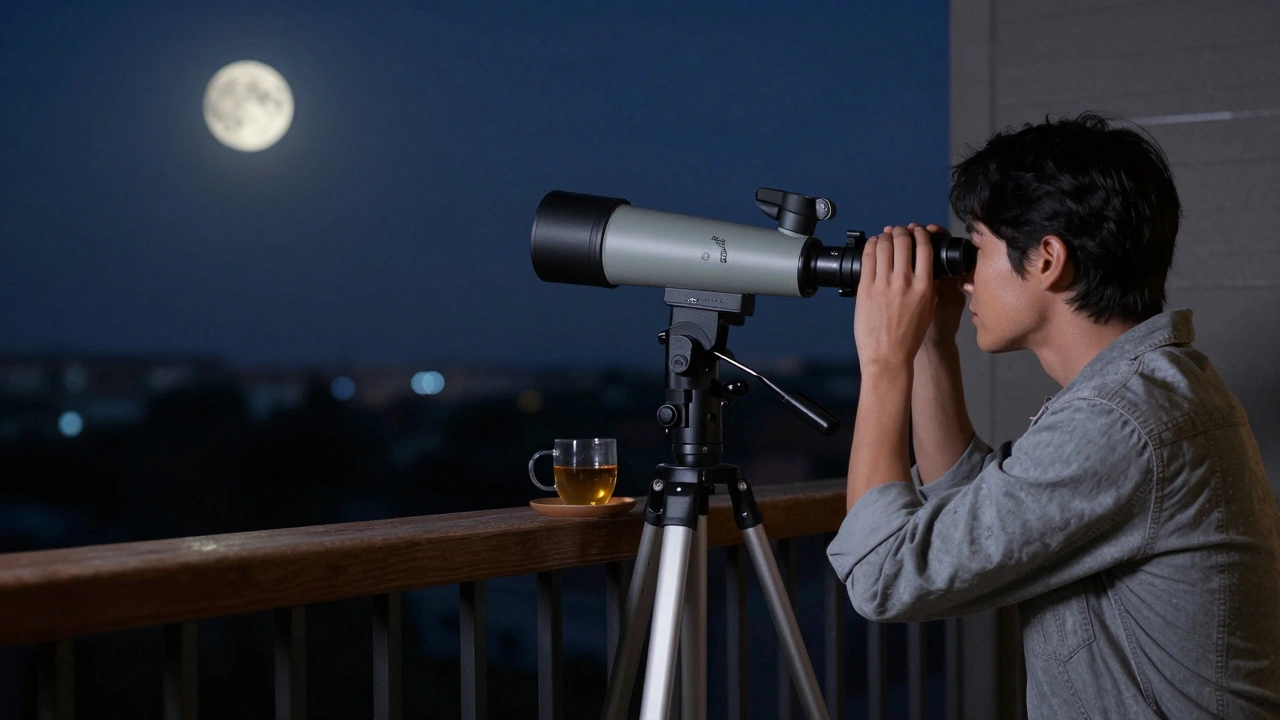
Tabletop telescopes are small, usually under 20 inches long and weighing less than 5 pounds. They sit on a table, a balcony railing, or even a car hood. Brands like Celestron, Meade, and Sky-Watcher make popular models like the Celestron AstroMaster 70AZ a refractor telescope with a 70mm aperture designed for easy setup and portability or the Orion SkyScanner 100 a compact reflector with a 100mm mirror that delivers surprisingly sharp views.
These are perfect if you live in an apartment, have a tiny backyard, or just don’t want to haul gear out every night. You can set it up in under a minute. No tripod assembly. No tools. Just place it on a steady surface and start looking.
But here’s the trade-off: aperture size. Most tabletop scopes have apertures between 60mm and 100mm. That means less light gathering. You’ll see the Moon clearly, Jupiter’s moons, and maybe the Orion Nebula on a dark night. But deep-sky objects like galaxies or faint nebulae? They’ll look like fuzzy smudges. You won’t get the same detail as someone with a bigger scope.
Also, stability matters. A tabletop scope on a wobbly patio table? You’ll be chasing the view across the eyepiece. Some models come with motorized tracking, but even then, vibration from wind or footsteps ruins the experience.
Full-Size Telescopes: The Real Powerhouse
Full-size telescopes start around 30 inches in length and weigh 15 to 40 pounds. These are the classic Dobsonians, Schmidt-Cassegrains, and refractors you see in observatories or backyard setups. Think the Sky-Watcher Dobsonian 8" an 8-inch (203mm) reflector with a massive light-gathering power for deep-sky viewing or the Celestron CPC 1100 a computerized GoTo Schmidt-Cassegrain with 11-inch aperture and GPS alignment.
Why go big? Aperture. A 6-inch scope gathers 4 times more light than a 3-inch one. A 10-inch? Over 10 times more. That means crisp, bright views of galaxies, nebulae, and star clusters you didn’t even know existed. You’ll see spiral arms in Andromeda. You’ll spot the Cassini Division in Saturn’s rings. You’ll resolve double stars that look like single dots through a tabletop scope.
But you pay for it. Setting up a full-size scope takes 10 to 20 minutes. You need space to store it-often a dedicated corner, closet, or shed. You need a sturdy tripod or mount. If you live in a city, you might have to carry it outside, which means climbing stairs or navigating narrow hallways. And if it rains? You’re hauling it back inside.
Space Isn’t Just About Storage-It’s About Use
Most people think space means “how much room does it take up when stored.” But real space is about how often you use it.
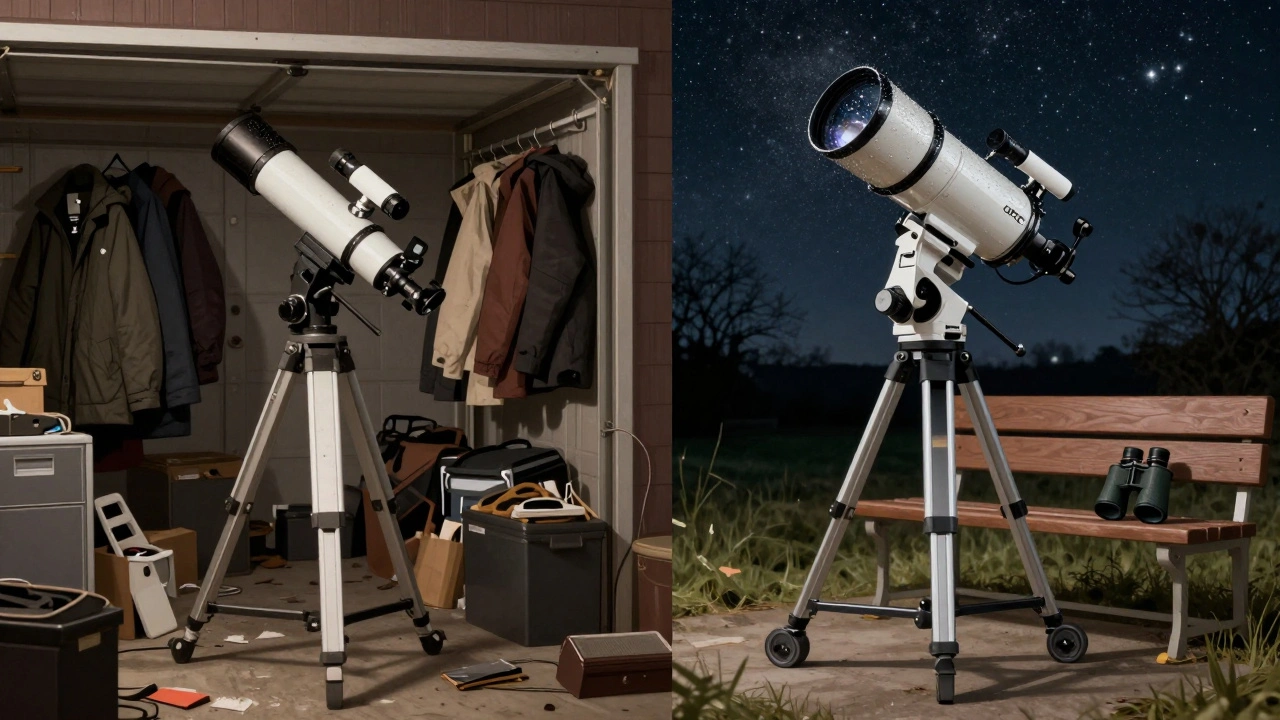
Here’s the data: A 2024 survey of 1,200 amateur astronomers found that users of tabletop telescopes observed 18 nights per year on average. Full-size users? 42 nights. Why? Because the smaller scopes were easier to grab. But the bigger scopes? They were set up and ready. Once you leave a full-size scope outside on a pier or in a roll-away shed, you’re far more likely to use it spontaneously.
One user in Portland told me: “I bought a 90mm tabletop scope. It sat in the garage for 6 months. Then I got a 6-inch Dobsonian and left it on my patio. Now I’m out every clear night, even in winter.”
Storage matters-but so does accessibility. If you can leave your telescope outside, even partially, you’ll use it more. Tabletop scopes don’t usually allow that. They’re too exposed to dew, dust, and theft.
Convenience Isn’t Just About Setup Time
Convenience isn’t just “can I carry it?” It’s “can I enjoy it?”
Tabletop scopes often come with basic alt-azimuth mounts. They’re simple but shaky. Tracking a planet for more than 30 seconds? Impossible without constant fiddling. That’s frustrating when you finally find Jupiter and want to show someone.
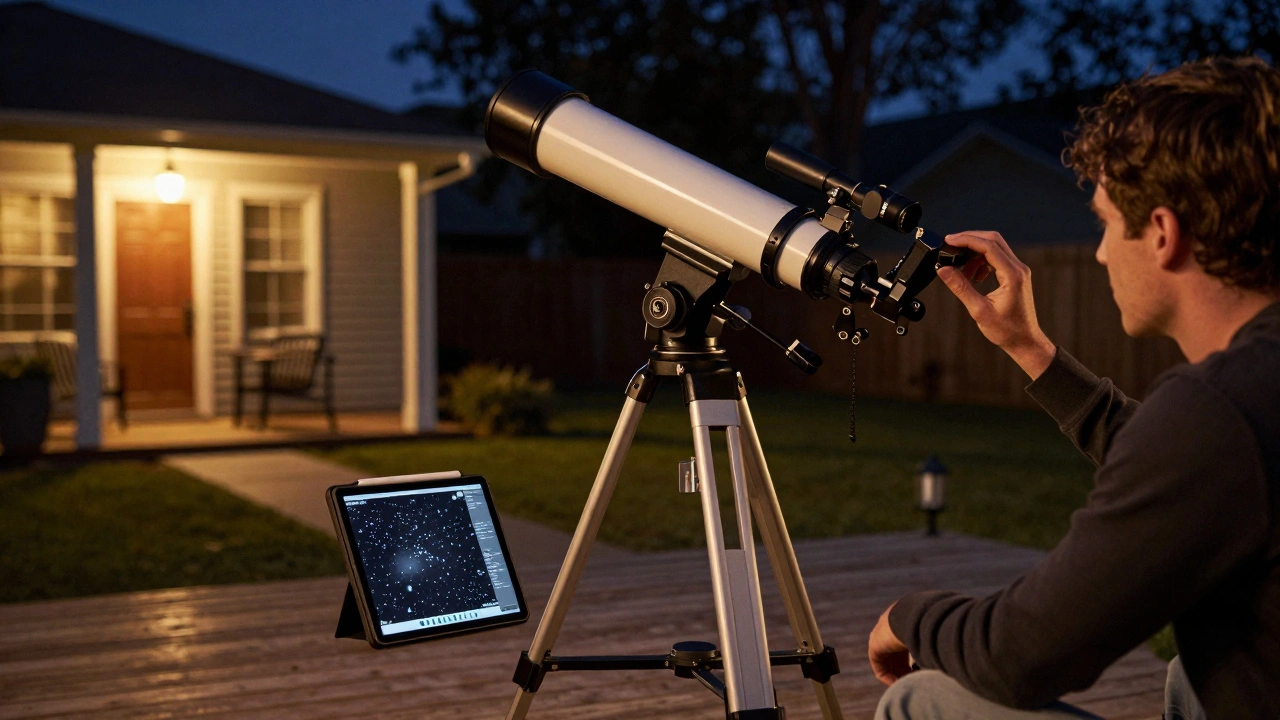
Full-size scopes, especially those with GoTo systems, can find objects automatically. Point it at the sky, press a button, and it slews to M42. No star-hopping. No charts. No guesswork. You can even connect it to a tablet and get real-time guided tours.
And don’t forget accessories. Full-size scopes support higher-quality eyepieces, Barlow lenses, and filters. You can upgrade your views over time. Tabletop scopes? Most are sealed systems. You’re stuck with what came in the box.
Who Should Choose What?
Let’s cut through the noise. Here’s who each telescope is really for:
- Choose a tabletop telescope if: You live in an apartment, have no outdoor space, travel often, or just want to show kids the Moon on a Friday night. You’re not chasing deep-sky objects. You want something you can grab, point, and put away.
- Choose a full-size telescope if: You have a yard, shed, or balcony where you can leave it out. You’re serious about seeing galaxies, nebulae, and planetary detail. You don’t mind spending 15 minutes setting up-and you’ll do it often. You’re willing to invest in upgrades later.
There’s a middle ground: the Sky-Watcher Evostar 80ED an 80mm refractor on a sturdy equatorial mount that balances portability with performance. It’s not quite a tabletop scope, but it’s light enough to carry in one trip. It’s a solid pick if you’re torn.
The Hidden Cost of Compromise
People think buying a smaller scope is a budget-friendly shortcut. But it’s often a trap.
You spend $200 on a tabletop scope. You get excited. You see the Moon. Then you want to see more. So you buy a better eyepiece. Then a diagonal. Then a red-dot finder. Then a motorized mount. Before you know it, you’ve spent $500-and still can’t see what a $400 full-size scope shows you on day one.
That’s why many experienced observers say: “If you’re going to spend more than $300, go full-size.” The upgrade path is clearer. The performance gap is too wide to ignore.
Final Thought: Your Backyard Is Your Observatory
Telescopes aren’t just tools. They’re invitations. If your scope is hard to use, you’ll stop looking. If it’s easy, you’ll look every night.
Don’t let size fool you. A 6-inch scope isn’t just bigger-it’s more alive. It invites curiosity. It rewards patience. It turns a casual glance into a ritual.
Choose the scope that fits your life-not the one that looks coolest in the catalog.
Can a tabletop telescope show planets clearly?
Yes, but with limits. Tabletop telescopes with 70mm to 100mm apertures can show Jupiter’s cloud bands and Saturn’s rings clearly under dark skies. You’ll see the Galilean moons and lunar craters in detail. But fainter details-like cloud features on Mars or the Cassini Division in Saturn’s rings-require larger apertures. Atmospheric conditions also matter more with smaller scopes.
Is a full-size telescope too heavy to move?
It depends. A 6-inch Dobsonian weighs 25-30 pounds and can be carried in one piece with a handle. Many users store them on wheeled platforms or in sheds. If you live in a multi-story apartment, it’s challenging. But if you have a backyard or porch, you can leave it out. Most full-size scopes are designed for frequent use, not occasional hauling. Portability isn’t the main trade-off-storage and setup time are.
Do I need a GoTo system for a full-size telescope?
Not at all, but it helps. GoTo systems use motors and GPS to find objects automatically. They’re great for beginners or if you’re short on time. But many experienced observers prefer manual Dobsonians-they’re cheaper, more reliable, and teach you the sky. You can learn star-hopping with a basic scope and still see amazing things. GoTo is a convenience, not a requirement.
Can I upgrade a tabletop telescope later?
Very limited. Most tabletop scopes are sealed systems. You can swap eyepieces or add a diagonal, but the optical tube and mount are fixed. You can’t add a motorized mount or upgrade the aperture. If you want better views, you’ll likely need to buy a new telescope. Full-size scopes, on the other hand, are modular-you can upgrade optics, mounts, and accessories over time.
What’s the best budget option for someone with limited space?
The Orion SkyScanner 100 is one of the best compact reflectors under $200. It has a 100mm mirror, decent optics, and a sturdy alt-az mount. It’s small enough to store in a closet but powerful enough to show lunar details, Jupiter’s moons, and the Orion Nebula. Pair it with a red-dot finder and a good eyepiece, and you’ll get more than most expect from a tabletop scope.