24 Jan 2026
- 0 Comments
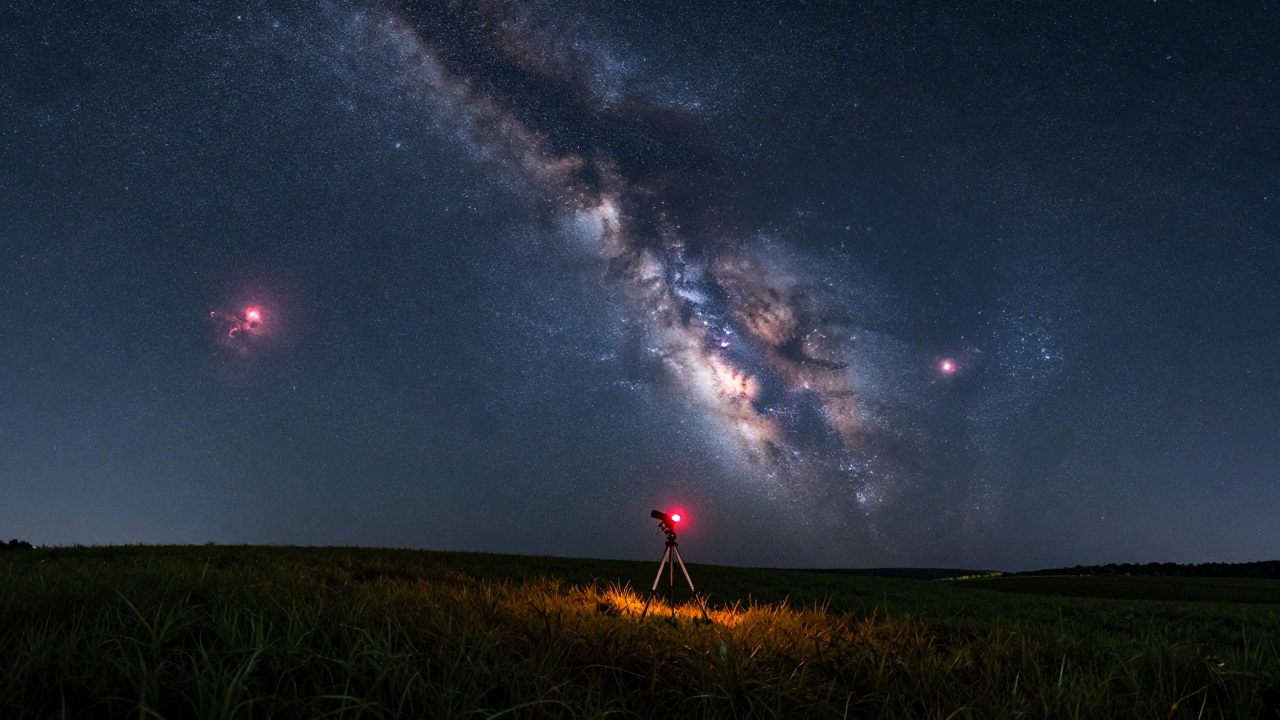
Every summer, the heart of our galaxy rises high in the night sky, turning ordinary stargazing into a cosmic treasure hunt. Between late May and early September, the Milky Way isn’t just visible-it’s unmissable. From Sagittarius in the south to Cygnus overhead, the galactic plane is packed with glowing gas, dense star clusters, and dark rifts that look like ink spilled across velvet. If you’ve ever looked up and wondered what’s out there beyond the stars, this is your season to find out.
Where to Look: The Galactic Core in Sagittarius
As soon as the sky darkens after 10 p.m. in June, the constellation Sagittarius climbs into view low in the southern sky. This isn’t just another zodiac sign-it’s the center of the Milky Way. If you point your binoculars or telescope at the Teapot asterism, you’re staring directly into 27,000 light-years of galactic dust and starlight.
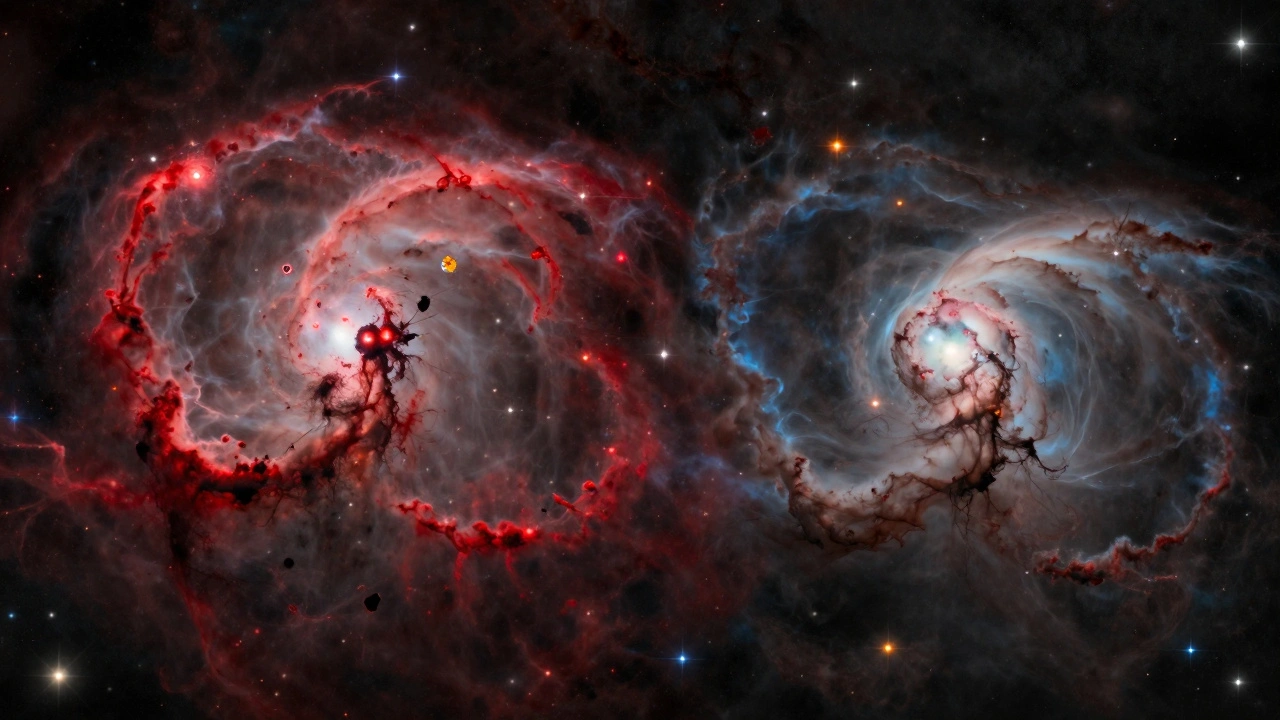
The most famous target here is the Lagoon Nebula (M8). It’s a giant cloud of hydrogen gas, roughly 5,000 light-years away, where new stars are being born. Through a small telescope, it looks like a hazy patch. With a filter or long exposure, it turns into a swirling pink-and-red masterpiece. Nearby is the Trifid Nebula (M20), split into three lobes by dark dust lanes. It’s smaller than M8 but more colorful, with a mix of emission, reflection, and dark nebulae all in one frame.
Don’t miss the Omega Nebula (M17). Also called the Swan or Horseshoe Nebula, it’s one of the brightest and most massive star-forming regions in the galaxy. Its shape looks like a cosmic butterfly when captured with a narrowband filter. These three nebulae are close enough to fit in the same wide-field view, making them perfect for your first summer astrophotography session.
Star Clusters: Nature’s Jewelry Box
While nebulae draw the eye with color, star clusters deliver precision. The Milky Way is littered with them-some loose and scattered, others dense enough to look like glued-together diamonds.
In Sagittarius, the globular cluster M22 stands out. It’s one of the brightest and closest globulars to Earth, visible even without optical aid under dark skies. Through a telescope, you can resolve dozens of individual stars, some glowing orange, others white-hot. It’s older than the Sun by billions of years, and its stars formed before our solar system even existed.
Just above Sagittarius, the open cluster M11 (the Wild Duck Cluster) is a gem. It’s packed with over a thousand stars, arranged in a V-shape that looks like a flock of ducks in flight. It’s fainter than M22, but its tight grouping makes it a favorite for long-exposure shots. You’ll need at least 10 minutes of exposure to bring out its full glory.
The Northern Stretch: Cygnus and the Northern Cross
By midnight in July, the Milky Way arcs overhead, and Cygnus-the Swan-takes center stage. Its brightest star, Deneb, is one of the most luminous in the night sky, shining 200,000 times brighter than the Sun. But the real magic lies in the dark lanes and glowing clouds surrounding it.
The North America Nebula (NGC 7000) is shaped like the continent it’s named after. It’s hard to see visually, but in photographs, its pink glow is unmistakable. You’ll need a light pollution filter and a dark site to capture it. Just next door is the Pelican Nebula (IC 5067), a younger, more chaotic region of star birth. Together, they form a cosmic coastline.
The Veil Nebula is the crown jewel of Cygnus. It’s the remnant of a supernova that exploded 10,000 years ago. What’s left? A vast, filamentary shell of gas, stretching across more than three full moons. The Eastern Veil (NGC 6960) is the easiest to spot-a delicate, thread-like arc near the star Sadr. The Western Veil (NGC 6992/6995) is fainter, but with a long-exposure image, it becomes a lacework of glowing filaments.
Don’t overlook the open cluster M39. It’s a relaxed group of 30 or so stars, spread over a wide area. It’s perfect for wide-field imaging, especially when paired with the Veil Nebula in the same frame. It’s not as flashy as other clusters, but it gives your image balance and context.
Planning Your Summer Session
Observing or photographing these objects isn’t just about pointing a scope at the sky. You need timing, tools, and patience.
- Best time to observe: Late June through August, between 11 p.m. and 3 a.m. local time. The galactic core is highest around 1 a.m. in July.
- Equipment: Binoculars show the basics. A telescope with at least 4-inch aperture reveals detail. For astrophotography, a tracked mount and a cooled CCD or DSLR with a narrowband filter (Ha, OIII) are game-changers.
- Location matters: Get away from city lights. Even a 30-minute drive into the countryside makes a huge difference. Dark sky sites like the Oregon Outback or Mount Hood’s eastern slopes are ideal.
- Patience is key: The human eye doesn’t see color in deep-sky objects well. What looks gray through the eyepiece often bursts into reds and blues in a 10-minute exposure. Trust the process.
What You’ll See vs. What You’ll Capture
There’s a big gap between what your eyes see and what your camera records. In the dark, your pupils dilate, but your retina can’t collect enough photons to trigger color vision. So yes, the Lagoon Nebula looks like a gray smudge through your telescope. But after 30 minutes of exposure, it glows with the same reds and pinks you see in Hubble images.
This is why summer is the best time to start astrophotography. The Milky Way is bright, the targets are high, and the nights are warm. You can set up your gear in a T-shirt. No freezing hands, no fogged lenses. Just you, your tripod, and the galaxy.
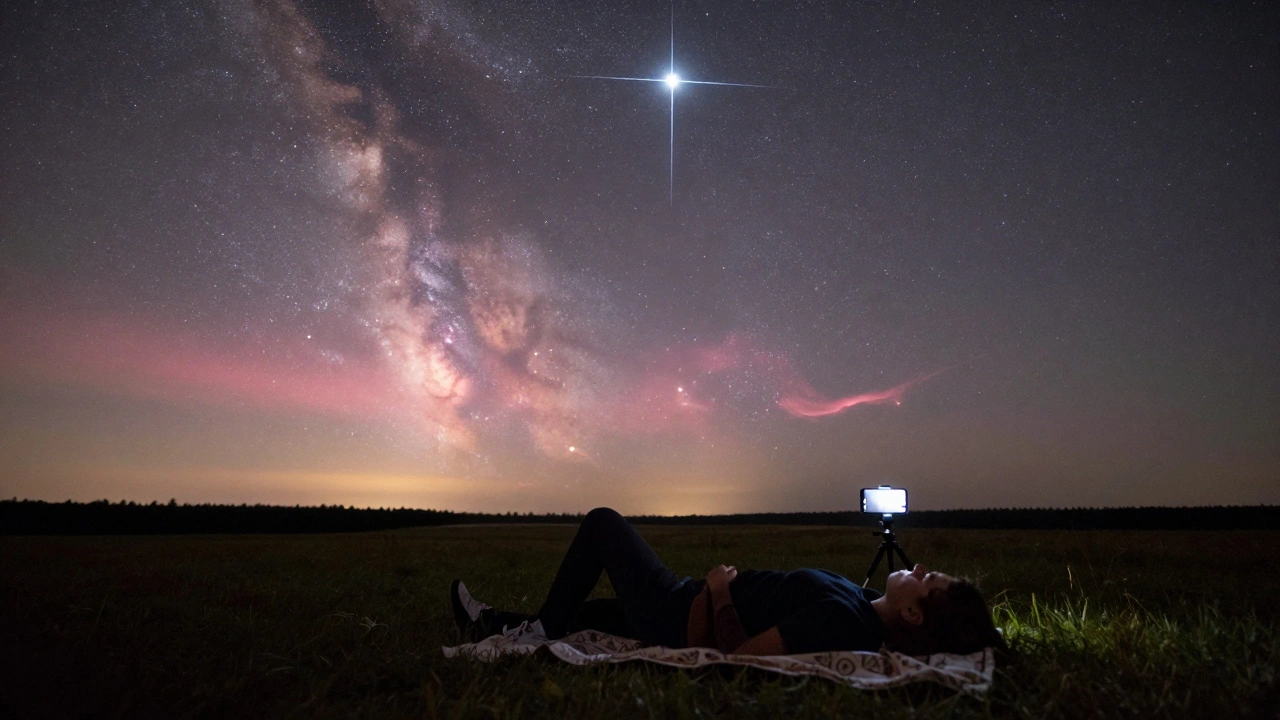
Start simple. Use your smartphone on a tripod to capture the Milky Way arching over the horizon. Then upgrade to a DSLR with a wide lens. After that, try stacking images with free software like DeepSkyStacker. You don’t need a $5,000 rig to get stunning results. Many of the best images come from gear under $1,000.
Common Mistakes to Avoid
- Trying to see everything in one night. Pick two or three targets. Master them. Come back next week for more.
- Ignoring the moon. The Moon’s brightness can wash out faint nebulae. Plan your sessions around the new moon. In 2026, the best windows are June 14-19, July 14-19, and August 13-18.
- Not letting your eyes adjust. Give yourself 20 minutes in the dark before you even look through the eyepiece. Use a red-light headlamp if you need to read a chart.
- Overcomplicating the setup. If you’re new, skip the filters, the autoguiders, the software tweaks. Just point, shoot, and learn. You’ll improve faster by doing than by reading forums.
What’s Next After Summer?
Once you’ve captured the Sagittarius to Cygnus stretch, you’ve seen the heart of our galaxy. Next season, turn your attention to the winter Milky Way-Orion’s Nebula, the Horsehead, and the Rosette. But don’t rush. Summer’s targets are the foundation. They’re bright, forgiving, and endlessly rewarding.
There’s no rush. No deadline. Just the sky, the silence, and the slow, quiet wonder of realizing you’re looking at the same galactic core that humans have stared at for thousands of years.
What’s the best time of night to view the Summer Milky Way?
The best time is between 11 p.m. and 3 a.m. local time, especially in July and August. That’s when the galactic core-centered in Sagittarius-is highest in the sky. By 1 a.m., it’s nearly overhead, giving you the clearest, least distorted view through the atmosphere.
Do I need a telescope to see these nebulae and clusters?
No. Many of these objects are visible with binoculars. The Lagoon and Trifid Nebulae appear as fuzzy patches. Star clusters like M22 and M11 show up as dense smudges of light. A telescope reveals more detail, but you don’t need one to enjoy the view. Start with what you have.
Can I photograph the Summer Milky Way with a smartphone?
Yes, but with limits. Use a tripod, set your camera to manual mode, and try 10-30 second exposures at f/2.8 or wider. Use an app like NightCap or ProCamera. You’ll capture the Milky Way’s glow and maybe a bright cluster, but fine details like nebulae won’t show up. Smartphones are great for learning composition and timing.
Why do these objects look gray through the eyepiece but colorful in photos?
Your eyes have two types of light-sensing cells: rods (for low light) and cones (for color). In dim conditions, rods dominate, and they can’t detect color. Cameras, however, collect light over minutes, building up enough photons to reveal the true reds and blues of hydrogen and oxygen emissions. That’s why long-exposure images look so vivid.
What filters help the most for summer deep-sky targets?
A narrowband Ha (Hydrogen-alpha) filter is the top choice for nebulae. It blocks light pollution and lets through the red glow of ionized hydrogen. For star clusters, you don’t need a filter. For broadband imaging, an OIII (Oxygen III) filter enhances the Veil Nebula and other planetary nebulae. Avoid UV/IR cut filters unless you’re using a modified DSLR.