16 Aug 2026
- 0 Comments
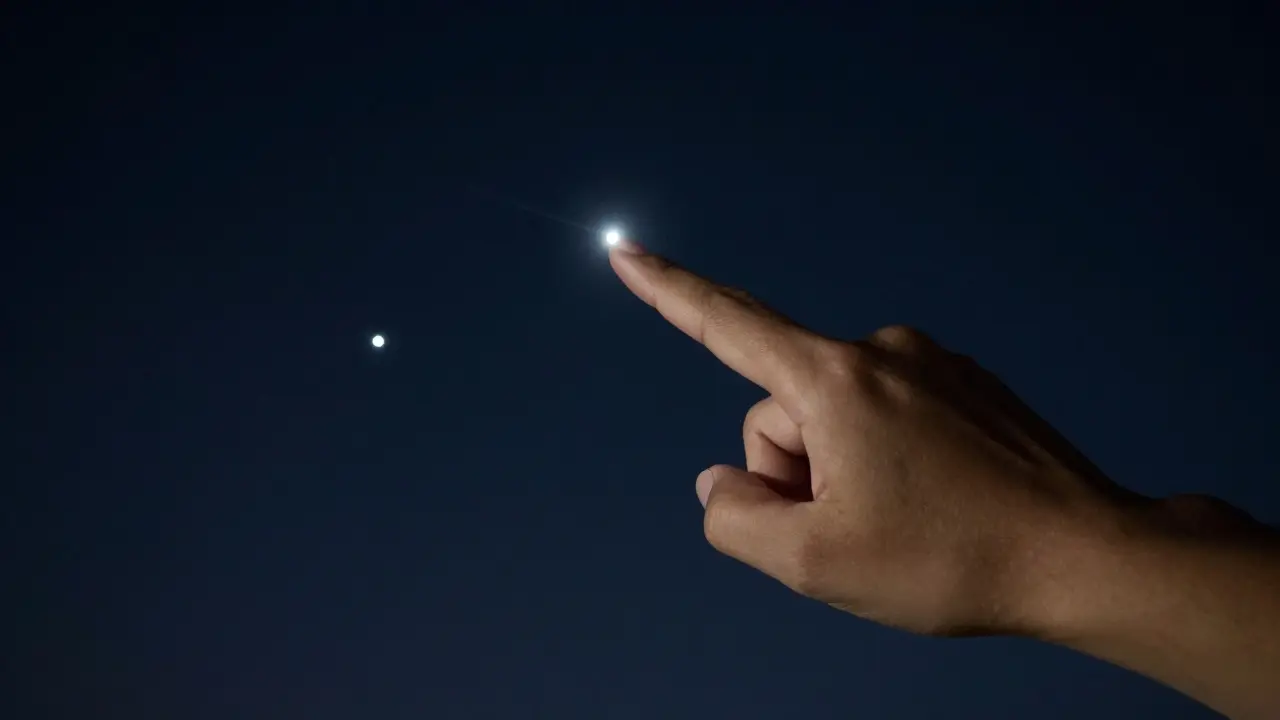
Ever looked up at the night sky and wondered how far apart two stars really are? You don't need a theodolite or an expensive app for a quick estimate. Your hands are surprisingly accurate tools for measuring angular distance, the apparent separation between objects in the sky as seen from your eye. This technique is a cornerstone of star hoppinga method of navigating the night sky by using bright, known stars as waypoints to locate dimmer targets. It allows you to move from one familiar object to another without losing your place.
Why does this matter? Because the human eye cannot perceive true distance in space. A star that looks next to another might be light-years further away than its neighbor. What we can measure is the angle they subtend at our location. By mastering hand-based angular estimation, you gain a portable, battery-free instrument that works anywhere on Earth. Whether you are identifying constellations, tracking planets, or just enjoying the view, this skill bridges the gap between casual observation and serious amateur astronomy.
The Physics Behind Hand Measurements
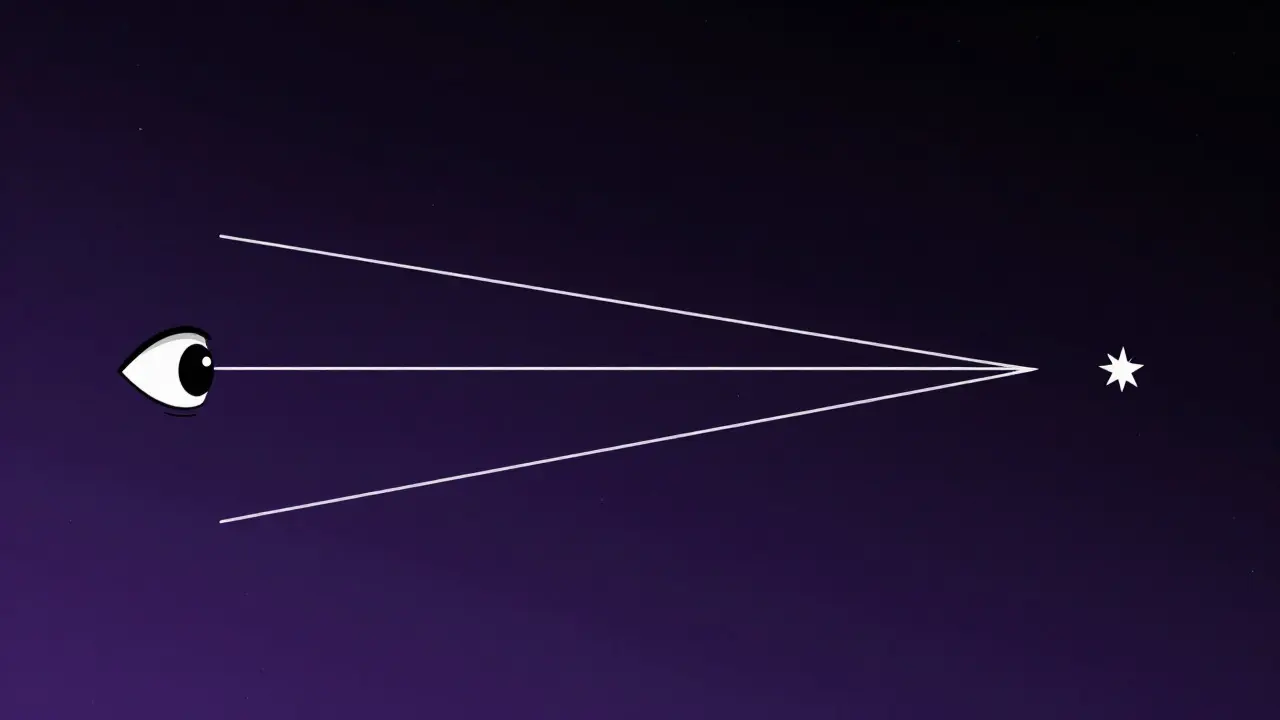
To understand why your fist measures about 10 degrees, you have to look at simple geometry. Angular size depends on two factors: the actual size of the object and its distance from you. When you hold your arm fully extended, the distance from your eye to your hand remains roughly constant for most adults, typically around 60 to 70 centimeters (24 to 28 inches). This consistency is what makes the method reliable. If you bend your elbow, the distance shrinks, and the same hand span covers a larger angle, ruining your accuracy.
The relationship follows the tangent function in trigonometry, but for small angles, we can use a simpler approximation. The angle in degrees is roughly proportional to the physical width of the object divided by the distance to it. Since your arm length is fixed, the ratio of different hand parts to your arm length stays the same. This means if your index finger covers 1 degree when held at arm's length, it will always cover approximately 1 degree, regardless of whether you are looking at the Moon or a distant galaxy, provided the target is far enough away that parallax is negligible.
Your Personal Ruler: Standard Hand Spans
Not everyone has the same hand size, but the ratios between fingers and palm are remarkably consistent across populations. However, individual variation exists, so it is worth calibrating your own "ruler" against a known reference like the Moon. Here are the standard approximations used by astronomers and navigators:
- Index Finger Width: Approximately 1 degree. This is your smallest unit for fine adjustments.
- Three Fingers (Middle, Ring, Pinky): Approximately 5 degrees. Hold these together vertically.
- Fist (Knuckles): Approximately 10 degrees. Make a tight fist and look over the top knuckles.
- Open Hand (Thumb to Pinky): Approximately 20 degrees. Stretch your hand wide with your arm extended.
These values are averages. For example, a person with very large hands might find their fist covers 11 degrees, while someone with smaller hands might get 9 degrees. The difference is usually within the margin of error for general stargazing, but for precise work, calibration is key.
| Hand Position | Approximate Angle | Common Use Case |
|---|---|---|
| Index Finger | 1° | Separation between close stars |
| Three Fingers | 5° | Distance between major stars in a constellation |
| Fist | 10° | Size of the Big Dipper bowl |
| Open Hand | 20° | Width of the Orion Nebula complex |
Calibrating Your Own Instrument
Before relying on your hands for celestial navigationthe practice of determining position using astronomical observations, you should verify your personal metrics. The best way to do this is to use a known angular size as a reference point. The full Moon is the perfect candidate because it has a nearly constant angular diameter of about 0.5 degrees. While this is too small to measure directly with a single finger width (which is ~1 degree), you can use it to check the scale of your larger spans.
A better calibration target is the distance between the two pointer stars of the Big Dipper, Merak and Dubhe. They are separated by about 5 degrees. Hold your three-finger span at arm's length. Does it match the gap? If your three fingers cover significantly more or less than the gap between Merak and Dubhe, adjust your mental model. Another excellent test is the width of the Pleiades cluster. The main body of the Pleiades spans about 1.5 degrees. Your index finger should cover slightly more than the visible cluster core. If your finger covers exactly the cluster, your arm might be bent slightly, or your finger is particularly narrow.
Perform this calibration at night under low-light conditions. Your eyes adapt to darkness, and pupil dilation can slightly affect depth perception, though the impact on angular estimation is minimal compared to arm positioning errors.
Step-by-Step: Measuring Angular Distance in the Field
Executing this technique correctly requires discipline. Follow these steps to ensure accuracy during your next stargazing session:
- Extend Your Arm Fully: Lock your elbow. Do not bend it even slightly. Keep your wrist straight and relaxed. If you are holding a pair of binoculars or a smartphone, rest them lightly against your chest or use a tripod, but keep the measuring hand free and extended.
- Close One Eye: Cover your non-dominant eye. This eliminates parallax error caused by the slight horizontal offset between your two eyes. Looking with both eyes can create a confusing double image or shift the perceived position of the hand relative to the stars.
- Position the Reference Object: Align your chosen hand span (e.g., fist) with the first star or object. Ensure the edges of your fingers align precisely with the target's boundaries if you are measuring size, or center the span between two points if measuring separation.
- Estimate the Angle: Count how many of your units fit into the gap. For example, if the gap between two stars is slightly wider than your fist, you might estimate it as 11 or 12 degrees.
- Cross-Check: If possible, compare your estimate with a star chart or app. Over time, your estimates will become intuitive and faster.
A common mistake is moving your head while keeping your hand still. This changes the line of sight and distorts the measurement. Keep your head stable, turning your whole body if you need to reorient, rather than just swiveling your neck.
Applications in Star Hopping
Star hopping is the art of finding faint objects by starting from a bright, easily identifiable star and moving step-by-step through intermediate stars. Without a sense of angular distance, you might search in the wrong area entirely. For instance, suppose you want to find the Andromeda Galaxy (M31). You start with Polaris, then move to Mirach in Andromeda. The distance between Polaris and Mirach is roughly 20 degrees. If you only know they are "near each other," you might scan the wrong part of the sky. Knowing that Mirach is about two open-hand widths south-southwest of Polaris narrows your search field dramatically.
Consider another scenario: locating the Double Cluster in Perseus. It lies about 15 degrees west of Algol. Using your fist (10 degrees) plus three fingers (5 degrees), you can quickly pinpoint the approximate region. This precision prevents the frustration of scanning empty patches of sky for minutes on end. It turns a guessing game into a calculated process.
Pitfalls and How to Avoid Them
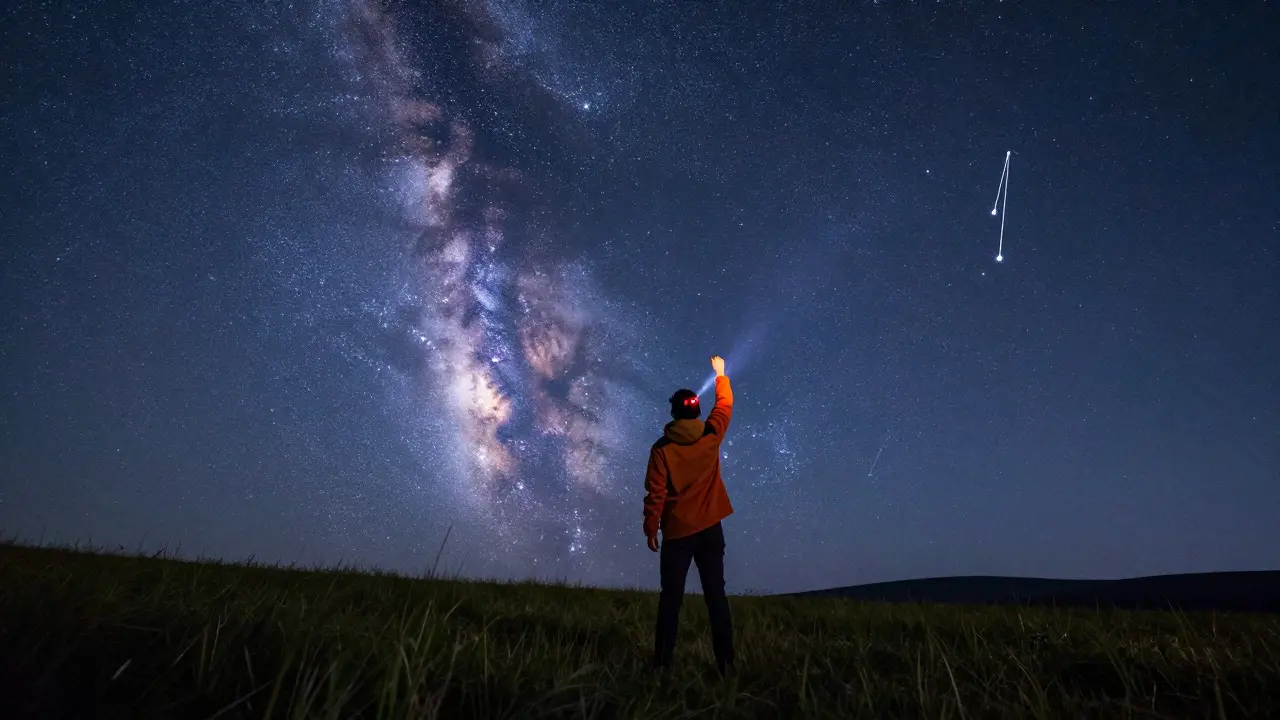
While effective, hand measurement has limitations. Here are the most common pitfalls and how to mitigate them:
- Arm Length Variance: If you are shorter or taller than average, your arm length differs. However, since the ratio of hand size to arm length is relatively constant, the error is usually small. Still, if you borrow a friend's telescope or use their charts, remember their hand sizes may differ from yours.
- Temperature Effects: In cold weather, your hands may shrink slightly due to vasoconstriction, potentially reducing your measured angles by a fraction of a degree. This is negligible for most purposes but worth noting for high-precision work.
- Visual Acuity Issues: If you have astigmatism or wear bifocals, the edge of your finger might appear blurry. Focus on the stars, not your finger. Your brain will interpolate the boundary accurately enough.
- Parallax Error: As mentioned, closing one eye is crucial. If you must use both eyes, keep your head perfectly still and imagine projecting the hand onto the sky from a single point behind your head.
Another subtle issue is the curvature of the sky. Over large distances, such as measuring the arc of the Milky Way, linear approximations break down. But for typical star-hopping hops of 5 to 30 degrees, the flat-plane assumption holds well.
When to Use Instruments Instead
Your hands are great for rough estimates and initial targeting. But when you need higher precision, consider upgrading your toolkit. A red-dot findera small optical device attached to a telescope that projects a red dot onto the sky for aiming offers a much finer field of view, often 1 to 2 degrees, allowing for precise alignment. Binoculars with a reticle or crosshair can also help measure small separations. For digital assistance, apps like Stellarium or SkySafari allow you to tap on two stars and instantly see the angular separation in degrees and arcminutes.
However, don't let technology replace your skills. Apps can fail if your phone dies, and red dots can be hard to see in bright moonlight. Your hands never run out of battery, weigh nothing, and are always with you. Mastering manual estimation builds spatial awareness that enhances your overall experience of the night sky. It connects you physically to the cosmos in a way that tapping a screen rarely does.
Practical Exercises for Beginners
If you are new to this, try these exercises to build confidence:
- Moon Sizing: Look at the full Moon. Estimate its width using your pinky finger tip. It should be about half the width of your index finger. This helps you calibrate your smallest unit.
- Big Dipper Mapping: Identify the seven stars of the Big Dipper. Measure the width of the bowl (Merak to Dubhe) with three fingers. It should be close to 5 degrees. Then measure the handle length (Alkaid to Mizar) with your fist. It should be around 10 degrees.
- Orion's Belt: Find the three stars of Orion's Belt. The total span is about 2.5 degrees. Your index finger should cover it comfortably, with a little room to spare. This teaches you how to handle sub-degree measurements by estimating fractions of your finger width.
Practice these regularly. Within a few nights, you will develop an instinct for where things are in the sky, making your stargazing sessions smoother and more enjoyable.
How accurate is hand measurement for angular distance?
For most stargazing purposes, hand measurement is accurate to within ±0.5 to 1 degree. This is sufficient for identifying constellations, locating deep-sky objects, and general star hopping. Precision beyond this level requires optical aids or digital tools.
Does my height affect the accuracy of hand measurements?
Height itself does not directly affect the calculation, but it correlates with arm length. Since the ratio of hand size to arm length is relatively constant across humans, the method works for people of all heights. However, if you have unusually long or short arms relative to your hand size, you should calibrate against a known reference like the Big Dipper.
Can I use this method during the day?
Yes, the physics is the same. You can measure the angular size of the Sun (be careful not to stare directly at it without protection) or clouds. However, atmospheric refraction and scattering make daytime measurements less crisp than nighttime star observations.
What is the difference between angular distance and physical distance?
Angular distance is the angle between two objects as seen from your eye, measured in degrees or arcminutes. Physical distance is the actual space between the objects in kilometers or light-years. Two stars can appear close together (small angular distance) but be millions of light-years apart in physical space. Hand measurement only tells you the angular separation.
Should I use my left or right hand?
Use whichever hand feels more natural and stable. The key is to extend the arm fully and close the opposite eye. Right-handed individuals often find the right hand easier to control, but there is no inherent advantage to one side over the other.