13 Sep 2026
- 0 Comments
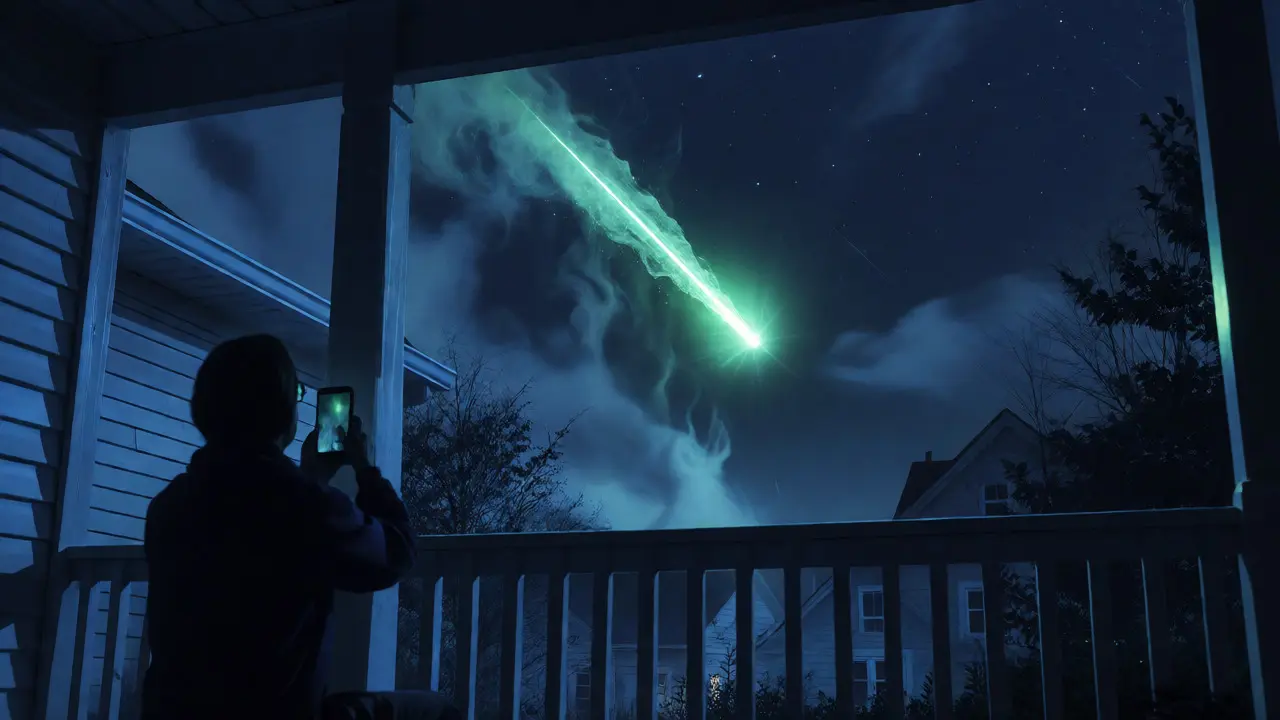
Imagine you’re sitting on your porch at 2 AM. The sky is clear, maybe a bit cold, and suddenly-a streak of green light tears across the darkness. It’s brighter than Venus, lasts for three seconds, and leaves a faint trail that lingers like smoke. You grab your phone to tweet about it, but by the time you type "Did anyone see that?", the moment is gone. Now, imagine if someone had been watching from fifty miles away, capturing that same flash on video. With two points of observation, scientists could calculate exactly where that rock came from in the solar system, how fast it was moving, and whether any fragments might have survived the fall to hit your neighbor’s roof.
This isn’t just fantasy. It happens every day thanks to Meteor Networks are distributed systems of automated cameras designed to capture meteor trails and fireballs from multiple angles simultaneously. These networks turn amateur astronomers into critical data providers, helping professional researchers track space debris, recover meteorites, and understand the population of small bodies orbiting our Sun. If you’ve ever wanted to move beyond simple stargazing and contribute real scientific data, joining a regional network is one of the most impactful things you can do with a backyard telescope setup-or even without one.
Why One Camera Is Never Enough
You might wonder why you can’t just point one camera at the sky and call it a night. After all, many people already do this with dashcams or security systems. The problem is geometry. A single camera gives you a 2D image of a 3D event. You know the direction the meteor appeared to come from in the sky, but you don’t know its distance. Was it a tiny dust grain burning up 60 miles above your head, or a massive boulder entering the atmosphere 100 miles away? Without triangulation-calculating position based on angles from at least two different locations-you’re left guessing.
Triangulation is the geometric method used to determine the precise trajectory and radiant point of a meteor. When two stations record the same fireball within a fraction of a second, software calculates the intersection of their sightlines. This allows for:
- Determination of the meteor’s speed before atmospheric entry.
- Calculation of the orbital elements (path around the Sun).
- Prediction of the fall zone for potential meteorite recovery.
The American Meteor Society (AMS) estimates that over 90% of significant fireball events go unreported because they occur during daylight hours or over oceans. But when they do happen at night, only a fraction are captured by enough cameras to be scientifically useful. By adding your node to a network, you increase the coverage area exponentially. A cluster of ten cameras covering a 50-mile radius can detect objects too faint for the naked eye, expanding the dataset far beyond what visual observers alone can provide.
Choosing Your Hardware: DIY vs. Commercial Solutions
So, what do you actually need? The good news is that technology has made this accessible. You don’t need a $5,000 CCD camera anymore. Modern CMOS sensors found in mirrorless cameras or even high-end webcams are sensitive enough to catch bright meteors and fireballs. However, consistency matters more than raw resolution. If everyone uses different equipment, combining data becomes messy.
Most successful networks standardize on specific hardware setups to ensure compatibility. Here is a breakdown of common approaches:
| Option Type | Typical Cost | Sensitivity | Field of View | Best For |
|---|---|---|---|---|
| Modified DSLR/Mirrorless | $800 - $1,500 | High | Wide (14-16mm lens) | Users who also want astrophotography capabilities |
| All-Sky Security Cameras | $100 - $300 | Moderate | Very Wide (Fisheye) | Beginners and low-budget network nodes |
| Specialized Astro-Cams (e.g., Watec) | $400 - $700 | Very High | Medium | Dedicated long-term monitoring stations |
| Smartphone Apps | $0 - $20 | Low | Narrow | Visual confirmation and casual reporting |
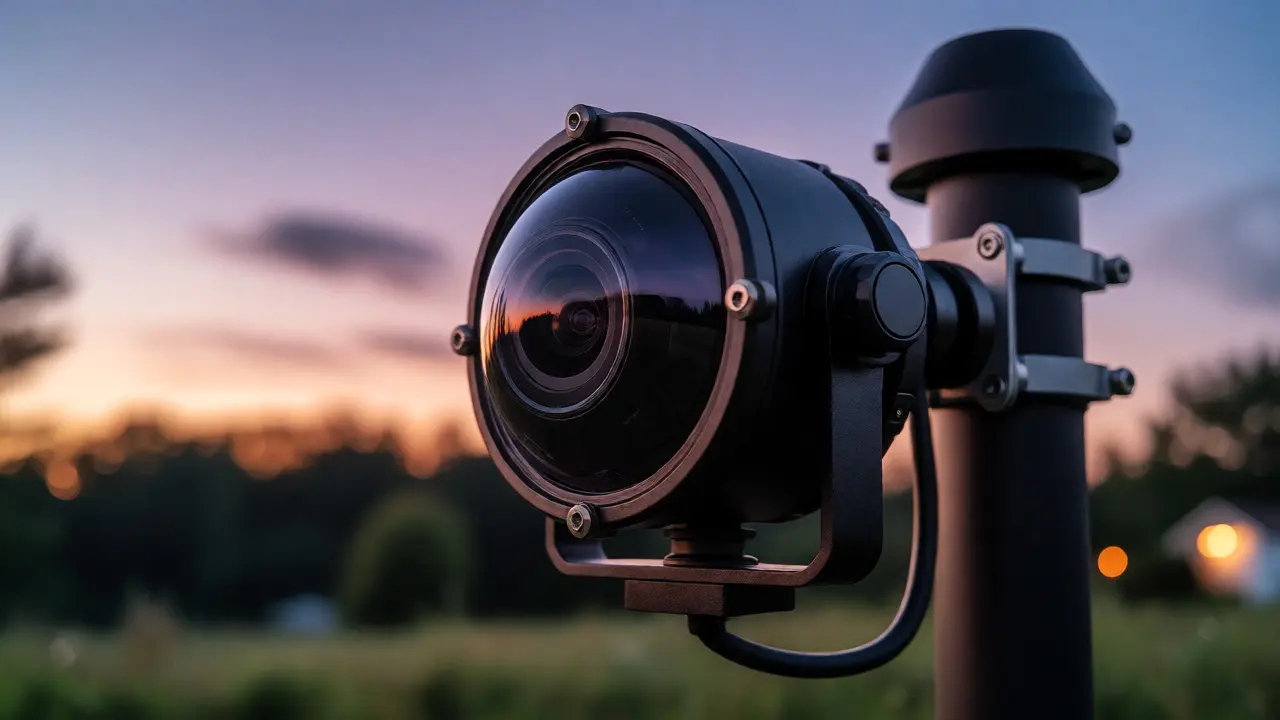
For serious participation in networks like the Global Meteor Network is an international collaboration of volunteer-operated all-sky cameras dedicated to detecting meteoroids, specialized low-light CCTV cameras are often preferred. They are robust, weather-resistant, and designed to run 24/7 without overheating. Brands like Watec or Sony Effio-E sensors are staples in the community. If you go the DIY route with a Raspberry Pi and a NoIR camera module, you’ll save money upfront but spend more time troubleshooting moisture issues and power fluctuations.

Site Selection: Location Matters More Than Gear
You can buy the best camera in the world, but if you mount it under a streetlight, it’s useless. Light pollution is the enemy of meteor detection. While fireballs are bright enough to pierce through moderate urban glow, fainter sporadic meteors disappear quickly in light-polluted skies. Ideally, your site should have a Bortle Scale rating of 4 or lower. That means no direct glare from nearby houses or commercial signage.
But it’s not just about darkness. Consider these practical constraints:
- Obstructions: Trees, buildings, and wires block large chunks of the sky. Use a fisheye lens to maximize coverage, but try to place the camera on a pole or roof where obstructions are minimized.
- Weather Exposure: Rain and snow will ruin electronics if not properly sealed. IP67-rated enclosures are mandatory. Also, consider wind load; a camera shaking in the breeze produces blurry streaks that algorithms struggle to interpret.
- Power and Connectivity: Running a cable 200 feet for power is annoying but manageable. Wi-Fi signal strength at the camera location is critical. Many enthusiasts use PoE (Power over Ethernet) switches to send both power and data over a single Cat6 cable, simplifying installation significantly.
Pro Tip: Before committing to a permanent mount, test your viewfinder at midnight. Walk around your proposed site and look up. Are there neighbors with motion-sensor lights that trigger randomly? Do birds nest in the eaves? Small annoyances become big problems when you’re trying to maintain a remote station.
Software and Data Processing
Capturing the video is only half the battle. The other half is processing it so computers can make sense of the pixels. Raw video files are huge. Recording 1080p video at 30 frames per second generates gigabytes of data daily. Most networks use software that detects changes between frames-essentially looking for moving bright spots against a static starfield background.
Popular open-source tools include:
- UFOCapture is a widely used software package for controlling digital cameras to record meteor videos: User-friendly interface, great for beginners using Windows PCs.
- PiMeteor is a Python-based software suite specifically designed for Raspberry Pi all-sky cameras: Lightweight, runs efficiently on Linux devices, highly customizable.
- FFmpeg is a command-line tool used for video encoding and frame extraction in many custom meteor pipelines: Essential for converting raw feeds into formats compatible with analysis tools.
Once detected, the coordinates of the meteor trail must be calibrated. This involves identifying known stars in the field of view to correct for lens distortion and camera orientation. Some modern systems automate this using plate-solving algorithms, which compare the star patterns in your image to databases like Gaia DR3. If you’re setting up a new node, ask the network coordinator if they provide calibration scripts. Don’t reinvent the wheel unless you enjoy coding in Python.
Joining the Community: Finding Your Network
Where do you start? You don’t need to build a global network yourself. There are established groups actively recruiting volunteers. In North America, the American Meteor Society maintains a database of fireball reports and collaborates with camera networks for verification works closely with several regional projects. In Europe, the European Fireball Network has been operational for decades. Australia’s Desert Fireball Network covers vast outback regions.
To join, search for terms like "all-sky camera network [your country/state]." Look for forums or Discord servers associated with these groups. Introduce yourself honestly: state your location, your hardware specs, and your technical comfort level. Experienced members are usually happy to help troubleshoot alignment issues or share configuration files. Remember, consistency is key. A camera that goes offline for three months disrupts the statistical continuity of the dataset. Commit to regular maintenance checks, especially cleaning the lens dome after rain or pollen season.
The Payoff: What You Get Back
Is it worth the hassle? Absolutely. When your camera catches a fireball, you get immediate feedback. Many networks send alerts via email or app notifications when a multi-station event is confirmed. You might see your name listed in a published paper analyzing the orbit of a specific meteor shower. Or, better yet, you might learn that a meteorite fell within a few miles of your home, prompting a search party that includes you.
Beyond the thrill of discovery, you gain a deeper understanding of the night sky. You stop seeing random flashes and start recognizing patterns. You notice that Perseid meteors appear more frequently from the northeast. You realize that sporadic meteors tend to be slower and bluer than cometary ones. This observational skill translates directly to visual astronomy, making you a sharper observer even when you’re not looking at a screen.
Do I need a dark sky site to participate?
No, but it helps. Urban sites can still detect bright fireballs and bolides, which are scientifically valuable. However, fainter sporadic meteors will be missed. If you live in a city, consider placing the camera on a balcony facing away from major light sources, or use a narrow-band filter to cut out sodium vapor lights.
How much electricity does an all-sky camera use?
It varies by hardware. A Raspberry Pi 4 with a USB camera typically draws 5-8 watts continuously. A modified DSLR might draw 10-15 watts. Over a year, this adds up to roughly 50-130 kWh, costing less than $20 in most areas. Solar-powered setups are possible but require large battery banks for winter months.
Can I use my existing security camera?
Sometimes. Standard security cameras often have auto-exposure settings that wash out meteors or compress video too aggressively, losing detail. If your camera supports manual exposure control and outputs uncompressed or lightly compressed video (like MJPEG), it might work. Check with your local network coordinator before repurposing old gear.
What happens if my camera captures a plane instead of a meteor?
Planes are the biggest source of false positives. Automated software filters them out by analyzing speed and path linearity. Planes move slowly and follow straight lines with blinking lights. Meteors move fast and often fragment or flare. Human review is sometimes required for borderline cases, but modern algorithms are quite accurate.
Is it hard to align the camera correctly?
Not if you use a bubble level and a compass. The goal is to point the zenith (top center of the image) as close to true vertical as possible. Tilt doesn’t matter as much as knowing the exact tilt angle, which software can compensate for during calibration. Take a test shot at dusk when stars are visible to verify orientation.