30 Aug 2026
- 0 Comments
You walk into a camera store or browse online, and the options are overwhelming. You see numbers like 70mm, 900mm, f/10, and ED glass. It feels like you need a degree in optics just to pick up a tube that lets you see Saturn’s rings without your hands shaking from adjusting a wobbly mount. If you’re looking for a refractor telescope, you’re already on the right path. Refractors are low-maintenance, durable, and provide crisp images. But here is the trap most beginners fall into: they buy a scope with huge magnification potential but terrible usability.
The real secret to enjoying astronomy isn’t just about how much light a telescope gathers. It’s about how easy it is to find things and keep them in view. This guide breaks down the two numbers that actually matter for ease of use: focal length and aperture. We’ll skip the heavy math and focus on what happens when you’re standing outside at 2 AM, trying to locate Jupiter while your neck hurts.
Why Refractors Are the Best First Scope
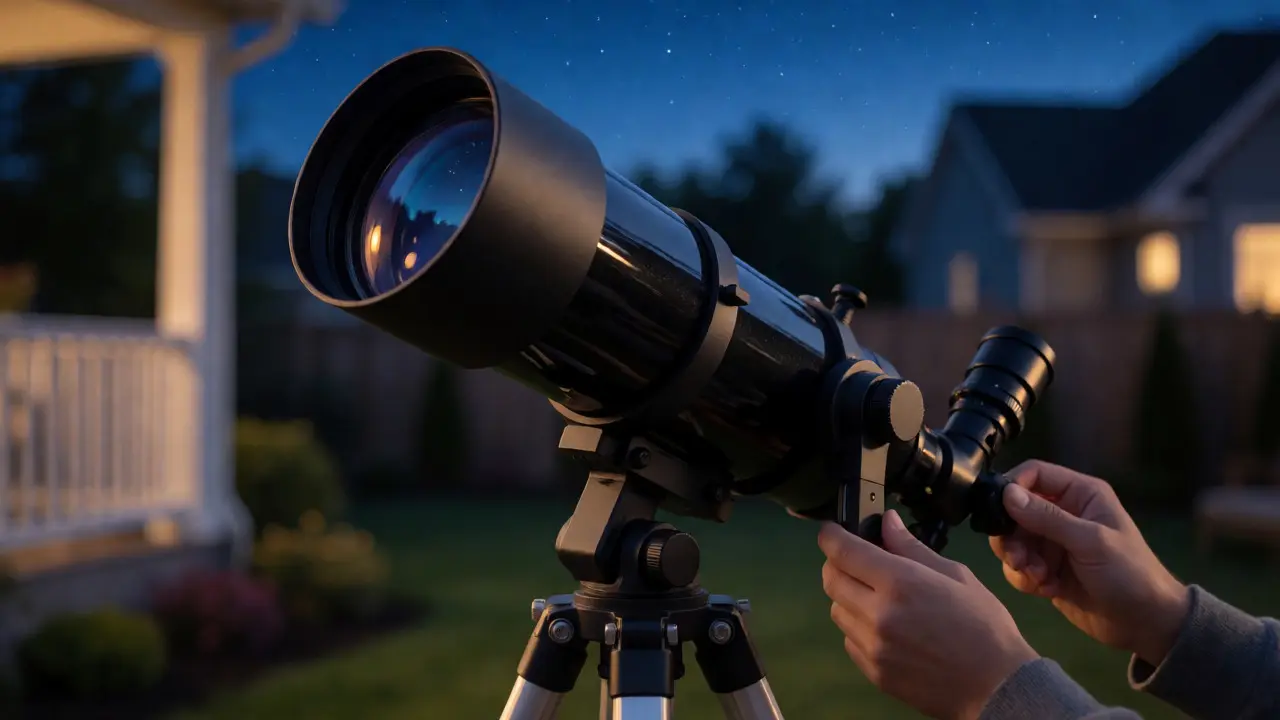
A Refractor Telescope is an optical instrument that uses lenses to gather and focus light. Unlike reflectors, which use mirrors and require regular alignment (collimation), refractors come factory-aligned and stay that way. They are sealed tubes, meaning dust doesn’t settle on the primary lens. For a beginner, this means less frustration and more time looking through the eyepiece.
But not all refractors are created equal. A cheap $50 toy refractor will disappoint you. A high-end apochromatic refractor might break your budget. The sweet spot for beginners lies in understanding the relationship between the size of the lens (aperture) and the length of the tube (focal length).
Aperture: The Light Bucket
Aperture refers to the diameter of the main objective lens or mirror. Think of it as the bucket size. A bigger bucket catches more rain (light). In astronomy, more light means fainter stars become visible, and planets show more detail.
For beginners, the common advice is "bigger is better." That’s true, but only up to a point. Here is the reality check:
- 60-70mm Aperture: Good for bright planets and the Moon. You won’t see many deep-sky objects like nebulae. These scopes are small, portable, and often come on flimsy tripods.
- 80-90mm Aperture: The sweet spot. You can see Jupiter’s moons clearly, resolve star clusters like the Pleiades, and spot some brighter galaxies. Still manageable to carry.
- 100-120mm Aperture: Excellent performance. You start seeing fainter details in planetary surfaces and more deep-sky objects. However, these tubes get long and heavy.
If you choose a large aperture, you must pair it with a sturdy mount. A 120mm refractor on a weak tripod will vibrate every time you touch the focuser. The image shakes, and you lose interest. Ease of use depends heavily on stability.
Focal Length: The Zoom Factor
Focal Length is the distance from the objective lens to the point where light converges. It determines the magnification potential. Longer focal lengths allow for higher magnifications, which is great for planets. Shorter focal lengths offer wider fields of view, which is great for star clusters and finding objects.
Here is where beginners get confused. They think a longer focal length automatically means better views. Not always. A long focal length makes the telescope physically longer. A 1200mm focal length refractor with an f/10 ratio requires a 1.2-meter-long tube. That’s four feet. It’s awkward to set up, hard to store, and difficult to balance on a lightweight mount.
Conversely, a short focal length (like 400mm) creates a stubby, compact tube. These are often called "short-tube" or "fast" refractors. They are incredibly easy to transport and set up. But because they have lower inherent magnification, you rely on eyepieces to zoom in. This can lead to dimmer images if you push the magnification too high.
The F-Ratio: Balancing Speed and Comfort
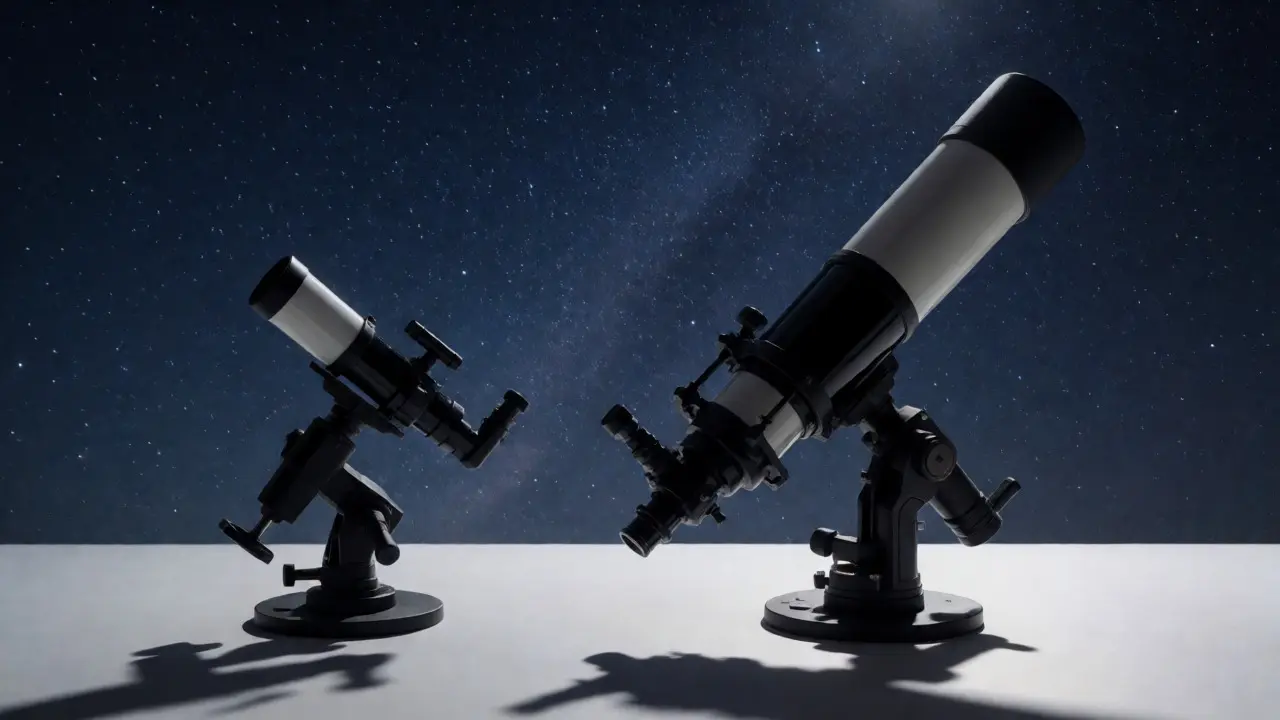
The Focal Ratio (or f-number) is calculated by dividing the focal length by the aperture. It tells you how "fast" the telescope is. Lower numbers (like f/5) mean a wide field of view. Higher numbers (like f/10) mean narrow fields and higher potential magnification.
| Configuration | Aperture | Focal Length | F-Ratio | Best For | Ease of Use |
|---|---|---|---|---|---|
| Compact Planet Killer | 80mm | 400mm | f/5 | Moon, Wide Fields | High (Portable) |
| The Classic All-Rounder | 90mm | 900mm | f/10 | Planets, Double Stars | Medium (Long Tube) |
| Deep Sky Starter | 100mm | 500mm | f/5 | Nebulae, Clusters | High (Wide View) |
| Portability Compromise | 70mm | 700mm | f/10 | Budget Planets | Low (Stability Issues) |
Notice the trade-offs. The 90mm f/10 scope is a classic recommendation for a reason. The long focal length provides natural high magnification without needing expensive eyepieces. It’s forgiving of atmospheric turbulence. But that long tube is annoying to carry. The 80mm f/5 scope is tiny and fits in a backpack. You’ll take it out more often, which matters more than perfect optics sitting in a closet.
Mounts Matter More Than Glass
You can have the best lenses in the world, but if your mount is bad, you’ll hate astronomy. There are two main types of mounts beginners encounter:
- Alt-Azimuth (Alt-Az): Moves up/down and left/right. Like a camera tripod. Simple to understand. Great for casual viewing. However, tracking planets manually gets tedious over time.
- Equatorial (EQ): Aligns with Earth’s axis. Allows tracking one object by turning one knob. Better for long observations and astrophotography. Harder to set up initially.
For "ease," stick with a robust Alt-Az mount with slow-motion controls. Avoid the tiny tabletop tripods found on department store telescopes. They shake violently. Look for a mount rated for at least 1.5 times the weight of your telescope tube plus accessories.
Real-World Scenarios: What Will You Actually See?
Let’s make this concrete. Imagine you live in Portland, Oregon, where light pollution is moderate, and humidity is high.
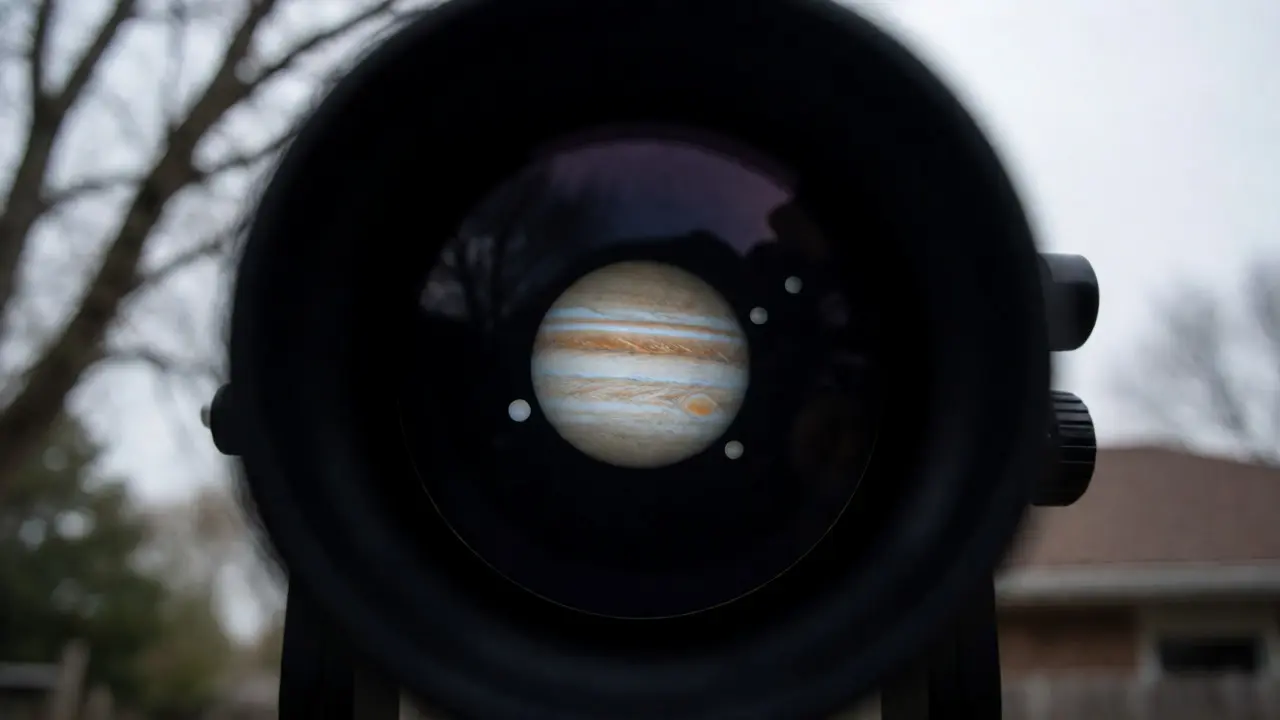
Scenario A: The Weekend Warrior You want to look at the Moon and Jupiter after dinner. You don’t want to drive 30 minutes to a dark site. You need something quick. * **Choice:** 80mm f/5 Refractor on a Dobsonian-style mount or sturdy Alt-Az. * **Why:** Setup takes 2 minutes. The wide field helps you find Jupiter quickly. The Moon looks stunning. You can hand-carry it to the backyard easily.
Scenario B: The Detail Seeker You want to split double stars and see cloud bands on Mars. You have space to store a longer tube. * **Choice:** 90mm f/10 Refractor on an EQ mount. * **Why:** The long focal length gives you steady high-power views. You spend more time aligning the mount, but the payoff is sharper planetary details.
Scenario C: The Deep Sky Hunter You want to see the Orion Nebula and Andromeda Galaxy. * **Choice:** 100mm f/5 Refractor. * **Why:** Wide field of view lets you frame large objects. The shorter tube is easier to aim at different parts of the sky.
Pitfalls to Avoid When Buying
Don’t let marketing fool you. Here are three traps:
- "600x Magnification": Ignore this number. Maximum useful magnification is roughly 2x the aperture in millimeters. A 70mm scope maxes out at 140x. Anything higher is blurry mush.
- Barlow Lens Hype: A Barlow lens doubles magnification. But if your base optics are poor, doubling the blur just gives you more blur. Buy good eyepieces instead.
- Plastic Focusers: Check the focuser material. Plastic strips wear out quickly. Metal rack-and-pinion focusers last years and provide smoother adjustment.
Final Checklist Before You Buy
Before clicking purchase, ask yourself these questions:
- Can I lift it? If the tube weighs more than 15 lbs, ensure the mount is rock solid.
- Where will I store it? A 4-foot tube needs garage space. A 1.5-foot tube fits in a closet.
- Do I have patience for setup? If no, avoid complex EQ mounts. Choose simple Alt-Az.
- Is my location dark? If yes, larger aperture helps. If no, smaller aperture with good contrast (like ED glass) is better.
Choosing a refractor is about matching the tool to your lifestyle. Ease of use beats raw power every time for beginners. Pick a scope you’ll actually take outside, and you’ll unlock the universe.
What is the best aperture for a beginner refractor?
An 80mm to 90mm aperture is generally considered the best starting point. It offers a significant improvement over small toy telescopes, allowing you to see planetary details and bright deep-sky objects, while remaining lightweight and portable enough for frequent use.
Does a longer focal length mean better magnification?
Not necessarily. While a longer focal length allows for higher magnification with standard eyepieces, the quality of the image depends on aperture and optical quality. A long focal length also means a longer, bulkier tube, which can be harder to handle and stabilize.
Are refractor telescopes better than reflectors for beginners?
Yes, for most beginners. Refractors are sealed, maintenance-free, and hold alignment well. Reflectors require collimation (aligning mirrors) and are more sensitive to knocks. If you want a "grab and go" experience, a refractor is usually the better choice.
What does f/5 or f/10 mean on a telescope?
This is the focal ratio, calculated by dividing the focal length by the aperture. An f/5 telescope has a short focal length relative to its aperture, offering a wide field of view. An f/10 telescope has a long focal length, offering narrower fields and higher potential magnification.
How important is the mount compared to the telescope tube?
The mount is critical. A shaky mount makes viewing frustrating, regardless of how good the lenses are. Always prioritize a stable mount that can support the weight of the telescope tube plus accessories with room to spare.