17 Aug 2026
- 0 Comments
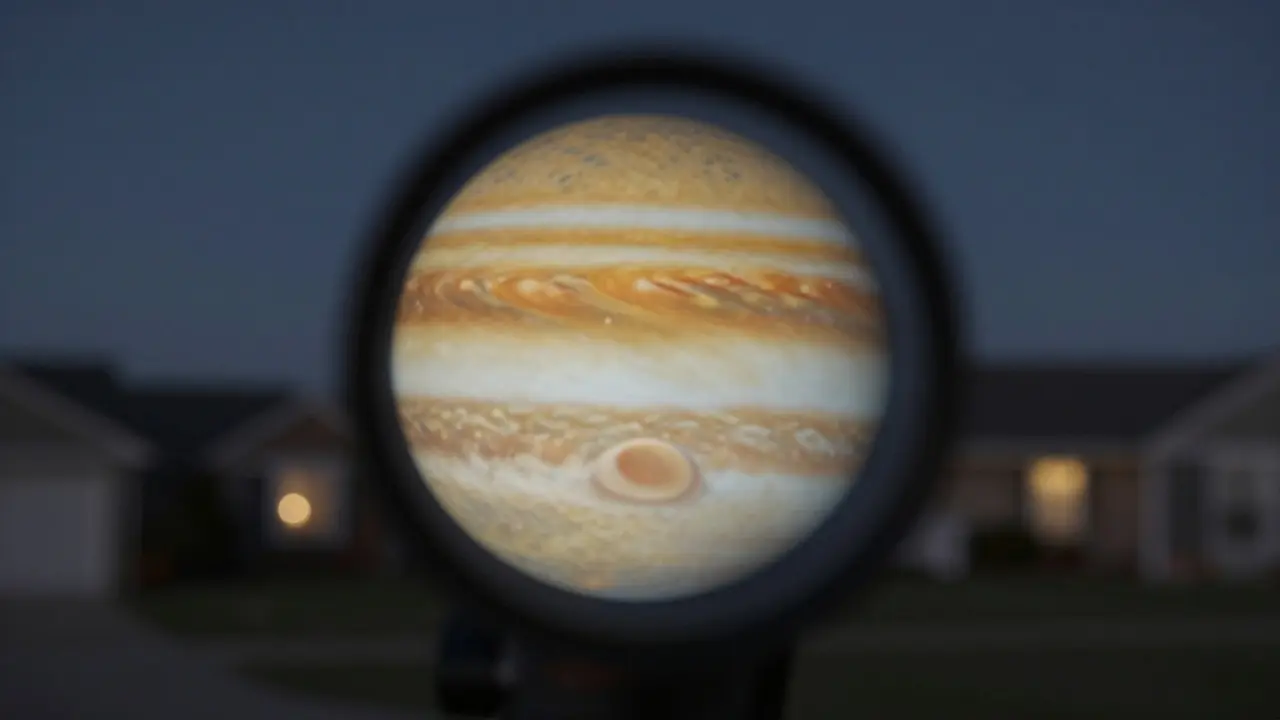
Staring at Jupiter through a cheap department store telescope and seeing only a blurry blob is frustrating. You want to see the Great Red Spot, Saturn’s rings, or Mars’ polar caps, but the atmosphere keeps getting in the way. The problem usually isn’t your eyes; it’s the mismatch between your equipment and the atmospheric seeing the stability of the Earth's atmosphere which determines how sharp celestial objects appear. In typical mid-latitude locations like Portland, Oregon, you rarely get the "perfect" seeing required for high-power detail. Instead, you deal with average conditions where turbulence blurs fine details. Choosing the right telescope type for these specific conditions is the difference between a satisfying session and a headache.
Understanding the Limiting Factor: Atmospheric Turbulence
Before picking a scope, you need to understand what you are fighting against. Atmospheric seeing measured by the size of the disk on which a star appears to spread out due to air turbulence is measured in arcseconds. In excellent mountain-top observatories, seeing can be under 0.5 arcseconds. In a typical suburban backyard, it often hovers between 2.0 and 4.0 arcseconds. This means that no matter how powerful your lens is, the atmosphere acts as a soft filter, smearing details larger than about 2-3 arcseconds into mush.
This has a direct impact on magnification. If your seeing is 3.0 arcseconds, pushing a 10-inch telescope to its theoretical maximum power (around 200x) will just show you a bigger blur. The sweet spot for most average nights is lower magnification where the image remains steady and bright. This reality dictates that optical design matters more than raw aperture when prioritizing planetary clarity in non-ideal conditions.
The Refractor Advantage: Sharpness and Contrast
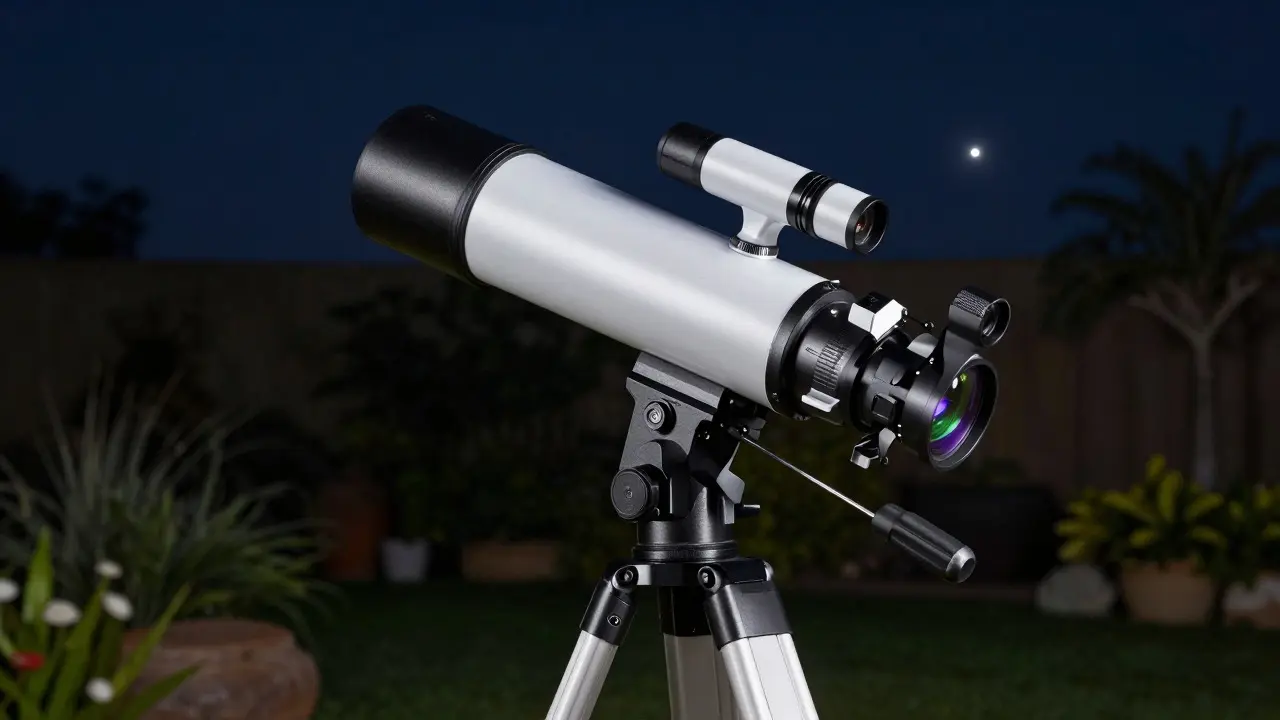
For planetary observation in typical seeing, Refractors telescopes that use lenses to gather and focus light, known for their sealed tubes and low maintenance are often the gold standard. Why? Because they have no central obstruction. A Newtonian reflector has a secondary mirror blocking part of the light path, which creates diffraction spikes and reduces contrast. In average seeing, where the atmosphere is already reducing contrast, a refractor preserves every bit of edge definition available.
Achromatic refractors are affordable but suffer from chromatic aberration (color fringing). For planets, this is noticeable around bright edges like Saturn’s rings. Apochromatic (APO) refractors use special glass elements to correct this, delivering crisp, color-free images. An 80mm to 100mm APO refractor is the ideal entry point for planetary enthusiasts. It offers enough light-gathering power to resolve cloud bands on Jupiter while maintaining the high contrast needed to see subtle surface features on Mars during opposition.
Reflectors: Aperture vs. Stability
Newtonian Reflectors telescopes that use a curved primary mirror to collect light, offering large apertures at lower cost offer more aperture per dollar than refractors. However, their open tube design makes them sensitive to thermal equilibrium. If the mirror hasn't cooled down to the ambient temperature, internal air currents create "boiling" images that mimic bad seeing. On a typical summer night in Portland, if you set up your 8-inch Dobsonian an hour before observing, you might be fighting thermal turbulence inside the tube even if the sky is calm.
That said, if you allow sufficient cooling time (often 2-3 hours), a 6-inch to 8-inch Newtonian provides excellent resolution. The key is patience. Once thermally stable, the larger aperture helps you push slightly higher magnifications during moments of better seeing. But for quick-and-easy planetary sessions where you don't want to wait for the mirror to cool, the sealed design of a refractor or SCT wins on convenience and consistent performance.
Schmidt-Cassegrain Telescopes: The All-Rounder
Schmidt-Cassegrain Telescopes (SCTs) catadioptric telescopes combining mirrors and lenses, known for their compact design and long focal lengths sit in the middle ground. They are compact, easy to transport, and have long focal lengths that make high-magnification planetary viewing easy without needing expensive eyepieces. An 8-inch or 11-inch SCT is a popular choice because it fits in a car trunk and delivers solid planetary detail.
The downside? Like reflectors, they have a central obstruction. However, modern SCTs are well-collimated and thermally stable if covered properly. For users who want one scope for both deep-sky and planets, an 11-inch SCT is hard to beat. It handles average seeing well because its long focal length allows you to use shorter focal length eyepieces to achieve high magnification, which tends to produce steadier images in turbulent air compared to short-focal-length systems.
Maksutov-Cassegrain: The Planetary Specialist
If your sole focus is planets, consider a Maksutov-Cassegrain a type of catadioptric telescope with a thick meniscus corrector plate, offering very long focal ratios for high magnification. These scopes have a much thicker corrector plate than SCTs, resulting in less central obstruction and sharper images. A 127mm (5-inch) Maksutov often outperforms an 8-inch SCT in terms of pure image sharpness and contrast for planetary work. The trade-off is slower cooling times and a narrower field of view, which doesn't matter for planets but limits deep-sky use. For dedicated planetary observers, the 127mm Maksutov is a legendary choice for resolving fine details on Mars and Jupiter.
Comparison: Which Type Wins in Average Seeing?
Let’s break down how these designs perform in typical 2.5-3.5 arcsecond seeing conditions.
| Telescope Type | Contrast Performance | Thermal Stability | Ideal Aperture Range | Best For |
|---|---|---|---|---|
| APO Refractor | Excellent (No obstruction) | High (Sealed tube) | 80mm - 120mm | Crisp detail, ease of use |
| Newtonian Reflector | Good (Central obstruction) | Low (Requires long cooling) | 6 inch - 10 inch | High aperture, budget-friendly |
| Schmidt-Cassegrain (SCT) | Very Good | Medium-High | 8 inch - 11 inch | All-round use, portability |
| Maksutov-Cassegrain | Excellent (Minimal obstruction) | Low-Medium (Slow cooling) | 127mm - 150mm | Pure planetary sharpness |
Practical Tips for Maximizing Detail
Even the best telescope fails if you don't manage your expectations and setup. Here is how to get the most out of your gear in typical seeing:
- Wait for Thermal Equilibrium: Set up your scope at least 1-2 hours before observing. Let the optics cool to the night air temperature. Warm optics create internal turbulence that ruins the image.
- Start Low, Go High Slowly: Begin with low magnification to find the object and assess the seeing. Only increase magnification when the image looks steady. If it starts boiling, drop back down.
- Use Barlow Cautiously: A 2x Barlow doubles magnification. Use it only when the seeing is exceptionally good for the night. In average seeing, it often degrades the image rather than improving it.
- Observe from Higher Ground: If possible, move away from hot surfaces like asphalt or rooftops. Heat shimmer rising from the ground can ruin low-altitude views. Aim for targets higher in the sky.
- Filter Usage: Use colored filters (like a 23A or UHC) to enhance contrast on specific features, such as the Great Red Spot or Martian albedo markings.
Frequently Asked Questions
What is the best telescope type for beginners interested in planets?
An 80mm or 90mm APO refractor is the best starting point. It is lightweight, requires no collimation, and provides high-contrast images that are forgiving of average seeing conditions. It is easier to handle than a large reflector and produces cleaner images for planetary details.
Does a larger telescope always mean better planetary views?
Not necessarily. In poor or average seeing, a very large telescope (like a 16-inch Dobsonian) may not provide a clearer image than a smaller, optically superior scope (like a 100mm APO). The atmosphere limits the usable resolution. A smaller scope with better contrast and stability often yields a more pleasing and detailed view in typical conditions.
How do I know if my seeing is good or bad?
Look at a bright star at high altitude. If the star is a steady, pinpoint dot, seeing is good. If it is dancing, expanding, or breaking up, seeing is poor. You can also observe the Moon; if the craters look sharp and distinct, seeing is decent. If the surface looks wavy or blurred, seeing is poor.
Is a Maksutov better than an SCT for planets?
Generally, yes. Maksutovs have less central obstruction and often better optical quality for the same aperture, leading to sharper planetary images. However, they take longer to cool down and have a narrower field of view. If you only look at planets, a Maksutov is superior. If you also want to see nebulae and galaxies, an SCT is more versatile.
What magnification should I use for Jupiter in average seeing?
In average seeing (2.5-3.5 arcseconds), aim for 150x to 200x. Going higher may reveal more apparent size but often reduces contrast and stability. Start at 100x, then slowly increase until the image begins to wobble or lose detail. That is your limit for the night.