17 Aug 2026
- 0 Comments
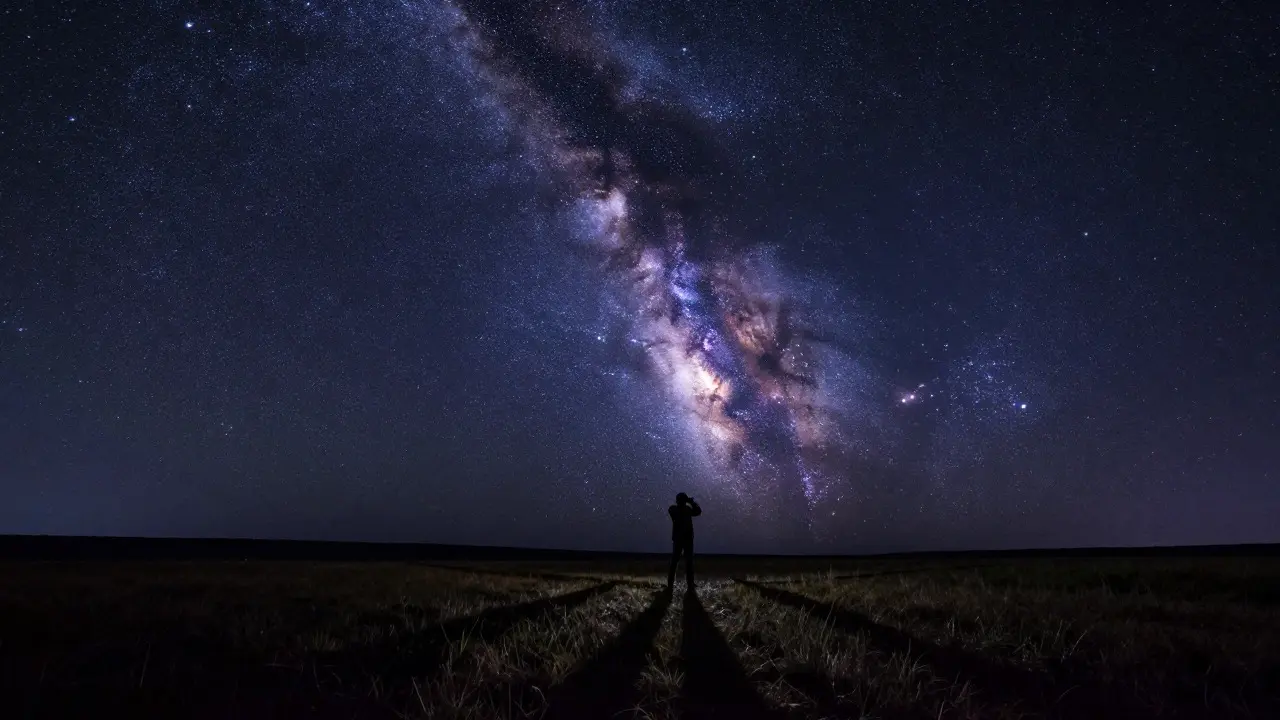
Ever looked up at the night sky and felt like you were missing something? You’re not alone. In many parts of the world, the Milky Way is invisible to the naked eye due to artificial light glowing on the horizon. This is where the Bortle scale comes in. It is a nine-step logarithmic scale used to quantify the brightness of the night sky away from a light source. Created by John Bortle in 2001, this tool helps astronomers, photographers, and stargazers understand exactly how much light pollution affects their viewing location.
Key Takeaways
- The Bortle scale ranges from Class 1 (pristine dark sky) to Class 9 (inner city center).
- It measures sky glow, not just the presence of stars, making it a critical metric for deep-sky observing.
- Classes 1-3 are ideal for seeing faint nebulae and galaxies; Classes 4-6 require adaptation but still offer good views.
- You can estimate your local Bortle class using visual cues like the visibility of the zodiacal light or the extent of the Milky Way.
What Is the Bortle Scale?
John Bortle, an amateur astronomer from New Mexico, developed this system because existing methods for measuring light pollution were either too technical or too subjective. The scale doesn't use instruments like photometers; instead, it relies on human observation under specific conditions. To get an accurate reading, you need to be in a location with no nearby streetlights, allow your eyes to adapt to the dark for at least 20 minutes, and observe during a moonless night when the target area is high in the sky.
The core concept is simple: as you move from the center of a bright city out into the countryside, the sky gets darker in distinct steps. Each step represents a significant drop in background brightness. Understanding these steps allows you to predict what you can see before you even pack your telescope.
Breaking Down the Nine Classes
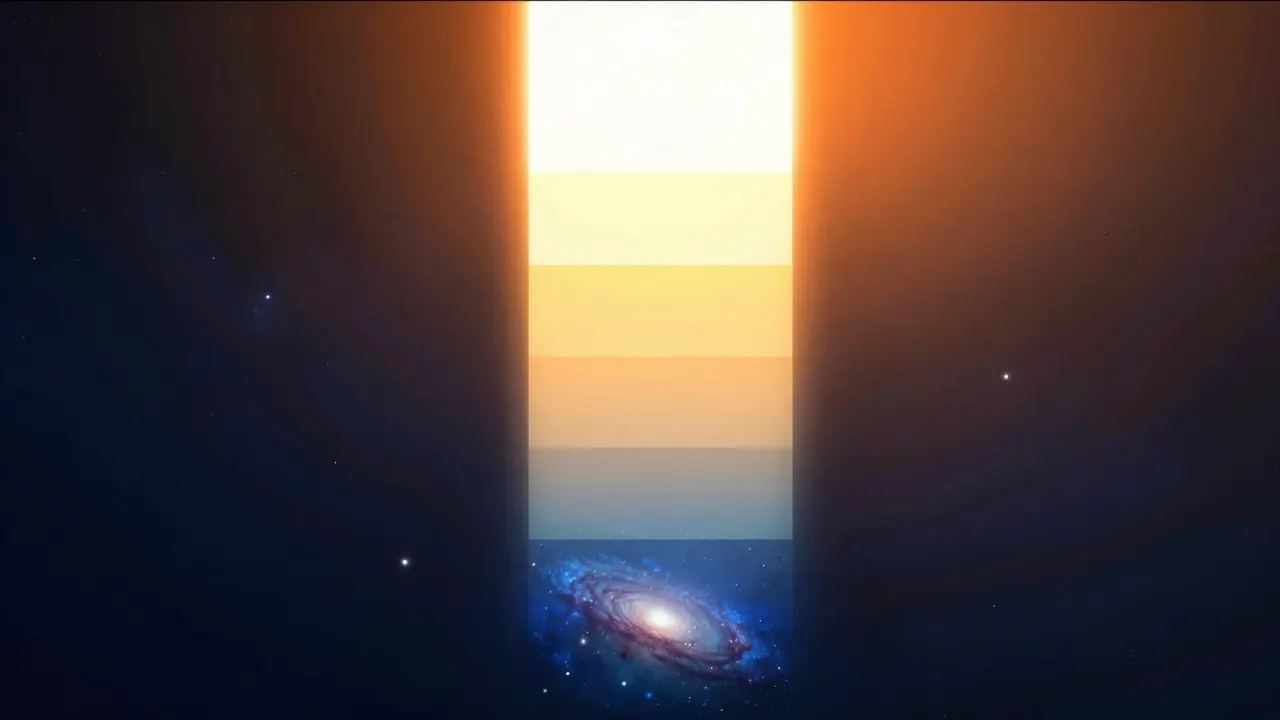
Each class has specific characteristics that help you identify your current location. Here is how they break down:
- Class 1: Excellent Dark-Sky Site
This is true darkness. The Milky Way casts shadows. Zodiacal light is obvious. Airglow is visible. M33 (the Triangulum Galaxy) is easily seen with binoculars. This environment is rare and usually found in national parks or remote rural areas far from any major population centers. - Class 2: Typical Truly Dark Site
Similar to Class 1, but the Milky Way does not cast shadows. Zodiacal light is prominent. M33 is still easy to see. This is the standard for serious deep-sky astrophotography without extensive post-processing. - Class 3: Rural Sky
The transition zone. The Milky Way is detailed but lacks contrast. Zodiacal light is present but less obvious. M33 is difficult to see without binoculars. This is a great balance for both visual observing and casual photography. - Class 4: Rural/Suburban Transition
Light domes are visible on the horizon. The Milky Way is distorted by light pollution. Zodiacal light is hard to spot. M33 requires binoculars and practice. Many suburban backyards fall here. - Class 5: Suburban Sky
Strong light domes dominate the horizon. The Milky Way is only visible overhead. Zodiacal light is absent. M33 is barely visible with binoculars. This is common in areas surrounding mid-sized cities. - Class 6: Bright Suburban Sky
The horizon is completely lit up. The Milky Way is indistinct and patchy. Only the brightest constellations are clearly defined. Deep-sky objects become challenging without optical aids. - Class 7: Suburban/Urban Transition
The sky is never truly black. The Milky Way is invisible except perhaps directly overhead on the clearest nights. Light pollution dominates the view. Most people in large metropolitan suburbs live here. - Class 8: City Sky
The entire sky is illuminated. The Milky Way is invisible. Only the brightest stars and planets are visible. Light domes merge into a uniform glow. - Class 9: Inner City Sky
The darkest part of the sky is brighter than the brightest part of the Moon. Stars are scarce. The Milky Way is completely gone. This is the experience of living in the heart of a major metropolis.
How to Determine Your Local Bortle Class
You don’t need expensive equipment to assess your sky. Here is a practical method to self-assess:
- Find a Dark Spot: Go to the darkest place within a 10-minute drive or walk. Avoid facing any streetlights or house lights.
- Wait for Adaptation: Stand still for 20 minutes. Avoid looking at phone screens. Your pupils will dilate, allowing more light to enter your eyes.
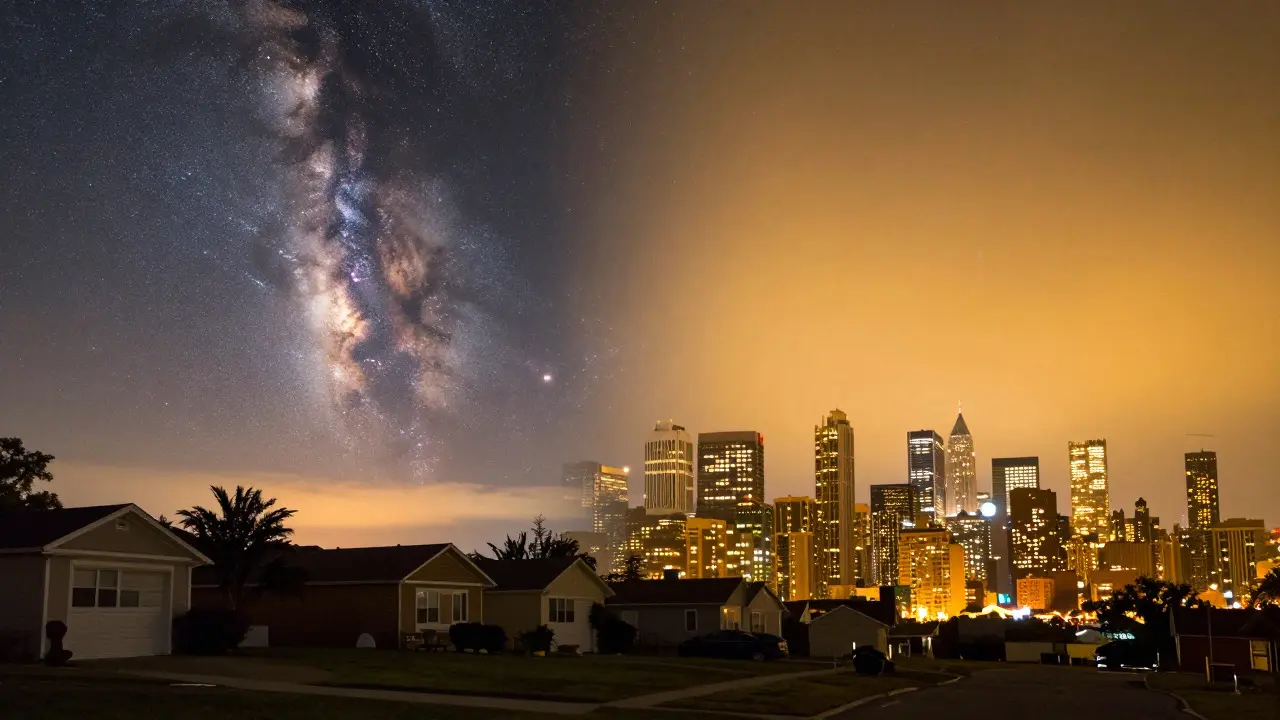
- Check the Horizon: Look at the horizon line. If you see a distinct orange or yellow dome, you are likely Class 5 or higher. If the horizon is black, you might be Class 4 or lower.
- Look for the Milky Way: Face the direction of the galactic core (usually Sagittarius in summer). Can you see a band of light? If it’s structured and bright, you are Class 3 or better. If it’s a faint smear, you are Class 4-5. If it’s invisible, you are Class 6 or worse.
- Test with Binoculars: Point binoculars at M33 (in Triangulum) or M31 (Andromeda). If M33 is easily visible, you are likely Class 1-3. If only Andromeda is clear, you are probably Class 4-6.
Impact on Observing and Photography
Your Bortle class dictates what you can achieve visually and with a camera. For visual observers, lower classes reveal more faint details. At Class 1-2, you can see thousands of stars and subtle nebulosity. At Class 7+, you are limited to bright double stars, clusters, and planets.
For astrophotographers, the difference is exponential. A Class 1 sky allows for short exposures (30 seconds to 2 minutes) to capture deep-sky objects. A Class 6 sky may require 10-30 second exposures per frame, meaning you need significantly more total integration time to get the same signal-to-noise ratio. Furthermore, color fidelity suffers in higher Bortle classes because sodium and mercury vapor lamps add red and green tints to the image.
| Class | Milky Way Visibility | Zodiacal Light | Best For |
|---|---|---|---|
| 1-2 | Casts shadows / Very detailed | Obvious / Prominent | Deep-sky imaging, visual faint objects |
| 3-4 | Detailed / Distorted | Present / Hard to spot | Balanced visual and photo work |
| 5-6 | Overhead only / Indistinct | Absent / Absent | Lunar/Planetary, wide-field astrophoto |
| 7-9 | Invisible | Invisible | Bright targets, urban star parties |
Common Misconceptions About Light Pollution
Many people think that if you can see the Moon, the sky must be dark. That’s incorrect. The Moon reflects sunlight, so it is visible even in Class 9 skies. The key indicator is the background sky brightness, not the brightness of celestial objects themselves. Another misconception is that clouds hide light pollution. While clouds do block direct light, they also scatter ambient glow, often creating a diffuse, hazy appearance that reduces contrast rather than improving it.
Also, note that the Bortle scale is logarithmic. The difference between Class 4 and Class 5 is roughly a factor of two in brightness. This means moving from Class 5 to Class 4 doubles the amount of faint light you can detect. Small improvements in location yield massive gains in observing capability.
Improving Your Viewing Experience
If you live in a high Bortle class area, don’t give up. You can still enjoy astronomy by focusing on appropriate targets. Planets, the Moon, and bright star clusters remain visible even in Class 8 skies. Use averted vision techniques to detect fainter stars. For photography, consider stacking multiple images to overcome noise and using filters that block specific wavelengths of artificial light, such as narrowband filters for emission nebulae.
However, if you want to see the full glory of the universe, plan a trip to a darker site. Even driving 50 miles away from a major city can drop your Bortle class by two or three levels. Check local dark sky reserves or national parks for certified dark sites. The investment in travel time is often worth the reward of seeing the cosmos as our ancestors did.
Is the Bortle scale the same as the SQM meter readings?
No, but they correlate. SQM (Sky Quality Meter) provides a precise numerical measurement in magnitudes per square arcsecond. The Bortle scale is a qualitative classification based on visual assessment. An SQM reading of 21.5 mag/arcsec² typically corresponds to Bortle Class 4, while 22.0+ is Class 3 or lower.
Can I determine my Bortle class during the day?
Not accurately. The scale relies on the contrast between the sky background and celestial objects, which is only apparent at night. Daytime observations can indicate general light pollution levels via haze or glare, but not the specific Bortle class.
Does weather affect the Bortle class?
Yes. High humidity, dust, or aerosols can increase atmospheric scattering, making the sky appear brighter and reducing contrast. This can effectively raise your perceived Bortle class by one level on humid nights compared to dry, crisp air.
What is the best Bortle class for astrophotography?
Class 1 or 2 is ideal for capturing faint deep-sky objects with minimal processing. However, skilled photographers can produce excellent results in Class 3 or 4 environments by using longer exposures and careful data processing to remove background gradients.
How has the Bortle scale changed since its creation?
The scale itself hasn’t changed, but the distribution of locations has. Due to increasing LED lighting and urban sprawl, fewer areas qualify as Class 1 or 2 today than in 2001. Many former Class 3 rural areas have shifted to Class 4 or 5 due to new development.