14 Mar 2026
- 0 Comments
Carrying your telescope from home to the field is more than just packing gear-it’s protecting an investment that could cost hundreds or even thousands of dollars. One wrong bump, a sudden drop, or even damp air can ruin alignment, scratch optics, or warp components. That’s why choosing the right transport case matters more than most beginners realize. You’ve got two real options: hard cases and soft cases. Each has strong supporters, and neither is universally better. But understanding the differences will help you pick the one that actually fits your needs.
What Hard Cases Do Best
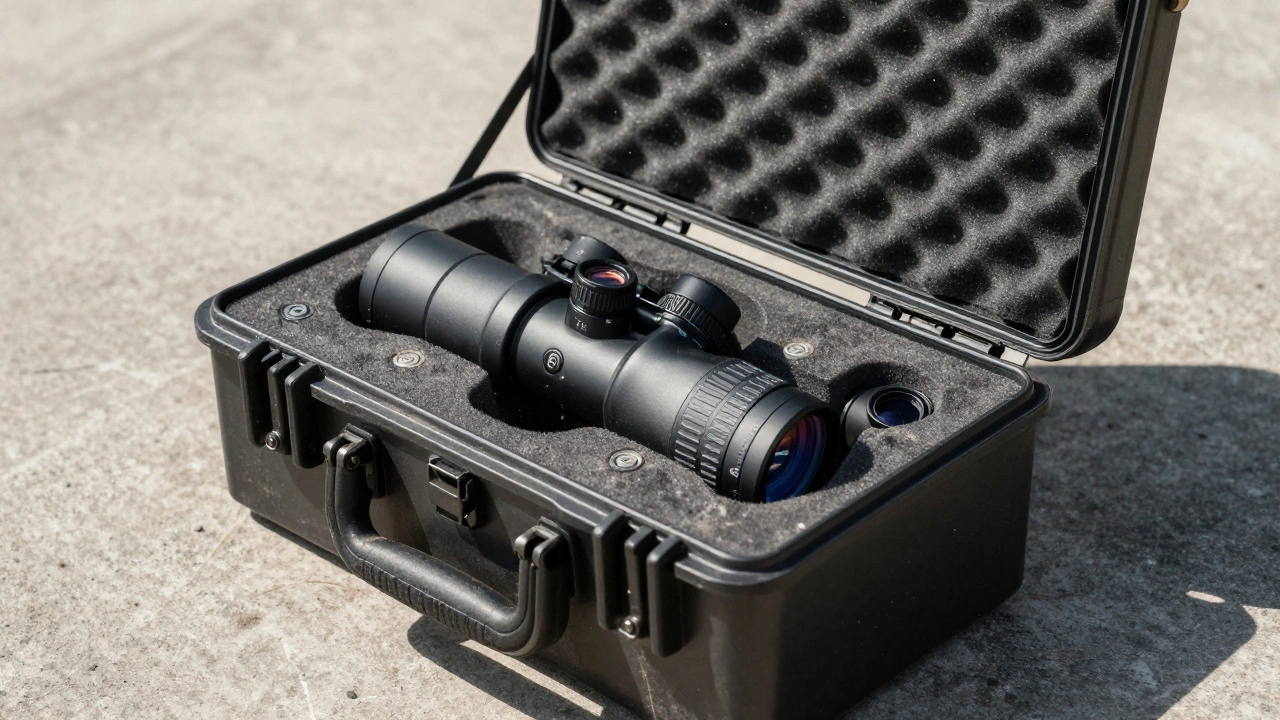
Hard cases for telescopes are built like armored boxes. They’re made of high-impact plastic, often with foam inserts molded to hold your telescope, eyepieces, finderscopes, and accessories snugly in place. Think of them as the suitcase version of a vault. Brands like Pelican, SKB, and Hardigg dominate this space, and they’re not cheap-expect to pay $200 to $600 depending on size and customization.
Here’s what they deliver: absolute impact resistance. I’ve seen a Pelican case survive being dropped off a truck bed onto concrete. The telescope inside? Perfectly fine. These cases are watertight, dustproof, and even rated to handle extreme temperatures. If you’re flying to a dark-sky site, hiking over rough terrain, or storing your scope in a hot car trunk, a hard case is the only choice that gives you real peace of mind.
The downside? Weight and rigidity. A hard case for a 10-inch Dobsonian can weigh over 20 pounds empty. They’re bulky, hard to fit in small car trunks, and impossible to squeeze into overhead bins on planes without paying extra baggage fees. They also don’t flex. If you need to pack in a few extra filters or a portable power bank, you’re stuck cutting foam or buying a bigger case.
Where Soft Cases Shine
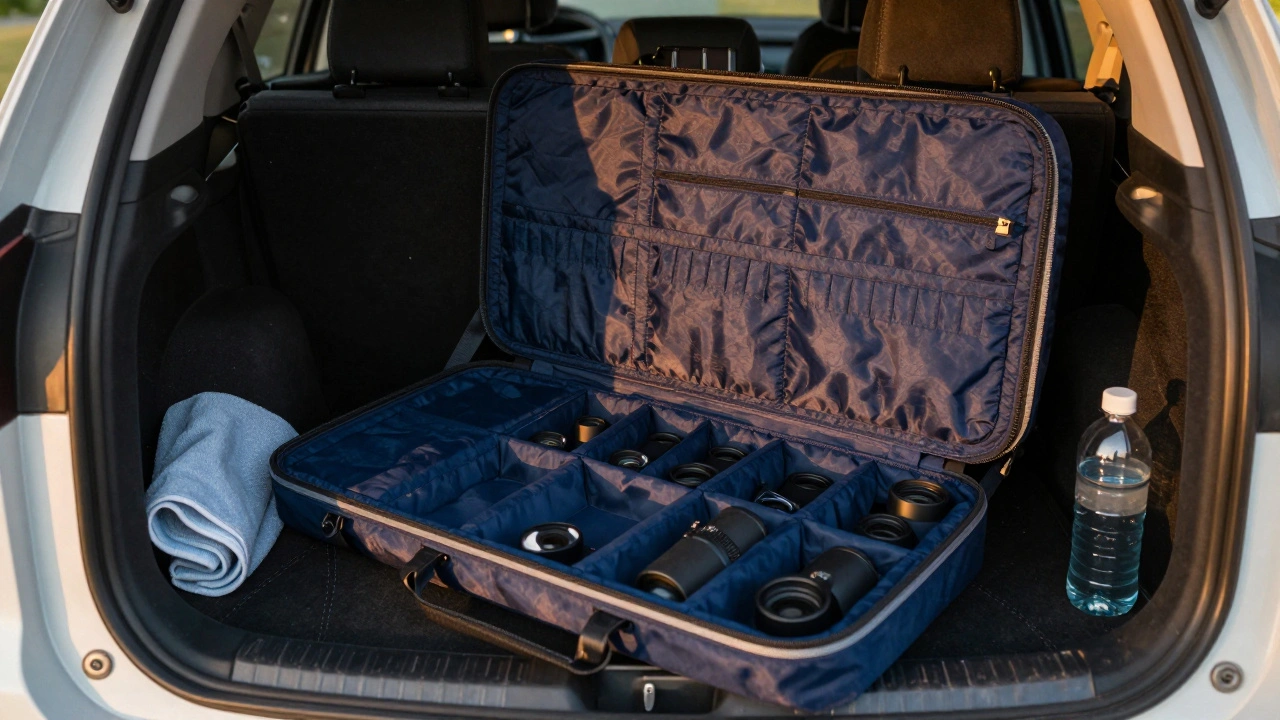
Soft cases are made of thick, padded nylon or polyester, with zippers and sometimes reinforced corners. They’re lighter, cheaper, and far more flexible. You’ll find them from brands like Celestron, Orion, and even third-party makers like Tenba or Lowepro. Prices range from $50 to $180.
They’re great if you drive short distances to a backyard or nearby park. They compress when not full, fit easily in SUVs or hatchbacks, and often have external pockets for power supplies, cables, or notebooks. Many include removable interior dividers so you can rearrange how your gear sits. And if you’re traveling by car, a soft case won’t scratch your paint or dent your doorframes.
But they’re not indestructible. I once left a soft case in a friend’s car overnight during a rainstorm. The padding soaked up moisture, and by morning, the diagonal of the primary mirror was fogged with condensation. It took three days of drying and careful cleaning to restore clarity. Soft cases don’t seal out humidity, dust, or pressure. If you’re heading to a coastal site with high humidity, or your scope gets tossed around in a pickup bed, a soft case won’t cut it.
Real-World Scenarios: Which Case Fits Your Life?
Let’s say you’re a weekend observer. You drive 15 minutes to a local park, set up under the stars, pack up before midnight, and head home. A soft case works fine here. You don’t need military-grade protection. You just need something that keeps dust off the optics and prevents your eyepieces from rattling around.
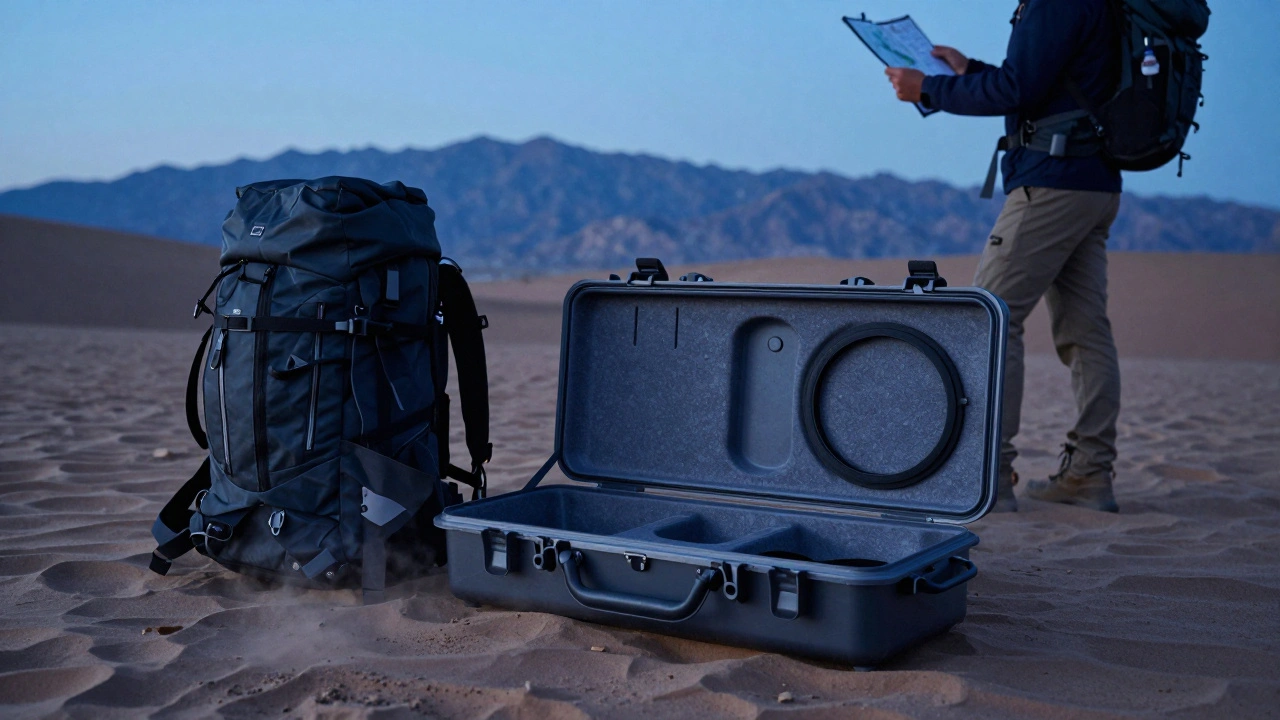
Now imagine you’re planning a trip to the Arizona desert-two nights away, 800 miles one way, no reliable power, and temperatures dropping to 20°F at night. You’re flying with your scope, then driving a rental car over dirt roads to your site. That’s a hard case scenario. You need to protect against vibration, temperature swings, accidental drops, and airborne dust. A soft case? It would be useless.
Another factor: your scope type. Refractors with long tubes are delicate. Dobsonians with large mirrors are heavy and easy to misalign if jostled. SCTs and Maksutovs have complex optical trains that can shift if not held perfectly still. Hard cases give you custom foam that locks every component in place. Soft cases? They just cushion. That’s not enough for precision optics.
Cost vs. Risk: Is the Extra Price Worth It?
A hard case costs three to five times more than a soft one. But how much is your telescope worth? A 6-inch refractor might be $800. A 12-inch Dobsonian? $2,500. If you’ve ever had a mirror chip from a fall, you know the repair bill can be half the price of a new scope. Hard cases pay for themselves after one close call.
Some people try to save money by using a generic hard-shell suitcase. Don’t. Those aren’t designed for optical equipment. The foam is too thin, the latches aren’t secure, and the interior isn’t padded to prevent shifting. You’re gambling with your gear.
On the flip side, if you’re just starting out with a $300入门 scope and you’re still learning how to use it, a soft case is plenty. You’ll upgrade your gear-and your case-before long anyway.
Hybrid Solutions and Smart Upgrades
There’s a middle ground: hard-shell cases with soft-shell covers. Some manufacturers now sell cases with a rigid shell inside and a padded, zip-off outer layer. This gives you the protection of a hard case with the convenience of a soft case. You can carry it like a backpack, and when you reach your site, you remove the outer layer to reduce bulk.
Another trick: use a soft case inside a hard one. If you’re flying, pack your scope in a soft case first, then slide it into a hard shell. The soft case absorbs shock, and the hard shell seals out the environment. It’s overkill, but it works if you’re paranoid-or if your scope is irreplaceable.
What to Look for in Either Case
Regardless of type, here’s what you need to check before buying:
- Internal fit: Does it hold your scope without pressure on the tube or mount? Are eyepieces and accessories secured so they can’t slide?
- Padding quality: Foam should be high-density (at least 1 inch thick). Low-density foam compresses and offers no real protection.
- Weather sealing: Hard cases should have O-ring seals. Soft cases should have water-resistant zippers and coated fabric.
- Handles and wheels: Are handles padded? Do wheels roll smoothly over gravel? A case that’s hard to carry defeats the purpose.
- Expandability: Can you add accessories later without buying a new case?
Test the case in person if you can. Bring your scope with you. Don’t just rely on dimensions listed online. A case that fits on paper might crush your diagonal mirror.
Final Verdict: Pick Based on Use, Not Price
Hard cases win for travel, extreme conditions, and expensive gear. Soft cases are perfect for local use, casual observers, and budget-conscious beginners. There’s no right answer-only the right answer for you.
If you’re serious about astronomy and you’ve invested in quality optics, don’t cut corners on protection. Your scope deserves more than a gym bag. But if you’re just starting out, a good soft case is a smart first step. You can always upgrade later-once you’ve had your first unexpected drop, you’ll know exactly why.
Can I use a regular suitcase for my telescope?
No. Regular suitcases aren’t designed for optical equipment. Their foam is too thin, latches aren’t secure, and interiors don’t prevent shifting. Even if it looks sturdy, the risk of misalignment or damage is too high. Use a case built specifically for telescopes.
Do hard cases prevent condensation?
Yes, if they’re properly sealed. Hard cases with O-ring seals block outside air, which stops moisture from forming on cold optics. Soft cases don’t seal at all, so condensation is common when moving from cold to warm environments. Always let your scope acclimate slowly before opening any case.
Are soft cases safe for air travel?
Not reliably. Airlines treat luggage roughly. A soft case can be crushed, stepped on, or torn open. If you must fly with a soft case, pack it inside a hard-shell suitcase or check it as fragile cargo with extra padding. But for frequent flyers, a hard case is the only safe option.
How do I choose the right size case?
Measure your telescope’s total length and diameter, including the mount and finderscope. Add at least 2 inches of clearance for padding. Don’t buy a case that’s too tight-it won’t protect well. And always test with your actual gear, not just the specs. A case that fits on paper might crush your eyepiece tray.
Can I store my telescope long-term in a case?
Hard cases are fine for long-term storage if kept dry and at room temperature. Soft cases are not recommended. They trap moisture and can cause mold, mildew, or fabric degradation over time. For long-term storage, remove the optics, use silica gel packs, and keep the scope in a climate-controlled space-not inside any case.