23 Aug 2026
- 0 Comments
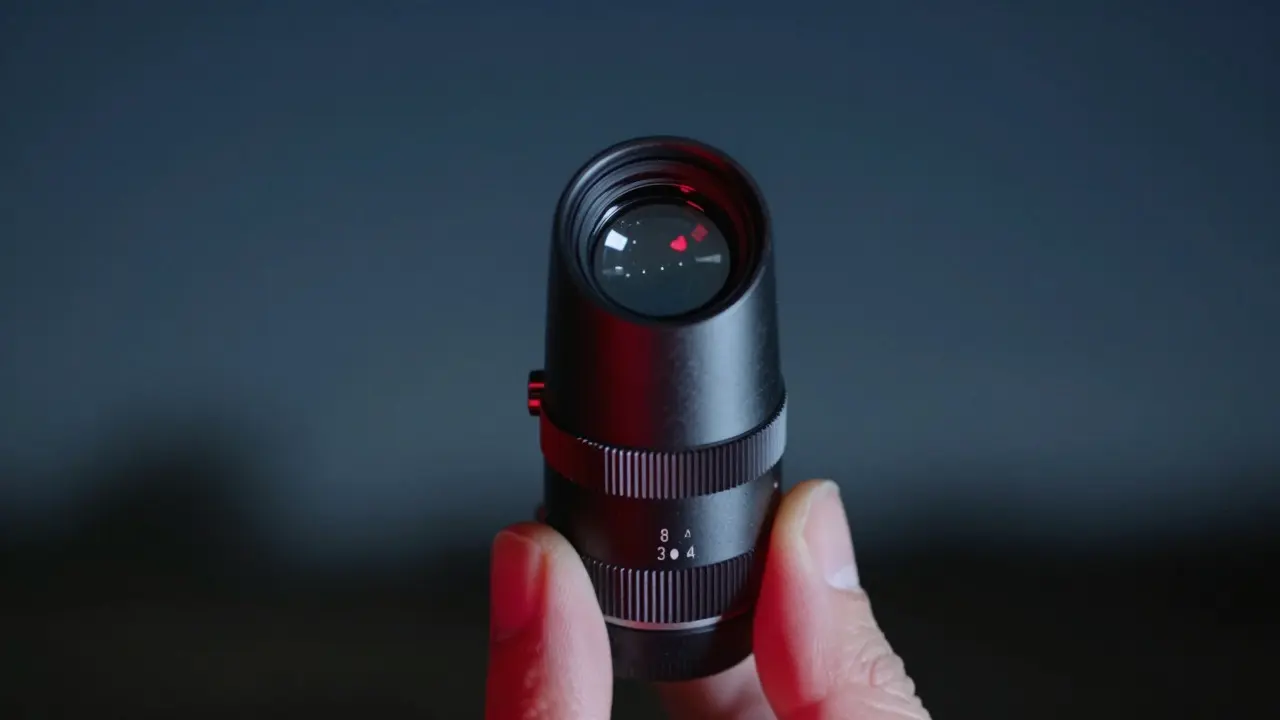
There is a specific moment in every astronomer’s life when the single 25mm eyepiece they bought with their first telescope feels like a cage. You see the Moon, sure. But the stars look like pinpricks, and the planets are just bright dots that refuse to resolve into detail. The frustration isn’t your eyes; it’s your glass. Building a proper eyepiece collection is less about buying more lenses and more about mastering the relationship between magnification, exit pupil, and field of view. It is the difference between seeing a sky and understanding it.
The Physics of Seeing: Why Focal Length Matters
To build a useful kit, you first need to understand what the number on the barrel actually does. The focal length of an eyepiece (measured in millimeters) determines two critical things: how much it magnifies your target and how wide your view is. The formula is simple: divide your telescope's focal length by the eyepiece's focal length to get magnification. If you have a 1000mm telescope and use a 25mm eyepiece, you get 40x magnification. Use a 10mm, and you jump to 100x.
However, magnification is only half the story. The other half is the exit pupil. This is the size of the beam of light exiting the eyepiece into your eye. Your eye has a maximum aperture of about 7mm when fully dilated in total darkness. If your exit pupil exceeds this, you are wasting light because your iris physically cannot accept it. Conversely, if your exit pupil is too small (below 1mm), the image becomes dim and noisy due to atmospheric turbulence. A balanced collection respects these physical limits rather than fighting them.
The Foundation: Low-Power Wide-Field Glass
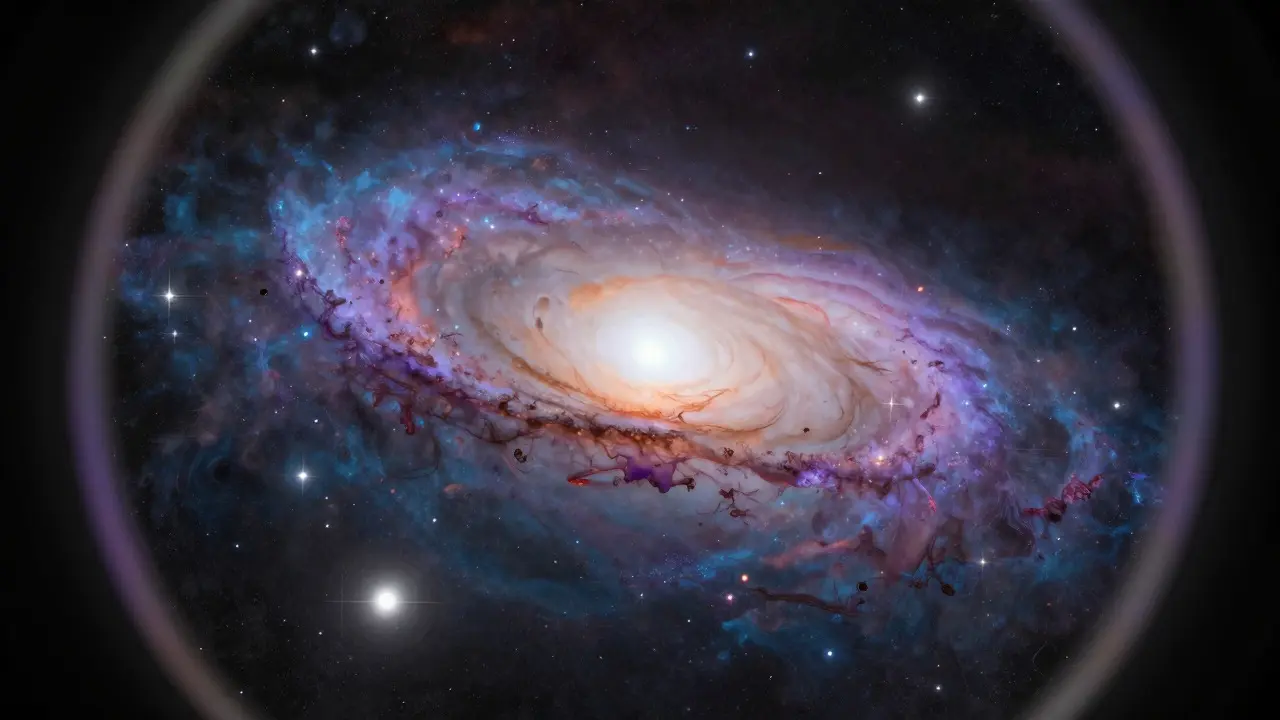
Every serious observer starts here. Low-power eyepieces typically range from 30mm to 60mm. These are your tools for nebulae, galaxies, and large star clusters. They provide a wide field of view, which is essential for framing objects like the Andromeda Galaxy or the Orion Nebula. Without a low-power lens, these objects feel cramped and difficult to center.
For most refractors and small reflectors, a 30mm or 32mm eyepiece is the sweet spot. It offers a generous field without pushing the exit pupil limit too hard. If you own a larger aperture scope (8 inches or more), you might consider stepping up to a 40mm or even a 50mm. Just be careful: if your exit pupil calculation goes above 7mm, you aren't gaining brightness; you're just seeing a darker, wider version of the same object. Many modern wide-field designs, such as those with 100-degree apparent fields, make these low powers incredibly immersive, turning a standard telescope into a portable planetarium.
The Workhorse: Mid-Power Versatility
This is where most observing happens. Mid-power eyepieces usually fall between 10mm and 20mm. This range covers the majority of planetary observation, double stars, and smaller deep-sky targets. A 15mm or 16mm eyepiece is often considered the "do-it-all" lens. It provides enough magnification to see the phases of Venus or the cloud bands on Jupiter, yet retains enough field of view to comfortably track fast-moving objects or locate faint targets.
When selecting mid-power glass, prioritize optical quality over extreme field of view. At these magnifications, chromatic aberration and astigmatism become noticeable. A well-corrected design will show crisp star points across the entire field. If you find yourself constantly switching between a 10mm and a 20mm, consider investing in a high-quality 13mm or 14mm as a bridge. It saves time and reduces the wear-and-tear on your focus wheel.
High Power: Pushing the Limits
High-power eyepieces, generally under 10mm, are for detailed planetary work and tight double stars. An 8mm or 7mm lens can reveal surface features on Mars or the Great Red Spot on Jupiter, provided the atmosphere is stable. However, high power is unforgiving. Any vibration, wind, or poor seeing conditions will wash out the details. It is not a lens you use every night; it is a special tool for clear, steady nights.
A common mistake is going too high. There is a practical limit to magnification based on your telescope's aperture. As a rule of thumb, the maximum useful magnification is roughly twice the aperture in millimeters. For a 200mm (8-inch) telescope, that’s about 400x. Going beyond this yields empty magnification-larger images that are dimmer and blurrier. A 5mm or 6mm eyepiece is rarely necessary unless you have a very large scope and exceptional seeing. Start with 8mm or 9mm and see if you need to go lower.
Zoom vs. Fixed: Which Should You Buy?
Zoom eyepieces offer convenience. One lens replaces three fixed ones, making them ideal for travel or quick setup sessions. Modern zooms have improved significantly in optical quality, but they still struggle to match the sharpness and color fidelity of premium fixed-focal-length lenses at the extremes of their range. If you are a casual observer who values speed, a good zoom is a fantastic entry point. If you are chasing the last bit of contrast on Saturn’s rings, fixed lenses win.
A hybrid approach works well for many collectors. Keep a zoom for general scanning and locating, and add one or two high-quality fixed lenses for dedicated planetary sessions. This balances versatility with peak performance without cluttering your drawer with ten different barrels.
Filtering and Accessories: Completing the Kit
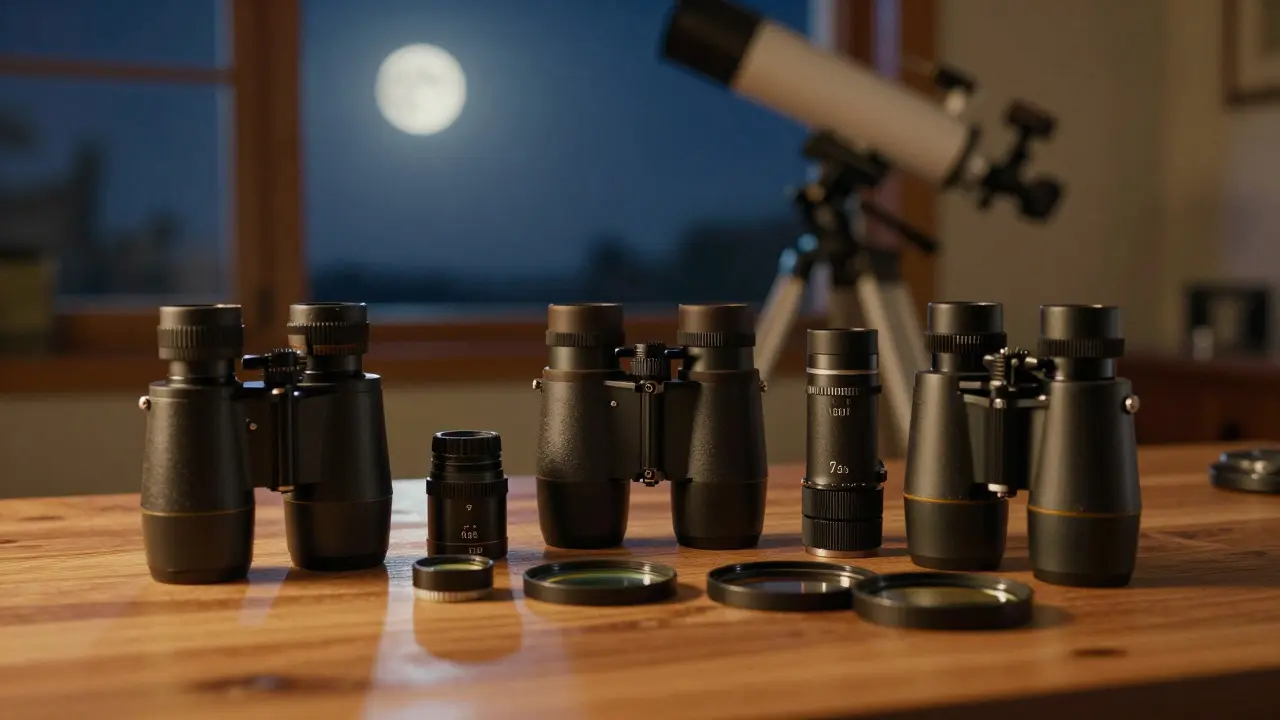
An eyepiece is only as good as the light control you apply to it. For lunar and planetary observing, a neutral density filter (like a 25% or 50% ND filter) helps reduce glare and enhances contrast. For deep-sky observing, a light-pollution filter can cut through city glow, though its effectiveness varies depending on your local sky quality. Don’t forget the dew shield for your eyepiece if you observe for long periods; condensation on the lens is a quick way to ruin a session.
| Telescope Aperture | Low Power (Wide Field) | Mid Power (Versatile) | High Power (Planetary) |
|---|---|---|---|
| 4-6 inches (100-150mm) | 30mm - 32mm | 15mm - 20mm | 8mm - 10mm |
| 8-10 inches (200-250mm) | 32mm - 40mm | 12mm - 16mm | 6mm - 8mm |
| 12+ inches (300mm+) | 40mm - 50mm | 10mm - 14mm | 5mm - 7mm |
Common Pitfalls to Avoid
Don’t buy eyepieces before you know your telescope’s focal ratio. A fast telescope (f/4 or f/5) requires eyepieces with excellent coma correction at the edges, while a slow telescope (f/10 or faster) can handle simpler, cheaper designs. Also, avoid mixing brands with different mechanical threads if possible. Standardizing on a single thread type (like M48 or 1.25 inch) ensures all your accessories fit. Finally, resist the urge to upgrade your eyepieces before upgrading your mount. A shaky mount ruins even the best optics. Stability is the foundation of high-power viewing.
What is the best first eyepiece to buy?
A 25mm or 30mm eyepiece is generally the best starting point. It provides a comfortable exit pupil for most telescopes and offers a wide enough field of view to locate objects easily. Once you are comfortable with that, move to a 10mm or 12mm for higher magnification.
How do I calculate my exit pupil?
Divide the telescope's aperture (in mm) by the magnification. Alternatively, divide the eyepiece's focal length by the telescope's focal ratio (f-number). For example, a 10mm eyepiece in an f/10 telescope gives an exit pupil of 1mm.
Are zoom eyepieces worth it?
Yes, for convenience and travel. They allow you to adjust magnification quickly without swapping lenses. However, for the highest possible image quality, especially at the high-magnification end, fixed-focal-length eyepieces usually perform better.
Do I need a barlow lens?
A Barlow lens multiplies the magnification of any eyepiece, effectively doubling the utility of your collection. A 2x Barlow is the most versatile. It turns your 10mm eyepiece into a 5mm equivalent, allowing you to test high-power views without buying a new lens.
What is the difference between 1.25 inch and 2 inch eyepieces?
The diameter refers to the physical size of the barrel. 2-inch eyepieces are required for low-power, wide-field views because they have larger lenses that capture more light. 1.25-inch eyepieces are standard for mid and high power. Most telescopes come with a 1.25-inch adapter, so you may need a separate 2-inch holder for larger lenses.