17 Aug 2026
- 0 Comments
Ever tried to get a sharp image of Jupiter only to watch the stars swim and blur as your scope warms up? If you use an aluminum telescope tube is a standard material for reflector and refractor telescopes that offers high strength-to-weight ratio but suffers from significant thermal expansion and contraction., you know the frustration. The metal cools down unevenly, creating internal air currents that distort light before it even hits your eyepiece. On the other hand, carbon fiber reinforced polymer is a lightweight composite material with low thermal conductivity that maintains structural rigidity across wide temperature ranges. doesn't have that same problem. But is it worth the extra cost? Let's break down how these two materials actually behave under real-world observing conditions.
The Physics of Cooling Down
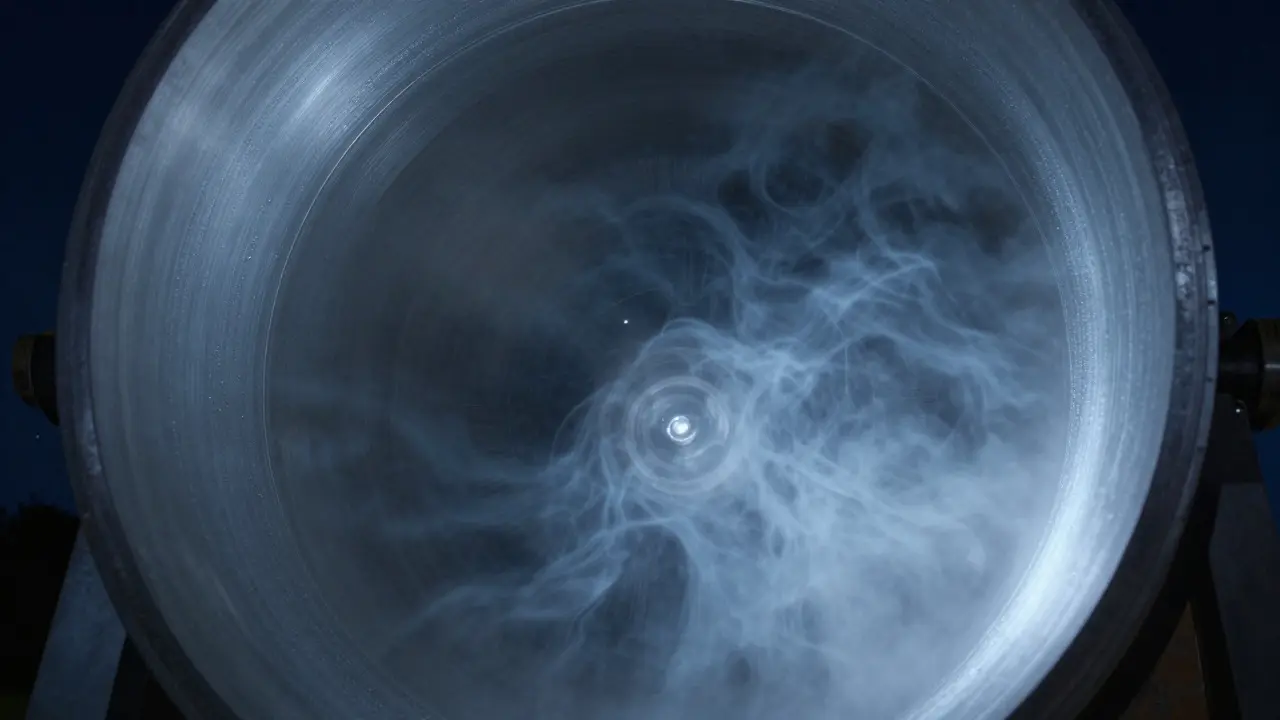
When you bring a telescope inside or set it up in a cold garage, the tube starts at room temperature (around 70°F or 21°C). Outside, it might be 40°F (4°C) or lower. The goal is to reach thermal equilibrium is the state where the telescope tube temperature matches the ambient air temperature, eliminating internal convection currents.. Aluminum conducts heat about 50 times faster than carbon fiber. This sounds good-faster cooling, right? Not exactly. Because aluminum conducts heat so well, it also transfers heat from the warm air inside the tube to the cooler outer surface rapidly. This creates a temperature gradient within the tube itself. Warm air rises, cool air sinks, and you get turbulence. It’s like trying to see through a hot oven window.
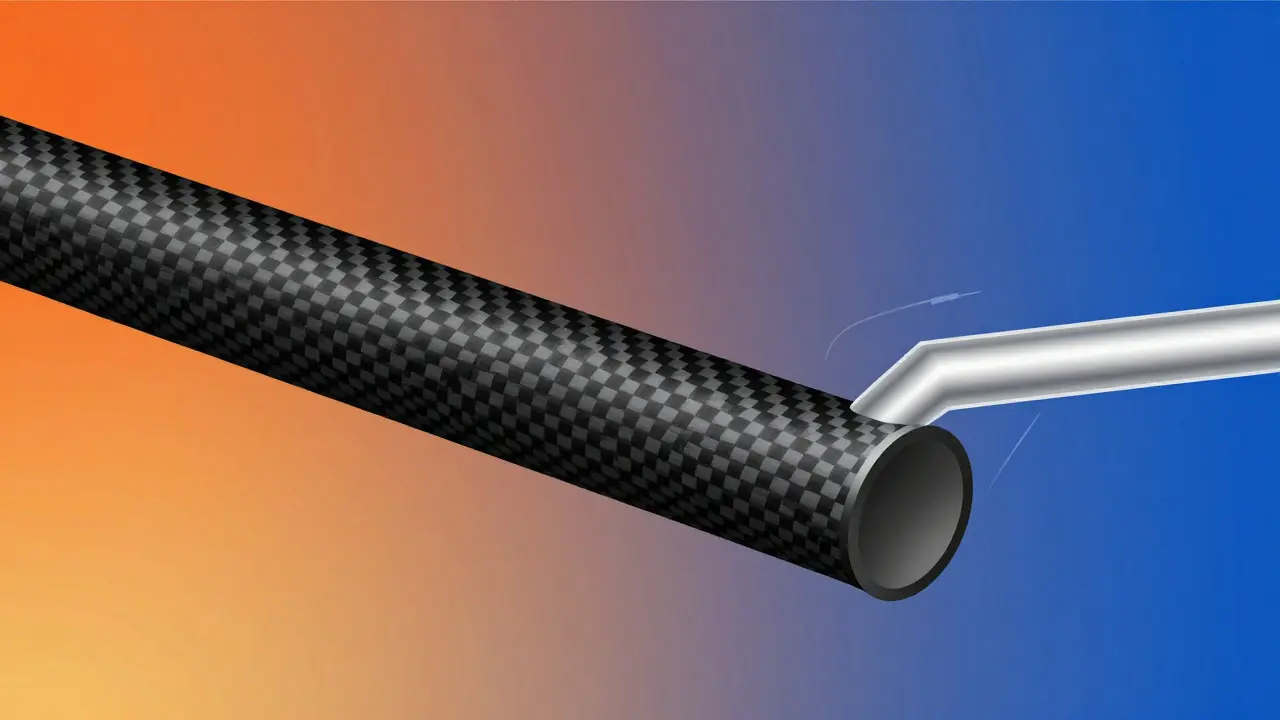
Carbon fiber, being a poor conductor, cools much slower. A carbon tube might take 30 to 60 minutes to fully equilibrate, compared to 15 to 20 minutes for aluminum. However, once it does reach equilibrium, the temperature difference between the inner and outer walls is minimal. There are no strong convection currents because there isn’t a large temperature differential driving them. For visual astronomy, this means cleaner seeing conditions sooner after setup if you account for the initial wait time.
Focus Shifts and Structural Integrity
It’s not just about air movement inside the tube; it’s also about the physical shape of the tube changing. Thermal expansion is the tendency of matter to change in length, area, or volume in response to a change in temperature. is a critical factor here. Aluminum has a high coefficient of thermal expansion. As it cools, it contracts. In a long Dobsonian telescope, this contraction can shift the primary mirror relative to the focuser. You might need to refocus every few minutes during a session.
Carbon fiber has a very low coefficient of thermal expansion, often close to zero depending on the weave pattern. This means the distance between the primary mirror and the secondary mirror stays constant regardless of temperature swings. If you’ve ever struggled with maintaining optical collimation is the alignment of the optical elements in a telescope to ensure light travels along the intended path. while observing, carbon fiber solves that headache. The structure holds its geometry rigidly, meaning your focus point remains stable throughout the night.
| Property | Aluminum Tube | Carbon Fiber Tube |
|---|---|---|
| Thermal Conductivity | High (~205 W/m·K) | Low (~5-10 W/m·K) |
| Cooling Time (Typical) | 15-20 minutes | 30-60 minutes |
| Thermal Expansion Coefficient | High (23 µm/m·K) | Near Zero (-1 to +5 µm/m·K) |
| Internal Convection Risk | High during cooldown | Low after equilibrium |
| Weight (Relative) | Heavier | Lighter (approx. 30-40% less) |
Real-World Observing Scenarios
Imagine you’re in Portland, Oregon, on a clear August night. The humidity is high, and the temperature drops by 10 degrees overnight. If you use an aluminum scope, you’ll likely notice "boiling" in the first hour. Stars will appear to dance around due to the internal air currents. You might think your seeing is bad, but it’s actually your equipment fighting itself. With a carbon fiber scope, the first 30 minutes might feel slow because the tube is still slightly warmer than the air. But once it settles, the image becomes incredibly stable. No more swimming. No more refocusing every time the temperature dips further.
For astrophotographers, this stability is non-negotiable. Even a millimeter of focus drift can ruin a long exposure stack. Carbon fiber tubes provide a consistent focal plane. Aluminum tubes require frequent manual adjustments, which introduces vibration and potential misalignment. If you shoot planetary images, the lack of internal turbulence in a carbon fiber tube translates directly to higher contrast and sharper details in your final processed frames.
Cost, Weight, and Durability Trade-offs
Let’s talk numbers. A 10-inch Dobsonian with an aluminum tube typically weighs around 50-60 pounds. The same aperture in carbon fiber can weigh 35-40 pounds. That’s a significant difference when you’re carrying gear up a hill or setting up in a car trunk. But carbon fiber costs more. You’re paying for the manufacturing complexity of weaving and curing the composite material. An aluminum tube is stamped and welded-a cheaper process.
Durability is another angle. Aluminum dents if you drop it. Carbon fiber cracks if you hit it hard. However, carbon fiber is generally more resistant to corrosion. Aluminum oxidizes over time, especially in coastal areas like the Pacific Northwest. While oxidation doesn’t affect optics immediately, it adds weight and looks bad. Carbon fiber doesn’t rust. It’s inert. So, if you live near the coast, the longevity argument favors carbon fiber despite the higher upfront cost.
Which One Should You Choose?
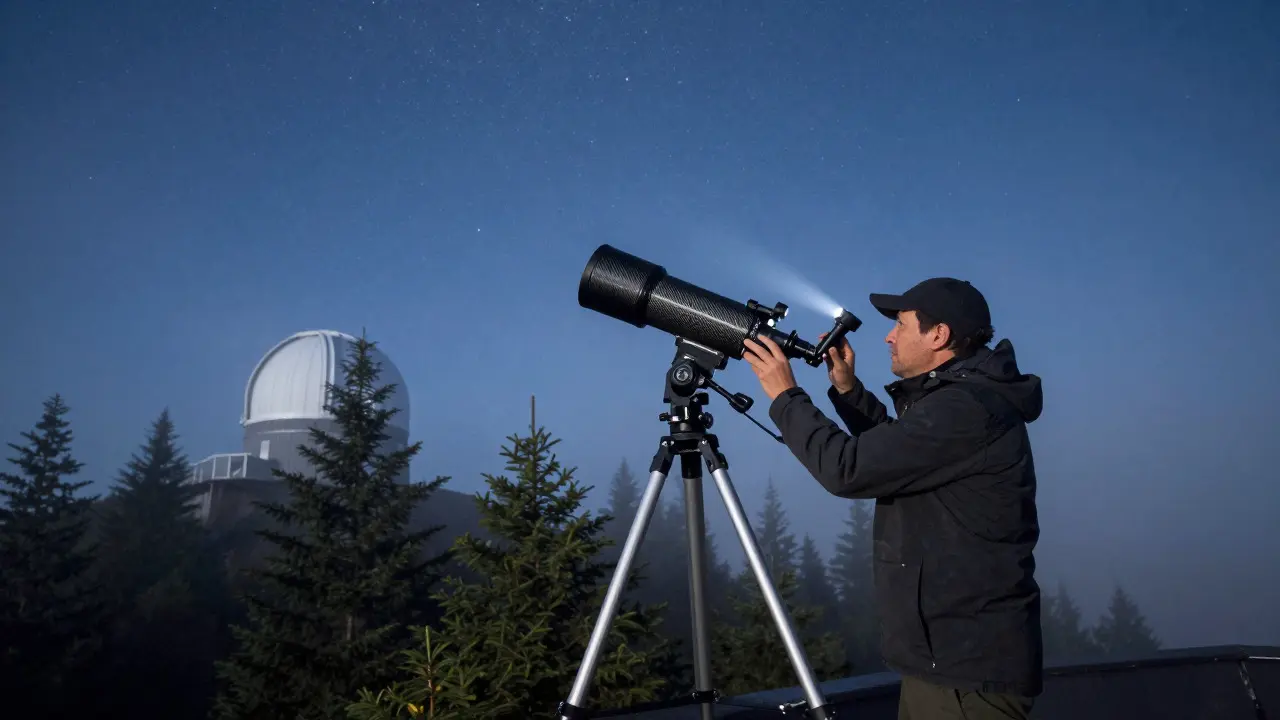
If you observe visually and don’t mind waiting 20 minutes for your scope to settle, aluminum is a perfectly fine choice. It’s affordable, sturdy, and widely available. Most beginner scopes come with aluminum tubes for good reason. But if you value stability, plan to do any imaging, or simply hate fiddling with focus during a session, carbon fiber is the upgrade worth making. The peace of mind knowing your focus won’t drift and your seeing won’t degrade due to internal convection is priceless.
Consider hybrid approaches too. Some manufacturers offer aluminum trusses with carbon fiber spars. This reduces weight and some thermal issues without the full price tag of a solid carbon tube. It’s a middle ground that works well for large apertures where a solid tube would be impractical.
Frequently Asked Questions
How long does it take for a carbon fiber telescope to reach thermal equilibrium?
Typically, it takes 30 to 60 minutes for a carbon fiber tube to fully match the ambient air temperature. This is longer than aluminum but results in a more stable optical environment once settled.
Does aluminum telescope tube material affect image quality permanently?
No, the effect is temporary. Once the aluminum reaches thermal equilibrium, the image quality stabilizes. The issue only occurs during the cooling phase when internal convection currents are active.
Is carbon fiber stronger than aluminum for telescope tubes?
In terms of stiffness-to-weight ratio, yes. Carbon fiber is stiffer per unit of weight than aluminum. However, aluminum is more ductile and less prone to cracking upon impact. Both materials are structurally sound for typical telescope loads.
Can I convert an aluminum telescope tube to carbon fiber?
Generally, no. The mounting points, diameter, and wall thickness differ significantly between materials. It is usually easier and safer to purchase a new tube designed for the specific material rather than attempting a conversion.
What is the best material for astrophotography telescope tubes?
Carbon fiber is preferred for astrophotography because of its minimal thermal expansion and reduced internal convection. These factors help maintain consistent focus and reduce atmospheric distortion artifacts in long exposures.