19 Mar 2026
- 0 Comments
Everyone loves the first clear night after a long stretch of clouds. You point your telescope at Jupiter, turn the focuser, and-nothing. The view is hazy. Not because of the atmosphere, but because your optics haven’t been cleaned in too long. Or maybe you cleaned them too often and scratched the coating. You’re not alone. Most amateur astronomers mess up telescope maintenance by either ignoring it or over-cleaning. The truth? There’s no one-size-fits-all schedule. But there is a smart way to know when to clean and when to leave it alone.
When Your Telescope Actually Needs Cleaning
Telescope optics-especially the primary mirror and eyepiece lenses-don’t need cleaning just because they look dusty. Dust on the surface of a mirror or lens rarely affects image quality. Light bounces or passes through the center of the optical surface, not the edges. A thin layer of dust is like a light fog on a window: you don’t see it while looking straight through.
Here’s when you do need to clean:
- Visible smudges from fingerprints, pollen, or moisture
- Oil residue from touching the surface with bare hands
- Hard spots from bird droppings, tree sap, or salt spray
- Loss of contrast or brightness after a humid or coastal observing session
If you’re unsure, try this: observe a bright star at high magnification. If the image is sharp but dimmer than usual, or if you see a faint haze around the star that doesn’t go away with focusing, that’s a sign of surface contamination. Don’t clean just because you see dust-wait for performance to drop.
How Often Should You Clean the Optics?
There’s no official calendar, but based on real-world use across hundreds of amateur telescopes, here’s a practical guideline:
- Primary mirror (reflectors): Every 2-5 years. Most reflectors go years without needing a cleaning unless you live in a dusty, coastal, or pollen-heavy area. In Portland, with our damp winters and tree cover, 3 years is average.
- Secondary mirror: Every 3-5 years. It’s smaller and less exposed, so it collects less debris. Clean it only if you notice a drop in contrast or if it’s visibly dirty during inspection.
- Eyepiece lenses: Every 1-2 years. These get handled more, exposed to skin oils, and are more prone to smudges. Clean them only when you see fingerprints or smears that affect viewing.
- Corrector plates (SCTs and Maksutovs): Every 3-4 years. These are sealed but can collect dust on the outer surface. Don’t clean the inner surface unless you’re sure it’s contaminated-opening the cell risks misalignment.
These numbers assume you store your scope indoors, use a dust cap, and avoid exposing it to rain or high humidity for long periods. If you leave your telescope outside under a tarp or in a garage with poor ventilation, you’ll need to clean more often.
What About the Mechanics?
Optics get all the attention, but the mechanics-focuser, mount, drive systems-are just as important. A dirty focuser won’t ruin your view of Saturn, but a stiff one will make fine focusing impossible. Here’s how to keep them running smooth:
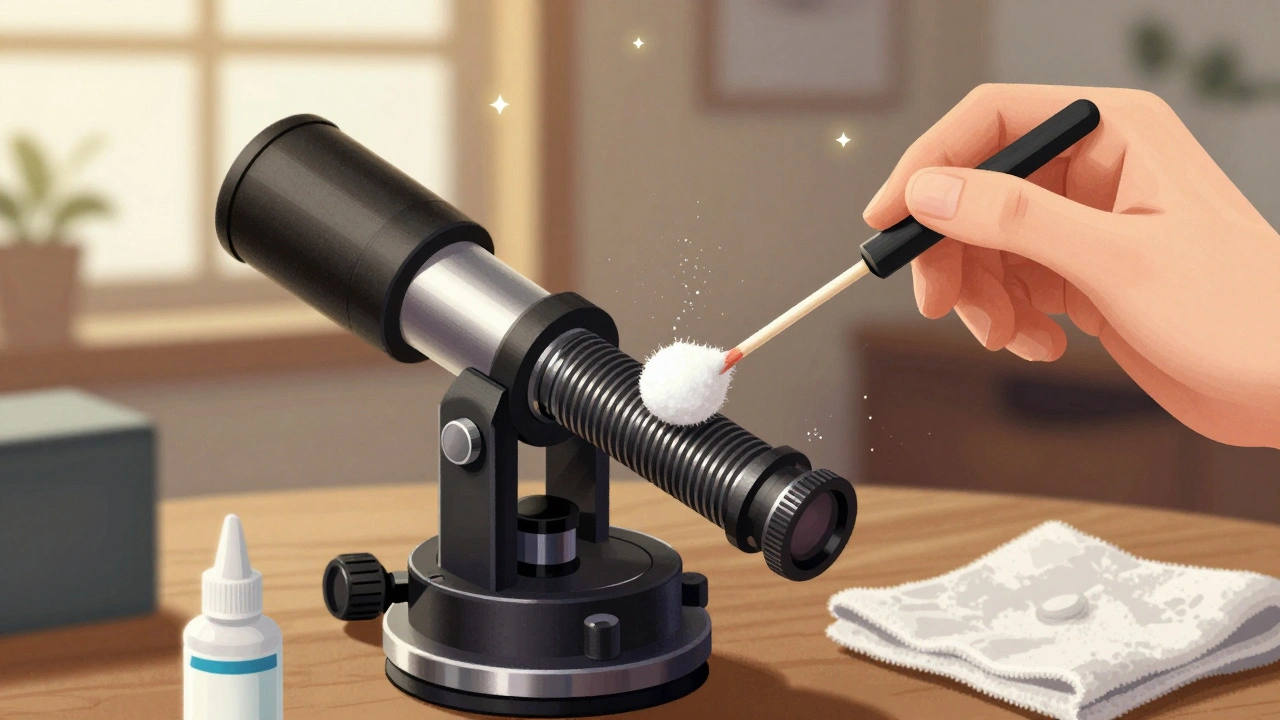
- Focuser: Lubricate every 6-12 months. Use a dry lubricant like graphite powder or PTFE-based grease. Avoid WD-40-it attracts dust and dries out over time. If the focuser feels gritty or sticks, clean the helical threads with a soft brush and isopropyl alcohol (90%+), then re-lubricate.
- Mount gears (equatorial or alt-az): Check gear mesh every 6 months. If the tracking feels jerky or the motor strains, the gears may need cleaning. Use a cotton swab with isopropyl alcohol to remove old grease and debris. Reapply a small amount of high-quality gear grease.
- Motorized drives: Don’t open the motor housing unless you’re experienced. Dust inside the housing is normal. If your GoTo system starts missing targets or loses alignment often, it’s likely a calibration issue, not dirt.
- Tube and trusses: Wipe down with a microfiber cloth every few months. No need for cleaners-just remove dust and moisture. In coastal areas, wipe down metal parts with a dry cloth after each use to prevent corrosion.
What You Should Never Do
Too many people ruin their optics trying to clean them. Here’s what not to do:
- Never use paper towels, tissues, or clothing. Even “lint-free” cloths can scratch. Use lens tissue or a microfiber cloth designed for optics.
- Never clean unless necessary. Every cleaning removes a tiny amount of coating. Over-cleaning is the #1 cause of permanent damage.
- Never use household cleaners. Windex, vinegar, or alcohol below 90% can strip coatings or leave residues.
- Never clean the inside of a sealed corrector plate. If you think it’s dirty inside, send it to the manufacturer. Don’t risk misalignment.
- Never clean under bright light. Dust becomes visible in direct sunlight or a bright lamp. Clean in dim light so you don’t overestimate how dirty it is.
How to Clean Properly (Step by Step)
If you’ve confirmed cleaning is needed, here’s how to do it right:
- Remove the optical component from the telescope. Always handle it by the edges. Wear nitrile gloves if you have them.
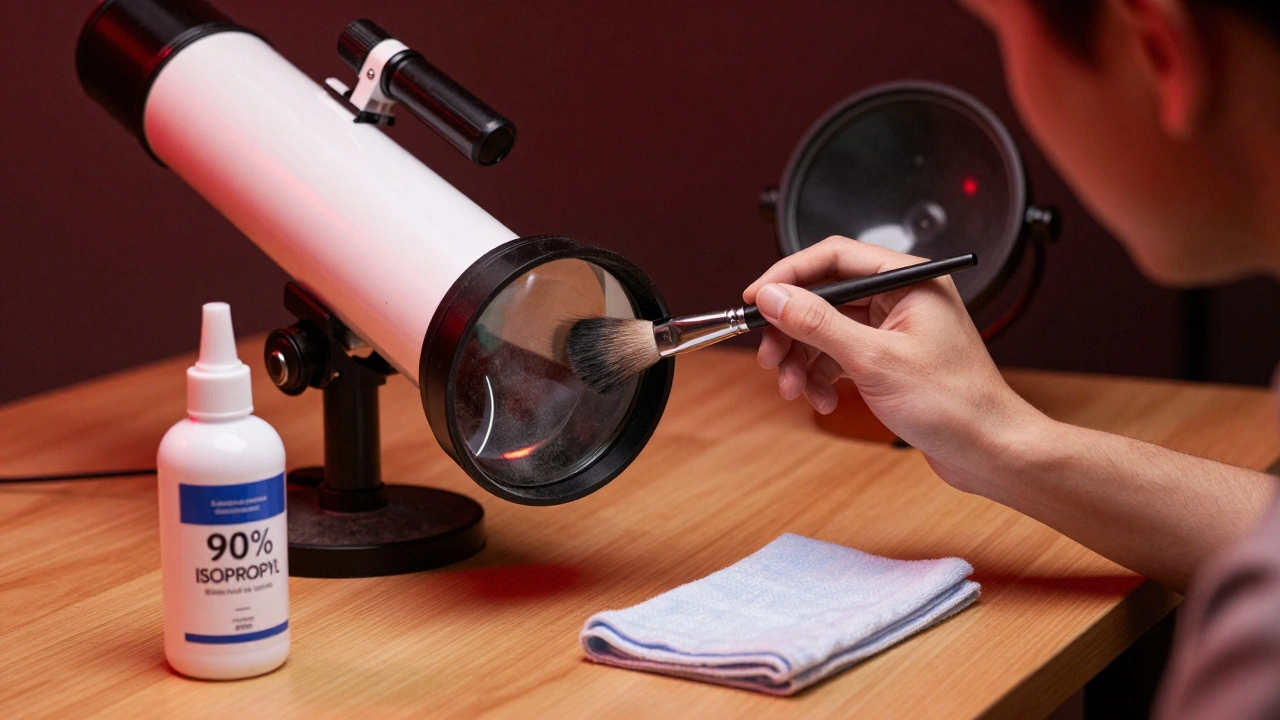
- Use a clean, soft brush (a clean makeup brush works) to blow off loose dust. Never wipe yet.
- Prepare a solution of 90%+ isopropyl alcohol and distilled water (50/50 mix). Pour a few drops onto a fresh lens tissue or microfiber cloth-not directly on the optic.
- Gently wipe in a circular motion from the center outward. Use light pressure. Don’t scrub.
- Let it air dry. Don’t wipe again. If you see streaks, repeat with a fresh cloth and less solution.
- For mirrors, use the same method, but be extra careful. Mirrors are coated on the front surface. One wrong swipe can ruin it.
For the focuser and gears, use a cotton swab dipped in alcohol to clean surfaces, then apply a pea-sized amount of lubricant. Wipe off excess. Too much grease is worse than too little.
Environmental Factors That Change Your Schedule
Your location matters more than you think. Here’s how different environments affect cleaning needs:
- Coastal areas (like Portland): Salt spray and humidity mean you’ll need to wipe down metal parts after every outing. Optics may need cleaning every 2-3 years.
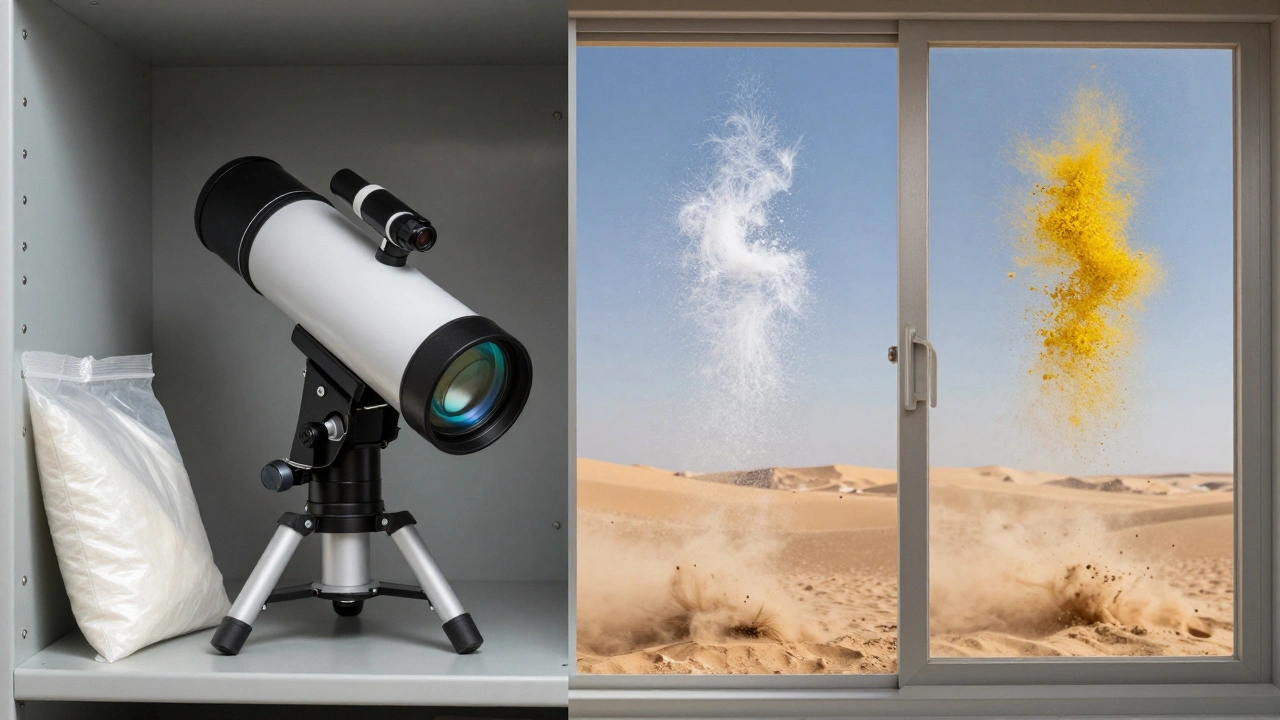
- Dry desert climates: Dust builds up faster. Clean optics every 1-2 years. Use a sealed storage case.
- Pollen-heavy regions (springtime): Pollen sticks to optics like glue. Clean after major pollen events. Cover your scope when not in use.
- Urban areas: Airborne grime and exhaust can coat optics. Monthly wipe-downs of the exterior help. Optics still need cleaning every 3-4 years.
Keep a simple log: write the date each time you clean. After a few years, you’ll see your own pattern. Mine? I clean my 8-inch reflector every spring, just before the observing season peaks. That’s been reliable for six years now.
Storage Matters More Than Cleaning
The best way to avoid cleaning? Store your telescope right.
- Use a dust cap on the front and back. Even a cheap one helps.
- Store in a dry, temperature-stable place. A closet or basement is better than a garage.
- Use silica gel packs inside the case. They absorb moisture and prevent fungus.
- Don’t leave the scope uncovered in a shed. Even a tarp traps moisture.
If you follow these steps, you’ll rarely need to clean your optics. And when you do, you’ll know exactly why-and how to do it safely.
Can I clean my telescope optics with water?
No, plain water isn’t safe. Tap water contains minerals that leave spots when they dry. Distilled water is better, but even then, it doesn’t dissolve oils or fingerprints. Use a 50/50 mix of 90%+ isopropyl alcohol and distilled water. It evaporates cleanly and lifts grease without damaging coatings.
How do I know if my mirror is coated with aluminum or silver?
Most modern amateur telescope mirrors are aluminum-coated. Silver coatings are rare and more delicate. If your scope is under 10 years old, it’s almost certainly aluminum. Silver mirrors require special cleaning methods and are more prone to tarnishing. If you’re unsure, check the manufacturer’s manual or contact them directly. Don’t guess-mistakes can ruin the mirror.
Is it okay to clean the eyepiece more often than the mirror?
Yes. Eyepieces are handled more, exposed to skin oils, and have multiple glass elements. Cleaning them every 1-2 years is normal. The mirror, on the other hand, is sealed inside the tube and rarely touched. Clean it only when performance drops. Don’t match the frequency-you’re cleaning two different components with different exposure levels.
What if I accidentally touch the mirror?
Don’t panic. If you only touched it lightly and didn’t smear oil, you may not need to clean it. But if you see a smudge or feel sticky residue, clean it using the proper method. A single accidental touch won’t ruin the mirror, but leaving oil on it can cause permanent damage over time. Clean it once, properly, and move on.
Should I clean my telescope before a big observing session?
Only if you’ve noticed a drop in image quality recently. Cleaning right before an event adds stress and risk. If your optics are clean now, leave them alone. A freshly cleaned mirror can still have slight residue or streaks. Wait a day or two after cleaning to let everything settle. Better to observe with slightly dusty optics than blurry ones from rushed cleaning.