17 Aug 2026
- 0 Comments
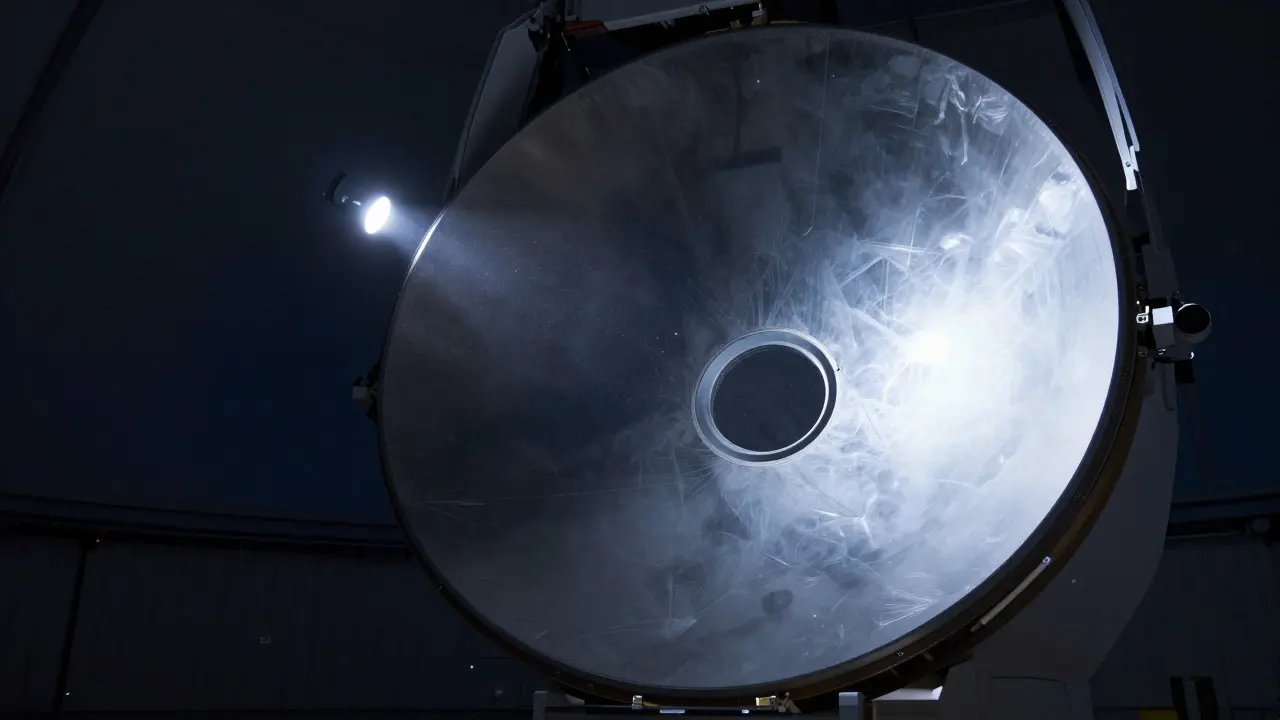
Dust is the silent killer of high-end optics. It doesn't just make your view look grainy; it degrades contrast, reduces light transmission, and can permanently etch delicate coatings if left unattended. For serious amateur astronomers and professional facilities alike, managing particulate matter isn't about keeping things "pretty"-it's about preserving asset value and image quality. Whether you are running a backyard dome or a research-grade enclosure, the battle against airborne particles requires a multi-layered defense strategy involving physical barriers, airflow management, and disciplined human behavior.
The core problem lies in the sheer volume of air that moves through an observatory during a typical night. As telescopes track celestial objects, thermal gradients create convection currents that pull in external air. If that air carries pollen, soil, or industrial residue, it settles directly onto your primary mirror or secondary flat. Once settled, these particles become magnets for moisture, leading to corrosion or mold growth on sensitive surfaces. The goal is not zero dust-that’s impossible outside a Class 100 cleanroom-but rather reducing the particle count by 90% compared to outdoor levels.
Building the First Line of Defense: Seals and Barriers
Your observatory structure is the first filter. Most failures happen at the seams. A standard roll-off roof or dome has significant gaps where the moving parts meet the stationary frame. These gaps act as vacuum cleaners, sucking in every speck of dirt from the surrounding environment. To combat this, you need continuous sealing along all dynamic interfaces.
- Door Seals: Use weatherstripping with a compression rating suitable for local wind speeds. Magnetic seals work well for sliding doors but fail under heavy vibration. Brush seals are better for high-wind areas because they flex without breaking.
- Roof Tracks: Install felt or silicone strips along the roof rails. This prevents direct entry of debris while allowing smooth movement. Check these quarterly; UV degradation breaks them down faster than you think.
- Perimeter Gaps: Even small cracks in the foundation or wall panels let in ground-level dust, which is often heavier and more abrasive than airborne pollen. Seal these with expanding foam followed by paintable caulk.
Beyond the structure, consider the entrance point. If you have a door, it should be a double-door system or an airlock. Walking in from the outside brings in tracked-in dirt and humidity. An airlock forces you to remove shoes and shake out clothing before entering the main observation area. This simple architectural change cuts indoor particle counts significantly.
Airflow Management: Curtains and Filtration
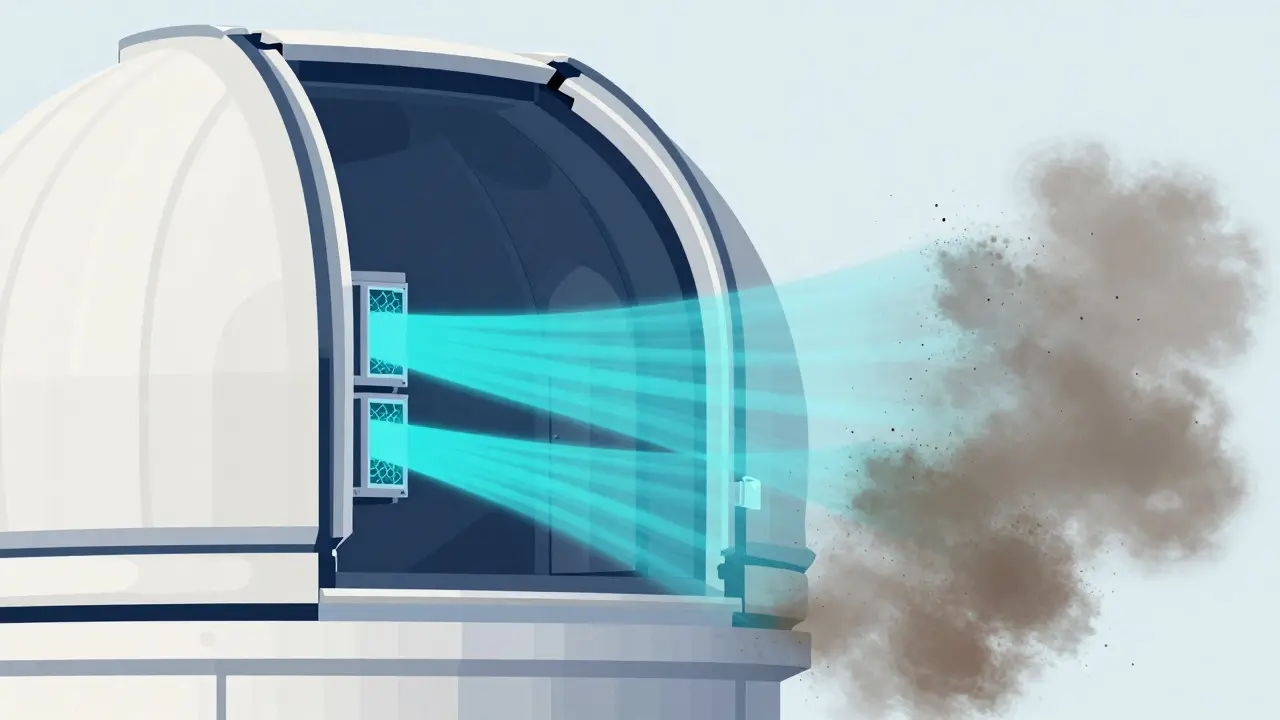
Sealing everything creates a new problem: heat buildup. Telescopes need to reach ambient temperature to avoid internal turbulence (seeing). If you seal your observatory too tightly, the interior warms up, creating rising columns of hot air that distort your images. The solution is controlled ventilation using positive pressure systems.
Positive pressure means forcing clean air into the observatory faster than dirty air can leak in. You achieve this with HEPA filters and exhaust fans. When the interior pressure is slightly higher than the exterior, any gaps in the seals push air *out* instead of pulling dust *in*. This turns your leaks into exhaust ports.
| Strategy | Effectiveness | Cost | Maintenance Frequency |
|---|---|---|---|
| Passive Sealing | Low-Medium | $ | Quarterly |
| Active Airlock | Medium-High | $$ | Monthly |
| HEPA Positive Pressure | High | $$$ | Bi-Weekly Filter Change |
| Clean Room Protocols | Very High | $$$$ | Daily |
For smaller setups, magnetic curtains made of anti-static fabric offer a middle ground. Hang these at the open end of a slide-roof observatory. They block large particles and reduce draft velocity without requiring complex ductwork. Look for fabrics with a static-dissipative coating; regular cotton attracts dust like a flypaper.
The Human Factor: Clean Routines and Handling
Even with perfect seals and filters, humans are the biggest source of contamination. Your clothes shed millions of microfibers per hour. Your skin sheds dead cells. And if you haven't washed your hands recently, you're carrying bacteria and oils that bond to glass. Establishing a strict routine is non-negotiable for long-term optical health.
- Entry Protocol: Remove outer footwear. Change into dedicated observatory slippers or socks. Shake out jackets and hats in the airlock. Wipe down hands with alcohol-free sanitizer (alcohol can damage some coatings over time).
- Attire Standards: Wear lint-free clothing. Fleece and wool are enemies. Cotton t-shirts are acceptable but should be washed frequently. Avoid wearing perfume or scented lotions near optics.
- Tool Hygiene: Keep a dedicated set of cleaning tools inside the observatory. Never bring in brushes or cloths that have been used outdoors. Store them in sealed containers when not in use.
- Inspection Schedule: Inspect optics weekly under low magnification. Look for dust spots that persist after tracking stops. If you see them, note their location. This helps you identify if the issue is settling (top-down) or vibration (random).
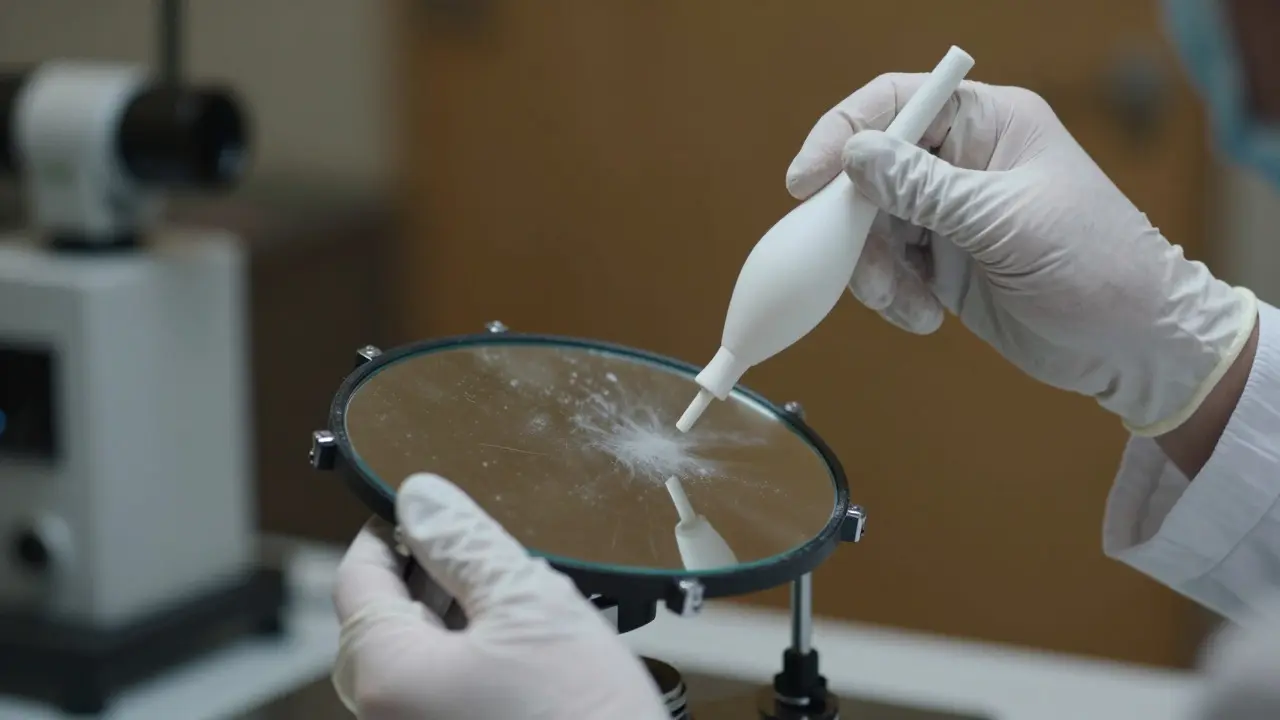
When cleaning does become necessary, resist the urge to wipe immediately. Let the dust settle completely. Use a blower with a soft rubber bulb, never compressed air cans, which release propellant residues that are hard to remove. Start from the center of the optic and move outward in circular motions. Only use lens paper and specialized fluid if dry blowing fails.
Monitoring and Maintenance Metrics
You can't manage what you don't measure. While professional labs use laser particle counters, amateurs can use simpler proxies. Track your image contrast ratio over time. If your dark sky details start fading despite clear atmospheric conditions, suspect dust accumulation. Also, monitor your filter replacement schedule strictly. A clogged HEPA filter loses efficiency rapidly, turning your clean air system into a mere fan.
Keep a logbook. Record the date, weather conditions, and any cleaning actions taken. Over six months, patterns will emerge. Maybe dust spikes after windy days, indicating a specific seal failure. Maybe it increases when you visit certain friends, suggesting their vehicle tracks in mud. Data-driven maintenance saves hours of guesswork.
Frequently Asked Questions
How often should I replace HEPA filters in an observatory?
Every two weeks during high-pollen seasons, and monthly otherwise. Clogged filters increase fan noise and reduce airflow, compromising the positive pressure balance essential for dust exclusion.
Is it safe to use compressed air dusters on telescope mirrors?
Generally no. Compressed air cans contain propellants that leave oily residues on optical surfaces. These residues attract more dust and are difficult to clean without specialized solvents. Use a manual blower instead.
What type of clothing is best for minimizing lint in an observatory?
Tight-fitting cotton or synthetic blends that do not shed fibers. Avoid fleece, wool, and loose garments. Dedicated observatory attire that stays indoors minimizes the introduction of outdoor contaminants.
Do magnetic curtains really work for dust control?
Yes, particularly for blocking large particles and reducing wind speed at the opening. They are most effective when paired with an airlock or positive pressure system to handle fine airborne dust.
How much does dust actually affect image quality?
Significantly. Even small particles scatter light, reducing contrast and sharpness. On large apertures, a single visible dust spot can obscure planetary detail. Regular cleaning maintains peak optical performance.