22 May 2026
- 0 Comments
Reading the Moon’s Scarred Surface
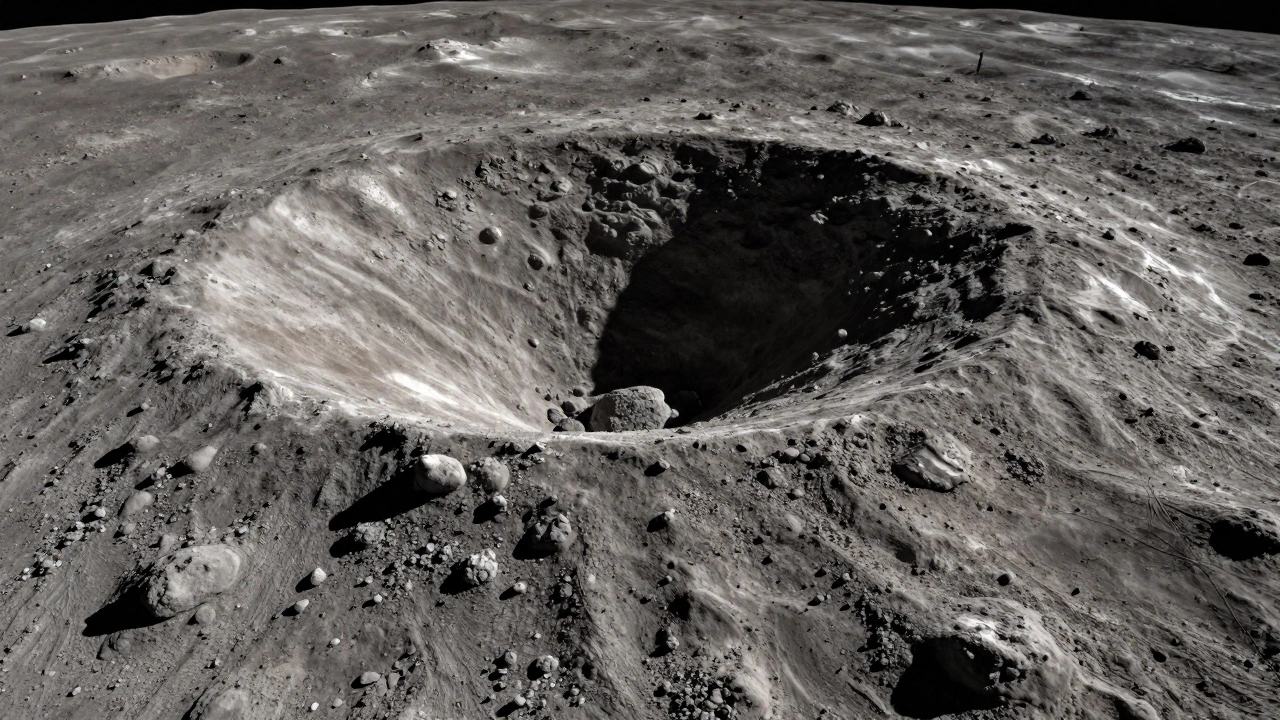
When you look at the Moon through a telescope, it’s easy to get lost in the dark seas and bright highlands. But if you zoom in on a fresh crater, you’ll see something that looks like an explosion frozen in time. Bright streaks radiate outward, and a fuzzy halo surrounds the rim. These aren’t random patterns. They are ejecta blankets and ray systems, the physical evidence of violent impacts. Understanding these features transforms your viewing session from simple sightseeing into geological detective work.
Impact geology is the study of how celestial bodies change when they collide with space rocks. On Earth, erosion hides most of this history. On the Moon, there is no wind or rain to clean up the mess. Every crater tells a story about the object that hit it, the angle of impact, and how long ago it happened. For amateur astronomers, learning to identify these features helps you date craters visually and understand the Moon’s dynamic past.
What Is an Ejecta Blanket?
An ejecta blanket is a layer of debris thrown out during a meteorite impact. When a rock strikes the lunar surface at speeds often exceeding 10 kilometers per second, the energy released vaporizes both the impactor and part of the target ground. This superheated material blasts outward in all directions. As it travels away from the crater, it slows down due to gravity and falls back to the surface, creating a thick, uneven layer around the crater rim.
This blanket isn’t just dirt. It consists of breccia-broken rock fragments cemented together by the heat of the impact-and fine regolith dust. The thickness of the blanket varies. Close to the crater rim, it can be dozens of meters deep. Further out, it thins rapidly. In telescopic views, especially under low-angle sunlight near the terminator (the line between day and night), this texture becomes visible as a rough, mottled area surrounding the crater. It often appears darker than the central crater floor because it contains material excavated from deeper beneath the surface, which hasn’t been exposed to solar radiation for billions of years.
You can spot a classic ejecta blanket around young craters like Copernicus or Tycho. Look for the transition zone where the smooth crater wall meets the chaotic, bumpy terrain outside. That boundary marks the edge of the primary ejecta flow. Secondary craters-smaller pits formed by chunks of ejecta falling back-often pepper the outer edges of this blanket, giving it a stippled appearance.
The Highways of Light: Ray Systems
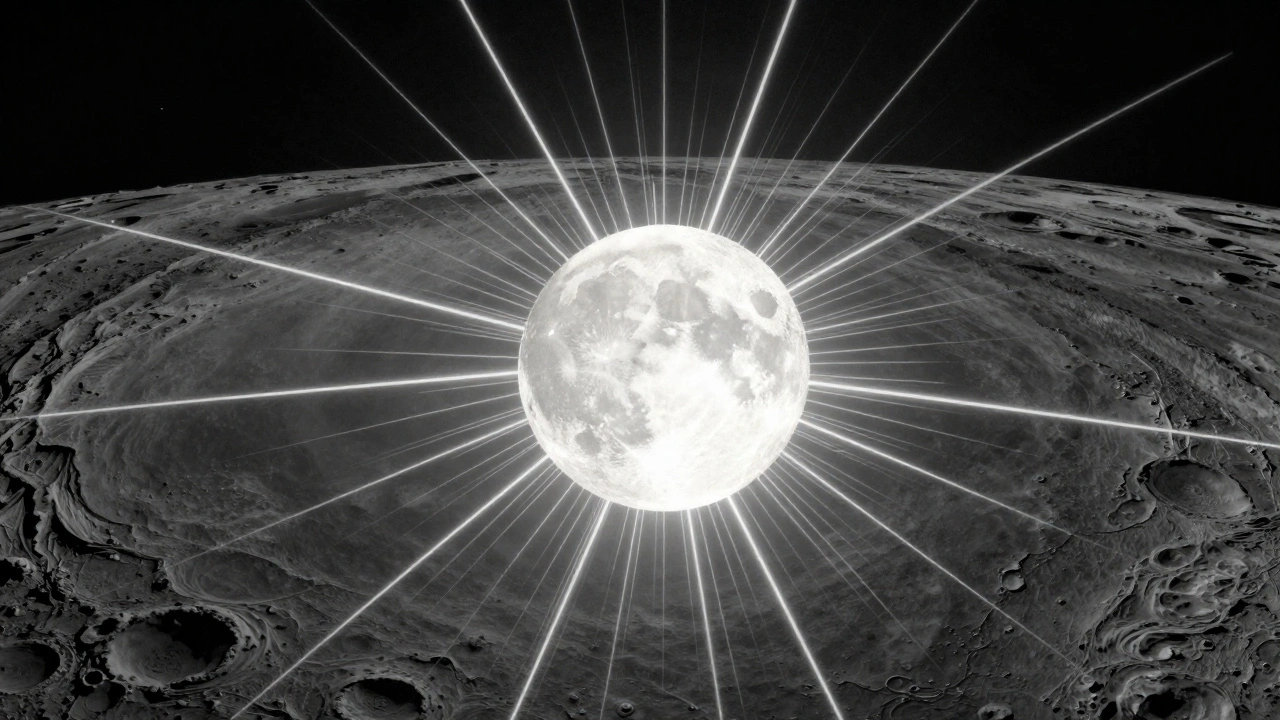
If ejecta blankets are the local debris field, ray systems are long, bright streaks of material extending hundreds of kilometers from an impact site. Rays form when finer particles are ejected at higher velocities, traveling further before settling. Because this material is freshly exposed, it reflects more sunlight than the surrounding, older surface. This makes rays appear brilliant white against the gray lunar landscape.
Rays are the hallmark of youthful craters. Over time, space weathering-the constant bombardment by micrometeoroids and solar wind-darkens the lunar surface. Fresh rays fade over millions of years. Therefore, the presence of prominent rays indicates a relatively recent impact in geological terms. Tycho, located at the Moon’s south pole, boasts rays that stretch over 1,500 kilometers. You can see them clearly even with binoculars. Copernicus, near the center of the near side, has shorter but still distinct rays that highlight its age of about 800 million years-young compared to the Moon’s 4.5 billion-year history.
Not all craters have rays. Older craters like Clavius or Plato show none. Their ejecta has been thoroughly mixed into the regolith and darkened by space weathering. When observing, use rays as a quick visual cue for relative dating. If you see bright streaks, you’re looking at one of the Moon’s newer scars.
| Feature | Ejecta Blanket | Ray System |
|---|---|---|
| Composition | Coarse breccia, large rock fragments, fine dust | Fine-grained powder, micro-debris |
| Distance from Crater | Immediate vicinity (few crater diameters) | Extensive (hundreds to thousands of km) |
| Visual Appearance | Rough, textured, often darker than surroundings | Bright, linear streaks, high albedo |
| Age Indicator | Visible in young to moderately old craters | Only in very young craters (< 1 billion years) |
| Best Viewing Time | Near terminator (low sun angle) | Full Moon or near-full (high sun angle) |
Why Angle Matters: Oblique Impacts
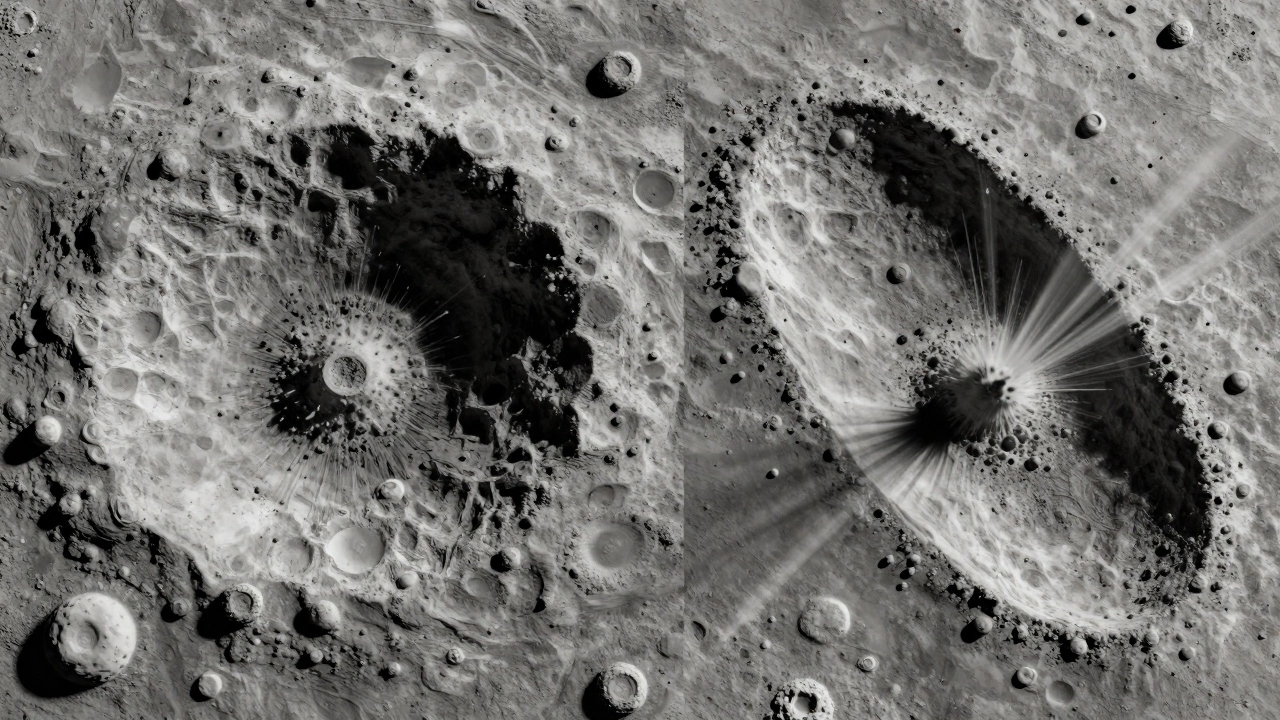
Most people imagine meteors hitting straight down. In reality, impacts occur at various angles. This changes the shape of the resulting features. A vertical impact creates a circular crater with symmetric ejecta. An oblique impact-where the rock hits at a shallow angle-produces an elliptical crater and asymmetric ejecta distribution. More material is thrown forward in the direction of travel.
Look at Zu Chongzhi on the eastern limb. Its elongated shape and lopsided ejecta pattern suggest a low-angle strike. Recognizing these asymmetries adds depth to your observation. It turns a static image into a dynamic event reconstruction. You start to visualize the trajectory of the incoming body.
Observing Tips for Amateur Astronomers
To see ejecta blankets and rays effectively, timing is everything. The Moon’s phases dictate what you can observe.
- First Quarter / Last Quarter: Best for seeing ejecta blankets. The low sun angle casts long shadows, highlighting the texture and topography of the debris fields. Use moderate magnification (50x-100x) to scan the areas around major craters.
- Full Moon: Ideal for spotting ray systems. With the sun directly overhead, shadows disappear, and contrast relies on brightness differences. Rays pop out vividly against the darker maria. Higher magnification (150x+) helps resolve individual ray strands.
Start with Tycho. It’s the poster child for impact geology. Observe how the rays extend across the southern highlands. Then move north to Copernicus. Notice how its rays are less extensive but still clear. Compare these to Archimedes, an older crater with faint, fragmented rays and a well-preserved ejecta blanket that blends into the surrounding plain.
Use averted vision when trying to detect faint rays. Your peripheral vision is more sensitive to subtle contrasts. Also, try sketching what you see. Drawing forces you to notice details you might otherwise gloss over. Note the direction of ray dispersion-it can hint at the impact angle.
The Role of Space Weathering
Why do rays fade? The answer lies in space weathering. Without an atmosphere, the Moon is bombarded by charged particles from the Sun and tiny micrometeorites. Over time, this process breaks down glassy grains and deposits nanophase iron on the surface. This iron absorbs light, making the surface darker and redder. Fresh ejecta lacks this coating, so it shines brighter. As it ages, it joins the rest of the darkening landscape.
This process explains why some craters have partial rays. The outermost rays fade first because they consist of the finest particles, which are most susceptible to weathering. Inner rays, composed of slightly larger grains, persist longer. By studying the extent of ray preservation, scientists estimate crater ages without needing to drill cores.
Connecting to Broader Solar System Geology
While we focus on the Moon, these principles apply elsewhere. Mercury has extensive ray systems around craters like Kuiper. Mars shows ejecta blankets around young craters, though wind erosion modifies them quickly. Even Jupiter’s moon Callisto displays rayed craters, proving that impact processes are universal. Understanding lunar ejecta and rays gives you a foundation for interpreting surfaces across the solar system.
Next time you point your telescope at the Moon, don’t just look for craters. Look for the chaos around them. Trace the rays back to their source. Feel the texture of the ejecta blanket. You’re not just looking at a rock; you’re witnessing the aftermath of cosmic collisions that shaped our nearest neighbor.
How old are craters with visible ray systems?
Craters with prominent ray systems are generally less than 1 billion years old. Most are significantly younger, often between 100 million and 500 million years. Rays fade due to space weathering, so their presence indicates a relatively recent impact in geological terms.
Can I see ejecta blankets with binoculars?
Yes, especially around large, young craters like Tycho or Copernicus. Binoculars provide a wide field of view, perfect for seeing the overall structure of ejecta blankets and ray systems. However, a small telescope will reveal more texture and detail in the debris fields.
Why do some craters have no rays?
Older craters lack visible rays because space weathering has darkened the ejected material over millions of years. Additionally, some craters may have formed in areas with different surface compositions that didn’t produce high-contrast ejecta, or they may have been partially buried by lava flows or subsequent impacts.
What is the best time of month to observe ray systems?
The Full Moon is the best time to observe ray systems. With the sun directly overhead, shadows are minimized, allowing the high reflectivity (albedo) of the fresh ejecta to stand out against the darker, weathered surface. Ejecta blankets are better seen near the terminator during quarter phases.
Do all impacts create ray systems?
No. Only sufficiently energetic impacts involving specific surface materials create visible rays. Small impacts may not eject material far enough to form long rays. Also, impacts on surfaces with low contrast or those that are already heavily weathered may not produce distinct ray patterns.