17 Jan 2026
- 0 Comments
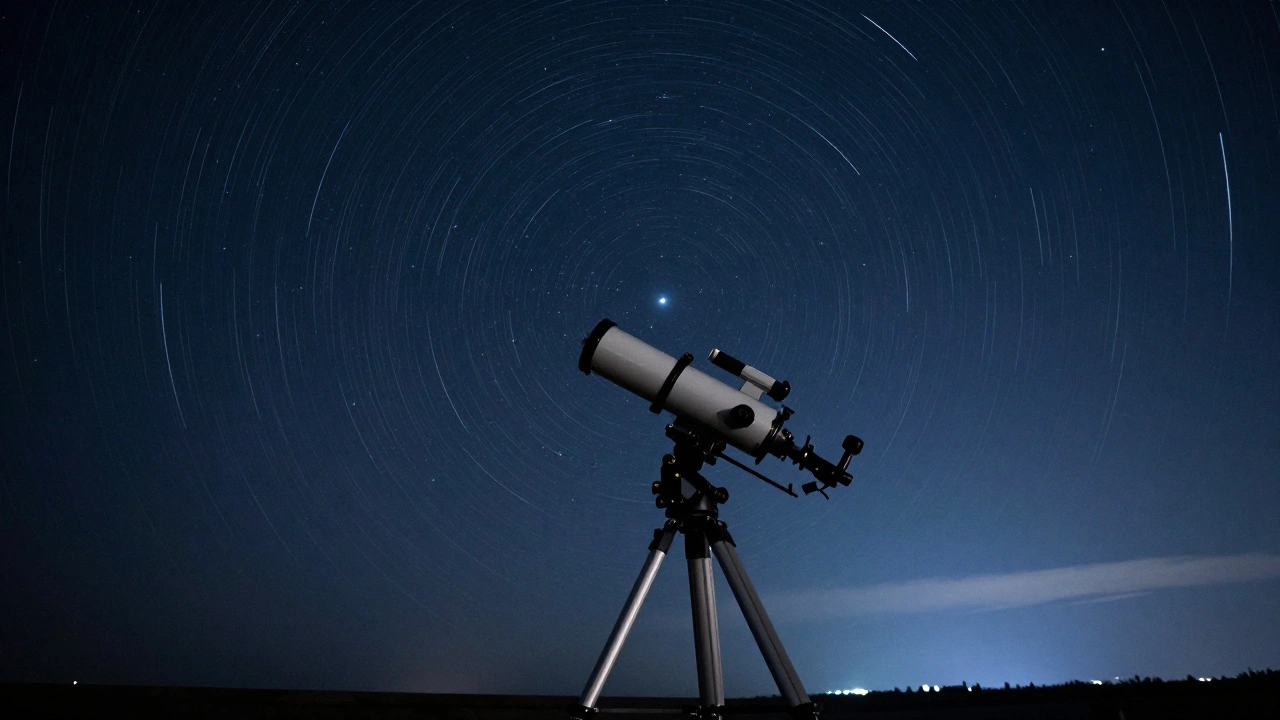
Have you ever stared at the night sky through a telescope and watched a star drift out of view after just a few seconds? That’s not your eyes playing tricks. It’s the Earth spinning beneath you. And if you want to keep a planet, galaxy, or nebula locked in your eyepiece-or capture it in a long-exposure photo-you need something that moves with the sky. That’s where an equatorial mount comes in.
Why the Sky Seems to Move
The stars don’t actually orbit Earth. They’re fixed in space, thousands of light-years away. But because Earth rotates once every 24 hours, the whole sky appears to circle around us. In the northern hemisphere, that motion centers on Polaris, the North Star. In the southern hemisphere, it’s around the faint patch of sky near Sigma Octantis. This apparent rotation is smooth, predictable, and constant. A telescope pointed at a star will see that star drift out of frame in under a minute unless it compensates for Earth’s spin.Alt-azimuth mounts-those simple, up-and-down, left-and-right setups-can’t keep up. They force you to constantly adjust both axes. But an equatorial mount is designed to match the sky’s motion with one simple rotation.
How an Equatorial Mount Works
Think of it like a spinning top on a tilted axis. An equatorial mount has two main parts: the right ascension (RA) axis and the declination (Dec) axis.The RA axis is aligned parallel to Earth’s rotation axis. Once you point it toward the celestial pole (Polaris for northern observers), the mount can rotate around this single axis at exactly one revolution per day. That’s 15 degrees per hour-the same rate Earth turns. The telescope, mounted on this axis, naturally follows the stars across the sky.
The Dec axis lets you swing the telescope up and down to point at different parts of the sky. But once you’ve found your target, you lock the Dec axis and just turn the RA axis slowly. No more fiddling with two knobs. Just one smooth motion.
This isn’t just convenient-it’s essential for astrophotography. A 30-second exposure on an alt-azimuth mount will show star trails. On an equatorial mount, with proper tracking, you can expose for 10 minutes or longer and get pin-sharp stars.
Polar Alignment: The Key Step
Getting this right is everything. If your RA axis isn’t aligned with Earth’s rotational axis, the mount won’t track accurately. You’ll get drift, even if you’re moving at the right speed.There are two main ways to align it:
- Visual alignment: Use the mount’s polar scope-a tiny telescope built into the RA axis. You line up Polaris with the reticle inside. For rough use, this works fine. For astrophotography? Not enough.
- Drift alignment: Point at the celestial equator. Watch a star drift north or south over 5 minutes. Adjust the mount’s azimuth or altitude until the star stops moving. Repeat with another star on the opposite side of the sky. It’s tedious but precise.
- Electronic assistance: Modern mounts like the Sky-Watcher EQ6-R or Celestron AVX have built-in polar alignment routines. They guide you with on-screen prompts using your camera or hand controller. This is the easiest method for beginners.
Even a 1-degree misalignment can cause noticeable drift during long exposures. That’s why serious astrophotographers spend 15-30 minutes on alignment. It’s not optional. It’s the foundation.
Types of Equatorial Mounts
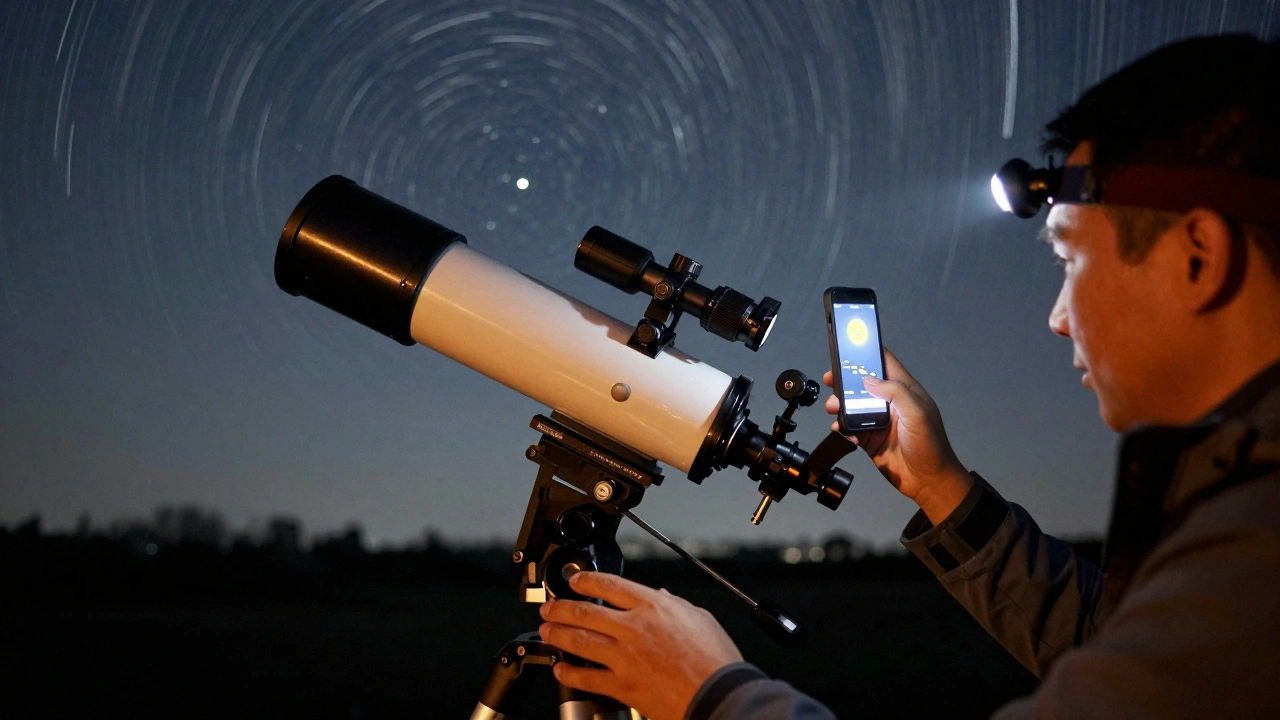
Not all equatorial mounts are the same. They fall into three broad categories based on size, weight capacity, and intended use.| Mount Type | Weight Capacity | Best For | Tracking Accuracy |
|---|---|---|---|
| Entry-Level (e.g., Celestron AZ-EQ5) | 10-15 lbs | Visual use, short-exposure imaging | Good for 1-3 min exposures |
| Mid-Range (e.g., Sky-Watcher EQ6-R Pro) | 20-30 lbs | Deep-sky astrophotography | Excellent for 5-15 min exposures |
| Professional (e.g., Astro-Physics Mach1GTO) | 40+ lbs | Long-exposure, CCD imaging | Sub-arcsecond precision |
Entry-level mounts are fine if you’re just starting out and using a small refractor. But if you plan to add a heavier telescope, a camera, or a guide scope, you’ll quickly outgrow it. The weight rating isn’t just about the telescope-it’s everything attached. A camera adds 2-3 pounds. A guide scope adds another 4. You need headroom.
Mid-range mounts like the EQ6-R Pro are the sweet spot for most amateurs. They handle most popular astrophotography setups and come with built-in GoTo systems. They’re sturdy, reliable, and quiet. The motors are precise enough to correct for minor tracking errors automatically.
Professional mounts are overkill unless you’re shooting galaxies with a 10-inch scope and a cooled CCD camera. They cost thousands, require serious setup, and are built to last decades. For most people, they’re unnecessary.
Do You Need a Motorized Mount?
You can manually turn the RA axis with a slow-motion control knob. Many older mounts work this way. But unless you’re doing visual observing with a fast telescope (f/5 or faster), manual tracking is frustrating. You’ll be constantly adjusting, and even then, you’ll miss fine details.Motorized mounts are standard now. They use stepper motors driven by a clock drive. Most have built-in controllers that let you select targets from a database. The mount slews to them and starts tracking automatically. Some even compensate for atmospheric refraction or mechanical flex.
For astrophotography? A motorized equatorial mount isn’t optional-it’s mandatory. Without it, you’re just guessing.
What About German Equatorial Mounts?
You’ll hear this term a lot. A German equatorial mount (GEM) is the most common design. It looks like a capital “T.” The counterweight bar hangs down, and the telescope sticks out sideways. The RA axis runs through the center.It’s popular because it’s balanced. The counterweight offsets the telescope’s weight, so the motors don’t have to fight gravity. It also gives you a clear view of the sky without the mount getting in the way.
But there’s a catch: when the telescope crosses the meridian (the imaginary line from north to south through the zenith), you have to flip the entire setup. This is called “meridian flip.” It’s a hassle for imaging because the software has to reposition the scope, and you lose time.
Some newer designs, like the fork mount with equatorial wedge, avoid this. But they’re less common. For most users, the GEM’s advantages outweigh the flip issue.
When You Don’t Need an Equatorial Mount
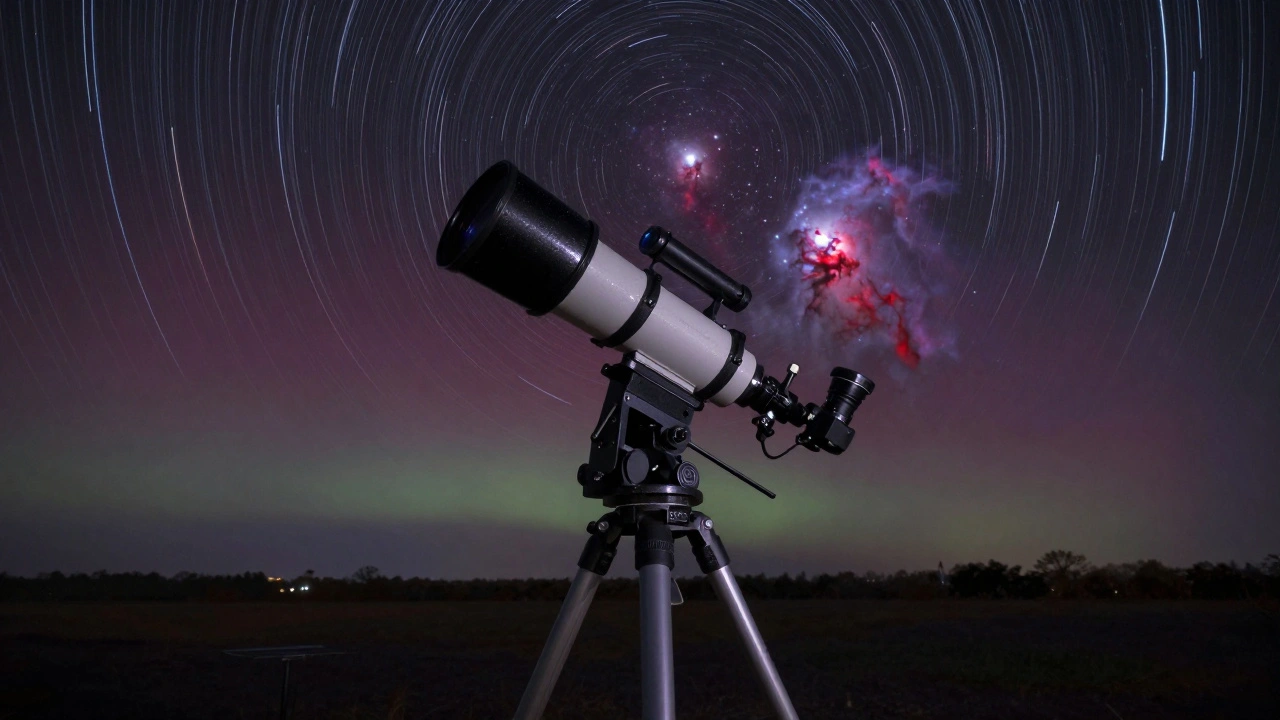
Not every astronomer needs one. If you’re mostly looking at the Moon, planets, or bright stars through a small scope, an alt-azimuth mount is simpler, cheaper, and more stable. You won’t notice drift at low magnifications. And if you’re using a smartphone adapter to snap quick shots, you don’t need tracking at all.But if you want to photograph the Orion Nebula, the Andromeda Galaxy, or faint nebulae in Sagittarius-you need precision. That’s where equatorial mounts shine. They’re the only tool that gives you the freedom to step back, relax, and let the sky come to you.
Real-World Tip: Don’t Skip the Balance
A common mistake? Not balancing the telescope properly. Even the best mount can’t track well if the scope is too heavy on one side. Always balance in both RA and Dec axes before you start observing.Here’s how: loosen the clutch, move the scope until it stays put without sliding. Add or remove counterweights until it’s neutrally balanced. Do the same for the Dec axis. If it tips forward or backward, adjust the ring or tube position. It takes five minutes, but it makes tracking smooth and reduces motor strain.
Final Thought: It’s Not Magic-It’s Physics
An equatorial mount doesn’t guess. It doesn’t rely on AI or fancy algorithms. It uses geometry and physics. You align it with Earth’s axis. It turns at Earth’s speed. The sky stays still. That’s it.That’s why, after 500 years of telescope use, the equatorial mount is still the gold standard. It’s elegant. It’s reliable. And for anyone serious about seeing-or photographing-the deep sky, it’s the only way to go.