16 Aug 2026
- 0 Comments
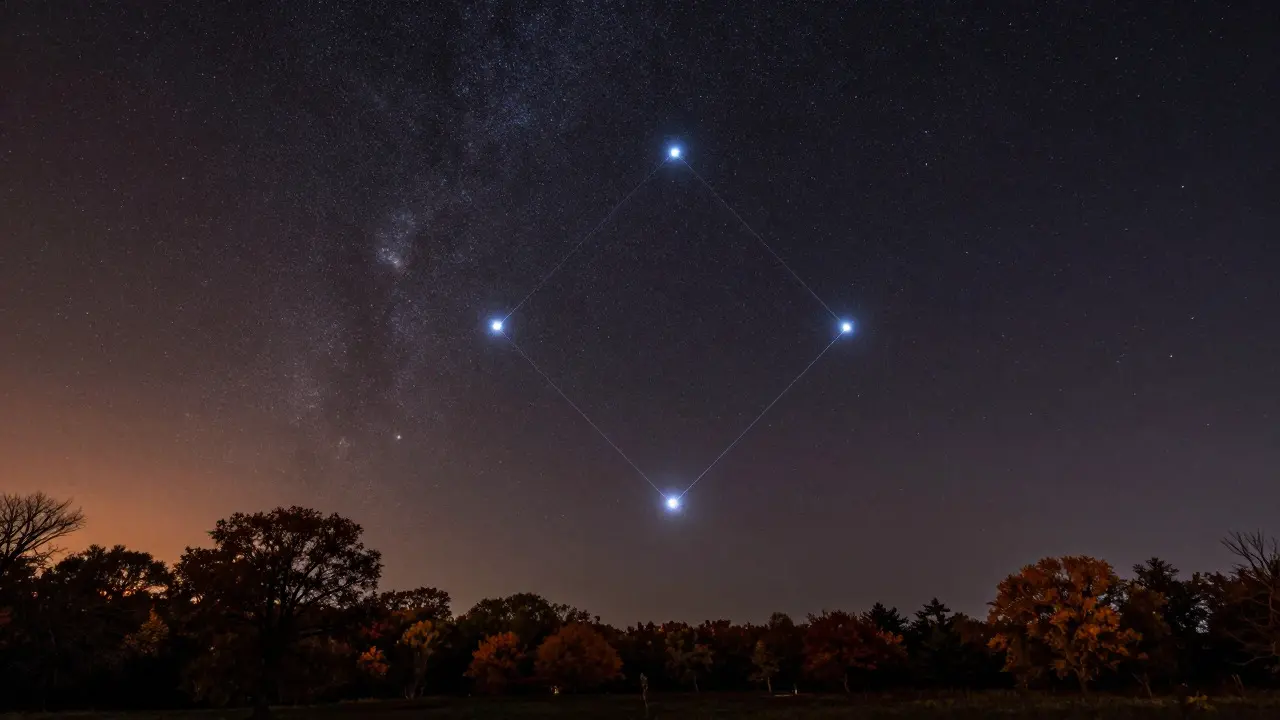
There is a specific magic to looking up at the night sky in late autumn. The summer heat fades, the air turns crisp, and the Milky Way begins its retreat toward the horizon. In its place rises one of the most recognizable asterisms in the entire celestial sphere: the Great Square of Pegasus is a prominent constellation named after the winged horse from Greek mythology, serving as a gateway to other major fall stars. It sits high in the southern sky, acting as a beacon for stargazers across the Northern Hemisphere. If you can find that square, you have found your anchor point for the entire autumn sky.
This guide breaks down the four key players of the fall sky: Pegasus, Andromeda, Cassiopeia, and Perseus. We will look at how to identify them, what deep-sky objects they contain, and why this particular arrangement of stars is so significant for both casual observers and serious astronomers.
The Gateway: Understanding the Great Square of Pegasus
Pegasus dominates the autumn view because of its defining feature: the Great Square. This asterism consists of four bright stars: Alpheratz, Markab, Scheat, and Algenib. To find it, look south-southwest after sunset. You are likely to see a distinct diamond shape hanging in the dark canvas above the tree line.
Here is a quick way to orient yourself:
- Alpheratz (Alpha Pegasi): Located on the western edge of the square. It is actually the brightest star in the neighboring constellation Andromeda, but visually it completes the square for us.
- Scheat (Beta Pegasi): Sits on the eastern edge. It has an orange hue, which contrasts nicely with the blue-white light of its neighbors.
- Markab (Delta Pegasi): Occupies the northern corner. It is a white giant star that serves as a reliable navigation point.
- Algenib (Gamma Pegasi): Forms the southern corner. It is slightly dimmer than the others but still easily visible to the naked eye.
Once you have locked onto these four stars, you are no longer lost. The Great Square acts like a map key. From here, lines extend outward to connect with the other major constellations of the season. It is the central hub of the fall sky, linking the mythological figures together in a coherent narrative.
Tracing the Line to Andromeda
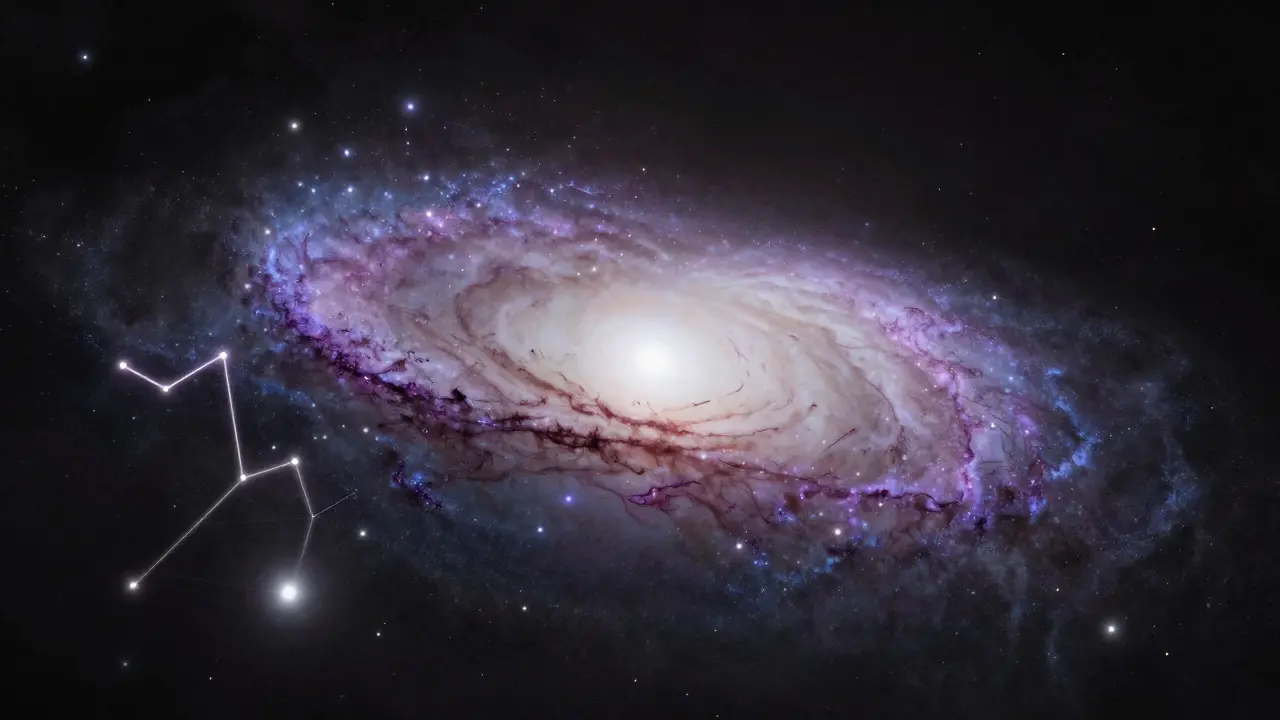
If you start at Alpheratz and draw a straight line eastward, away from the square, you immediately enter the territory of Andromeda. This constellation represents the chained princess from Greek myth, who was saved by the hero Perseus. Visually, it is a long, winding chain of stars stretching across the sky.
Why does Andromeda matter? Because it holds one of the most famous deep-sky objects in astronomy: the Andromeda Galaxy is the nearest large spiral galaxy to our own Milky Way, located approximately 2.5 million light-years away. It is the farthest object visible to the naked eye under dark skies. When you look at the third star along the chain from Alpheratz, Mizar (actually Mirach), and then head north to the next bright star, Almach, you are looking directly at the location of this massive galactic neighbor.
Even without a telescope, you can spot the faint smudge of the galaxy if your eyes are adjusted to the darkness. With binoculars, it becomes a stunning oval of light. For those with telescopes, it reveals intricate details of dust lanes and star clusters. Andromeda is not just a pattern of stars; it is a window into the scale of the universe.
The W-Shaped Crown of Cassiopeia
Look north, and you will see another unmistakable shape: the "W" or "M" formed by Cassiopeia. This constellation is circumpolar for many mid-northern latitudes, meaning it never sets below the horizon. It rotates around the North Star throughout the year, but in autumn, it is positioned low in the northern sky, making it highly visible.
Cassiopeia represents the vain queen who boasted about her beauty. As punishment, she was bound to her throne, circling the pole. The five main stars form a distinct zigzag pattern. Unlike the symmetrical square of Pegasus, this shape is irregular and dynamic. It is often used as a counterweight to the Big Dipper in the opposite direction of the sky.
Within Cassiopeia, you will find several interesting deep-sky targets. The region contains numerous nebulae and open clusters. One notable target is the Heart Nebula, though it requires good optics and dark skies to appreciate fully. More accessible is the cluster of stars surrounding Gamma Cassiopeiae, which appears as a dense knot of light. This area is also rich in variable stars, offering opportunities for amateur astronomers to track changes in brightness over time.
Perseus: The Hero Connecting the Dots
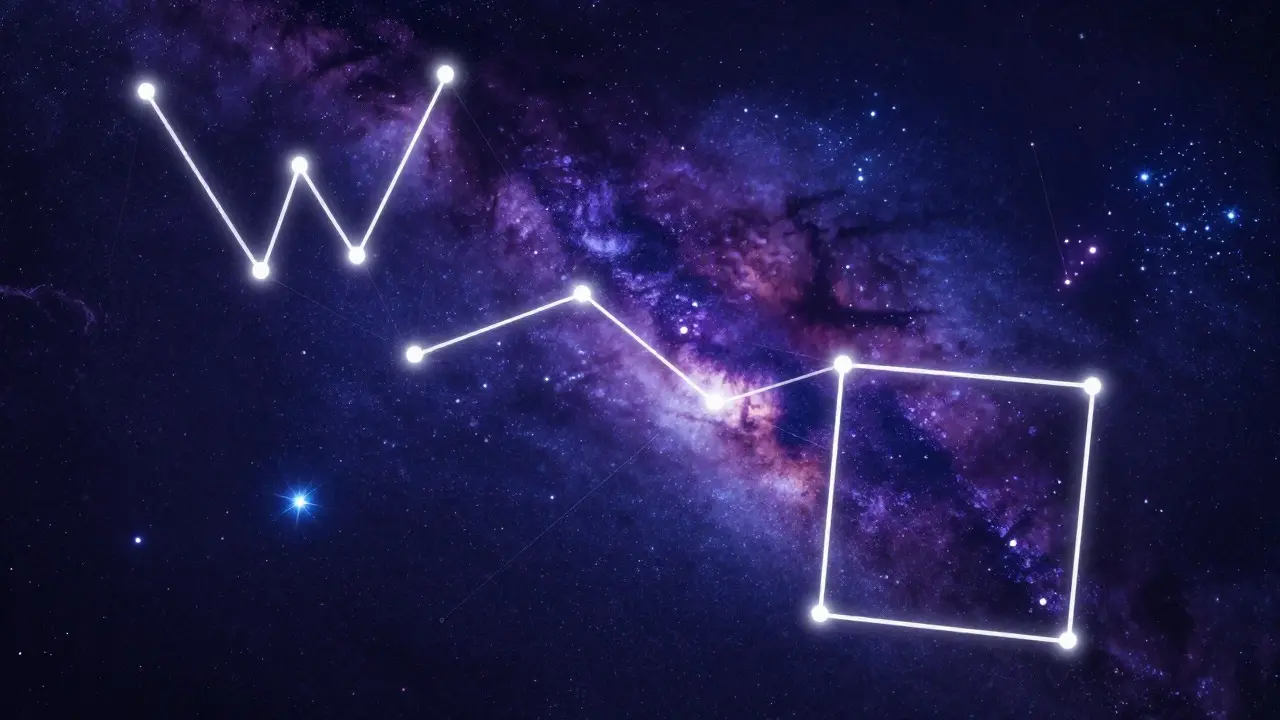
Between Pegasus and Cassiopeia lies Perseus. This constellation represents the hero who slew Medusa. It acts as a bridge between the two larger figures. If you look closely, you can trace a line of stars that connects the Great Square to the W-shape of Cassiopeia, with Perseus occupying the space in between.
The most famous star in Perseus is Algol, known as the "Demon Star." It is a famous eclipsing binary system where one star passes in front of the other, causing the apparent brightness to dip periodically. This cycle lasts about 2.9 days, making it a popular target for variable star observation. Watching Algol fade and brighten again provides a tangible sense of the dynamic nature of stellar systems.
Beyond Algol, Perseus is home to the Double Cluster, a pair of spectacular open clusters visible even in small telescopes. These clusters contain hundreds of young, hot stars packed tightly together. They are among the finest examples of star formation in the local sky. The visual impact of seeing two distinct, dense groups of stars side-by-side is something few other regions of the sky can match.
Connecting the Constellations: A Visual Map
To truly master the fall sky, you need to understand how these constellations interact. They do not exist in isolation; they form a connected network. Here is how they relate spatially:
| Constellation | Primary Shape | Key Anchor Star | Notable Deep-Sky Object | Direction from Pegasus |
|---|---|---|---|---|
| Pegasus | Great Square | Alpheratz | Milky Way Core Region | Center |
| Andromeda | Long Chain | Almach | Andromeda Galaxy (M31) | East/Northeast |
| Cassiopeia | W-Shape | Schedar | Heart Nebula | North |
| Perseus | Irregular Zigzag | Algol | Double Cluster | Northwest |
Notice how Andromeda extends from the square, while Cassiopeia sits opposite. Perseus fills the gap, creating a balanced composition. This geometric relationship makes it easy to navigate. If you lose sight of one constellation, you can use the others to reorient yourself.
Best Times and Conditions for Viewing
The optimal time to observe these constellations is from September through November. During this period, they are high enough in the sky to be viewed comfortably without straining your neck. In early September, they rise in the west after sunset and reach their highest point around midnight. By November, they are visible earlier in the evening, allowing for more relaxed viewing sessions.
Light pollution is a critical factor. While the bright stars of Pegasus and Cassiopeia are visible from urban areas, the deep-sky objects require darker skies. The Andromeda Galaxy is challenging to see from cities with heavy light pollution. Binoculars help significantly, but a telescope reveals the true structure. If you live in a metropolitan area, consider driving to a darker location for a dedicated observing session.
Weather also plays a role. Clear, dry nights are ideal. Autumn is generally a stable season for weather in many parts of the Northern Hemisphere, with less cloud cover than winter. However, check the forecast before heading out. Even a thin layer of clouds can obscure fainter stars and deep-sky objects.
Practical Tips for Stargazing
Start with the naked eye. Spend ten minutes letting your eyes adjust to the darkness. Avoid looking at phone screens or bright lights, as this resets your dark adaptation. Once your eyes are adapted, you will notice many more stars appearing in the sky.
Use a star chart or a stargazing app to help identify the constellations initially. Apps like Stellarium or SkySafari can overlay the names of stars and constellations on the live view of the sky. Hold your phone up to the sky to match the patterns. Over time, you will memorize the shapes and no longer need the aid.
If you have binoculars, bring them. They are invaluable for spotting the Andromeda Galaxy and the Double Cluster in Perseus. Use a low power setting (7x or 10x) to keep a wide field of view. This makes it easier to locate objects and appreciate their context within the constellation.
For telescopes, start with a simple refractor or reflector. A 6-inch aperture is sufficient for most of the targets mentioned here. Focus on the bright stars first, then move to the fainter deep-sky objects. Patience is key. Some objects take time to resolve, especially under less-than-perfect conditions.
Frequently Asked Questions
When are the best months to see Pegasus and Andromeda?
The best months are September, October, and November. During this time, the constellations are high in the sky during the middle of the night, providing the clearest views. In August, they may be lower in the west, and by December, they begin to set earlier in the evening.
Can I see the Andromeda Galaxy with the naked eye?
Yes, but only under very dark skies away from city lights. It appears as a faint, elongated smudge. Under suburban or urban conditions, binoculars are recommended to make it visible. The galaxy is the most distant object visible without optical aid, so light pollution significantly impacts its visibility.
How do I distinguish Pegasus from other squares in the sky?
The Great Square of Pegasus is unique because it is surrounded by other bright stars and constellations. Look for the line extending from Alpheratz to Andromeda and the connection to Cassiopeia via Perseus. No other square in the sky has this specific configuration of neighboring bright stars and deep-sky objects.
Is Cassiopeia visible all year round?
For observers in mid-northern latitudes (above 40 degrees North), Cassiopeia is circumpolar, meaning it never sets below the horizon. It rotates around the North Star, changing its position in the sky throughout the year. In summer, it is high in the north; in winter, it is low. In autumn, it is at a comfortable height for viewing.
What is the significance of Algol in Perseus?
Algol is a famous eclipsing binary star system. Its brightness varies periodically as one star passes in front of the other. This makes it a prime target for variable star observation. The cycle is short (about 2.9 days), so you can observe multiple cycles in a single night if you start early enough. It demonstrates the dynamic interactions between stars in a binary system.