
26 Aug 2026
- 0 Comments
Ever looked at a star chart and felt lost in a sea of Greek letters? You aren't alone. The sky is full of stars, but we don't have names for all of them. Instead, astronomers use a system called Bayer designations is a systematic method for labeling stars within constellations using Greek letters combined with the genitive form of the constellation name. This system helps us locate specific celestial objects without needing to memorize thousands of proper names. Understanding how to read and pronounce these labels is the first step toward navigating the night sky with confidence.
What Are Bayer Designations?
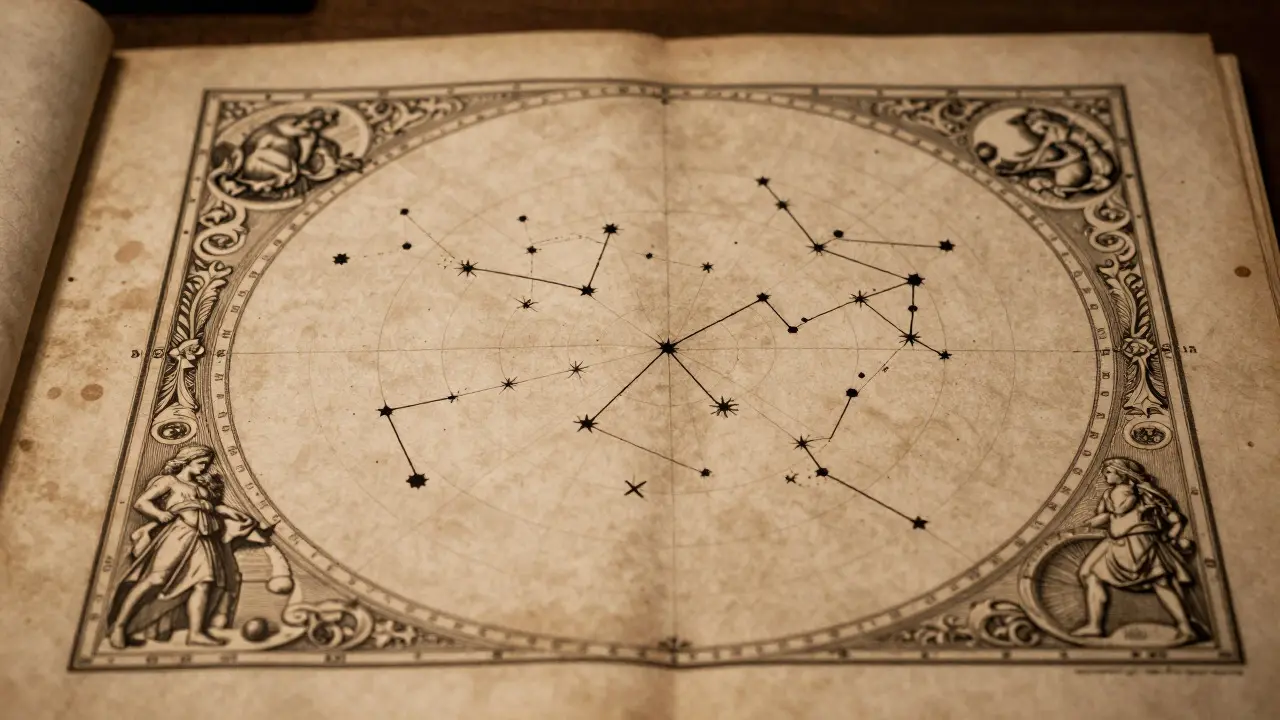
Bayer designations were introduced by Johann Bayer in his 1603 atlas, Uranometria. Before this, star naming was inconsistent across different cultures and regions. Bayer's system standardized the process by assigning the first letter of the Greek alphabet (Alpha) to the brightest star in a constellation, the second letter (Beta) to the next brightest, and so on. However, it’s not always strictly about brightness; sometimes historical precedence or position within the asterism matters more.
The format follows a simple pattern: Greek Letter + Genitive Constellation Name. For example, the brightest star in Orion is Alpha Orionis, commonly known as Betelgeuse. The second brightest is Beta Orionis, or Rigel. This structure allows astronomers and hobbyists alike to refer to any star in a constellation unambiguously.
How to Pronounce the Greek Letters Correctly
Many people struggle with the pronunciation because they confuse astronomical usage with modern Greek language rules. In astronomy, the letters are pronounced according to their classical or traditional English approximations, not necessarily how a native Greek speaker would say them today. Here is a quick reference for the most common letters you’ll encounter:
- Alpha (α): Pronounced "AL-fah." It marks the primary star.
- Beta (β): Pronounced "BAY-tah" or "BEE-tah." Both are acceptable, but "BAY-tah" is more common in casual conversation.
- Gamma (γ): Pronounced "GAH-mah." Often the third brightest star.
- Delta (δ): Pronounced "DEL-tah."
- Epsilon (ε): Pronounced "EP-sih-lon." Note that the 's' is soft, like in 'vision,' not hard like in 'sun.'
- Zeta (ζ): Pronounced "ZEE-tah" or "ZEH-tah."
- Theta (θ): Pronounced "THEE-tah."
- Kappa (κ): Pronounced "KAH-pah."
- Lambda (λ): Pronounced "LAM-bdah."
- Mu (μ): Pronounced "MOO."
- Nu (ν): Pronounced "NOO."
- Omicron (ο): Pronounced "OM-ih-kron."
- Pi (π): Pronounced "PIE."
- Rho (ρ): Pronounced "ROH."
- Sigma (σ): Pronounced "SIG-mah."
- Tau (τ): Pronounced "TAW."
- Upsilon (υ): Pronounced "OO-pih-lon."
- Phi (φ): Pronounced "FIE."
- Chi (χ): Pronounced "KIE."
- Psi (ψ): Pronounced "SEE."
- Omega (ω): Pronounced "OH-meg-uh."
Notice that some letters sound similar in English (like Zeta and Theta), but context usually makes it clear which one is being discussed. If you’re reading a star chart, the visual symbol will confirm the letter.
Common Mistakes to Avoid
One frequent error is assuming that Alpha is always the brightest star. While true for many constellations, there are exceptions. For instance, in the constellation Ursa Major, Alpha Ursae Majoris (Dubhe) is not the brightest star; Alioth (Epsilon Ursae Majoris) is brighter. Bayer prioritized the star’s role in the asterism’s shape over pure magnitude in some cases. Another mistake is mispronouncing Epsilon. Many people say "EPS-ih-lon," but the correct astronomical pronunciation emphasizes the first syllable: "EP-sih-lon."
Also, be careful with the genitive forms of constellation names. For example, the constellation Scorpius becomes Scorpii in the genitive case. So, the brightest star is Alpha Scorpii, not Alpha Scorpius. Learning the genitive forms of the 88 official IAU constellations takes time, but it’s essential for accurate communication.
Comparison Table: Common Star Designations
| Constellation | Letter | Star Name | Pronunciation | Brightness (Magnitude) |
|---|---|---|---|---|
| Orion | Alpha | Betelgeuse | AL-fah OR-ee-on-is | 0.5 (variable) |
| Orion | Beta | Rigel | BAY-tah OR-ee-on-is | 0.13 |
| Canis Major | Alpha | Sirius | AL-fah KAN-is MA-jor-is | -1.46 |
| Bootes | Alpha | Arcturus | AL-fah BOO-teez | -0.05 |
| Lyra | Alpha | Vega | AL-fah LY-ras | 0.03 |
Why Does This System Matter?
Bayer designations provide a universal language for stargazers. Whether you’re in Portland, Oregon, or Paris, France, saying "Alpha Centauri" refers to the same star system. This consistency is crucial for sharing observations, planning photography sessions, or discussing astronomical events. Without such a system, we’d rely solely on proper names, which only cover a small fraction of visible stars. Most stars don’t have proper names, so Bayer designations fill that gap efficiently.
Additionally, understanding these labels helps you use digital tools like Stellarium or SkySafari. These apps often display Bayer designations alongside proper names, allowing you to cross-reference information quickly. If you see a star labeled "Gamma Draconis," you know exactly where to look in the constellation Draco.

Practical Tips for Learning
Start with the brightest constellations visible from your location. In the Northern Hemisphere, Orion, Ursa Major, and Cassiopeia are excellent starting points. Practice pronouncing the designations aloud while pointing at the stars. Use a star chart app to verify your progress. Over time, the patterns will become second nature. Don’t worry about memorizing every letter immediately; focus on the ones you encounter most frequently.
Another tip: associate the letters with the star’s position in the asterism. For example, in the Big Dipper, Dubhe is Alpha, Merak is Beta, Phecda is Gamma, Megrez is Delta, Alioth is Epsilon, Mizar is Zeta, and Alkaid is Eta. Visualizing the shape helps anchor the sequence in your memory.
Frequently Asked Questions
Is Alpha always the brightest star in a constellation?
Not always. While Alpha is usually assigned to the brightest star, Bayer occasionally prioritized historical significance or position within the asterism. For example, in Ursa Major, Alpha (Dubhe) is not the brightest star; Epsilon (Alioth) is brighter. Always check the magnitude if precision is needed.
How do I pronounce Epsilon correctly?
Pronounce it as "EP-sih-lon." The stress is on the first syllable, and the 's' is soft, similar to the 's' in 'vision.' Avoid saying "EPS-ih-lon," which is a common mispronunciation.
What is the difference between Bayer designations and Flamsteed numbers?
Bayer designations use Greek letters and are generally based on brightness or historical importance. Flamsteed numbers use Arabic numerals and are assigned based on right ascension (east-west position) within the constellation. Bayer is more widely used in popular astronomy, while Flamsteed is preferred in some professional contexts for its systematic ordering.
Do all stars have Bayer designations?
No. Only stars bright enough to be visible to the naked eye or early telescopes received Bayer designations. Fainter stars use other systems, such as HD (Henry Draper) catalog numbers, HR (Harvard Revised) numbers, or proper names if available. Bayer designations cover roughly the brightest 1,000-2,000 stars per constellation.
How can I practice identifying Bayer-designated stars?
Use a star chart app like Stellarium or SkySafari. Turn on the Bayer designation overlay and point your device at the sky. Match the letters to the stars you see. Start with familiar constellations like Orion or Ursa Major. Practice regularly, and the associations will become automatic.