20 Aug 2026
- 0 Comments
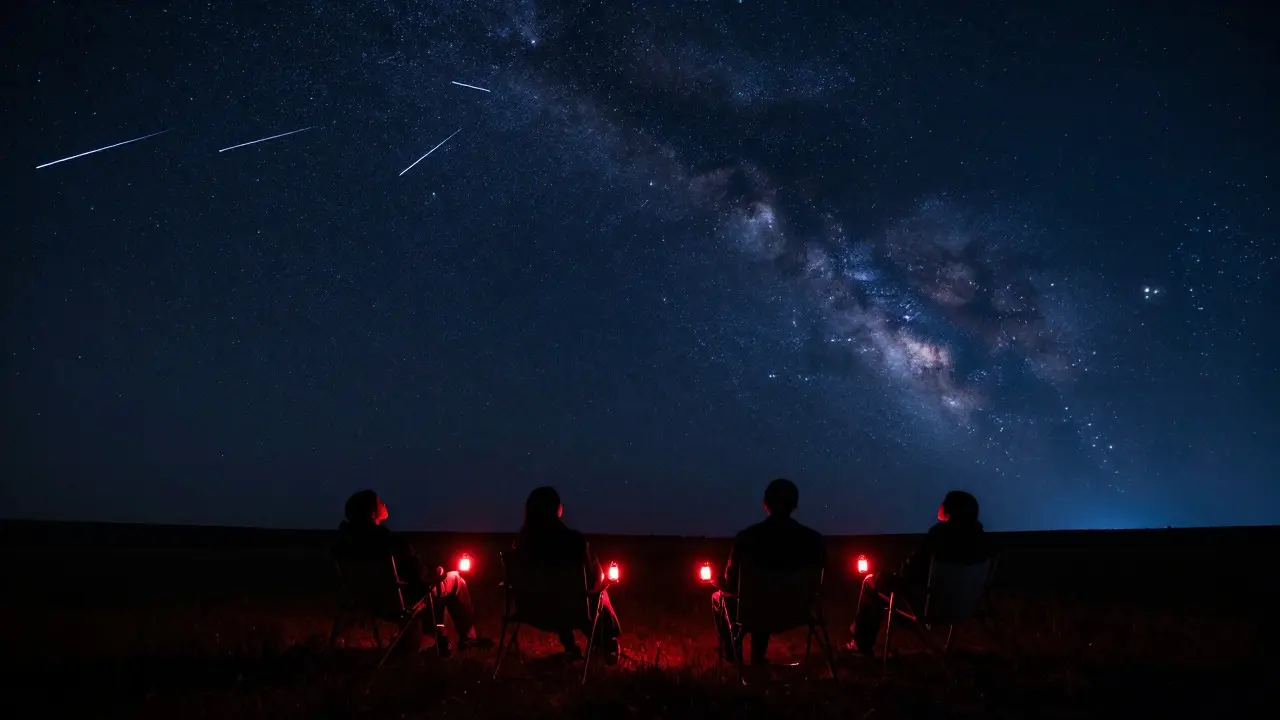
Imagine the Perseids peaking at 100 meteors per hour. You are alone in a field with a chair and a blanket. It’s beautiful, but you’re tired by midnight. Now imagine five friends, each covering a different sector of the sky, sharing real-time data, and rotating breaks seamlessly. That is the power of a coordinated group meteor watch is a structured observational effort where multiple observers divide the sky to maximize detection rates and ensure continuous coverage. The difference isn't just about comfort; it's about data quality and survival during long nights.
Most amateur groups fail not because they lack equipment, but because they lack structure. Who calls the end of an event? Who logs the time? Who handles the coffee? Without clear roles, chaos ensues, and you miss the best part of the show. This guide breaks down exactly how to organize your team so everyone knows their job before the first meteor streaks across the horizon.
Why Solo Watching Falls Short
Solo observing has limits. Human attention spans drop significantly after 45 minutes of staring at a dark sky. Your eyes adapt to darkness in about 30 minutes, but if you check your phone or shift position frequently, that adaptation resets. In a group setting, you can rotate observers every 60 to 90 minutes. While one person rests, another takes over their sector. This keeps eye sensitivity high and fatigue low.
Furthermore, solo observers often miss faint meteors because they are scanning too wide an area. By dividing the celestial sphere into specific sectors, each observer focuses on a smaller patch of sky. This increases the probability of detecting lower-magnitude events. According to the International Meteor Organization (IMO), standardized visual counts require observers to cover specific zones to be comparable globally. Even for casual fun, this method yields more consistent results.
Defining Core Roles Before Nightfall
You need three distinct roles: the Lead Observer, the Data Logger, and the Support Crew. Assign these before you leave home. Ambiguity kills momentum.
- The Lead Observer: This person monitors the overall sky conditions, decides when to start and stop logging, and coordinates rotations. They do not necessarily count meteors constantly; their job is situational awareness. If clouds roll in, they signal the pause. If the moon rises, they adjust the strategy.
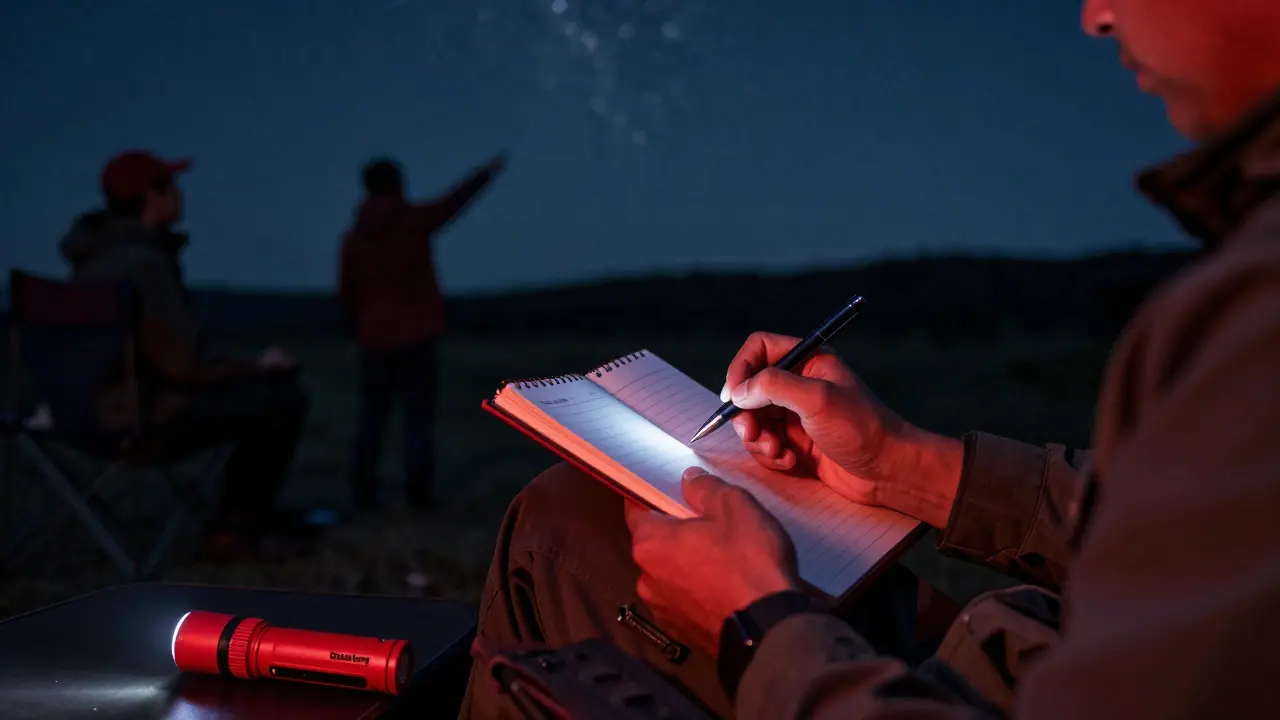
- The Data Logger: This individual records all reported events. They use a standardized format, noting the time, magnitude estimate, and location in the sky. They must remain calm and focused, as errors here ruin the dataset. A simple spreadsheet or a dedicated app like K-Meteo works well.
- The Support Crew: These members handle logistics: keeping drinks warm, managing lighting (red light only!), and ensuring observers stay warm. They also act as backup observers if someone needs a break.
In small groups of two or three, the Lead Observer might also log data, but try to separate duties if possible. Cognitive load is real. Counting and organizing are mentally taxing tasks that compete for the same brain resources.
Dividing the Sky: Sector Allocation
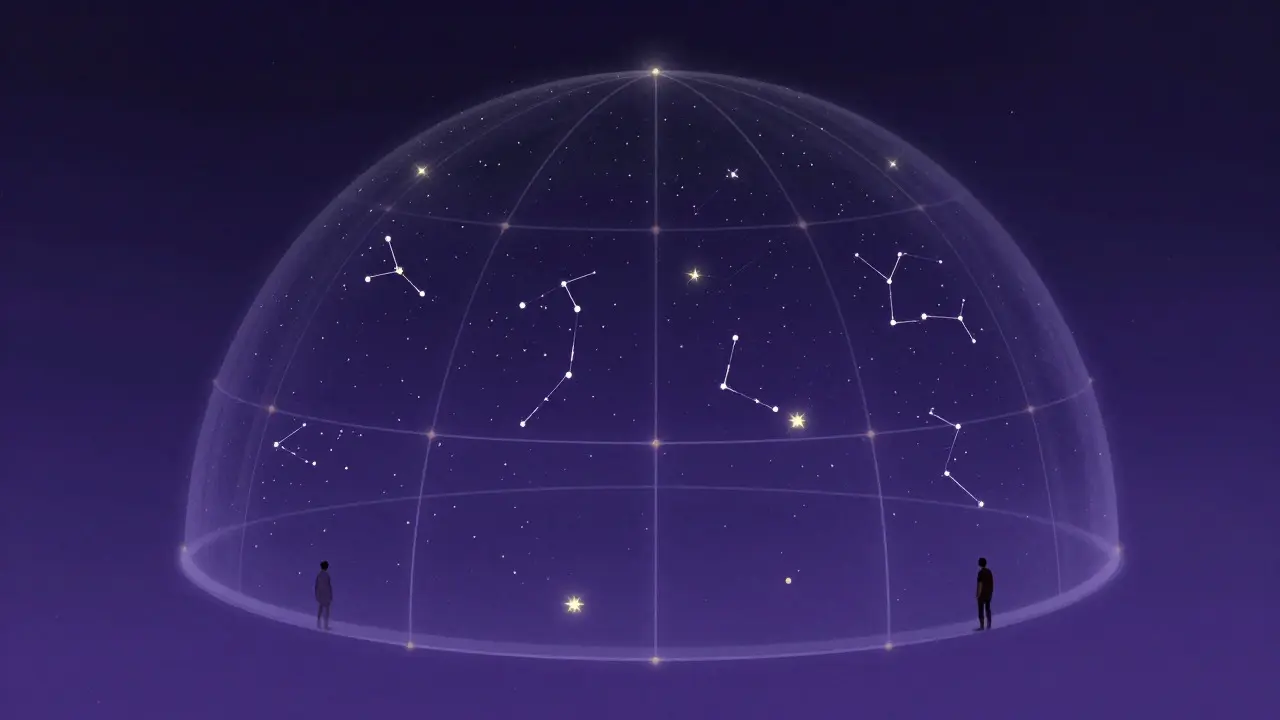
How do you split the sky? Use a star chart or a planisphere. Divide the visible hemisphere into equal-sized sectors. For a group of four, you might split the sky into quadrants based on cardinal directions relative to the zenith. Each observer owns one quadrant.
It is crucial to define the boundaries clearly. Use bright stars as landmarks. "Your sector is from Vega to Altair" is better than "the left side." Overlap is your enemy. If two observers see the same meteor, you have double-counted it. To avoid this, establish a rule: the observer whose sector contains the radiant point claims the meteor, or simply agree that if two people see it, the Data Logger marks it as a duplicate.
| Role | Primary Responsibility | Tools Needed | Rotation Interval |
|---|---|---|---|
| Lead Observer | Cloud monitoring, timing, coordination | Watch, star chart, red flashlight | Stays fixed until end |
| Observer A | Counting meteors in North-East sector | Recliner, notebook/tablet | Every 60 mins |
| Observer B | Counting meteors in South-West sector | Recliner, notebook/tablet | Every 60 mins |
| Data Logger | Recording timestamps and magnitudes | Laptop or paper log | Stays fixed until end |
Communication Protocols for Dark Adaptation
Light ruins everything. White light resets dark adaptation instantly. Therefore, communication must be silent or use red-spectrum light only. Here is a practical protocol:
- Verbal Cues: Use short, pre-agreed phrases. "One" means a meteor was seen. "Two" means a fireball. "Pause" means clouds are blocking the view. Avoid long conversations.
- Visual Signals: If you are spread out, use a red flashlight. One flash = single meteor. Two flashes = fireball. Long beam = pause. Agree on this beforehand.
- Digital Sync: If using phones, keep them on airplane mode and set the screen brightness to the lowest possible level. Use a shared document or a messaging app where the Data Logger inputs data in real-time. Ensure the battery is full and bring a portable charger.
A common mistake is talking too much. Chatter distracts observers and raises noise levels, making it harder to hear subtle cues. Keep conversations to a minimum during active counting periods. Save the stories for the debrief after the session ends.
Handling Weather and Environmental Factors
Nature rarely cooperates perfectly. Clouds will come. Temperature will drop. Wind will blow. Your plan must account for these variables. The Lead Observer should monitor the weather forecast closely in the hours leading up to the event. Apps like Stellarium or Clear Outside provide cloud cover predictions accurate to the hour.
If clouds cover more than 50% of the sky, decide whether to continue. Partial coverage reduces your effective field of view. If you continue, note the percentage of sky covered in your log. This allows for later statistical correction. If the temperature drops below freezing, rotate observers more frequently to prevent hypothermia. Warm clothing layers are essential, not optional.
Wind affects stability. If using tripods for cameras or telescopes, secure them well. For visual observers, wind chill is the main concern. Bring insulated bottles and hand warmers. Comfort directly impacts focus. An uncomfortable observer misses meteors.
Post-Session Debrief and Data Analysis
The night isn't over when the last meteor fades. Spend 15 minutes reviewing your data. Check for duplicates. Verify timestamps. Calculate the hourly rate for each sector. Compare your total count against predicted rates from sources like the IMO or NASA.
If your count is significantly lower, ask why. Was the sky too bright? Did you lose time due to clouds? Were the sectors defined poorly? This feedback loop improves your next watch. Share your data with online communities. Citizen science projects rely on this kind of aggregated data to track meteor stream activity over decades.
Finally, acknowledge the team. Group watching is social. Celebrate the big catches. Discuss what went wrong without blame. This builds trust for future collaborations. Astronomy is a marathon, not a sprint. Building a reliable team ensures you are ready for the next major shower, whether it’s the Geminids in December or the Quadrantids in January.
How many people are needed for an effective group meteor watch?
A minimum of three people is ideal. One acts as Lead/Data Logger, and two serve as Observers. This allows for rotation and redundancy. With four or more, you can add dedicated Support Crew members and cover more sky sectors, increasing the total detection rate significantly.
What is the best way to communicate without ruining dark adaptation?
Use pre-agreed verbal cues like "one" or "two" and red-light signals. Avoid white light from phones or flashlights. If digital communication is necessary, use text messages with screens at minimum brightness and keep interactions brief to minimize distraction.
Should we use binoculars or telescopes for meteor watching?
Generally, no. Binoculars limit your field of view, which is critical for seeing meteors that appear anywhere in the sky. Telescopes are even worse for this purpose. Visual naked-eye observation is standard for counting because it covers the widest area. Use optics only if you are specifically hunting for faint, slow-moving objects or doing astrophotography.
How do we handle duplicate sightings in a group?
Agree on a rule before starting. Common practice is that if two observers report a meteor within 10 seconds of each other in overlapping sectors, the Data Logger marks it as a single event. Alternatively, assign priority to the observer whose sector contains the meteor's radiant point. Consistency is key to maintaining accurate statistics.
What gear is essential for a group watch?
Essential gear includes reclining chairs or blankets, red-light headlamps, warm clothing, star charts or apps, a reliable timepiece, and a method for logging data (paper or digital). Portable heaters or hot drinks are highly recommended for comfort during long sessions. Avoid any white light sources unless absolutely necessary.