17 Aug 2026
- 0 Comments
There is a moment every new lunar observer knows well. You point your telescope at the Moon, adjust the focus, and suddenly the gray surface explodes into detail. But then you hit a wall. One side looks like a rugged, pockmarked landscape of mountains and valleys, while the other appears as smooth, dark plains. If you have ever wondered why one part of the Moon looks so different from the other, you are looking at the difference between Highland terrain and Mare terrain. Understanding this distinction changes everything about how you observe the Moon. It tells you what to expect, where to look for specific features, and how to set up your equipment for the best views.
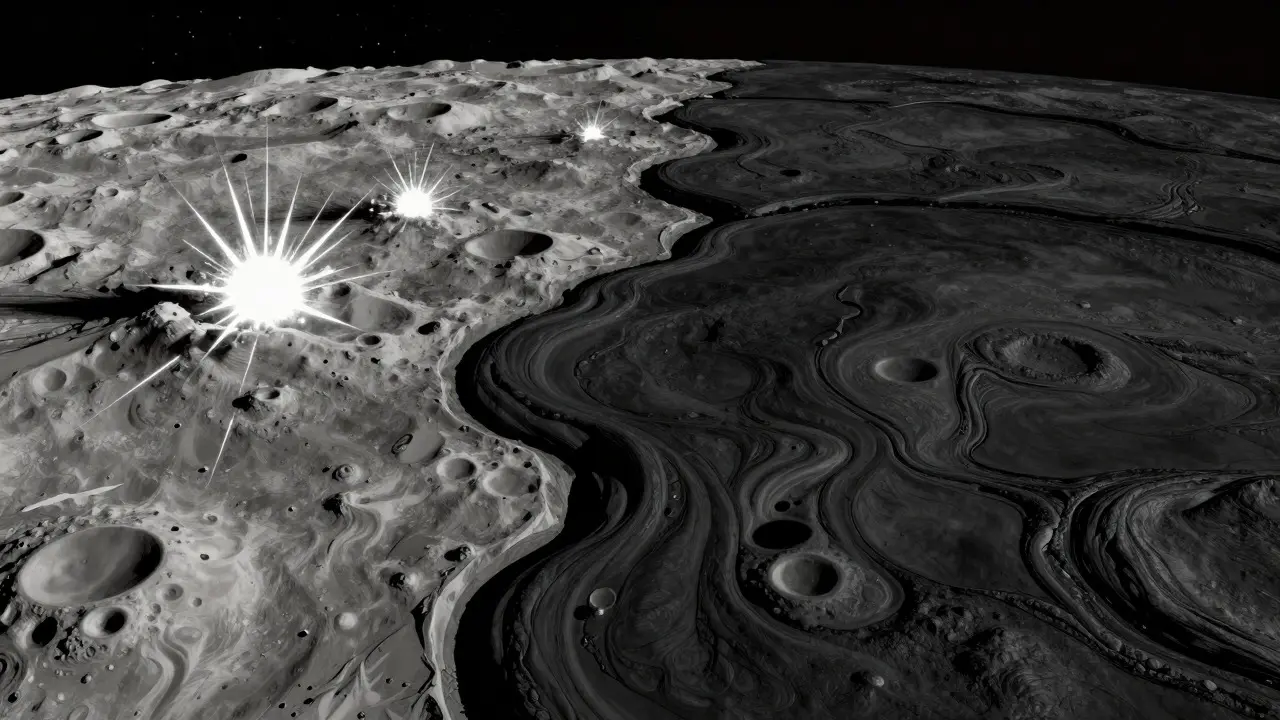
The Moon’s surface is not uniform. It is a patchwork of two distinct geological regions that formed billions of years ago. The highlands are the older, brighter areas, heavily cratered and elevated. The maria (singular: mare) are the younger, darker basins filled with ancient lava flows. When you look through an eyepiece, these differences become starkly apparent, especially near the terminator-the line dividing day and night on the Moon-where shadows reveal the true topography.
What Defines Highland Terrain?
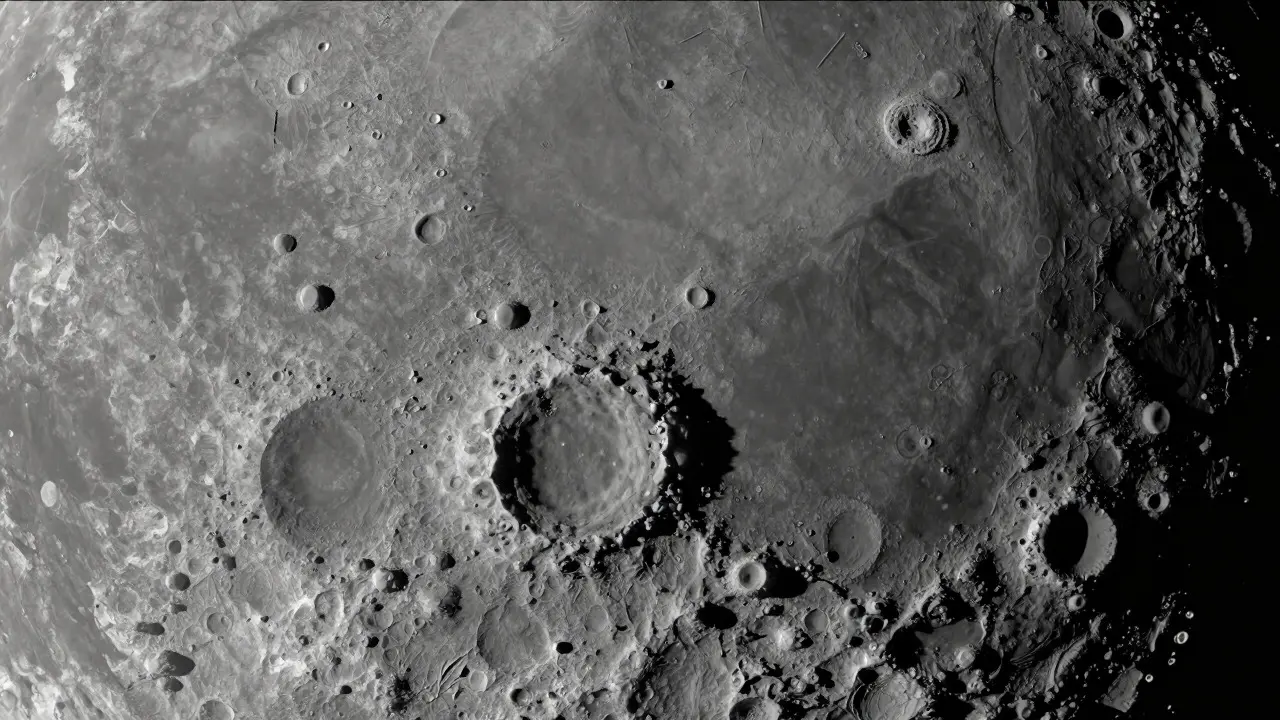
Highland terrain is the bright, rugged crust of the Moon characterized by high elevation, heavy cratering, and complex mountain ranges. Think of it as the Moon’s “old age.” These regions were formed during the early bombardment period of the solar system, roughly 4.5 billion years ago. Because they have been exposed to meteorite impacts for longer than the maria, they are covered in a dense network of craters of all sizes. Some are small pits, others are massive impact basins with central peaks and terraced walls.
When you observe highlands through a telescope, you will notice three key visual traits:
- Brightness: High albedo makes them appear significantly brighter than the surrounding dark plains. This contrast can be intense under low-power magnification.
- Texture: The surface looks rough and granular. Even at moderate magnification, you can see the density of small craters overlapping each other.
- Elevation Features: Mountain ranges like the Montes Apenninus or the Montes Caucasus rise sharply from the highland floor. Near the terminator, these mountains cast long, dramatic shadows that define their shape.
A classic example is the region around Tycho Crater. Located in the southern highlands, Tycho is a relatively young impact site. Its ejecta rays stretch across hundreds of kilometers, creating a bright starburst pattern against the darker background. Observing Tycho requires careful attention to brightness levels; if your exposure is too high (or your eyes are too sensitive), the rays can wash out the finer details of the crater itself.
Understanding Mare Terrain
In contrast, Mare terrain is the dark, flat basaltic plains formed by ancient volcanic activity that flooded large impact basins. The word “mare” is Latin for sea, a misnomer from early telescopic observations when astronomers thought these dark patches were water. We now know they are solid rock, specifically basalt, which has a lower albedo than the highland material, making them appear darker to our eyes.
Maria cover about 31% of the Moon’s visible surface, but they dominate our perception because of their contrast. They are geologically younger than the highlands, having formed between 3.9 and 3.0 billion years ago. This means they have fewer craters per square kilometer than the highlands, though they are not crater-free. Large maria often contain smaller, isolated craters that stand out clearly against the smooth background.
Key visual characteristics of mare terrain include:
- Darkness: Low albedo creates a smooth, almost featureless appearance at low magnification. The lack of texture can make it difficult to judge distance or scale.
- Flatness: The surface is generally level, with gentle slopes rather than sharp peaks. This makes it easier to spot subtle shading changes caused by minor topographic variations.
- Boundary Lines: Where mare meets highland, you often see sharp, irregular borders. These boundaries can indicate where lava flows stopped or where tectonic forces uplifted the crust.
The largest and most famous example is Oceanus Procellarum (Ocean of Storms). It covers a vast area on the Moon’s western side. Unlike the circular maria, Oceanus Procellarum is irregular and fragmented, containing numerous smaller basins and wrinkle ridges. Wrinkle ridges are linear hills formed by compression of the cooling lava. They are subtle features that require good seeing conditions and higher magnification to detect.
Comparing Visual Differences at the Eyepiece
So, what does this actually look like when you are sitting at your telescope? The difference is not just color; it is depth and complexity. Here is a direct comparison of what you should expect to see:
| Feature | Highland Terrain | Mare Terrain |
|---|---|---|
| Color/Brightness | Bright gray to white | Dark gray to blackish |
| Crater Density | Very high; overlapping craters | Moderate to low; isolated craters |
| Topography | Rugged, mountainous, steep slopes | Flat, smooth, gentle undulations |
| Shadow Behavior | Long, deep shadows from mountains | Short, subtle shadows from ridges/craters |
| Best Viewing Time | Near terminator for 3D effect | Full moon for contrast, but less detail |
| Example Location | Montes Apenninus, Tycho Crater | Oceanus Procellarum, Mare Imbrium |
One critical factor that affects your view is the phase of the Moon. During the full moon, the Sun is directly overhead, minimizing shadows. In this light, highlands and maria both appear flat. The highlands may look slightly washed out due to glare, while the maria look uniformly dark. This is the worst time to appreciate the topographic differences.
The ideal time for observing terrain differences is during the first or last quarter phases. At this point, the terminator cuts across the Moon’s surface. As sunlight rakes across the landscape at a low angle, mountains in the highlands cast long shadows, revealing their height and structure. Meanwhile, the flat maria remain largely shadow-free, emphasizing their smoothness. This contrast allows you to easily distinguish between the two terrains without relying solely on color perception.
Equipment Tips for Distinguishing Terrains
Your choice of eyepiece and magnification plays a significant role in how well you can separate highland from mare features. For a general overview, start with a low-power eyepiece (e.g., 25mm or 32mm) to locate major features. At this power, you will see the broad patterns of light and dark. However, you will miss the fine details of individual craters or wrinkle ridges.
To really analyze the terrain, switch to a medium-power eyepiece (e.g., 10mm or 12.5mm). This provides enough magnification to resolve individual craters in the highlands and to see the texture of the maria. Be cautious with very high magnifications (above 200x) unless you have excellent atmospheric stability. High magnification reduces the field of view, making it harder to orient yourself, and any turbulence in the atmosphere will blur the fine details you are trying to see.
If you want to enhance the contrast between highlands and maria, consider using a neutral density filter. A 25% or 50% ND filter can reduce the overall brightness of the Moon, preventing eye strain and helping your eyes adapt to the darker areas. This is particularly useful when observing bright highland regions next to dark maria, as the sudden change in brightness can cause temporary loss of detail in the darker areas.
Common Observation Pitfalls
New observers often make a few mistakes when trying to identify terrain types. Here are some common pitfalls to avoid:
- Confusing Brightness with Elevation: Not all bright areas are highlands. Some bright spots are ejecta rays from recent impacts (like Copernicus or Kepler). These rays lie on top of mare or highland surfaces and do not necessarily indicate high elevation. Look for the presence of mountains or dense cratering to confirm highland terrain.
- Ignoring Atmospheric Conditions: On nights with poor seeing (turbulent air), the Moon’s surface can shimmer. This makes it difficult to discern subtle textures in the maria. Wait for steady air before attempting detailed terrain analysis.
- Overlooking the Terminator: Many observers only look at the fully illuminated portion of the Moon. By missing the terminator, they miss the best opportunity to see the 3D structure of the highlands. Plan your sessions to coincide with waxing or waning gibbous phases.
Where to Start Your Observation Session
If you are new to lunar observing, start with a simple target list that includes both terrain types. This will help you build a mental model of the differences. Here is a recommended sequence:
- Mare Imbrium: Start here. It is one of the largest and darkest maria. Look for the smooth, dark surface and the few large craters within it, such as Aristarchus (which is notably bright).
- Montes Apenninus: Move to the eastern edge of Mare Imbrium. This mountain range rises from the highlands. Observe how the mountains cast shadows onto the mare below. This is a perfect example of the boundary between the two terrains.
- Tycho Crater: Jump to the southern highlands. Tycho is surrounded by bright rays. Notice how the rays cross over both highland and mare surfaces, highlighting the difference in underlying texture.
- Oceanus Procellarum: Finish with this vast, irregular mare. Look for the subtle wrinkle ridges and the scattered craters. This area challenges your ability to see detail in dark, flat terrain.
By moving between these targets, you will train your eye to recognize the distinct signatures of highland and mare terrain. Over time, you will no longer need to consciously search for these features; they will simply stand out to you as you scan the lunar surface.
Frequently Asked Questions
Why do highlands look brighter than maria?
Highlands are composed of lighter-colored rocks, primarily anorthosite, which reflect more sunlight (higher albedo). Maria are made of basalt, a darker volcanic rock that absorbs more light (lower albedo). This difference in composition causes the visual contrast seen from Earth.
Are highlands always older than maria?
Generally, yes. The highlands formed during the early history of the Moon, while the maria formed later from volcanic activity that filled impact basins. However, local variations exist due to subsequent impacts and tectonic activity. The age difference is estimated at several hundred million years.
Can I see the difference between highlands and maria with binoculars?
Yes, but with limited detail. Binoculars allow you to see the broad contrast between bright highlands and dark maria. You can identify large mountain ranges and major craters, but fine textures, small craters, and subtle topographic features will be invisible. A telescope is necessary for detailed terrain analysis.
What is the best time of month to observe lunar terrain?
The first and last quarters are ideal. During these phases, the terminator is prominent, casting long shadows that reveal the 3D structure of highlands and highlight the flatness of maria. Full moon lighting flattens the landscape, reducing the visibility of topographic details.
Do wrinkles ridges only appear in mare terrain?
Wrinkle ridges are most commonly found in mare terrain, where they form due to the compression of cooling lava. However, similar linear features can occur in highlands due to tectonic stress. In practice, the most prominent and easily observable wrinkle ridges are located in large maria like Oceanus Procellarum.