16 Aug 2026
- 0 Comments
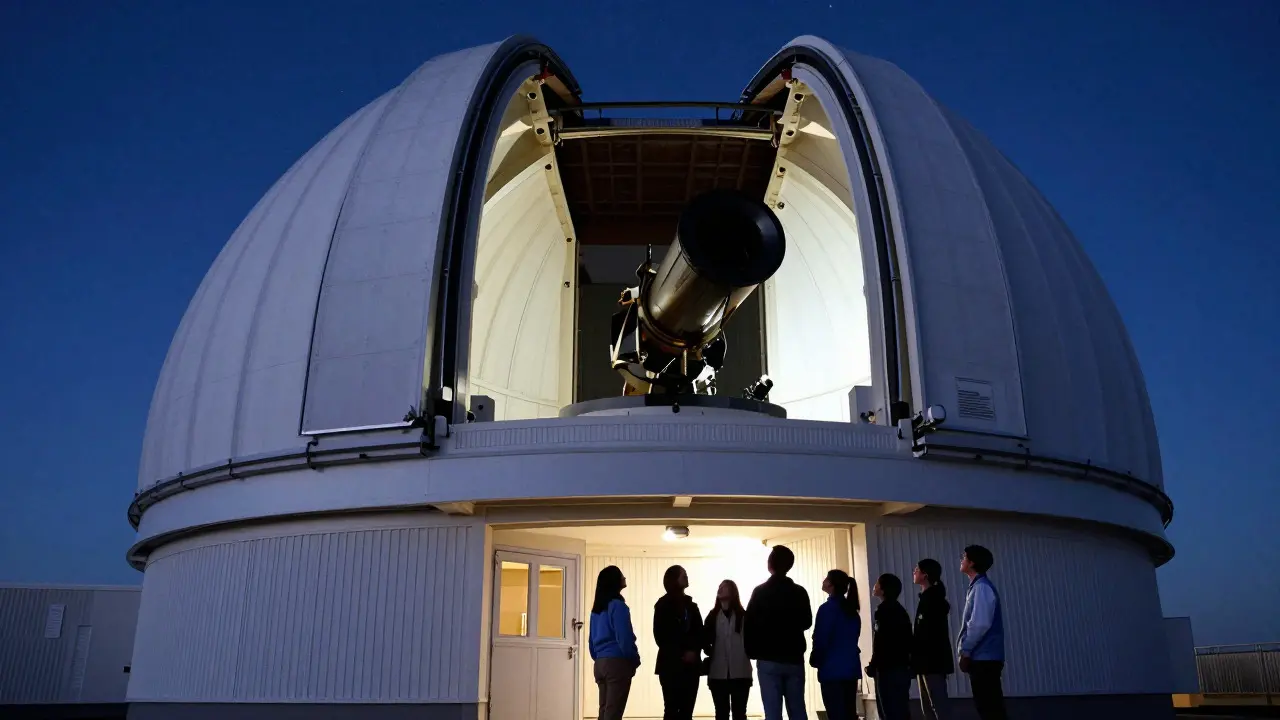
Imagine you have the idea of a lifetime. You want to track the erratic movements of a specific variable star or map the debris field of a recently discovered comet. But you don't own a 10-meter observatory. You need access to professional-grade equipment that costs millions to operate. This is where shared telescope time comes in. It is a competitive allocation system where amateur astronomers and citizen scientists apply for observation slots on large telescopes. Many assume this privilege is reserved for tenured professors at major universities. In reality, dedicated citizen science groups routinely secure hours on world-class instruments like the Keck Observatory or the Subaru Telescope. The difference between rejection and approval rarely lies in the novelty of your question; it lies in how clearly you define your scientific goal and prove your team’s capability to handle the data.
Understanding the Allocation Landscape
Before writing a single word of your proposal, you must understand who controls the keys to the dome. Most major observatories operate on a cycle-based system. For instance, the W. M. Keck Observatory uses a general call process where proposals are reviewed by a committee of peer experts. These committees look for three things: scientific merit, feasibility, and community impact. Unlike university grants that fund salaries and travel, telescope time is a finite resource measured in nights. One clear night of observation can cost tens of thousands of dollars in overhead. Therefore, your proposal must convince the reviewers that every minute of exposure will yield high-quality results without wasting time on technical errors.
The landscape has shifted significantly in recent years. With the rise of open-access data from missions like NASA's Hubble Space Telescope, ground-based citizen science projects now focus on real-time monitoring and rapid response observations. This niche is crucial because space telescopes often have long scheduling queues. If you are studying transient events like supernovae or asteroid impacts, ground-based shared time offers the flexibility that orbital assets cannot match. Recognizing this distinction helps you frame your project not as a "hobby" but as a necessary complement to existing infrastructure.
Crafting the Scientific Narrative
Your proposal needs a spine. This is your central hypothesis or objective. Do not write a vague statement like "we want to study stars." Instead, be surgical. State exactly what you are measuring, why it matters, and what result would confirm your theory. Reviewers read hundreds of pages; they skim for clarity. If your objective takes more than two sentences to explain, simplify it.
- Define the Target: Specify the celestial object(s). Use standard catalog designations (e.g., M31, Betelgeuse) alongside common names if applicable.
- State the Gap: What do we currently not know? Cite recent papers that highlight this missing piece of knowledge.
- Propose the Solution: How will your specific observations fill this gap?
For example, instead of saying "We will observe galaxy clusters," say "We will measure the velocity dispersion of galaxies in cluster Abell 2744 to constrain dark matter distribution models." This specificity signals professionalism. It shows you have done the literature review and understand the current state of the field. It also makes it easier for the reviewer to assess whether the proposed instrumentation is appropriate for the task.
Designing a Feasible Observation Plan
This section is where most citizen science proposals fail. You must demonstrate that you know how the telescope works. A beautiful scientific idea is useless if the observer spends six hours aligning the wrong filter. Your plan should detail the sequence of exposures, the filters used, and the total integration time required.
| Component | Academic Grant Focus | Citizen Science Telescope Time Focus |
|---|---|---|
| Budget | Salaries, equipment, travel | Minimal; focus on data storage and processing |
| Risk Assessment | Theoretical risks | Technical execution risks (weather, alignment) |
| Team Credentials | PI publication record | Collaborator expertise + PI learning curve |
| Data Management | Institutional archives | Open access repositories (Zenodo, MAST) |
Include a table in your proposal that lists each target, the instrument, the filter, the number of exposures, and the duration per exposure. Add a column for "Total Time." If your total requested time exceeds the available block, cut targets ruthlessly. Better to deliver one perfect dataset than five mediocre ones. Also, specify your backup plans. What happens if the primary target is behind clouds? Have a secondary list of targets with similar magnitudes ready. This contingency planning reassures the committee that you are prepared for the unpredictability of ground-based astronomy.
Demonstrating Technical Competence
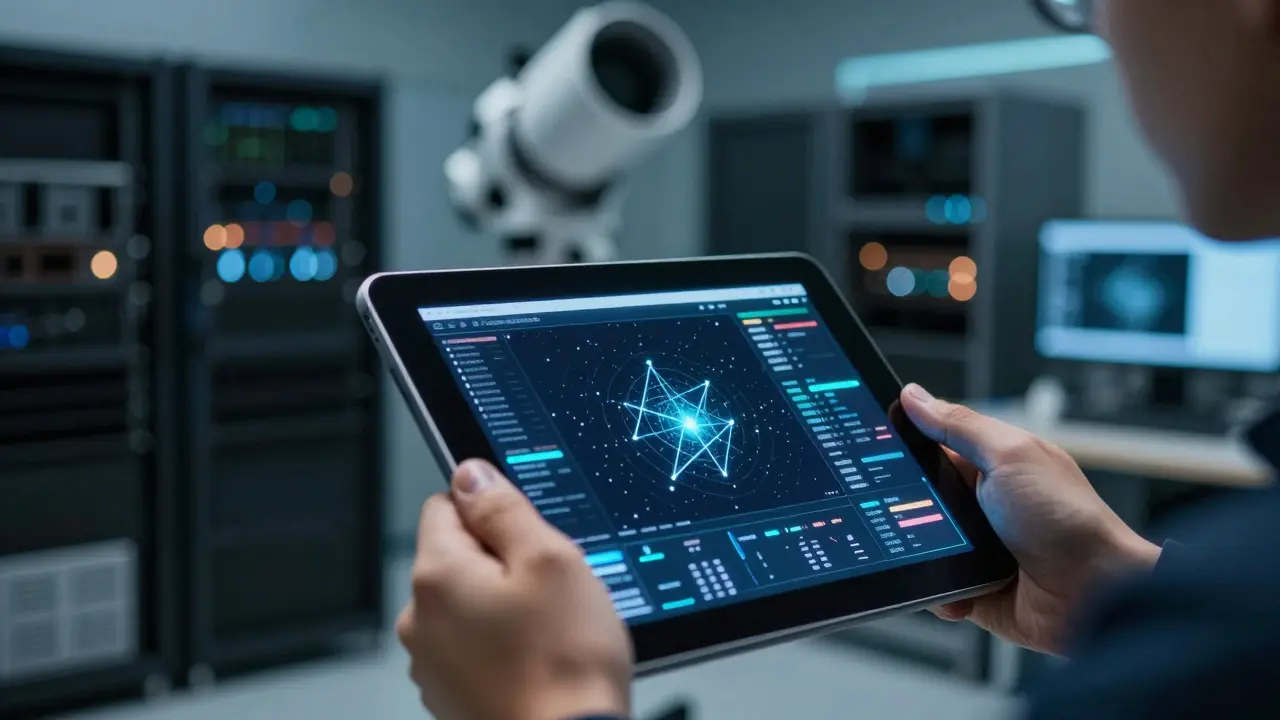
You do not need to be an astronomer to get telescope time, but you must show you are not flying blind. List the specific software you will use for data reduction. Mention tools like Python libraries such as Astropy or CCDPACK. Explain how you will calibrate your images using bias frames, dark frames, and flat fields. If you are working with a partner institution, name them explicitly. A partnership with a university department adds significant weight to your application because it implies mentorship and technical support.
Address the human element. Who will be at the eyepiece or controlling the remote interface? If it is a student, mention their training level. If it is a volunteer, highlight their previous experience with similar instruments. Committees are wary of assigning expensive time to observers who have never handled a spectrograph. By transparently outlining your team's skills and gaps, you show humility and preparedness. Include a brief timeline showing when you will complete calibration tests before the actual observation run.
Data Management and Open Access
One of the strongest arguments for citizen science is the commitment to open data. Professional astronomers sometimes keep data proprietary for a year. Citizen scientists usually pledge immediate public release. Make this explicit. State that all raw and reduced data will be uploaded to a public archive like Zenodo or the MAST Archive within 30 days of completion. Provide a DOI (Digital Object Identifier) strategy for your datasets. This commitment appeals to the broader astronomical community because it increases the utility of the telescope time beyond just your project. It turns your observation into a resource for others, which is a key value proposition for shared facilities.
Common Pitfalls to Avoid
Even strong proposals get rejected due to minor oversights. Here are the frequent mistakes that kill applications:
- Overestimating Visibility: Checking the airmass limits incorrectly. Ensure your targets are observable during the requested season and time of night.
- Vague Success Criteria: Saying "we hope to see something interesting" instead of defining measurable outcomes.
- Ignoring Weather Windows: Requesting too many consecutive nights without accounting for typical cloud cover statistics at the site.
- Poor Formatting: Using dense paragraphs instead of bullet points and tables. Reviewers appreciate scannable documents.
Read your proposal aloud. If you stumble over a sentence, rewrite it. Clarity is kindness. When the reviewer understands your intent instantly, they are more likely to advocate for your project during the committee meeting.
Building a Strong Team Structure
A solo applicant is at a disadvantage compared to a group. Form a small core team with defined roles. You might have a lead scientist who designs the experiment, a data engineer who handles the code, and an outreach coordinator who manages social media updates. Even if the data engineer is a hobbyist, their proficiency in Python and SQL is valuable. List these roles in the proposal. Show that the workload is distributed and manageable. This mitigates the risk of burnout or error, which protects the observatory’s schedule.
FAQs About Citizen Science Telescope Proposals
Do I need a PhD to apply for shared telescope time?
No. Many successful applicants are high school teachers, undergraduate students, or independent researchers. However, you must demonstrate technical competence. Partnering with a university mentor or including experienced co-investigators significantly improves your chances.
How much telescope time should I request?
Request only what you strictly need plus a 20% buffer for weather delays. Over-requesting looks greedy; under-requesting risks incomplete data. A typical first-time citizen science award ranges from 5 to 15 hours of total integration time.
What is the best way to present my data analysis plan?
Use flowcharts or pseudocode snippets. Avoid complex mathematical derivations unless they are central to the novel method. Focus on the workflow: raw data -> calibration -> extraction -> visualization. Mention specific software packages to prove familiarity.
Can I use the same proposal for multiple observatories?
Yes, but tailor it. Each observatory has different instruments, constraints, and cultures. Mention the specific capabilities of the facility you are applying to. A generic proposal that ignores the unique features of the telescope will likely be rejected.
How important is the outreach component?
Very important for citizen science. Observatories love projects that engage the public. Include a brief section on how you will share results via blogs, social media, or local astronomy clubs. This demonstrates the societal benefit of the investment.