28 Mar 2026
- 0 Comments
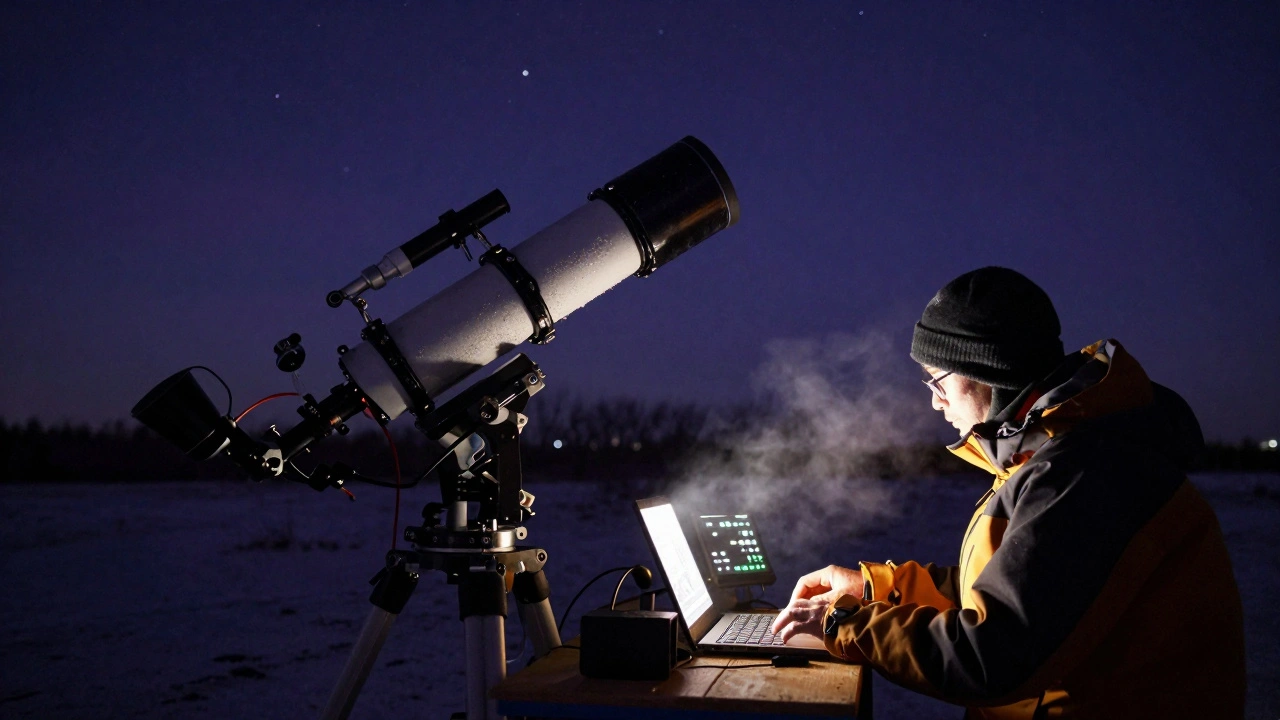
There is nothing more frustrating than spending three nights capturing data, only to realize your images are either blown out or grainy messes. You set up your rig in the cold, aligned the Equatorial Mounta device designed to track celestial objects by compensating for Earth's rotation, and started the capture sequence. But when you stack the files later, stars look like donuts or nebula details get lost in digital noise. The culprit is almost always incorrect exposure planning.
Mastery over your imaging session isn't about guessing. It relies on understanding the relationship between your sensor, your optical system, and the environment. Getting the right exposure length ensures your individual "subframes" contain maximum signal while keeping noise under control. This guide walks you through the precise logic needed to plan those lengths before you even point your scope at the sky.
The Three Pillars of Exposure Physics
Before opening a calculator app, you need to understand what actually drives exposure duration in deep-sky work. Unlike landscape photography where you balance aperture and shutter speed for artistic effect, astrophotography has one goal: collect enough photons from faint objects without introducing errors from your equipment. There are three main variables that dictate this balance.
First is the Focal Ratiothe mathematical ratio between the focal length and diameter of the telescope lens. Often called f-number or f-stop, this defines how bright the image projected on the sensor is. A faster scope, like one with f/5, gathers significantly more light per second than a slower one like f/10. If you are using a slow optical tube assembly, you must compensate by increasing exposure time to reach the same brightness level.
Second is Camera ISO Gainthe amplification applied to the sensor's electrical signal to increase sensitivity. In old days, we used low ISO settings to minimize noise. Modern cooled astronomy cameras have changed the game. Setting gain too low often leaves "read noise" drowning out the signal. Most astro-imagers now aim for ISO 800 or higher to saturate that read noise floor quickly. The rule is: turn the gain high enough to suppress the camera's internal electronics noise below the incoming starlight.
Third is the target itself. M42 Orion Nebula is vastly brighter than the Helix Nebula. You cannot treat every object with the same timer setting. Faint, extended objects demand longer sessions to overcome the background skyglow.
Determining the Hard Limit: Star Trails and Drift
You might think you can simply set your exposure to 10 minutes because you want more detail. Unfortunately, physics says no. If your mount cannot perfectly track the stars, long exposures turn point-source stars into streaks. This is known as Field Rotation or simply bad tracking.
To determine your maximum safe exposure, you must test your gear. Start by taking a short test shot of a bright star. Zoom in 100%. If the star is slightly elongated, you have tracking error. To fix this, shorter exposures are necessary. A common benchmark is that a perfect polar alignment allows for roughly 15 to 30 seconds before trails appear on large format sensors, depending on declination.
| Tracking System Quality | Typical Max Sub Length | Required Action |
|---|---|---|
| Polar Aligned Alt-Az | 10-15 Seconds | Use Short Subs |
| Standard Equatorial | 1-3 Minutes | Check Alignment |
| Guided Equatorial | 5 Minutes+ | Optimize Guide Rate |
If you own a guided mount, your limits increase dramatically. Autoguiding uses a small separate camera to lock onto a guide star and make micro-adjustments to the mount motors. With a good autoguider setup, you can safely push exposures to 5 minutes or even 10 minutes on certain targets. Just remember, the limit depends on atmospheric seeing-shooting in turbulent air will still ruin long subs regardless of how good your mount is.
The Signal-to-Noise Ratio Strategy
This is the concept most beginners miss. You aren't trying to get a perfect image in a single frame. You are building a master stack. The magic happens in the stacking software where you combine dozens of images.
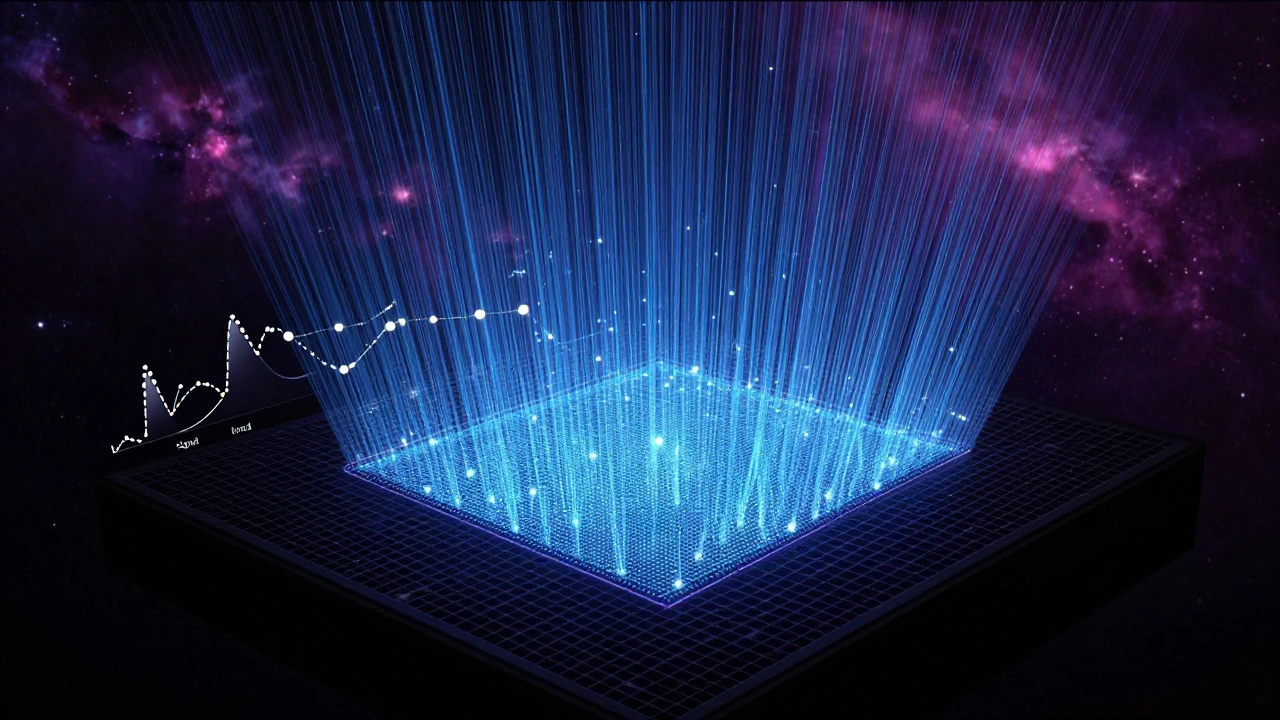
Your goal is to maximize the Signal-to-Noise Ratioa measure comparing the useful signal to the random background noise. Total integration time is king. Whether you shoot ten 5-minute exposures or twenty 2.5-minute exposures, the total result is similar, provided the short ones capture enough signal to beat the camera's read noise.
However, very short exposures are wasteful. Every frame has overhead-time saved reading the buffer, cooling fans kicking in, dithering moving the image slightly to kill fixed-pattern noise. If your exposures are only 20 seconds, you spend 20% of your night doing overhead tasks instead of collecting photons. Aim for exposures long enough to fill the histogram's peak around the middle-right area, but keep them short enough to preserve shape in case of sudden clouds or mechanical failure. A "safe" strategy is usually 3-minute subs for most medium-bright targets like M13 or M31.
Environmental Constraints: Moon and Light
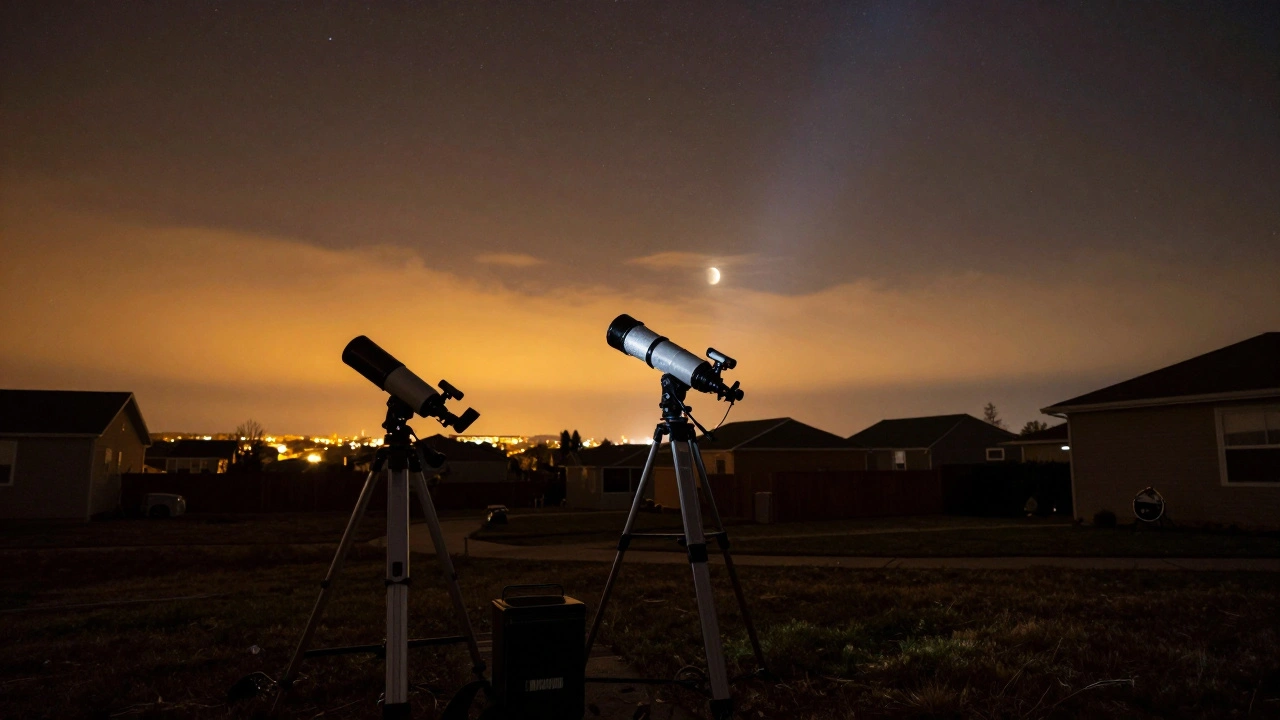
Even with perfect math, the environment dictates your limits. A full moon washes out faint nebulosity. When the moon is up, your sky background rises in brightness. This forces you to shorten your exposure length or risk blowing out the background glow, leaving you no latitude to recover shadows during editing.
Light pollution is another factor. If you are shooting from a suburban back yard rather than dark skies, your skyglow acts like a constant fog. You must expose just long enough to pull the target signal above that fog, but not so long that the fog takes over the entire file. For light-polluted areas, 1-minute exposures are often safer than 5-minute ones to maintain dynamic range. Always check apps like Dark Site Finder to see your local Bortle Class before heading out.
Practical Calculation Checklist
So, how do you put this all together in the field? Do not rely solely on calculators that assume perfect conditions. Run a real-world diagnostic first.
- Capture the Master Bias/Dark: Know your camera's thermal noise baseline. Cooled cameras run at -10°C or lower to eliminate hot pixels.
- Focus Precisely: A soft focus spreads light across more pixels, reducing the intensity of the central spike. A sharp focus means shorter exposures are possible.
- Set Histogram Peak: Target the signal peak to sit roughly 30-50% along the histogram scale for RGB targets. If it sits past 75%, you are losing highlight detail immediately.
- Start Conservative: Begin with 60-second tests. If stars show no trail and background isn't black, slowly increase to 180, then 300 seconds.
- Dither Frequently: Change your dither interval. Moving the optics by a fraction of a pixel between shots helps remove fixed sensor patterns during processing.
By adhering to this method, you move from guessing to engineering. You stop worrying about every cloud passing by and start trusting that your data contains the information you need.
What is the ideal exposure time for the Milky Way?
For Milky Way landscapes, photographers often use the 500 Rule. Divide 500 by your crop-factor corrected focal length to get seconds. However, for deep-sky imaging, you generally use narrower bands and longer tracking, allowing for 3-5 minute subs with a mount.
Does a larger sensor allow for longer exposures?
Larger sensors often have larger pixels which gather more light, improving dynamic range. However, the limiting factor remains your guiding precision, not just sensor size.
Why are my stars elongated diagonally?
Diagonal elongation typically indicates Polar Misalignment or lack of Guiding. Check your meridian flip settings or polar alignment accuracy using a tool like SharpCap.
Should I use High ISO or Low ISO for Astro?
On modern CMOS sensors, high ISO (Gain) is preferred. It pushes the read noise down relative to the signal. Find the point where read noise drops off (often ISO 800-1600 equivalent).
How do I prevent stars from trailing?
Ensure proper Polar Alignment or use an autoguider. For non-guider setups, strictly stick to the calculated 500/600 rule for exposure length to avoid rotational blur.