17 Aug 2026
- 0 Comments
Most stargazers miss the best part of a meteor shower because they look at the wrong time. You might set up your chair at 9 PM, only to watch the sky go quiet while the real action happens between 1 AM and 4 AM. This isn't bad luck; it's a misunderstanding of how orbital mechanics interact with Earth's rotation. To catch the maximum number of meteors, you need to understand hourly meteor rates, which vary dramatically depending on your location, the moon phase, and the exact moment the radiant reaches its highest point in the sky.
Planning an observation session is less about guessing and more about calculating specific windows where visibility is optimal. Whether you are watching from a suburban backyard in Portland or a remote desert site, the physics remain the same. The goal is to align your eyes with the sky when the atmospheric conditions allow the faintest trails to be seen against the darkest possible background.
Understanding the Zenithal Hourly Rate (ZHR)
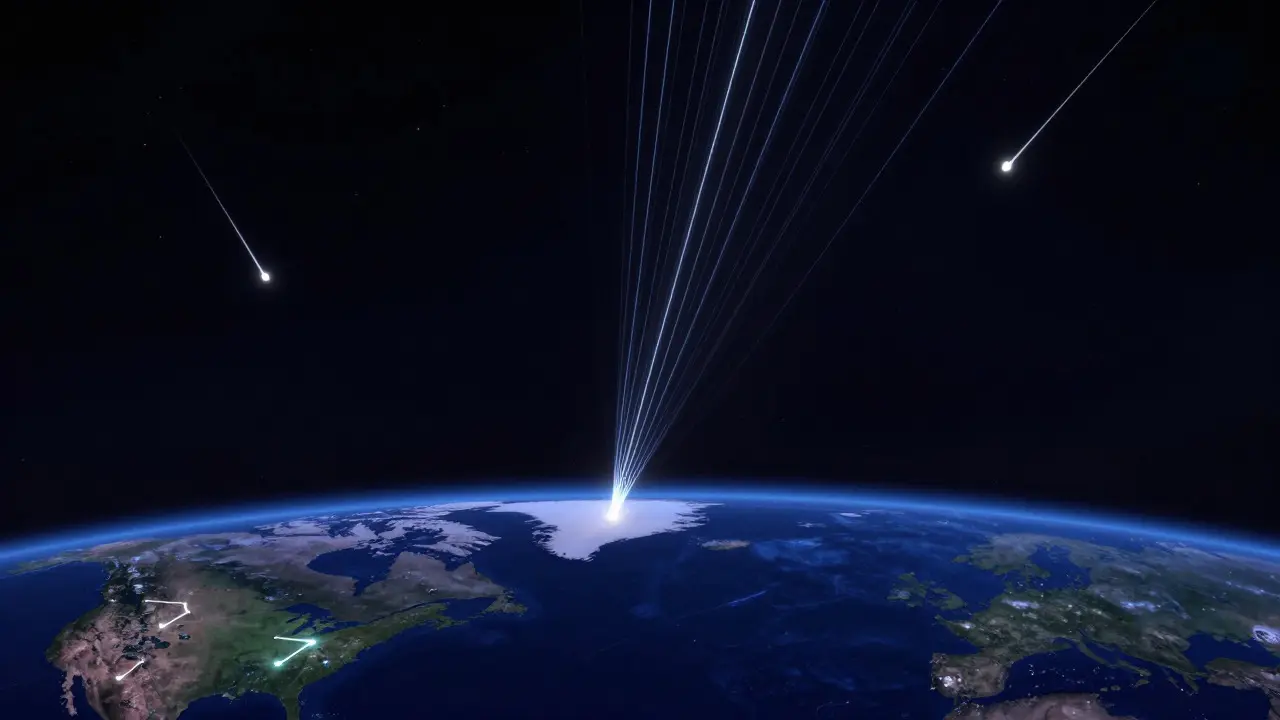
The standard metric used by astronomers to predict shower activity is the Zenithal Hourly Rate a theoretical rate of meteors visible to a single observer under perfect conditions. If you hear that a shower has a ZHR of 100, it does not mean you will see 100 meteors per hour. It means that if you were standing directly under the radiant (the point in the sky where meteors appear to originate) with a completely dark sky and no light pollution, you would see 100 meteors every hour.
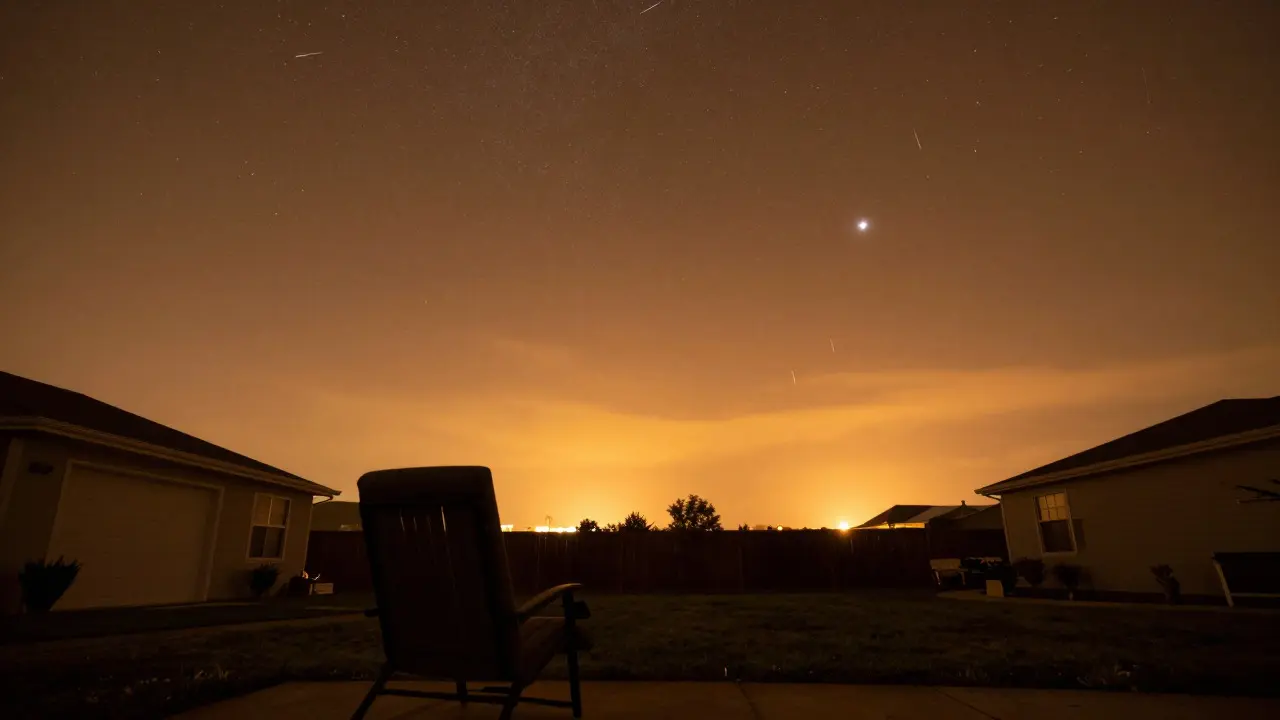
In reality, few observers ever stand directly under the radiant. Most people view the sky at an angle, which reduces the effective rate. Furthermore, light pollution and cloud cover further diminish what you can actually see. A good rule of thumb is that your actual observed rate will typically be 30% to 50% of the ZHR for moderate Bortle class skies. For urban areas with bright skies, the drop-off can be much steeper, often reducing the visible count to less than 10% of the theoretical maximum.
| Sky Condition | Bortle Class | Typical Reduction Factor | Example: ZHR 100 Shower |
|---|---|---|---|
| Excellent Dark Site | Class 1-2 | 80-90% | 80-90 meteors/hour |
| Rural Suburbs | Class 3-4 | 40-60% | 40-60 meteors/hour |
| Urban Fringe | Class 5-6 | 10-20% | 10-20 meteors/hour |
| City Center | Class 7-8 | <5% | Less than 5 meteors/hour |
The Role of Radiant Altitude and Local Time
The position of the radiant in the sky is the single biggest factor in determining your hourly yield. When the radiant is low on the horizon, meteors have to travel through more atmosphere before reaching your eyes. This extra distance causes many faint meteors to fade out before they become visible. Additionally, low-angle meteors are more likely to be blocked by trees, buildings, or hills.
The ideal viewing window occurs when the radiant is at its highest point in the sky, known as culmination. This usually happens shortly after midnight local time for most major showers. However, this timing shifts slightly each night due to Earth's orbit around the Sun. For example, during the Perseids in August, the radiant rises in the northeast around dusk but doesn't reach a comfortable altitude until well after midnight. If you want to maximize your count, aim to be active between 1 AM and 4 AM local time. During these hours, the radiant is high enough to minimize atmospheric extinction, and the sky is typically at its darkest.
You should also consider the pre-dawn hours. As the sun approaches the horizon, the sky begins to brighten rapidly. Astronomical twilight begins when the sun is 18 degrees below the horizon. Once civil twilight starts (sun 6 degrees below), the sky becomes too bright for most meteors to be visible. Therefore, your effective observing window closes roughly 45 minutes before sunrise. In summer months like August, this means you lose valuable observing time earlier than you might expect.
Moon Phase Interference and Timing Adjustments
Moonlight is the primary natural competitor for meteor visibility. A full moon can wash out the sky so thoroughly that even bright meteors are difficult to spot unless they leave long persistent trains. Conversely, a new moon offers the darkest possible conditions, allowing you to see the faintest, slowest meteors that would otherwise be invisible.
If a major shower peaks near a full moon, you have two strategic options. First, try to observe during the first half of the night when the moon sets early. Second, wait for the post-midnight window when the moon has risen but may be lower in the western sky, allowing you to focus on the eastern part of the sky where the radiant might be located. If the radiant is far from the moon, you can still get decent numbers despite the lunar glare. Use a moon phase calculator to determine exactly when the moon sets and rises relative to your local sunrise and sunset times.
Seasonal Variations and Atmospheric Conditions
Atmospheric stability plays a subtle but important role in meteor visibility. Turbulent air can cause scintillation, making stars twinkle and potentially breaking up the smooth trails of meteors. Calm nights generally offer clearer views. In regions like the Pacific Northwest, humidity levels can affect the appearance of the sky, creating a milky haze that reduces contrast. Checking weather forecasts for dew point and cloud cover is essential. Even 10% high cloud cover can reduce your observed rate by half or more.
Seasonal changes also affect the length of the night. In winter, the nights are longer, giving you more hours of darkness to observe. In summer, the nights are shorter, compressing your available window. This is why planning is critical in June, July, and August. You have less total time to work with, so every minute counts. Arriving late to the session can cost you the entire peak period.
Practical Planning Checklist for Observers
To turn theory into practice, follow this step-by-step process before heading out:
- Check the Shower Calendar: Identify the exact date of the peak for the specific shower you intend to watch. Note that peaks can last several days, but the maximum rate is concentrated in a 24-hour window.
- Determine Your Local Twilight Times: Find the times for astronomical twilight end and beginning. This defines your absolute earliest and latest safe observing times.
- Calculate Radiant Position: Use a planetarium app or website to find when the radiant culminates. Aim to be fully adapted to the dark (eyes adjusted) at least 30 minutes before this time.
- Assess Moon Interference: Check the moon phase and its rising/setting times. If the moon is bright, plan to observe when it is below the horizon or in the opposite direction of the radiant.
- Select a Dark Site: Choose a location with minimal light pollution. Use a light pollution map to verify the Bortle class of your chosen spot. Avoid streetlights and city glows.
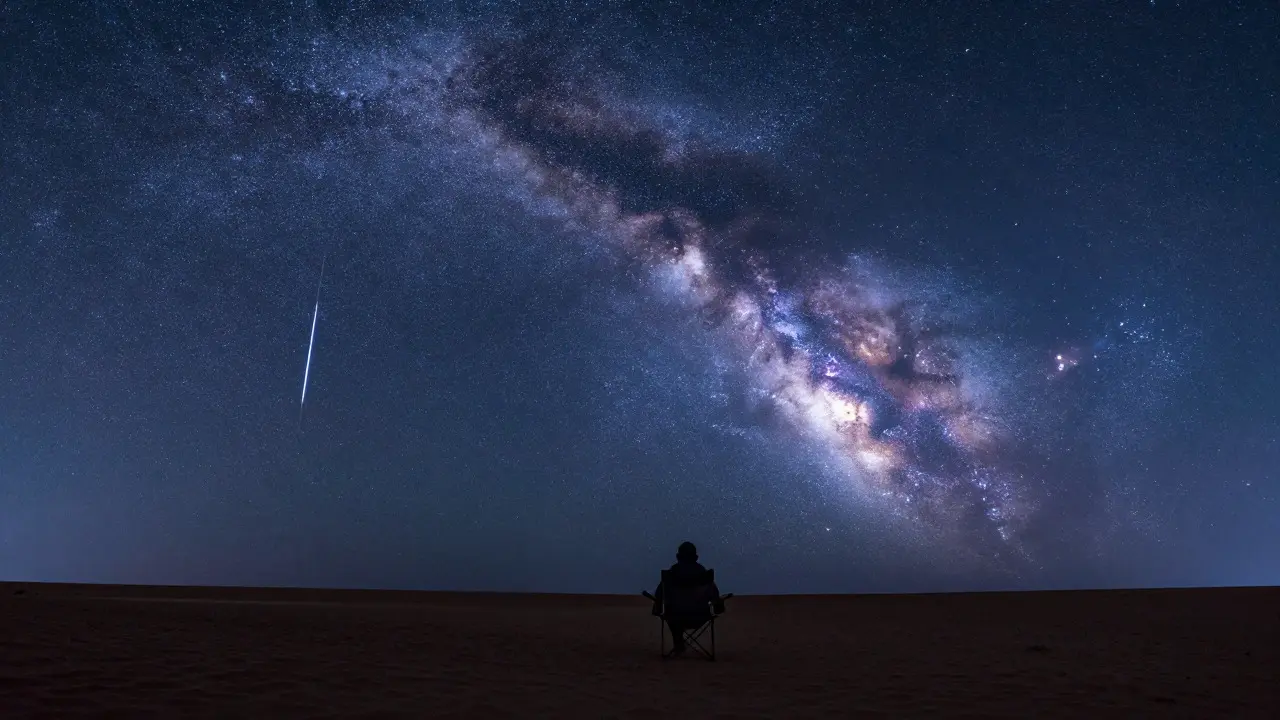
- Prepare for Comfort: Bring a reclining chair, warm clothing, and red-light headlamps. Cold temperatures can make it hard to stay focused, and white light will ruin your dark adaptation instantly.
Common Mistakes That Reduce Yield
Even with perfect planning, small errors can ruin your session. One common mistake is checking your phone screen without using a red filter. The blue light emitted by phones resets your dark adaptation, which takes 20 to 30 minutes to recover. Another error is starting too early. While it feels productive to start at dusk, the sky is rarely dark enough for serious counting until well after astronomical twilight ends. Waiting until the sky is truly black ensures you don't waste time staring at a washed-out dome.
Finally, don't forget to scan the whole sky. While the radiant is the focal point, meteors from other sporadic sources or minor showers can appear anywhere. Keeping your field of view wide allows you to catch unexpected displays. Some of the brightest fireballs occur away from the main radiant, so staying alert across the entire hemisphere above the horizon maximizes your chances of seeing something spectacular.
Frequently Asked Questions
What is the best time of day to watch meteors?
The best time is usually between 1 AM and 4 AM local time, when the radiant is highest in the sky and the atmosphere is stable. This window avoids the bright twilight of dusk and dawn, providing the darkest possible conditions for detecting faint meteors.
How does light pollution affect meteor rates?
Light pollution significantly reduces the number of visible meteors. In urban areas with Bortle Class 6 or 7 skies, you may only see 10-20% of the theoretical Zenithal Hourly Rate. Moving to a darker site with Bortle Class 3 or lower can increase your observed count by three to five times.
Do I need binoculars to see meteors?
No, binoculars are not recommended for meteor watching. They limit your field of view, making it harder to track fast-moving objects. The naked eye has a wider field of view and better peripheral vision, which is crucial for spotting meteors quickly. Binoculars are useful for identifying constellations but not for counting meteors.
How long should I wait for my eyes to adjust to the dark?
Full dark adaptation takes approximately 20 to 30 minutes. During this time, your pupils dilate and your rod cells become more sensitive to low light levels. Avoid looking at any white light sources, including phone screens, flashlights, or car headlights, during this period to preserve your sensitivity.
Can I see meteors during the day?
It is extremely rare to see meteors during the day. Only exceptionally bright fireballs can be visible against the bright daytime sky. For practical purposes, meteor watching is a nighttime activity that requires the sky to be sufficiently dark to reveal the faint trails of smaller particles burning up in the atmosphere.