7 Apr 2026
- 0 Comments
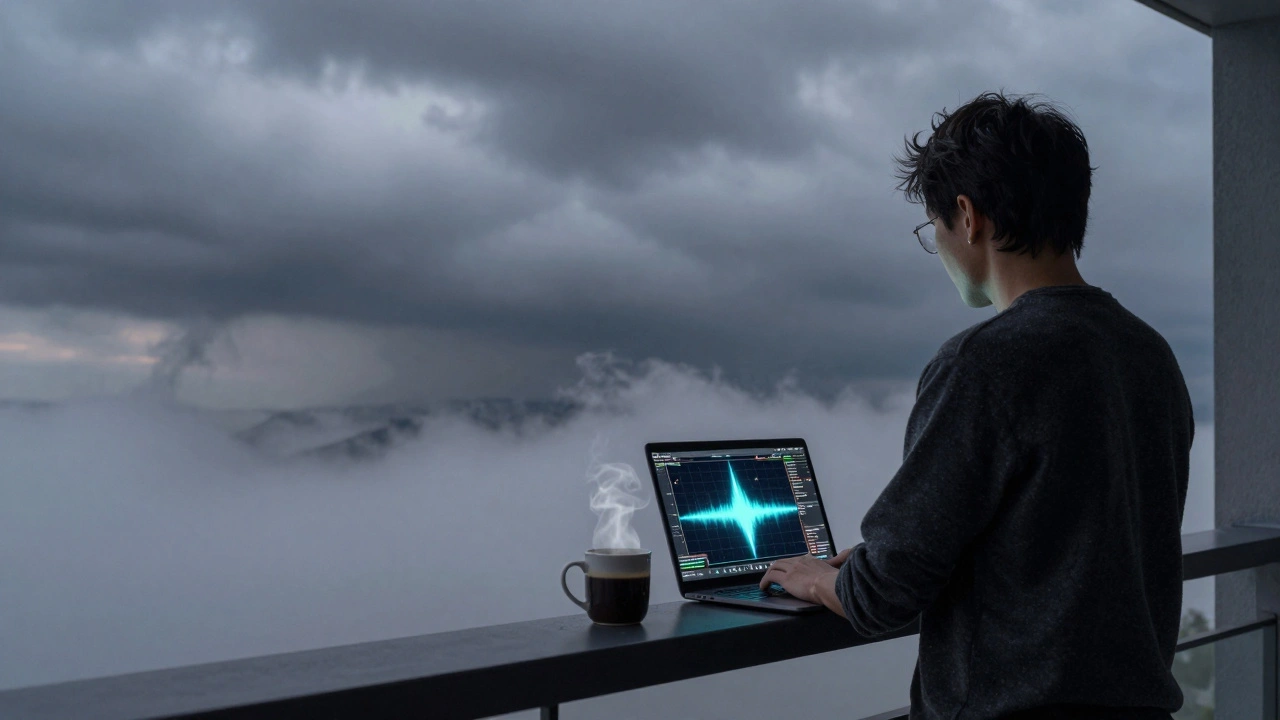
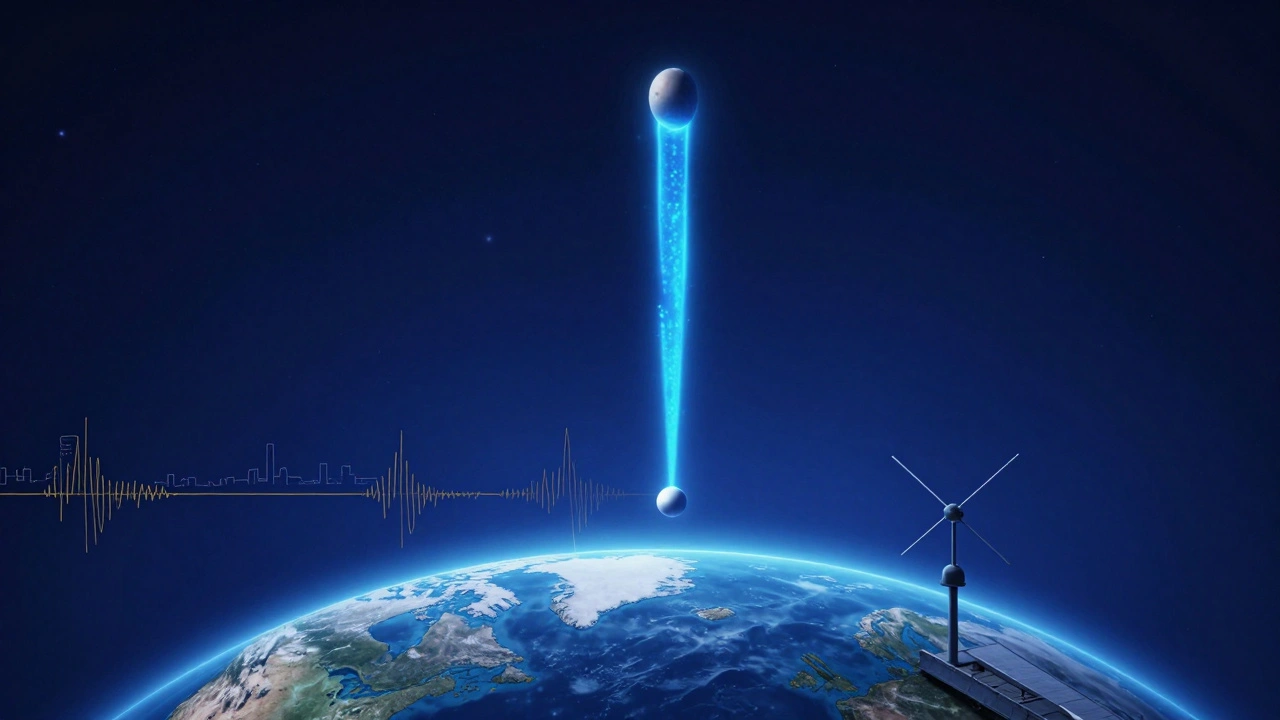
The secret lies in the way the upper atmosphere reacts to a space rock. When a meteoroid hits the atmosphere, it creates a trail of ionized gas. This trail acts like a temporary mirror for specific radio frequencies. By listening to a distant transmitter, you can detect the exact moment a meteor creates a reflective path between you and that signal. It's a way to do radio meteor observing without ever needing a clear night sky.
Quick Takeaways for Getting Started
- You don't need a telescope; you need a radio receiver and a specialized antenna.
- Observations work 24/7 because radio waves penetrate clouds and ignore sunlight.
- The process relies on "forward scatter" from ionized trails in the ionosphere.
- SDR (Software Defined Radio) has made this hobby affordable for everyone.
How the Physics of Radio Meteors Works
To understand this, we have to look at the Ionosphere is the ionized part of Earth's upper atmosphere, starting around 60 km altitude, where solar radiation strips electrons from atoms. When a meteor burns up, it doesn't just create light; it leaves behind a cylinder of plasma. This plasma is highly conductive.
If you have a Radio Transmitter (like a distant AM station or a dedicated beacon) and a receiver, the signal usually travels in a straight line or bounces off the ionosphere in a predictable way. But when a meteor creates a plasma trail, the signal "pings" off that trail and reaches your antenna. This creates a sudden, brief increase in signal strength-a "specular reflection." It's essentially a cosmic game of billiards where the meteor is the cushion that bounces the signal toward you.
The Essential Gear List
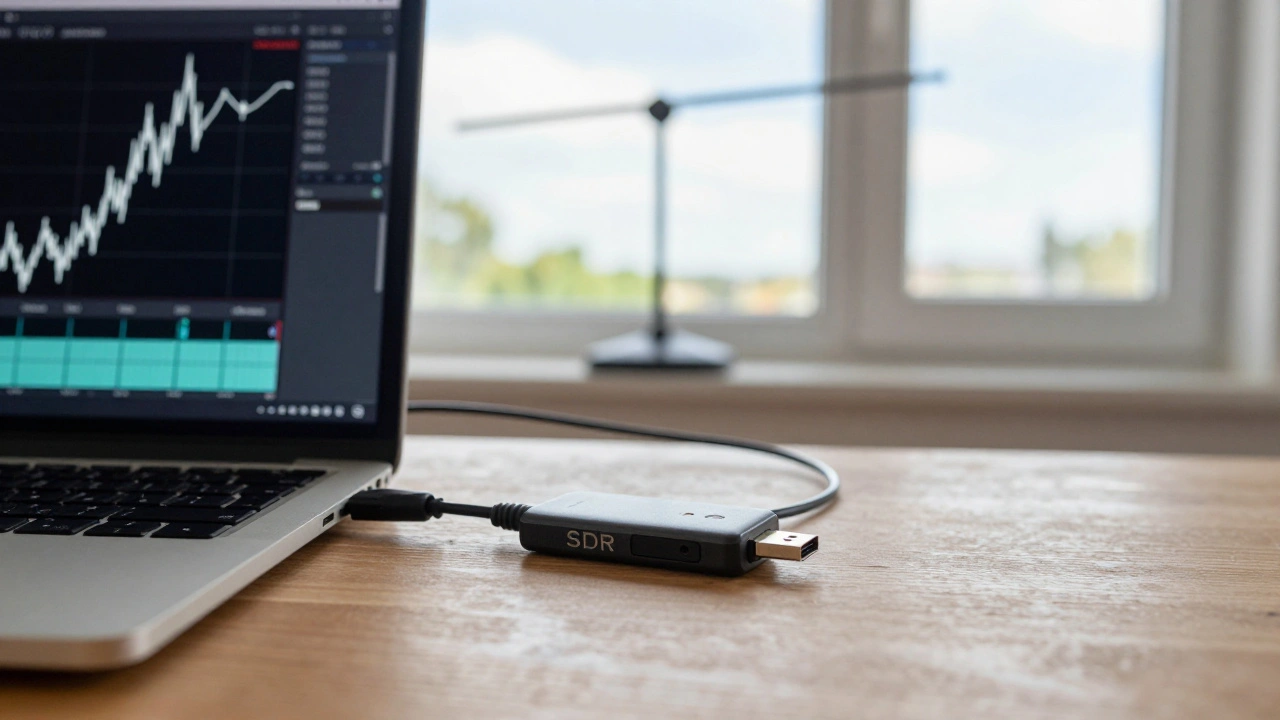
You don't need a NASA budget to start. Most modern observers use an SDR is a Software Defined Radio that uses software to perform the functions of a traditional hardware radio. These USB dongles are cheap and plug directly into your laptop.
For the antenna, a V-dipole is the gold standard. It's basically two long wires angled at 120 degrees, pointed toward the horizon. Because you are looking for signals coming from a low angle (where the meteors hit the atmosphere), you want your antenna to be sensitive to the horizon rather than the zenith.
| Component | Recommended Type | Purpose |
|---|---|---|
| Receiver | RTL-SDR v4 | Tuning into the signal |
| Antenna | V-Dipole | Capturing horizon signals |
| Cable | RG-6 or RG-58 | Low-loss signal transport |
| Software | SDR# or GQRX | Visualizing the waterfall plot |
Setting Up Your First Station
First, you need a target. You can't just tune to a random frequency; you need a signal that is normally "just barely" out of reach. If the signal is too strong, you won't notice the meteor ping. If it's too weak, the reflection won't be enough to trigger a detection. Many hobbyists use Radio Beacons or distant stations in the HF Band (High Frequency, 3-30 MHz).
- Position your antenna: Mount your V-dipole high enough to clear nearby buildings. The higher you are, the less "ground noise" you'll pick up.
- Find a distant transmitter: Look for a station a few hundred to a thousand miles away. You want a signal that is normally absent but occasionally flickers.
- Use a Waterfall Plot: This is the visual representation of the radio spectrum over time. A meteor will appear as a sharp, vertical line (a "ping") against a dark background.
- Filter out the noise: Use a narrow band-pass filter to ignore other stations and focus only on your target frequency.
Why 24-Hour Monitoring Beats Visual Watching
Visual observing is limited by the "astronomical window." You need darkness, a clear sky, and a specific orientation. Radio observing removes all three barriers. Because the plasma trails are created regardless of whether it's noon or midnight, you can track the meteor showers during the day. This is incredibly useful for identifying the "diurnal variation"-do more meteors hit during the day or night? (Hint: It depends on the orbit of the debris stream relative to Earth's rotation).
Furthermore, radio data is objective. While a human might miss a faint streak or miscount a fast one, a computer recording an SDR stream doesn't blink. You can run a script to count every single ping over a 24-hour period, giving you a precise "ZHR" (Zenithal Hourly Rate) based on actual data rather than estimated sightings.
Common Pitfalls and How to Fix Them
The biggest headache for beginners is "RFI" (Radio Frequency Interference). Your microwave, your neighbor's LED lights, and even some power lines can create spikes that look exactly like meteors. To solve this, try a "differential setup." This involves using two antennas-one pointed at the target and one pointed away. If both antennas pick up the spike, it's local interference. If only the target antenna picks it up, you've likely found a meteor.
Another issue is signal fading, known as QSB. This is a natural fluctuation in the ionosphere. To distinguish a slow fade from a meteor ping, look at the duration. A meteor ping is usually very sharp-lasting from a fraction of a second up to a few seconds-while ionospheric fading is a slower, waving motion.
Expanding into a Network
Once you've mastered a single station, the next step is joining a network. Groups like the BRAMS (Belgium Radio Meteor Stations) project demonstrate how multiple receivers across a continent can triangulate the exact location of a meteor. By comparing the time a ping hits different stations, researchers can map the trajectory of the meteoroid and determine where the debris is most concentrated in the atmosphere.
This turns a solo hobby into a contribution to science. You aren't just watching rocks fall; you're helping map the density of the Thermosphere, the layer of the atmosphere where these events happen.
Do I need a license to listen to these frequencies?
In most countries, including the US, listening (receiving) is perfectly legal and does not require a license. You only need a license if you intend to transmit a signal back into the air.
Can I detect any meteor, or only big ones?
Radio observing is actually much more sensitive than visual observing. You can detect "micro-meteors" that are far too small to create a visible streak of light, but large enough to create a temporary ionized trail.
Which frequencies are best for meteor observing?
The most common ranges are between 3 and 30 MHz. Specifically, the 50 MHz (6-meter) band is popular because it balances between the stability of lower frequencies and the clarity of higher ones.
How do I tell the difference between a meteor and a noise spike?
Meteors typically have a specific "attack" and "decay" profile on a waterfall plot. They rise in strength quickly and fade out over a second or two. Electronic noise is usually instantaneous (a vertical line) or rhythmic (like a hum).
Is the equipment expensive?
Not at all. A basic RTL-SDR dongle costs around $30, and a V-dipole antenna can be built from a few dollars worth of copper wire and some connectors.
Next Steps for Your Station
If you're feeling stuck, start by downloading SDR# and plugging in a cheap dongle. Spend a week just scanning the HF bands to get a feel for how the signals change throughout the day. If you notice a signal that disappears and reappears in short bursts, you might already be seeing your first meteor pings.
For those who want more precision, try moving your antenna to a roof or a high hill. The reduction in local interference will make your detections much cleaner and your data more reliable. From there, look into automating your recording software so you can collect data while you sleep, truly achieving that 24-hour monitoring goal.